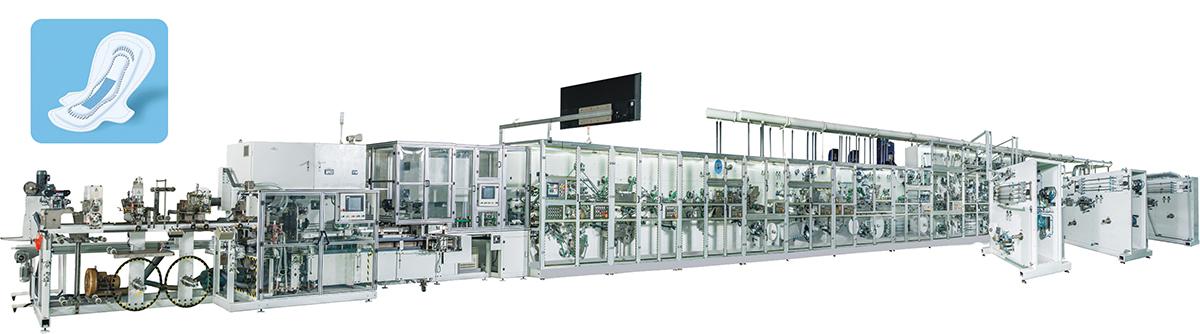
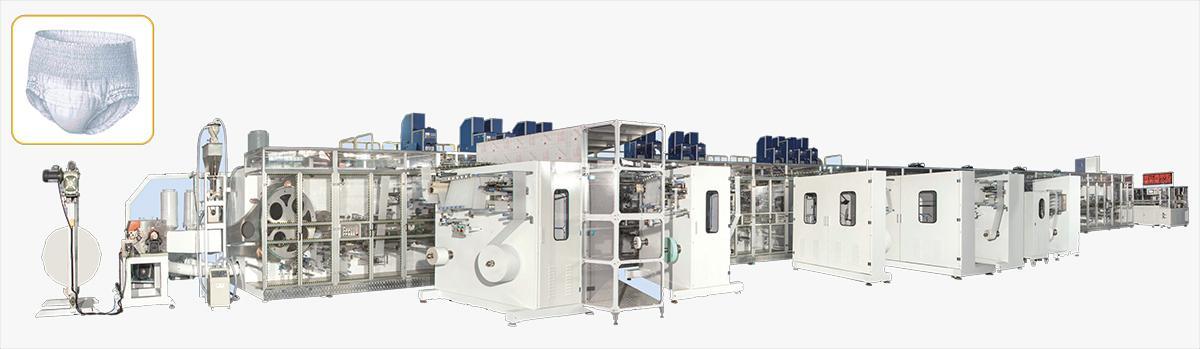
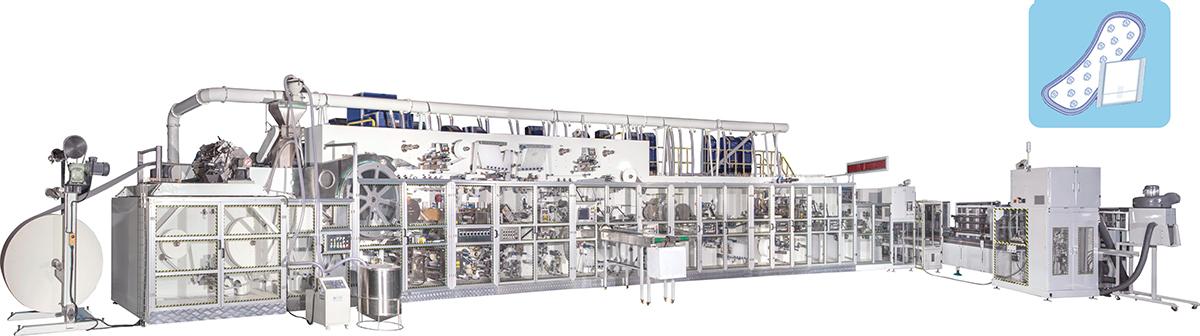
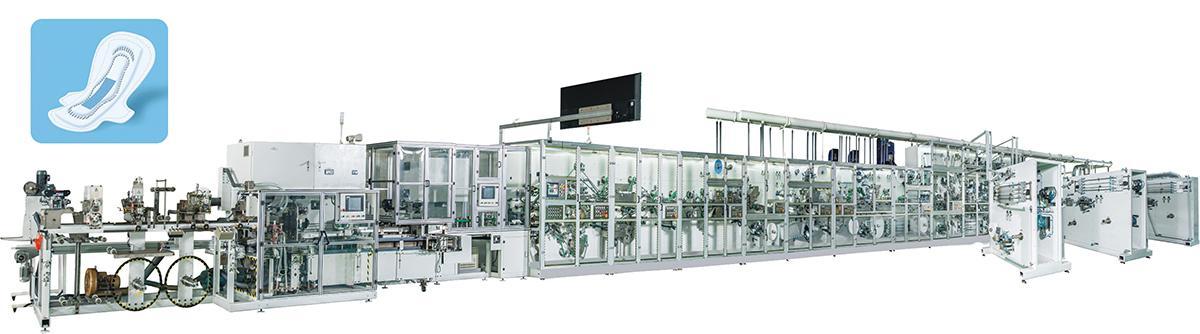
A fully automatic sanitary pad machine should be chosen by matching the finished pad specification, material structure, packaging boundary, factory utilities, and acceptance method before comparing supplier claims. The strongest choice is not simply the line with the highest stated design speed. It is the line that can demonstrate stable output with your approved materials, sizes, quality checks, operators, and planned changeovers. Procurement engineers should issue one common requirement sheet, witness a product-specific factory acceptance test, and score documentary evidence for configuration, controls, maintenance, training, and support before making a commercial decision.
Define the Finished Pad Before the Machine
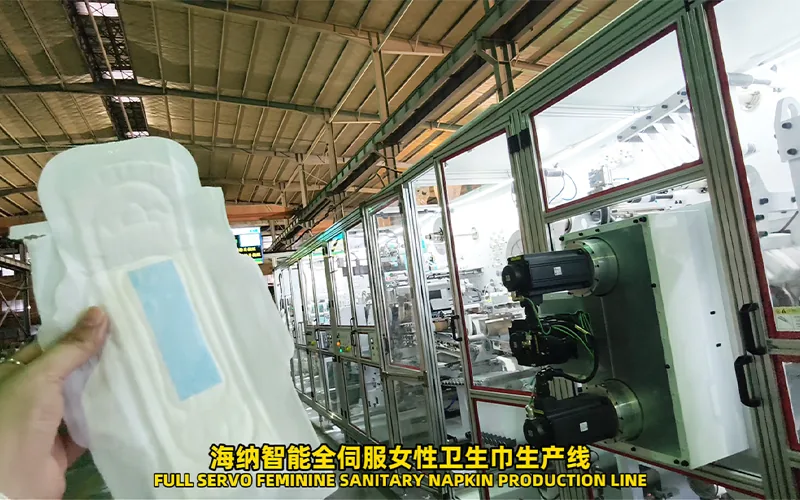
Begin with a controlled product specification, not a general request for a sanitary pad line. Record every intended pad length, width, thickness target, wing geometry, release-paper arrangement, adhesive zone, top-sheet type, absorbent-core construction, back-sheet structure, and individual wrapping concept. Include the packer's expected incoming orientation even when packaging equipment will be purchased separately. A machine can only be evaluated correctly when every supplier is pricing and demonstrating the same finished product.
Separate launch formats from future possibilities. The launch specification determines the modules, tooling, trial materials, and acceptance effort required now. Future formats belong in an option register that identifies what can be enabled by recipe, what needs interchangeable tooling, and what would require a structural modification. This distinction prevents a broad promise of "flexibility" from hiding an incomplete quotation. It also gives engineering and finance a common basis for comparing the installed scope with later expansion.
Define measurable product checks with your quality team. Useful checks include overall dimensions, component position, core integrity, seal appearance, adhesive placement, release-paper alignment, wing folding, wrapper closure, and visual contamination controls. The contractual values must come from the buyer's approved product standard and trial plan. Do not copy unverified tolerances from a generic proposal. Each value should state the method, sampling frequency, instrument, owner, and disposition when a result is outside the agreed limit.
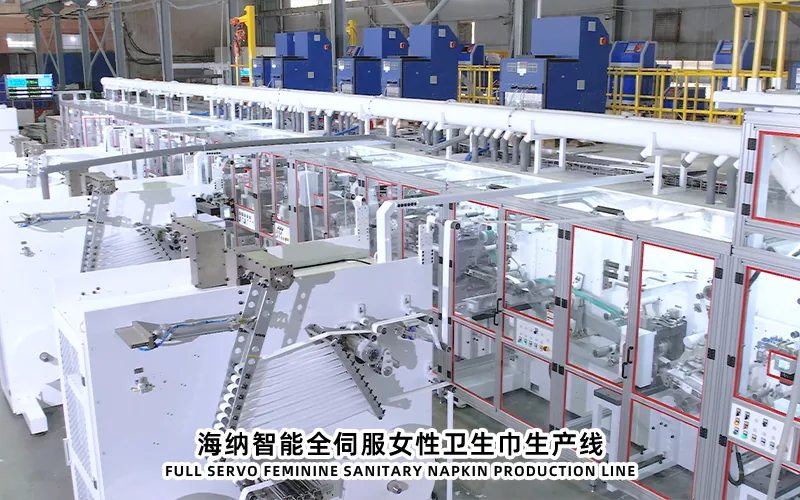
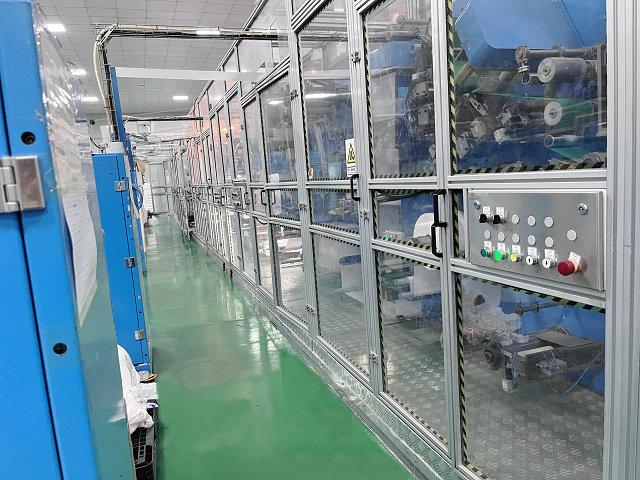
Review the complete converting route against the intended pad structure, not only the finished-product discharge.
Set the Fully Automatic Sanitary Pad Machine Boundary
The phrase fully automatic sanitary pad machine needs a written battery limit. Ask where material handling begins, where acceptable products leave the line, and which downstream operations are included. Core forming, material unwinding, web tension control, adhesive application, component placement, embossing, cutting, folding, individual wrapping, counting, stacking, and bagging may not all sit inside one quoted scope. Automatic conversion does not automatically mean automatic case packing, palletizing, or warehouse transfer.
Create a boundary drawing that assigns every interface. It should identify raw-material roll loading, splice method, dust extraction connection, adhesive preparation, compressed air, electrical distribution, scrap removal, finished-product transfer, data exchange, and guarding interfaces. For each boundary, name the supplier and buyer responsibilities. A clear diagram exposes overlooked conveyors, utility equipment, access platforms, inspection instruments, and civil works before contract signature rather than during installation.
Automation should also be described by function. Confirm which stations are recipe controlled, which adjustments remain manual, how access levels are managed, what alarms are recorded, and whether rejected products are positively segregated. Review the behavior after an emergency stop, material break, adhesive interruption, or sensor fault. The right boundary is the one your plant can operate and maintain safely with its actual staffing and support resources.
Match Materials and Converting Modules
Absorbent products combine materials that behave differently under tension, heat, pressure, cutting, and adhesive application. Provide candidate suppliers with controlled data for each web: composition, basis-weight range, roll width, roll diameter, core size, winding direction, splice condition, and any surface treatment relevant to feeding or bonding. Samples used during demonstrations should be traceable to the data sheet and representative of materials available to the operating factory.
Then map each product layer to a machine function. Ask how the equipment manages web alignment, tension isolation, elastic or wing placement, absorbent-core transfer, dust containment, adhesive patterns, compression, contour cutting, folding, and wrapper sealing. The purpose is not to prescribe the supplier's design. It is to verify that each critical product characteristic has an identifiable control point, inspection point, and adjustment method.
Material substitution is a normal commercial risk, so define a qualification route. A less expensive film or nonwoven may have different stretch, friction, thickness, or thermal response. It should not be released only because its nominal size fits the unwind. Require a trial that records settings, defects, sample measurements, stoppages, and the approved operating window. HAINA can review the material and format assumptions during requirement clarification, but the buyer should retain ownership of final product approval.
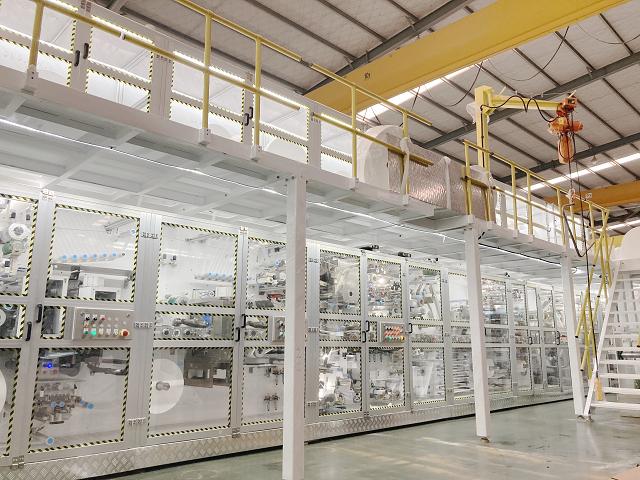
Material properties and roll presentation should be confirmed at each unwind and guiding interface.
Judge Stable Output, Not One Speed Number
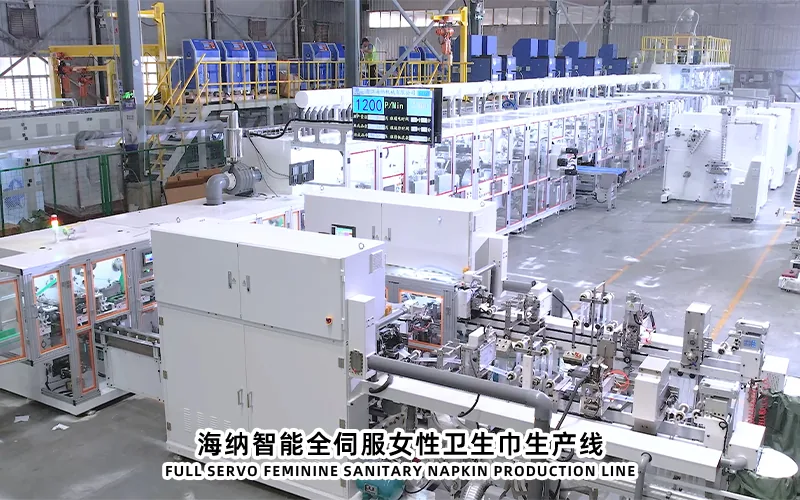
Design speed describes an engineering limit or nominal design point; it does not by itself prove sellable output. Stable working speed depends on product dimensions, material behavior, splice frequency, operator skill, adhesive condition, tooling condition, inspection rules, and downstream availability. Operating speed can vary by shift, while the contractual acceptance value must be tied to a defined product, material lot, test duration, staffing level, and quality criterion. Keep these terms separate in every meeting and document.
Ask for a time-based demonstration rather than a brief peak display. Record planned start time, warm-up, trial start, stops, reasons, restart duration, total input, acceptable output, rejects, and samples taken. Classify lost time so that material defects, machine faults, operator intervention, upstream delay, and downstream blockage are not blended into one unexplained percentage. The result should show whether the line can sustain the agreed condition and recover predictably from routine interruptions.
Stable output also requires balance across stations. Watch accumulation points, web flutter, trim extraction, transfer timing, fold consistency, and discharge spacing. A line that runs smoothly only when an engineer continually adjusts it has not demonstrated normal production readiness. Request a period operated by trained production personnel under the agreed support arrangement, with settings and interventions recorded in a shift-style log.
Compare Controls, Changeovers, and Operators
Controls should make the process understandable, repeatable, and recoverable. Review recipe naming, parameter limits, user permissions, alarm history, trend availability, language options, manual functions, backup procedure, and restore procedure. Confirm that critical settings cannot be changed silently and that a technician can trace the reason for a stop. Ask the supplier to demonstrate a controlled shutdown, restart, and recovery from several representative faults.
For every planned format, obtain a change-parts list and a documented sequence. Distinguish recipe changes from mechanical adjustments and tooling replacement. During a witnessed changeover, record who performs each task, required tools, removed parts, cleaning steps, alignment checks, first-piece inspection, and time from last acceptable product to first acceptable product. The observed result is more useful than an unsupported changeover claim.
Operator requirements belong in the equipment decision. Define the roles needed during material loading, normal running, quality sampling, adhesive handling, clearing, cleaning, and fault recovery. Check access around rolls and service points with the proposed layout. Ergonomic material presentation, clear status information, and disciplined work instructions can be more valuable to stable production than a feature that looks impressive in a quotation.
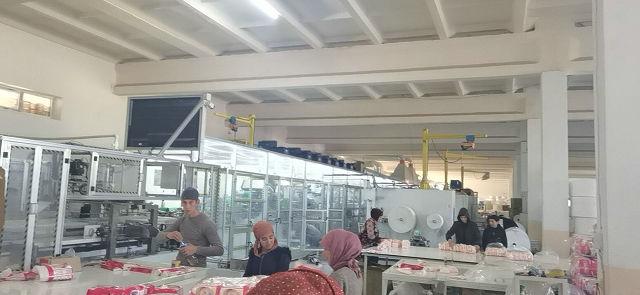
A witnessed recipe change and alarm-recovery exercise reveals how the control system supports routine work.
Build a Decision Scorecard
Score only evidence that answers the common requirement sheet. Set mandatory gates before weighted scoring: product scope confirmed, factory utilities compatible, safety review accepted, trial material available, FAT method agreed, and supplier responsibilities documented. A candidate that misses a mandatory gate should remain open for clarification rather than receive enough points in unrelated categories to hide the risk.
Decision area
Evidence to request
Evaluation question
Risk if unclear
Product definition
Signed format and layer matrix
Does the quoted scope cover every launch product?
Late tooling or module change
Stable output
Timed trial log and sample results
Was acceptable output sustained under defined conditions?
Peak speed mistaken for usable capacity
Changeover
Observed sequence and parts register
Can the plant control format transitions?
Long stops and setup defects
Factory fit
Layout, loads, utilities, access drawing
Can the line be installed and serviced in the site?
Civil rework or restricted maintenance
Support
Training, document, spare, escalation plan
Are responsibilities usable after handover?
Slow recovery and knowledge gaps
Use a documented scoring rule such as fully evidenced, partly evidenced, open, or noncompliant. Weightings should reflect the project: a multi-format contract manufacturer may emphasize changeover control, while a dedicated high-volume plant may emphasize stable product-specific output and maintainability. Keep commercial evaluation separate until technical clarifications are comparable. This stops a lower headline price from masking excluded equipment, unpriced site work, or an untestable acceptance statement.
Procurement evidence register
Controlled finished-product drawings and approved trial material list.
Module list, battery-limit drawing, and option or exclusion schedule.
Utility schedule, footprint, maintenance clearance, and floor-load data.
Format tooling register with recipe, adjustment, and replacement status.
FAT protocol linking each requirement to a witness record.
Training matrix, manuals list, recommended spares, and escalation contacts.
Plan a Product-Specific FAT
The factory acceptance test should be drafted while the specification is negotiated. Build a requirement-to-test matrix that states the test condition, method, duration, sample plan, acceptance rule, evidence, witness, and response to failure. Include identification checks, guarding and interlock demonstrations, manual and automatic functions, utility consumption measurement methods where contractual, recipes, alarms, product quality, sustained running, changeover, documentation, and backup restoration.
Use approved or formally accepted equivalent materials in sufficient quantity for setup, the sustained run, changeover, and repeat testing. Label lots and record unused material. Agree how warm-up and tuning are treated so that the test clock cannot be confused with commissioning activity. If a criterion fails, the record should describe containment, correction, retest scope, and the party who approves closure. Open items need owners and due dates; verbal assurances are not acceptance evidence.
Photographs, videos, measurement sheets, software versions, sample labels, and signed result pages should form one indexed FAT pack. The pack protects both parties because it records what the machine actually demonstrated. It also becomes the baseline for site acceptance, training, and early production troubleshooting rather than leaving the receiving factory to reconstruct settings from memory.
Verify Service and Lifecycle Evidence
Service evaluation should focus on the operating model, not a broad promise of support. Ask who handles installation guidance, commissioning, operator instruction, maintenance instruction, remote diagnosis, software backup, and parts identification. Define the information required before escalation: alarm text, event history, product format, settings, photographs, samples, and actions already attempted. A clear route shortens diagnosis without inventing a guaranteed response time.
Review the preventive-maintenance structure and recommended spare-parts logic. Parts should be classified by wear behavior, failure consequence, sourcing difficulty, and storage need. Confirm naming between the bill of materials, drawings, manuals, and labels. Ask how revisions are communicated and how obsolete components are replaced. HAINA should tie its project support to agreed training, FAT records, and maintainable documentation rather than to unverified claims about lifetime performance.
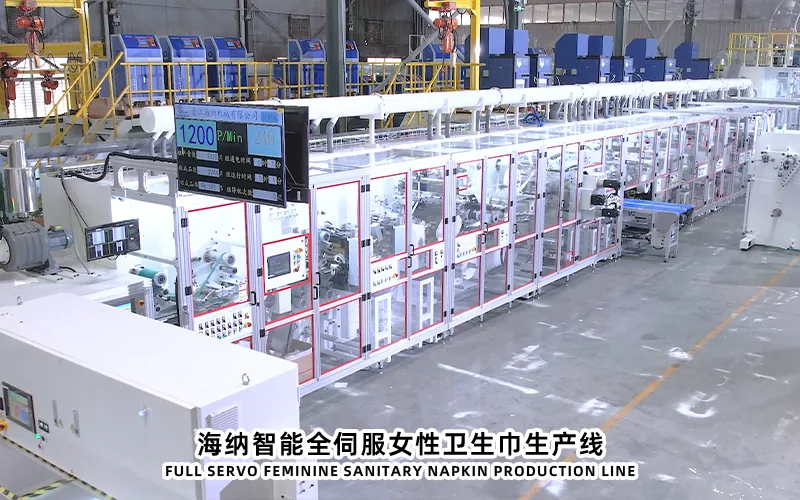
Before final comparison, normalize quotation boundaries. Include tooling, inspection devices, extraction interfaces, adhesive equipment, conveyors, packing connections, freight scope, supervision, commissioning inputs, training, documentation, initial spares, and buyer-provided site work. For a concrete equipment reference during this review, examine the automatic feminine sanitary napkin machine configuration and list which functions belong inside your required battery limits.
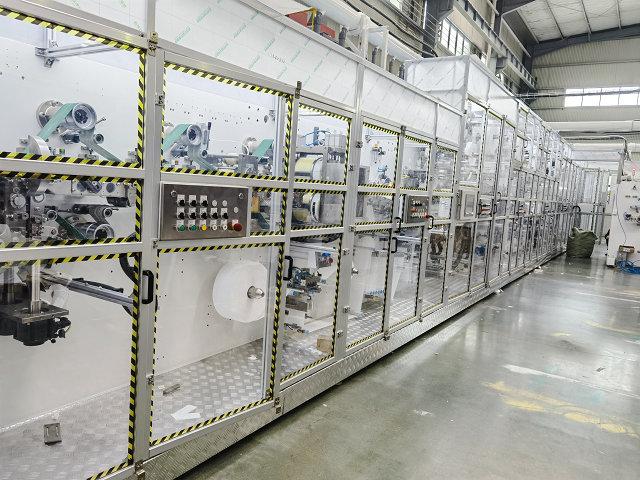
Service access, component identification, and utility connections should be checked on the proposed line arrangement.
Frequently Asked Questions
Does fully automatic mean no operators are required?
No. Automation can coordinate converting and handling functions, but people are still needed for material supply, quality checks, replenishment, cleaning, supervision, maintenance, and abnormal recovery. Confirm each role through an operating responsibility matrix.
Should the highest design speed win the comparison?
No. Compare stable working performance for a defined pad, material set, test period, quality rule, and staffing condition. Design speed, actual operating speed, and contractual acceptance output describe different things and should remain separate.
How many product formats should be tested at FAT?
Test the formats that represent contractual risk. This may include a launch format, a difficult material or geometry combination, and a witnessed changeover. The exact set should follow the approved requirement and acceptance matrix, not a generic count.
What supplier document is most useful before ordering?
No single document is enough. The strongest decision package links the signed product matrix, module boundary, layout and utilities, tooling register, FAT protocol, support scope, and deviation list so open assumptions remain visible.
Conclusion
Choosing a fully automatic sanitary pad machine is an evidence exercise: define the product, fix the automation boundary, qualify materials, distinguish stable output from headline speed, and make acceptance conditions testable. Compare suppliers on the same scope and preserve every clarification in the contract documents. Before approval, hold a joint review with production, quality, maintenance, utilities, safety, and procurement. Then issue a signed requirement-to-FAT matrix and require the shortlisted supplier to demonstrate the agreed launch format, recorded changeover, fault recovery, sample quality, documentation, and open-item closure before the factory releases the purchase decision.