

Is 800-900 ppm a guaranteed output for every pad?
No. It is the archived stable working range. Acceptance must identify the product, materials, individual wrap and test conditions.


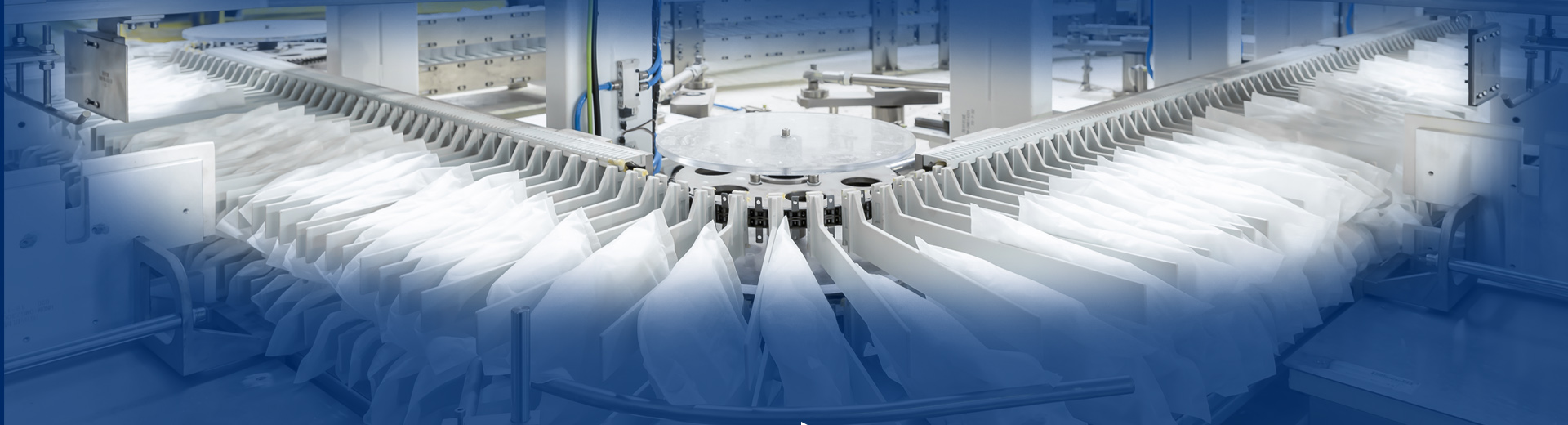
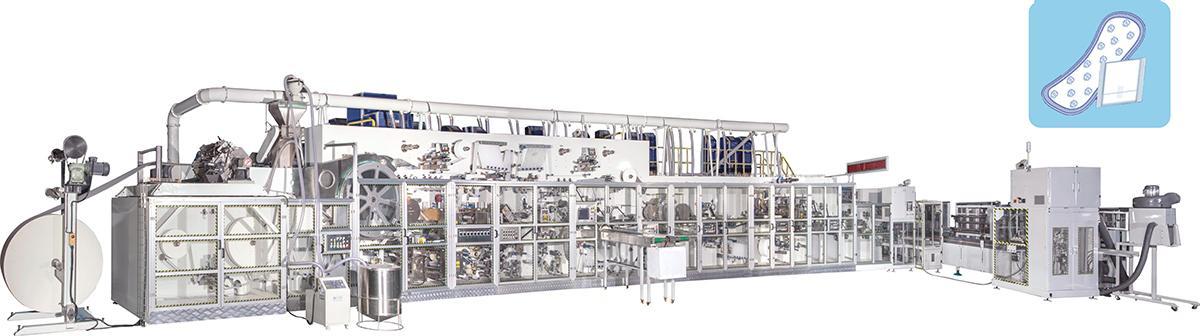
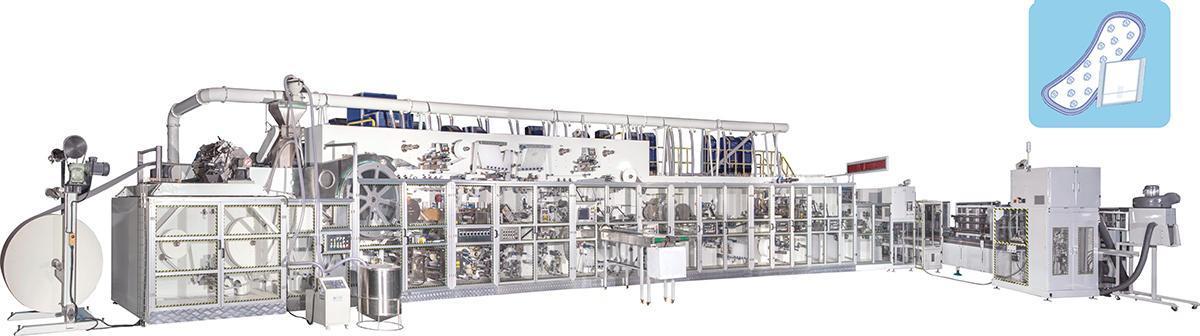
The WSJ1000 can be understood most clearly as a timed material journey. Its archived data records a 1,000 ppm design speed and an 800-900 ppm stable working range, but the production result depends on how thin webs, absorbent components, adhesives and wrapper film meet at successive stations. This process view identifies what the operator should see at each handoff and what the buyer should define before commissioning.
Topsheet, backsheet, release materials and pouch film enter their controlled paths. Roll orientation, width and splice construction must match the line setup.
Fluff pulp and SAP form the core route, while tissue, airlaid paper or SAP paper may be selected according to the signed construction.
ADL nonwoven and hydrophobic nonwoven are listed among the available layers. Their position and width belong on the product drawing.
Construction glue joins the web stack before shaping and cutting. Registration must be checked through acceleration and steady operation.
Back and wing release papers protect the position-glue areas and must remain centered on the selected wing geometry.
Pouch film and easy tape complete the individual package before products move toward the defined stacking or bagging equipment.
Topsheet nonwoven or PPF, ADL nonwoven, tissue, backsheet, hydrophobic nonwoven, release papers and pouch film need roll data and path references.
Fluff pulp and SAP require a defined core recipe. Their feed behavior should be observed together with containment and dust-management conditions.
Construction glue, position glue and easy tape need application settings, placement criteria and visual acceptance samples.
| Handoff | What can drift | Evidence to record |
|---|---|---|
| Unwind to formation | Edge position, tension and splice stability | Tracking marks and stop/restart observations |
| Core to lamination | Core distribution and containment | Opened-pad samples from defined intervals |
| Shape to release paper | Cut phase and wing-paper position | Dimension and registration checks |
| Pad to wrapper | Film print mark, fold and easy-tape position | Retained wrapped samples |
| Wrapper to packing | Orientation, count and recovery after stop | Agreed pack recipe and restart record |
The archived rejection reference is no more than 3%. Before using that value in an acceptance decision, define where rejects are counted and how startup, splice waste and downstream packing losses are classified.
A process walk should include the operator side, drive side and transfer points. The source backups do not specify the drive brand, HMI architecture, tension hardware or web-guiding hardware for ID 611. Confirm each control item on the signed technical schedule. Confirm the installed control components and use the approved recipe to show how each station responds to a normal stop, splice and restart.
No. It is the archived stable working range. Acceptance must identify the product, materials, individual wrap and test conditions.
The source lists fluff pulp, SAP, tissue, airlaid paper and SAP paper, but it does not choose one universal construction. Freeze the route from the buyer's sample.
Take traceable samples after startup, during the agreed stable run, around a splice and after restart so the handoffs can be compared.
Commissioning is complete when the timeline is repeatable, not merely when individual shafts turn. HAINA and the buyer should connect every station to a material input, a recipe value, an inspection method and an owner. That record makes future troubleshooting specific to the WSJ1000 process rather than generic to sanitary napkin equipment.
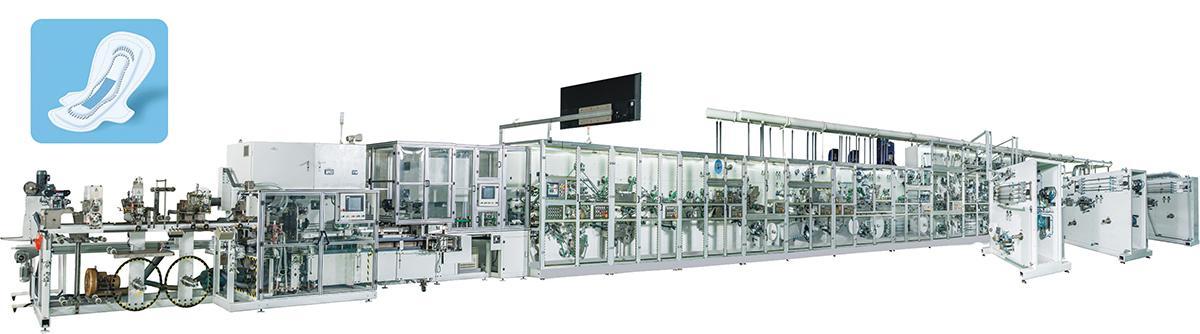
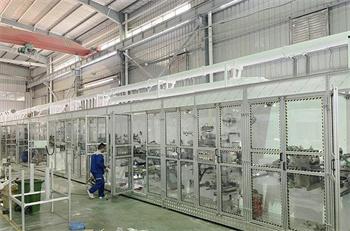
Full Automatic sanitary napkin production line
|
Dimensions(L×W×H8) |
30m*6m*3m |
|
Design Speed: |
1000ppm |
|
Stable Working Speed: |
800-900ppm |
|
Rejection Rate: |
≤3% |
|
Efficiency: |
≥85% |
|
Power Source: |
380V,50HZ |
|
Machine Capacity: |
220KW |
|
Air Pressure: |
0.6-0.8Mpa |
|
Machine Weight: |
55 tons |
Although the sanitary napkin production line has high productivity, the operation of the equipment depends on the effective cooperation of each component. Any damage to the component may cause the equipment to operate abnormally and cause production to stop.
Due to the high cost of equipment safety management and maintenance, some small and medium-sized enterprises often ignore the issue of safety management, and wait until the failure will cause production to stagnate. Lack of daily safety production management, therefore lack of effective operation and fault records, once a fault occurs, the problem cannot be accurately found, and the maintenance time will be increased.
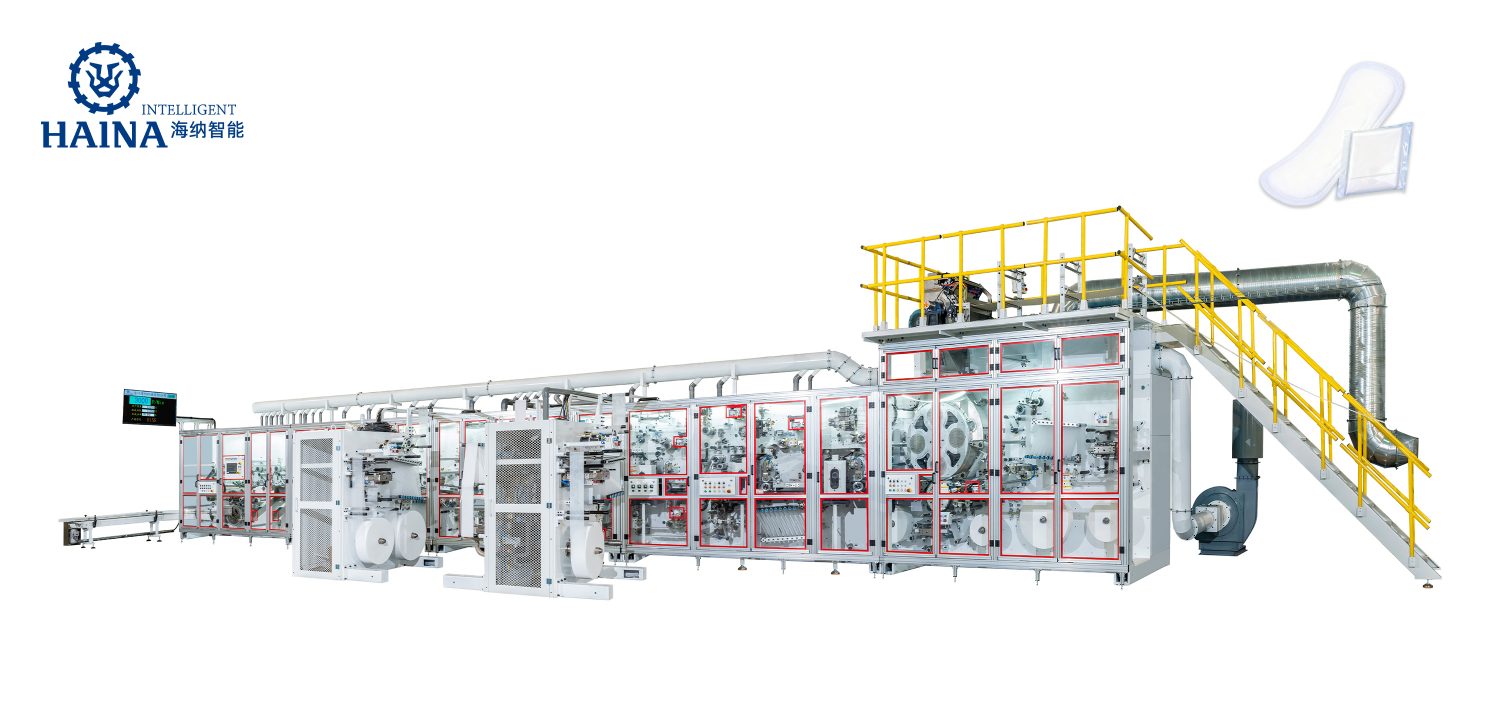
sanitary napkin making machine
| No. | Raw materials |
| 1 | Topsheet(NW or PPF) |
| 2 | Fluff pulp |
| 3 | SAP |
| 4 | ADL N.W. |
| 5 | Tissue |
| 6 | Backsheet |
| 7 | Back release paper |
| 8 | Wings release paper |
| 9 | Pouch film |
| 10 | Easy tape |
| 11 | Air laid paper |
| 12 | SAP Paper |
| 13 | Hydrophobic N.W. |
| 14 | Construction glue |
| 15 | Position glue |
Plan HD3500 pantyliner line delivery through sample approval, scope freeze, engineering, FAT and handover while resolving legacy speed conflicts....
Plan WSJ1000 sanitary pad changeovers with controlled drawings, materials, tooling, recipes, wrapper checks and first-off approval....
Review the HD1200 sanitary pad machine nameplate, process controls, utilities, material inputs and specification questions before purchase....






The support team behind the Feminine Napkin Machine is top-notch,They provided excellent training and assistance when we needed itLaura M 2024-05-31
The Feminine Napkin Machine has helped us streamline our manufacturing process and reduce costs. It's a fantastic investment for any companySamantha P 2024-05-31
The quality of the feminine napkins produced by this Feminine Napkin Machine is unmatched. Our customers have given us great feedback since we made the switchEmily T 2024-05-31
The Feminine Napkin Machine is a game-changer for our business. It's efficient, reliable, and produces high-quality products consistentlyRachel W 2024-05-31