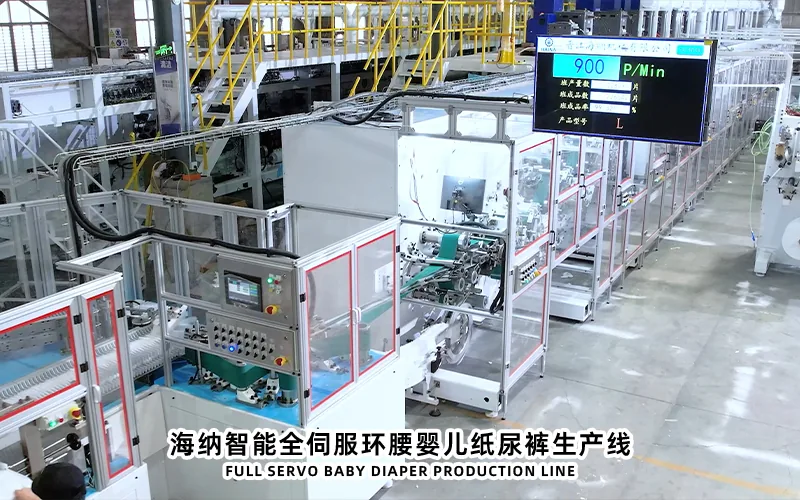
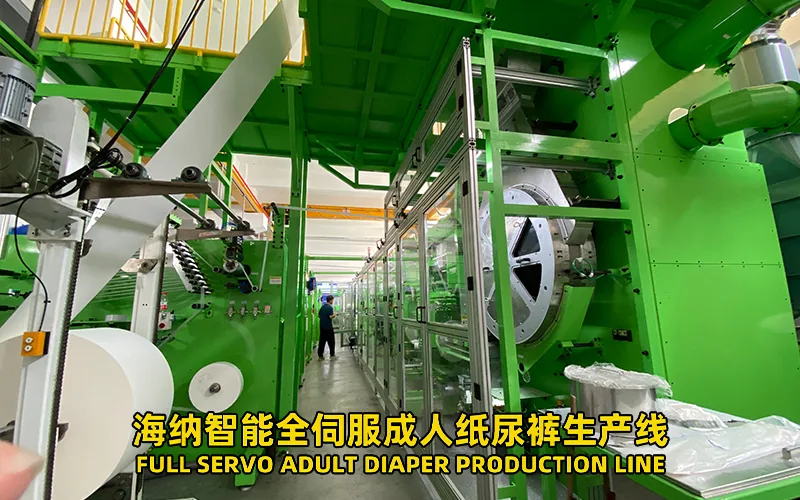
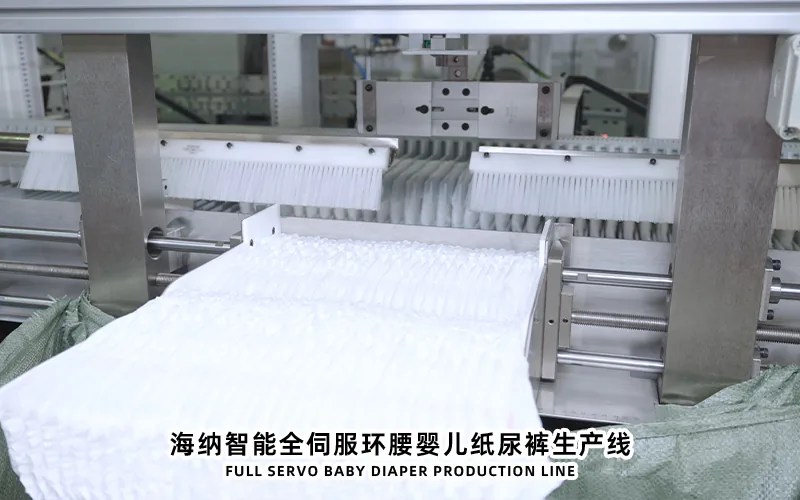
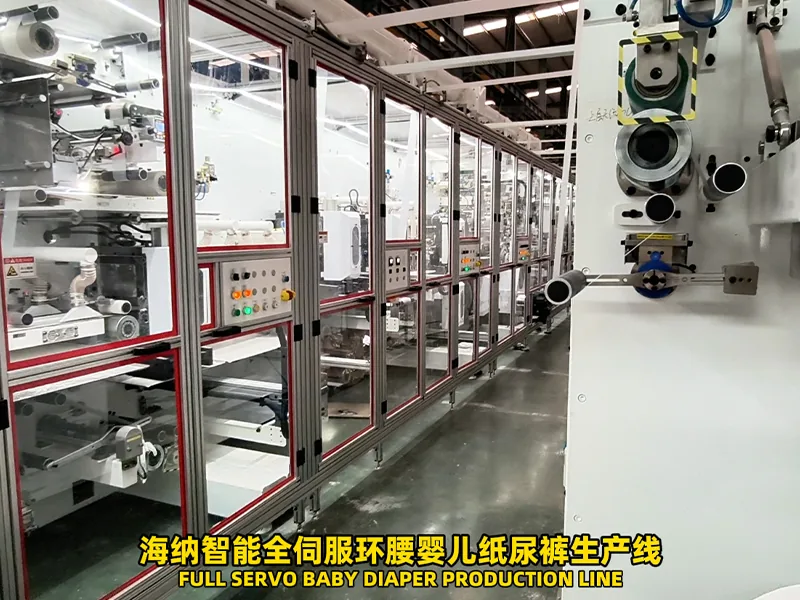
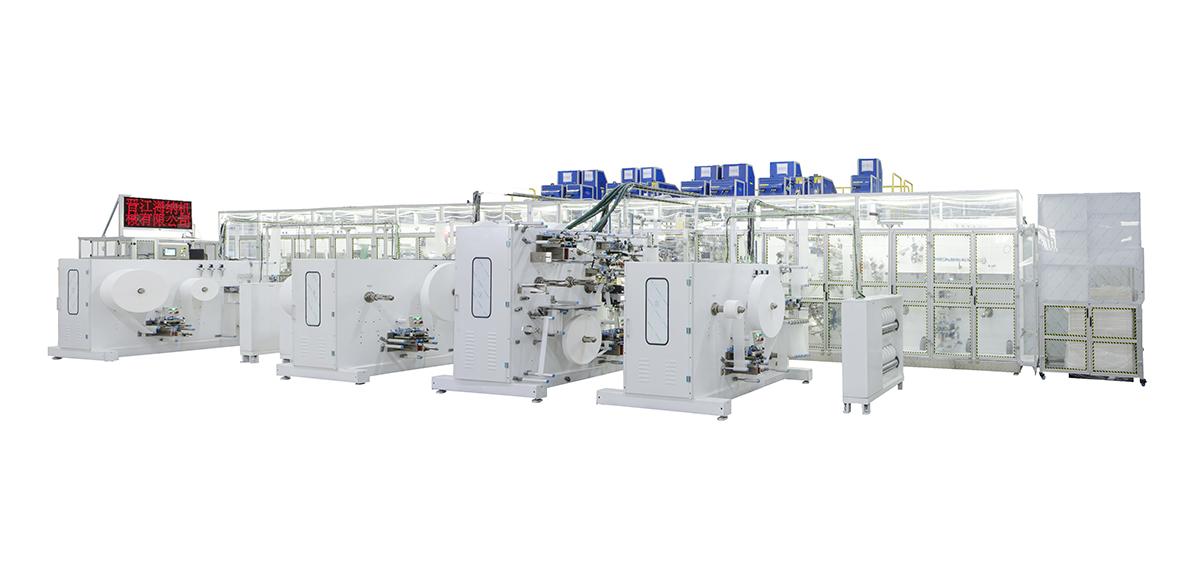
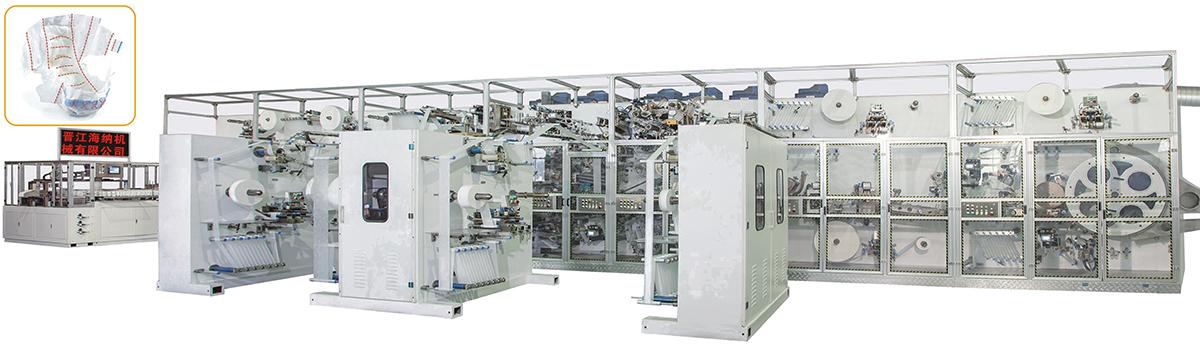
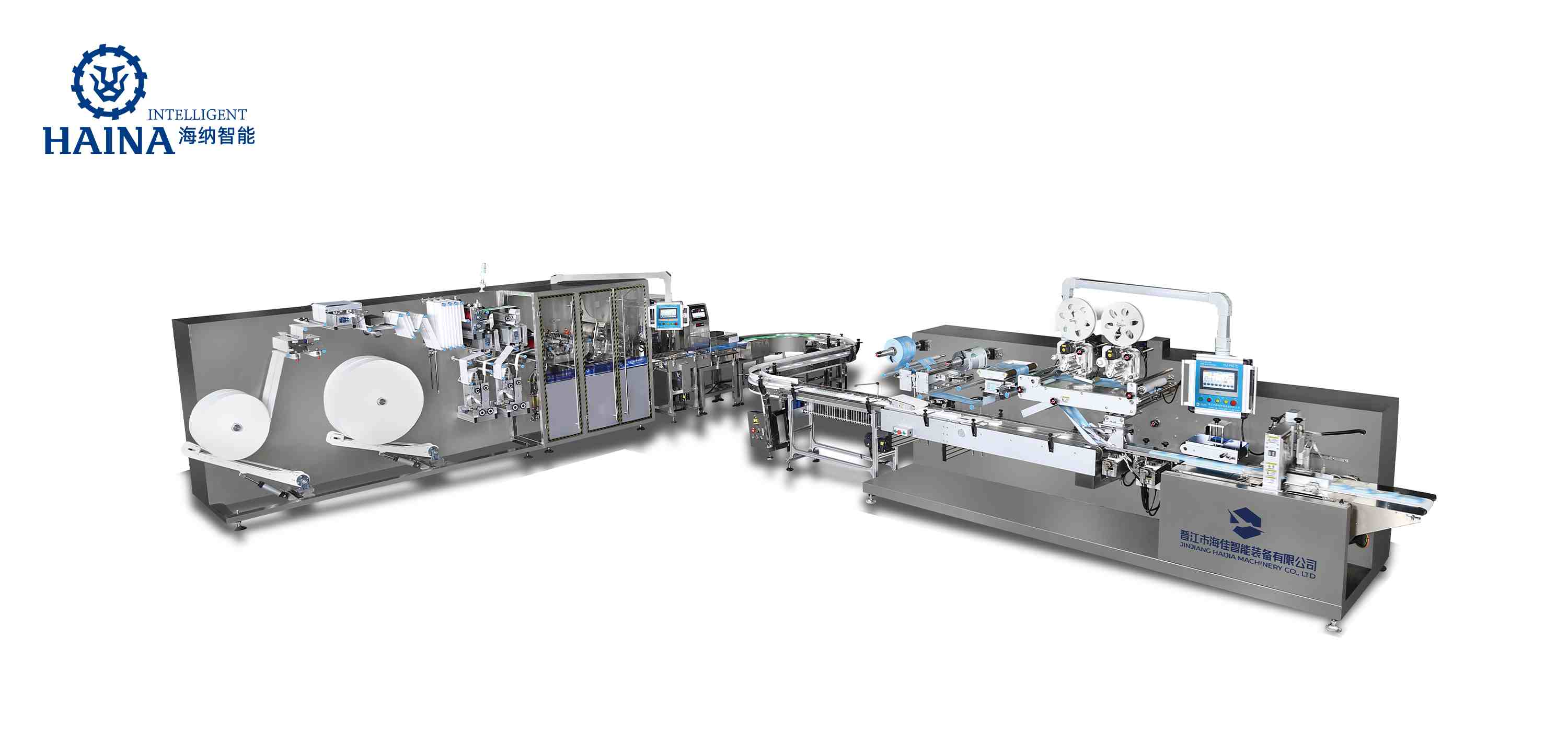
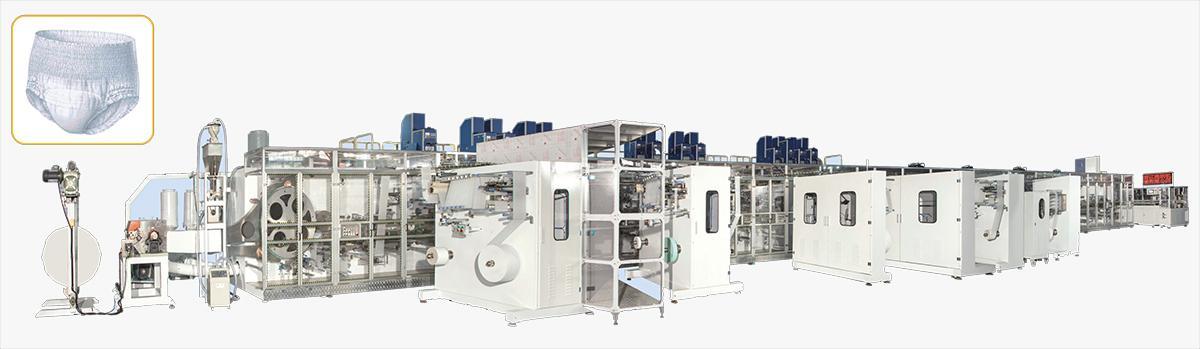
Choose a fully automatic infant diaper machine only after verifying what fully automatic means for the proposed line. Define the baby diaper sizes, construction, raw materials, packaging boundary, stable sellable output, changeover plan, and factory capability. Then confirm automatic splicing, web guiding, tension, dosing, registration, inspection, rejection, counting, stacking, and transfer functions one by one. The preferred machine should produce representative materials within agreed quality limits, recover predictably from stops, provide safe maintenance access, and arrive with the drawings, software backups, training, spares, and support needed for sustained operation.
Translate Fully Automatic into Verifiable Functions
Automation should be described as a list of tasks and control responses. Ask how rolls are loaded and spliced, how webs are guided, how tension is regulated, how the absorbent core is formed and dosed, how elastic and adhesive are applied, how registered parts are positioned, how defects are detected, and how products are counted and transferred. Identify every point where operators touch material or make a decision.
Some tasks can be automatic during steady production but manual during setup or recovery. For example, an automatic splice may still require roll preparation. Recipe selection may load settings, yet tooling and web paths may need physical change. Document normal, changeover, fault, and maintenance modes separately.
Ask the supplier to demonstrate the claimed functions on a relevant line. A video or component list does not prove coordinated behavior. Observe alarm messages, interlocks, sequence control, material changes, and recovery after a deliberate pause.
The automation boundary should be visible from material unwinding to product discharge.
Define the Product and Material Operating Window
Prepare drawings and samples for each confirmed infant diaper size. Specify the absorbent core, pulp and SAP approach, topsheet, backsheet, acquisition layer, standing cuffs, leg elastic, waist system, frontal tape, side tapes, printing or registration, folding, and package count. Mark dimensions and quality characteristics that influence machine design.
Raw materials need operating ranges, not only brand names. Record width, roll diameter, core, basis weight where relevant, thickness, stretch, surface, splice, storage, and variation. Ask which properties are critical to web tension, bonding, cutting, elastic application, and registration. Use representative production material for trials.
Product evidence package
Controlled drawings, samples, size matrix, and package requirements
Material specifications and approved or candidate supplier list
Critical quality characteristics and inspection methods
Planned product mix, changeover frequency, and future variants
Trial quantities, acceptance limits, and retained-sample plan
Verify Stable Output and Line Balance
Separate design speed from stable working speed and contractual acceptance. For each figure, identify the product, materials, test duration, quality limits, stop recording, and downstream condition. Calculate sellable output after rejects and production interruptions. The slowest constrained process, not the fastest drive, sets useful line capacity.
Review the connection to stacking and packaging. A converting line that repeatedly waits for a bagger cannot deliver its nominal output. Ask about accumulation, transfer control, product protection, and response to downstream blockage. Material logistics and roll preparation can also limit a high-speed line.
Observe recovery. Controlled output after a splice, minor stop, material break, alarm, or product change reveals more about factory performance than a short uninterrupted demonstration. Record adjustments and first-good-product time.
Stable production depends on material control, tooling, sensing, and repeatable settings.
Inspect the Quality Control Chain
Map each finished-product characteristic to a process unit, setting, sensor, inspection, and response. Examples include core position and mass, material alignment, elastic placement, adhesive pattern, cut shape, fastening location, seal integrity, fold, and contamination. Clarify which checks happen online and which require offline sampling.
Automatic inspection must have defined detection limits and rejection logic. Ask how false rejects, missed defects, sensor contamination, recipe changes, and rejected-product tracking are handled. Verify that the physical reject mechanism removes the intended piece and that operators can reconcile counts.
Quality records need context. Save product recipe, material lot, operating condition, inspection result, reject reason, and adjustments during FAT and ramp-up. This information helps distinguish machine drift from material or setup causes.
Measure Changeover, Cleaning, and Fault Recovery
For every product change, list replaced tooling, web widths, guides, elastic settings, adhesive patterns, recipes, sensors, fold settings, count, and packaging interface. Measure stop-to-stop time and first-good-product time separately. Record people, tools, adjustments, and startup waste. A changeover claim is meaningful only for a named pair of products.
Cleaning access affects both quality and uptime. Review dust, fiber, adhesive, cutters, sensors, belts, and reject paths. Determine which tasks can be done during planned stops and which require deeper isolation. Confirm safe access and the cleaning materials permitted for components.
Fault recovery should guide the operator from symptom to zone and approved action. Review alarm history, diagnostic screens, drawings, permissions, and escalation. Random part replacement is expensive on a synchronized servo line; maintenance needs controlled backups and test procedures.
Product flexibility should be measured through actual parts, settings, time, and first-good output.
Check Factory and Lifecycle Fit
A fully automatic line requires more than floor area. Verify safe material routes, jumbo-roll lifting, maintenance clearances, electrical supply, grounding, compressed air, dust extraction, temperature and humidity, adhesive handling, network, laboratory support, spare storage, and downstream logistics. Include operators and maintenance staff in the layout review.
Request final mechanical and electrical drawings, utility data, manuals, lubrication schedule, wear limits, spare-parts register, component list, program backups, parameter files, training plan, remote-support process, and field-service terms. Clarify who updates documents after a project change.
HAINA can present its fully automatic infant diaper machine options against a buyer's requirement sheet. Buyers should verify the exact controls, modules, and service deliverables included in the project proposal.
Use a Selection Scorecard Before Contract Award
Score area
Strong evidence
Weak evidence
Buyer action
Automatic function scope
Task map, control description, and live demonstration
Fully automatic label only
Attach function list to contract
Product and material fit
Drawings, specifications, samples, and relevant trial
Generic product photos
Freeze trial inputs and limits
Stable sellable output
Duration, stop, waste, and quality records
Brief peak-speed display
Define FAT calculation
Changeover and recovery
Observed tasks, time, tools, and first-good result
Unqualified quick-change claim
Test a named scenario
Lifecycle readiness
Documents, backups, spares, training, and escalation
General service promise
Specify handover deliverables
Score uncertainty separately. A function can be technically attractive but still carry implementation risk if it has not been tested with the buyer's material. Convert high-impact unknowns into pre-contract trials, design reviews, or explicit acceptance actions.
Supplier capacity should be judged beyond the demonstration line. Review how engineering changes are approved, how purchased parts are inspected, how software versions are controlled, and how test deviations are closed. Ask who will support the project after the sales team hands it to production and after commissioning personnel leave the buyer's site.
Make the scorecard cross-functional. Product development should own finished-product requirements, operations should assess staffing and material flow, maintenance should evaluate access and recovery, quality should define sampling and release, and procurement should close scope and commercial risk. A balanced review prevents one attractive specification from hiding a weak factory fit.
A controlled factory trial connects speed claims with quality, stops, waste, and recovery.
Before contract award, hold a clarification meeting using the scorecard as the agenda. Ask the supplier to classify each point as proven standard capability, project customization, buyer responsibility, or pending trial. Record deviations in one controlled list. This meeting reduces the chance that commercial language and engineering language assign different meanings to the same automatic function.
Use the same classification at FAT. Proven functions should be demonstrated, custom items should be traced to approved changes, buyer responsibilities should be ready for site work, and pending trials should have dates and acceptance owners. This keeps unresolved scope from disappearing inside a general pass statement.
Write FAT Around Real Operating Events
Verify machine identity, scope, components, guards, documents, and approved changes.
Run representative products and materials through the defined warm-up process.
Measure stable sellable output, quality, rejects, stops, and waste.
Test roll changes, splicing, alarms, rejection, and downstream transfer.
Observe one agreed changeover or recovery scenario.
Review maintenance access, backups, spares, and role-based training content.
Record deviations and close shipment-blocking items before release.
The protocol should name test duration, sampling frequency, instruments, calculation rules, allowed adjustments, and acceptance authority. Keep raw records rather than only a pass certificate. They become the baseline for installation and site ramp-up.
Frequently Asked Questions
Does full servo mean the whole infant diaper line is fully automatic?
No. Servo architecture describes motion control, while automation also includes material handling, inspection, rejection, transfer, packing, and operating tasks.
How many diaper sizes should be included initially?
Include sizes supported by a real product and sales plan. Confirm tooling, settings, trial scope, and changeover for each one.
Can supplier materials be used for FAT?
They can support early testing, but final acceptance should use representative buyer-approved materials or clearly document the difference and follow-up trial.
What proves a machine is easy to maintain?
Observe access, isolation, task time, tools, diagnostics, documentation, spare identification, and a technician performing representative work.
Conclusion
Choosing a fully automatic infant diaper machine requires verification beyond a catalog label. Define the product and material window, map automatic tasks, test stable sellable output, inspect the quality chain, and measure changeover and recovery. Confirm the factory can support the controls and maintenance demands. Finally, put the function list, documents, training, spares, and event-based FAT into the purchase agreement. This creates a line selection that can be reproduced during commissioning rather than relying on assumptions.