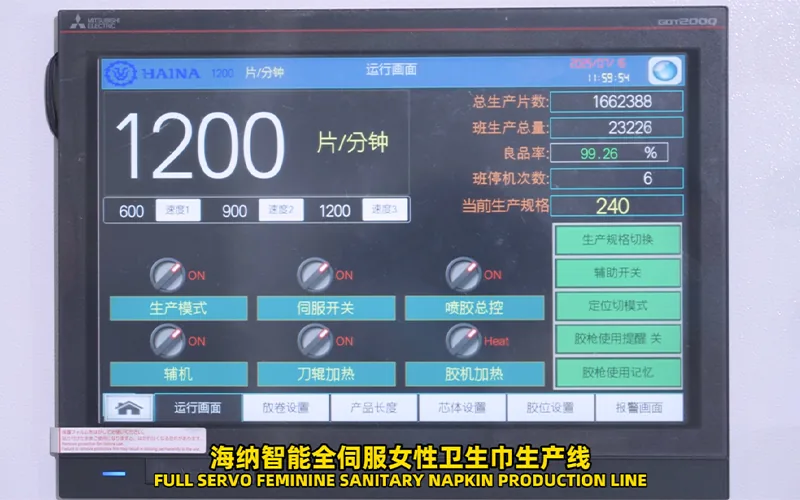
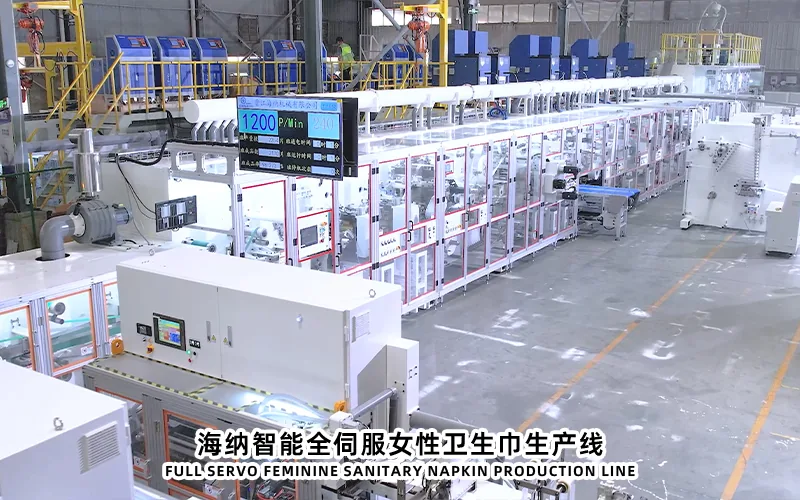
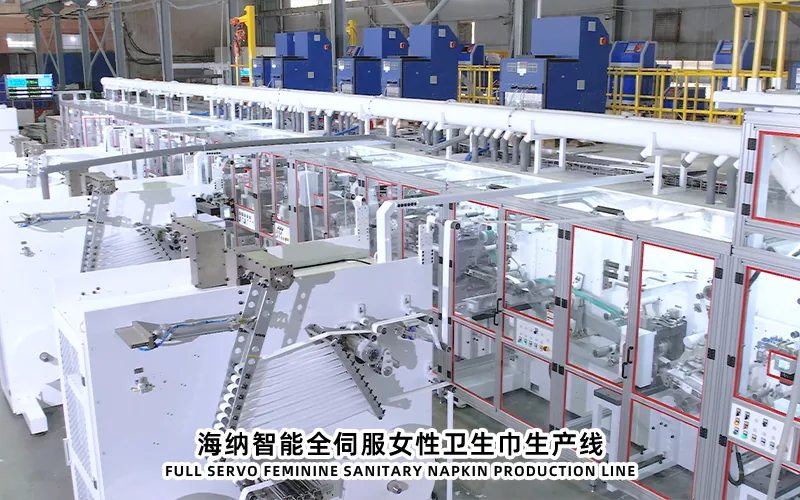
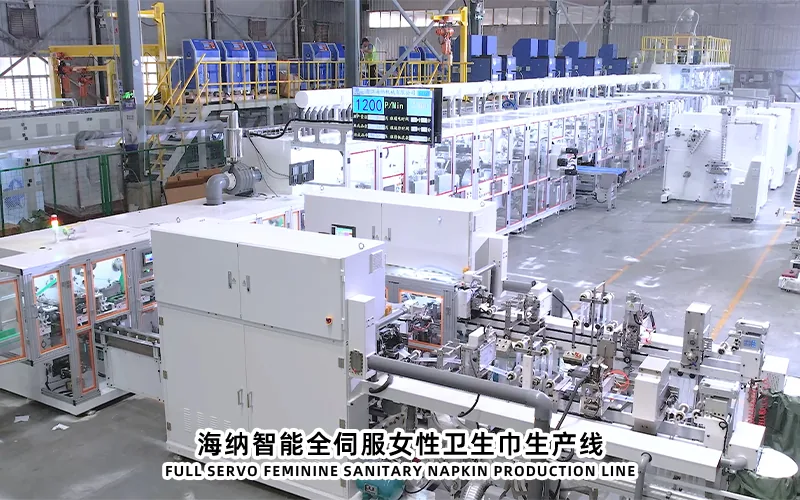
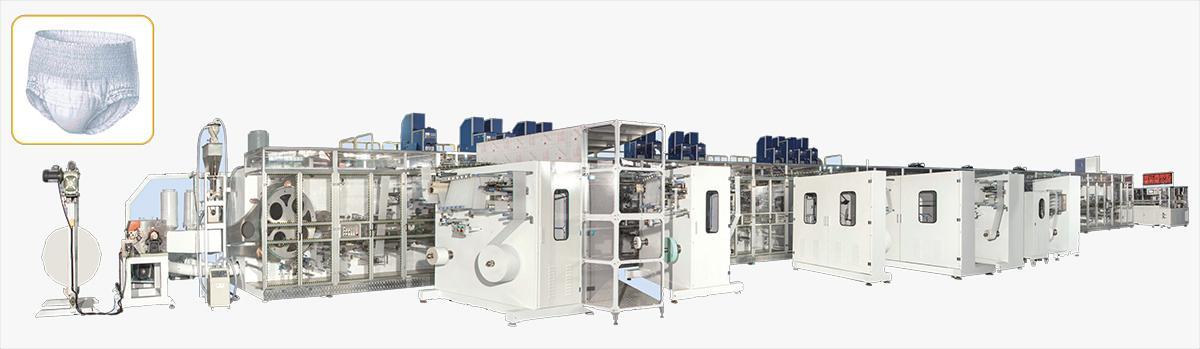
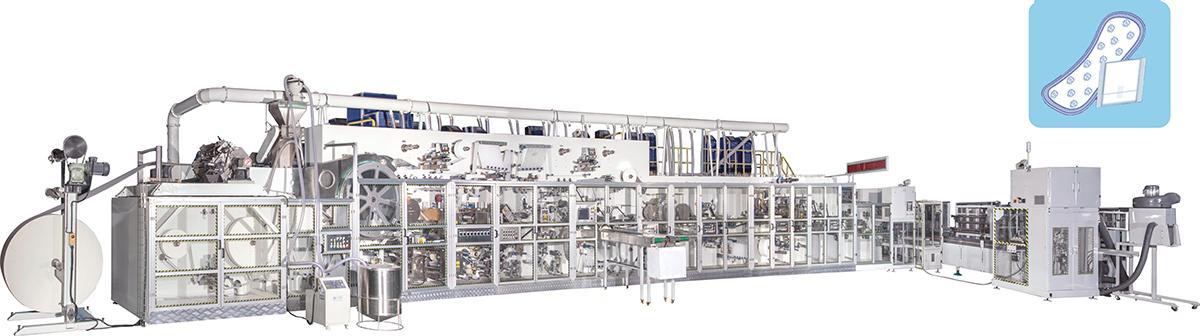
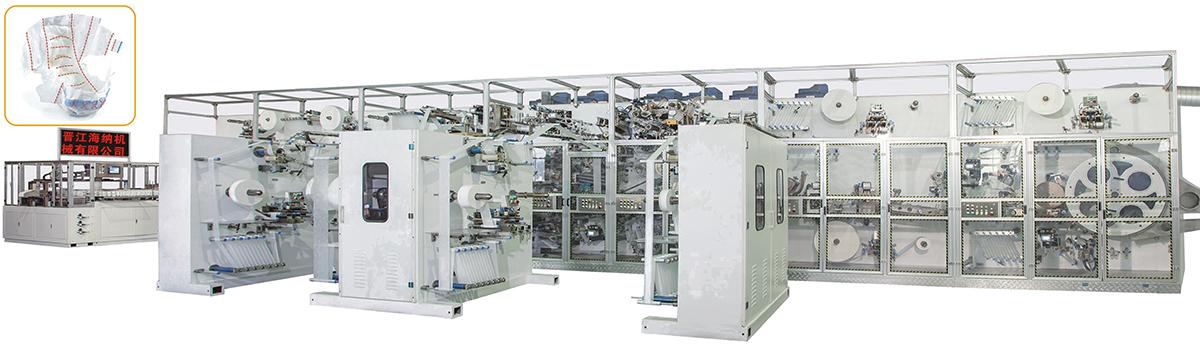
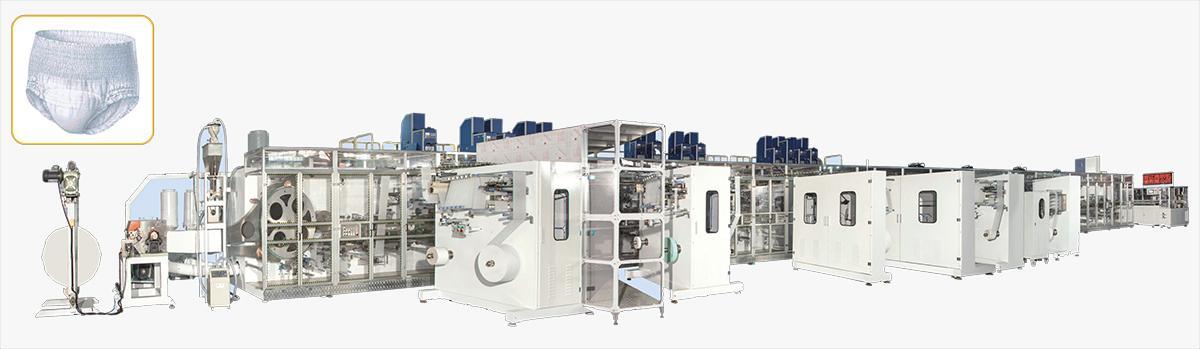
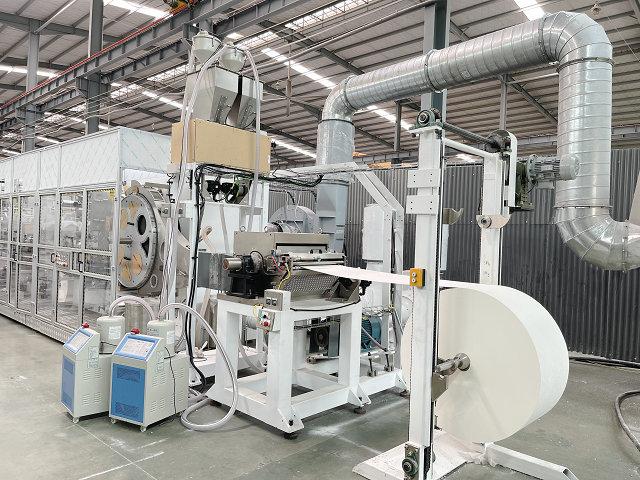
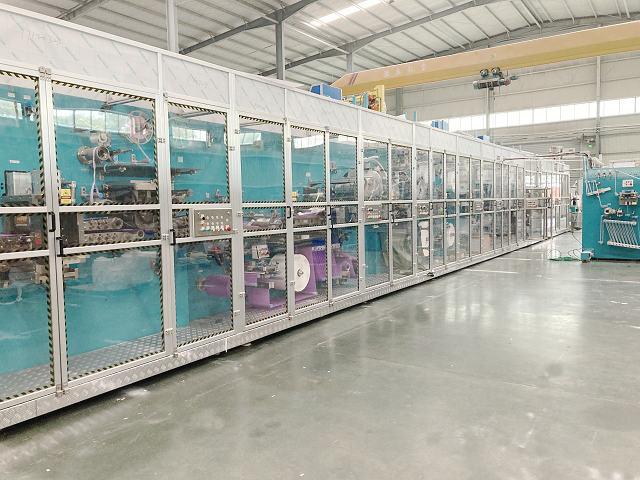
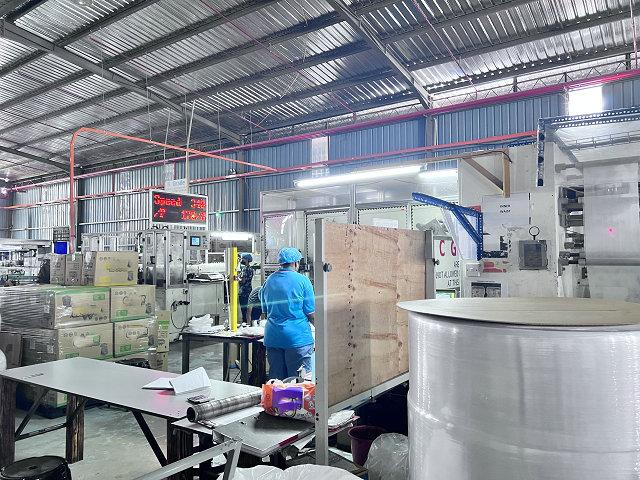
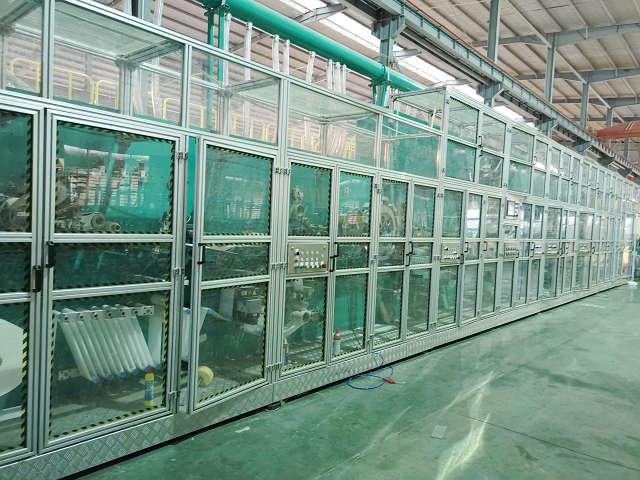
Care for a fully automatic sanitary pad machine must preserve coordinated motion, material control, process settings, safety functions, and product hygiene. The maintenance team should isolate energy, clean by zone, inspect drives and web paths, verify adhesive and thermal equipment, test sensors and rejects, protect parameter backups, and release the line through a documented trial. Automation does not eliminate maintenance; it makes small timing, signal, and setup changes capable of affecting several downstream stations. Use the delivered machine documentation and actual condition history to set intervals, and distinguish a successful component repair from proven pad conformity under the approved product recipe.
Care Strategy for a Fully Automatic Sanitary Pad Machine
A fully automatic line links unwinding, absorbent-core processing, layer placement, adhesive or bonding operations, sealing or embossing, shaping, folding, wrapping, inspection, rejection, and transfer. A condition change at one station can be carried forward before the finished product reveals it. Maintenance therefore needs a system view: understand the material and control dependency, find where a deviation begins, and confirm every downstream function affected by the intervention.
Create an asset hierarchy that matches the delivered configuration. Under each functional station, list mechanical assemblies, drives, instruments, sensors, valves, vacuum elements, heaters, adhesive components, protective devices, and software or recipe dependencies. Link manuals, drawings, spare identification, inspection points, and work history to that hierarchy. HAINA can review equipment-specific care requirements and documentation scope with the buyer, while the receiving factory controls local permissions, safety procedures, calibration policy, and maintenance execution.
Integrated care begins by mapping every station and its upstream and downstream dependencies.
Protect the Mechanical and Control Baseline
The baseline is the verified state from which condition changes can be judged. It includes alignment references, tension behavior, phase relationships, sensor positions, drive parameters, temperature response, vacuum behavior, adhesive pattern, guarding condition, approved recipes, and representative conforming product samples. Capture the baseline during commissioning and after accepted major changes. Without it, technicians may normalize gradual drift or copy settings that happened to keep one material lot running.
Mark critical mechanical references where permitted, but do not treat paint marks as proof of torque or alignment. Record measurement method and instrument status. For controls, retain backed-up versions with machine identity, date, software or firmware context, author, approval, and checksum or other file-control method where available. Keep a readable change log that explains why a value changed and which product formats were verified.
Protect physical and digital baselines from casual adjustment. Operators need defined controls for normal setup, but engineering-level changes should require authorization and evidence. If a setting repeatedly needs compensation, investigate wear, contamination, material variation, looseness, sensor drift, or an incorrect nominal reference. A growing offset is condition information, not simply an operator preference.
Use Condition Routes Across Coordinated Stations
Build routes that follow the conversion sequence and can be performed safely. Shift routes can capture alarm frequency, tracking stability, unusual sound, odor, temperature indication, adhesive pattern, dust accumulation, cut appearance, fold quality, transfer behavior, and reject events. Planned isolated routes add access to bearings, couplings, belts, rollers, guides, vacuum passages, nozzles, cutters, anvils, fasteners, cables, air lines, and guard hardware.
Condition route
Key observations
Cross-station risk
Escalation evidence
Material transport
Roll seating, tension, edge position, roller and belt condition
Layer displacement carried through bonding and cutting
Web-position trend and marked sample sequence
Core handling
Deposit level, vacuum, transfer timing, containment
Core variation affects shape, sealing, and inspection
Zone photos and staged product samples
Bond and seal
Delivery pattern, surface condition, temperature response, compression
Weak joining may appear only after folding or handling
Settings plus retained bond samples
Cut and fold
Blade or anvil condition, phase, looseness, crease and transfer
Routes should ask for a decision, not only a check mark. Define normal, monitor, plan work, and stop or escalate states. Where practical, trend objective readings with the same location and method. Where observation is qualitative, use reference images and specific vocabulary. "Noisy" is less useful than identifying the station, operating state, rhythm, direction, product format, and whether the sound changes with speed or load.
Condition routes should trace a deviation from its first station through every affected operation.
Maintain Automation and Detection Integrity
Automation maintenance starts with physical condition. Inspect enclosure seals, cooling or ventilation paths, connectors, cable support, grounding or bonding provisions, encoder couplings, sensor mounts, valve manifolds, air preparation, and actuator movement according to the applicable documentation. Keep cabinets closed during dusty work and use suitable cleaning practices. A control fault may be caused by an intermittent cable or contaminated sensor rather than the controller named in the alarm.
Use alarm history as a timeline, not a parts list. Record the first alarm and machine state before resets create a cascade of secondary messages. Correlate it with material splices, format changes, maintenance work, utility changes, and quality samples. For intermittent events, preserve timestamps and do not bypass protective logic to make the symptom disappear. Any temporary diagnostic override requires formal control, restricted access, clear indication, and removal verification.
Test safety and quality-related functions after affected work. For detection and reject, prove the complete chain from controlled challenge through signal processing, product tracking, physical ejection, and segregation. For interlocks and protective devices, use the approved validation method and competent personnel. Never infer successful operation from an interface icon alone. Record test conditions because timing and geometry may differ between pad formats.
Calibration or verification status should cover instruments that influence accepted output. Temperature sensing, tension measurement, pressure indication, dimensional tools, timing references, and test equipment may all matter depending on configuration. If a device is found outside its allowed condition, assess product made since the last valid verification rather than merely adjusting the device and closing the work order.
Govern Recipes, Backups, and Changes
Recipes should identify product format, approved materials, version, effective date, owner, and linked acceptance evidence. Limit editable ranges according to role. Before replacing a controller, drive, operator panel, or smart sensor, confirm backup completeness and restoration method. A backup is only useful when it can be associated with the correct machine and tested or otherwise verified through a controlled procedure.
Classify changes by risk. A like-for-like component replacement may still require parameter restoration and functional testing. A different sensor, drive, adhesive component, motor, or software revision may affect timing, response, electrical characteristics, spare strategy, and documentation. Changes to material width, surface, thickness, stiffness, friction, or registration marking can demand trials even when no machine hardware changes. Keep engineering review, implementation, verification, and release as distinct steps.
Recipe and backup governance prevents untraceable settings from becoming the new normal.
When evaluating automatic sanitary napkin manufacturing equipment, ask the supplier to demonstrate backup scope, user access levels, alarm history, recipe control, component identification, and restoration after a representative replacement. Capture the demonstration in the FAT plan instead of accepting a general statement that the machine is automatic.
Plan Shutdown Work as One Integrated Event
A planned shutdown should have a frozen scope, isolation map, parts confirmation, drawings, tools, lifting or access needs, cleaning plan, assigned competencies, inspection hold points, and restart sequence. Coordinate work that shares guarding, web paths, utilities, or control cabinets. Uncoordinated teams can recontaminate cleaned zones, disturb completed alignment, or energize equipment while another task remains open.
Use hold points after disassembly, before closing inaccessible areas, after alignment or calibration, and before energization. Record unexpected findings with a disposition rather than quietly expanding the job. If a discovered condition cannot be repaired within the outage, an authorized risk decision should define whether operation is prohibited, restricted under a temporary control, or allowed pending planned work. Production pressure is not an engineering disposition.
Before release, reconcile removed and installed parts, tools, fasteners, software versions, settings, open defects, and work permits. Inspect material paths for contamination and loose items. Restore guards and protective devices, then remove isolations through the site's authorized process. Communicate which systems were touched so the startup team knows which functions and product attributes require additional attention.
Prove Care Through Acceptance Evidence
Close automatic-line maintenance with a dependency test that starts at the device touched and follows every linked signal or process. A replaced encoder can affect phase and product tracking; a restored drive can affect tension and transfer; work on a detector can affect reject timing; service to a heater can affect adhesive delivery and bond response. List those dependencies before startup, then test them in increasing order of consequence. This prevents an apparently successful local repair from leaving a downstream automation gap.
Use an electronic-care release record with the intervention boundary, restored hardware and software identities, backup version, signal checks, alarm result, challenged sequence, recipe, material lots, and sample references. Controls personnel sign version and communication evidence, the line leader signs coordinated operation, and quality signs only the product characteristics and segregation decision within its authority. Keep startup output quarantined until the complete chain passes, and repeat a warm-state or sustained-run check where timing, temperature, or feedback can drift.
Care is accepted only when integrated machine functions produce conforming trial output.
Track maintenance quality with recurrence, overdue risk tasks, repeat adjustments, unresolved temporary controls, calibration findings, startup losses by cause, and work-order completeness. Do not chase a single percentage without context. A low count of recorded faults can indicate good condition or weak reporting. Review the underlying events and samples with the people who operate and maintain the line.
Frequently Asked Questions
Why does full automation increase the need for change control?
Coordinated stations depend on shared timing, recipes, sensors, and tracking logic. A small unrecorded adjustment can alter several later operations, so access, backups, version history, and format-specific verification become central maintenance controls.
Should all preventive tasks follow the same interval?
No. Use component instructions, duty, contamination, measured condition, failure consequence, and history. Shift observations, planned cleaning, calibration, measured inspections, replacements, and shutdown work should have distinct triggers and evidence.
What should happen after a controller or drive replacement?
Confirm hardware identity and configuration, restore the approved version, check communications and direction, verify affected protective and process functions, run a controlled product trial, and document the resulting settings and acceptance evidence.
How can recurring adjustments be reduced?
Trend the adjustment by station, product, material lot, operating state, and technician. Check mechanical wear, looseness, contamination, sensor mounting, material variability, and baseline accuracy. Treat repeated compensation as a diagnostic clue.
Conclusion
Maintenance and care for a fully automatic sanitary pad machine should preserve an integrated mechanical, process, and control baseline, not merely keep individual components energized. The factory's next action is to select one product recipe and conduct a traced condition route followed by a simulated maintenance recovery. Ask HAINA to clarify machine-specific backups, test points, spares, and FAT evidence, then require signed proof across assembly, function, material operation, and product conformity before accepting the care system.