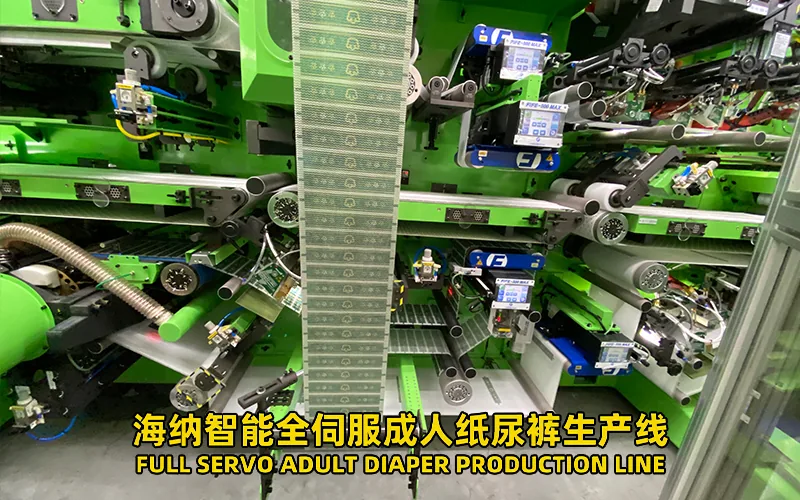
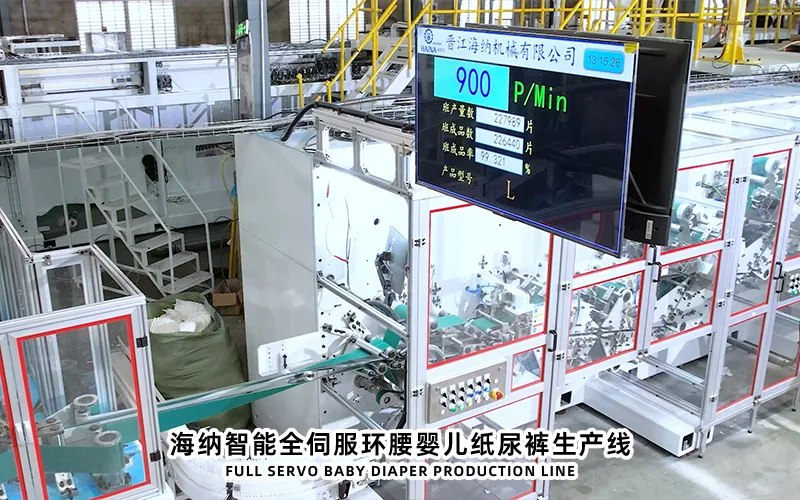
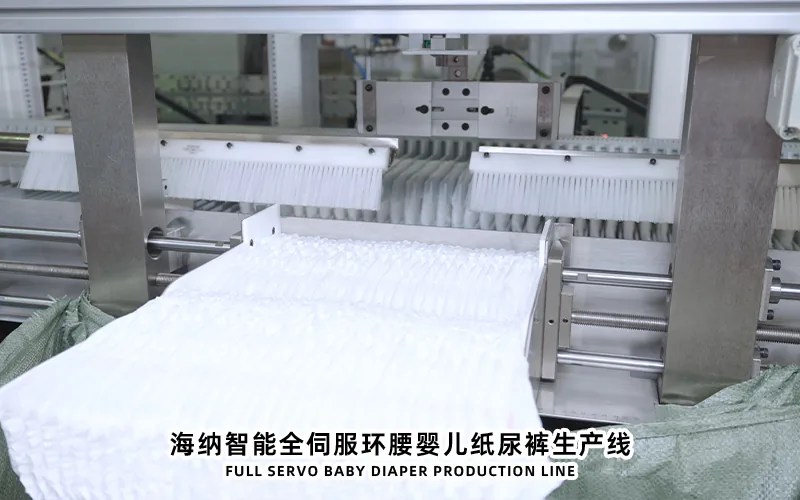
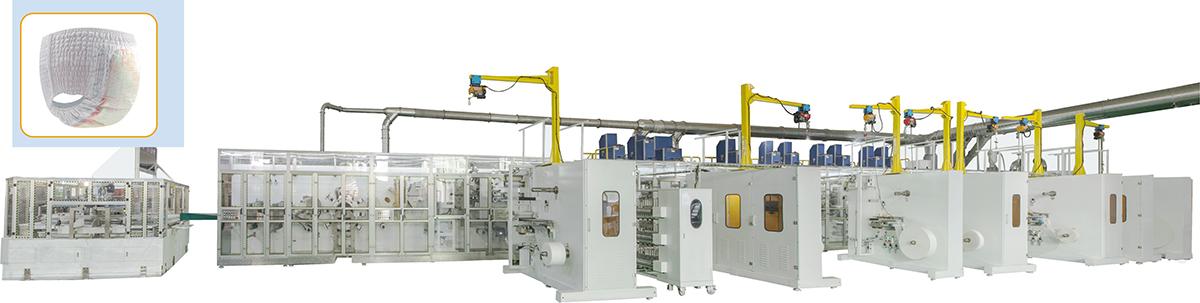
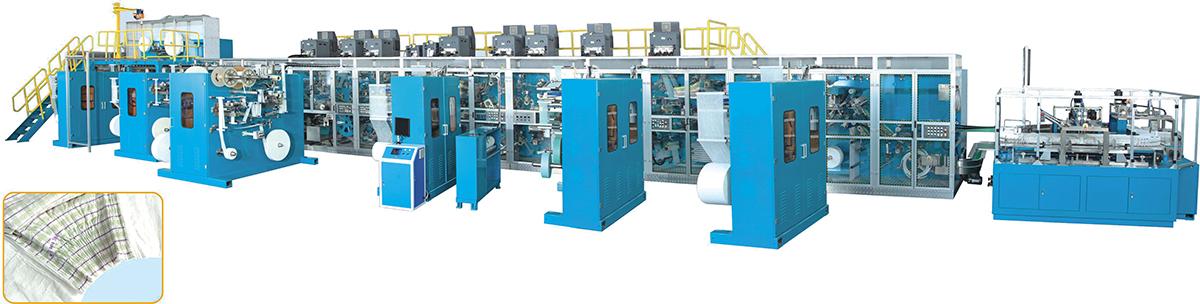
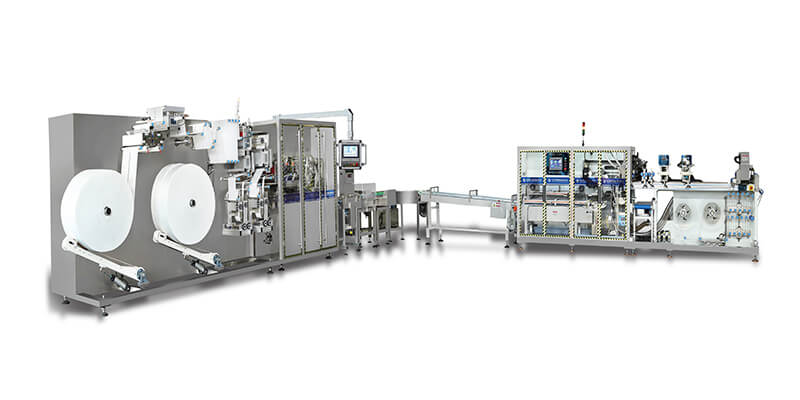
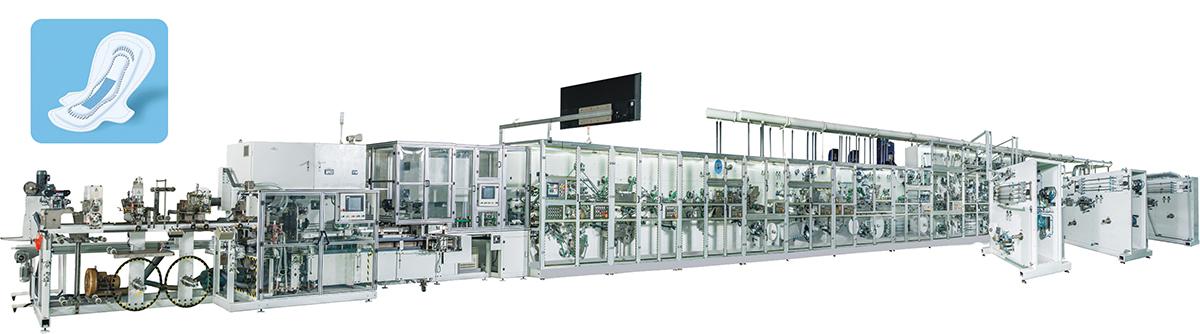
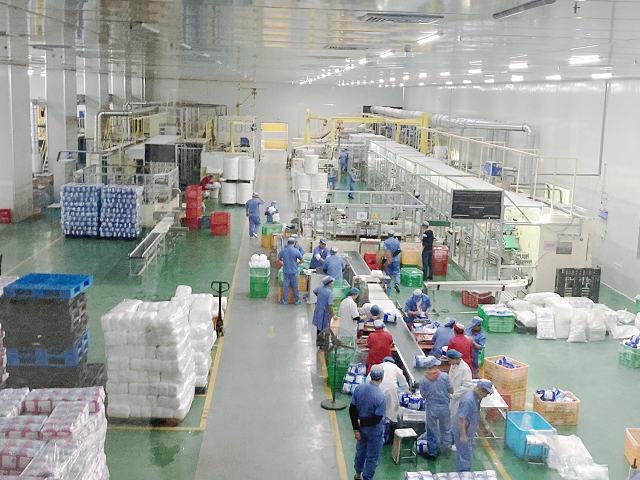
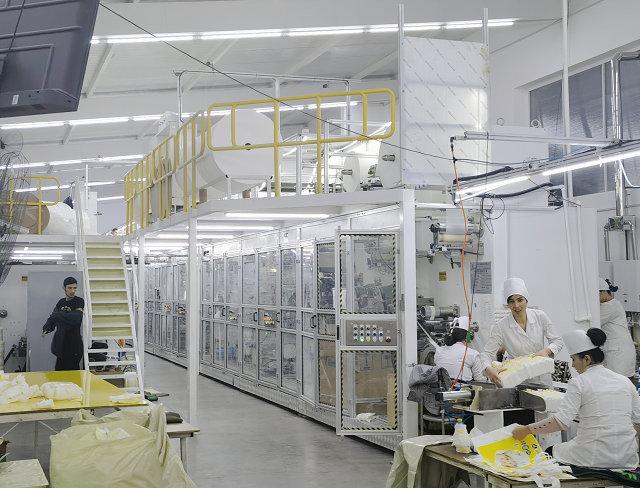
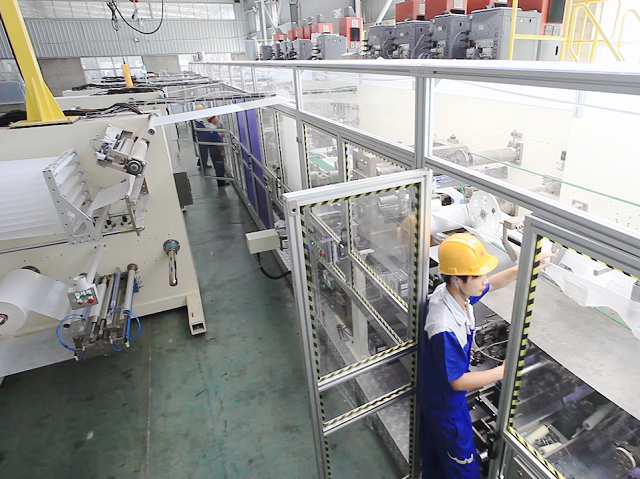
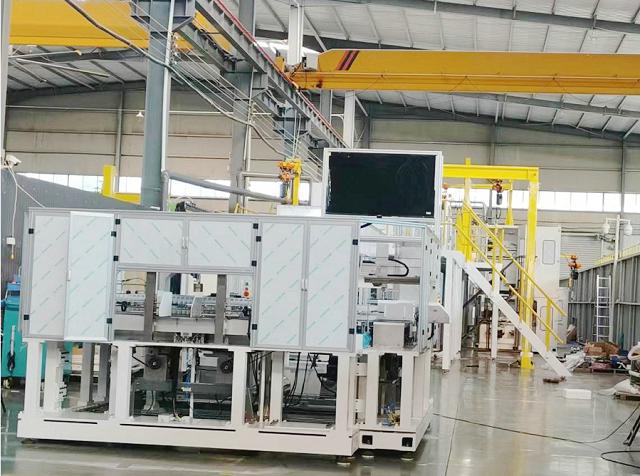
A diaper manufacturing machine is applied to converting specified absorbent and nonwoven materials into defined disposable diaper formats through core preparation, layer assembly, elastic and fastening application, bonding, shaping, inspection, and discharge. Its commercial application is not simply "making diapers": the buyer must establish the target user, size range, product construction, raw materials, packaging interface, quality tests, utilities, staffing, and changeover needs. A machine offered for sale should be validated against those requirements with material trials and a factory acceptance test. It is not a general-purpose line for every absorbent hygiene product unless the supplied configuration and evidence prove that scope.
Application Scope of a Diaper Manufacturing Machine
The primary application is industrial conversion of roll goods, absorbent ingredients, elastics, tapes or fastening elements, and adhesives into a repeatable diaper construction. Depending on the ordered scope, modules can form or handle the absorbent core, place acquisition or distribution material, combine topsheet and backsheet, apply leg and waist elastics, add cuffs and fastening systems, bond layers, cut contours, fold products, inspect selected characteristics, reject detected defects, and transfer accepted output toward packaging.
That description establishes a boundary, not a promise that every line contains every function. Product architecture and the supplier's configuration determine whether a feature is included. A buyer should provide drawings, material specifications, sample products, test methods, packaging presentation, and an intended product matrix. HAINA can review these inputs against a proposed equipment configuration and identify items that require trials, options, or buyer-supplied interfaces.
The application scope is defined by included modules and the approved diaper construction.
A baby diaper line should not be assumed to make adult diapers, sanitary pads, underpads, or pull-on products. Those products differ in dimensions, layer architecture, elastic or fastening arrangements, forming and cutting, folding, and handling. Even two taped baby diapers can demand different process capability when one adds a component or uses materially different substrates. The correct commercial question is which approved product families and variants the line can produce, using which materials and acceptance conditions.
Match Product Formats to Line Architecture
Start with the wearer and usage design. Define size range, taped or pull-on architecture, open and folded dimensions, core geometry, layer count, cuff and elastic arrangement, closure design, wetness indicator if applicable, and packaging handoff. Identify which features are mandatory at launch, optional later, or explicitly excluded. This prevents a broad request for flexibility from hiding substantial mechanical and control differences.
Build a product-to-module matrix. For each size and variant, map unwind positions, material widths, forming parts, applicators, cutters, folding parts, sensors, recipe requirements, and downstream handling. Mark common tooling and format-specific tooling. A wider setting range is not automatically useful if guides, vacuum surfaces, cutters, or packaging interfaces cannot support the target design. Require drawings and change-part lists rather than relying on a verbal statement that multiple sizes are available.
Also define the presentation after conversion. The machine may discharge individual folded diapers, counted groups, or another arrangement depending on project scope. Packaging equipment, conveyors, accumulation, coding, and case handling can be separate. Specify the physical interface, product orientation, count signal, stop behavior, buffer philosophy, and ownership of integration. A converting line cannot be commercially evaluated in isolation when downstream flow controls its usable operation.
Translate Product Design Into Process Capabilities
Every design element creates process demands. Absorbent-core geometry requires controlled material preparation, distribution, containment, and transfer. Soft nonwovens and thin films require suitable tension, guiding, and surface handling. Elastics require controlled feed, application position, and bonding. Fastening systems require accurate placement and orientation. Adhesive bonds depend on delivery, substrate behavior, compression, timing, and cleanliness. Contour and end cuts require compatible tooling, product stack control, phase, and debris management.
Product feature
Required process capability
Buyer input
Validation evidence
Absorbent core
Formation or handling, distribution, transfer, containment
Geometry, ingredients, basis and test method references
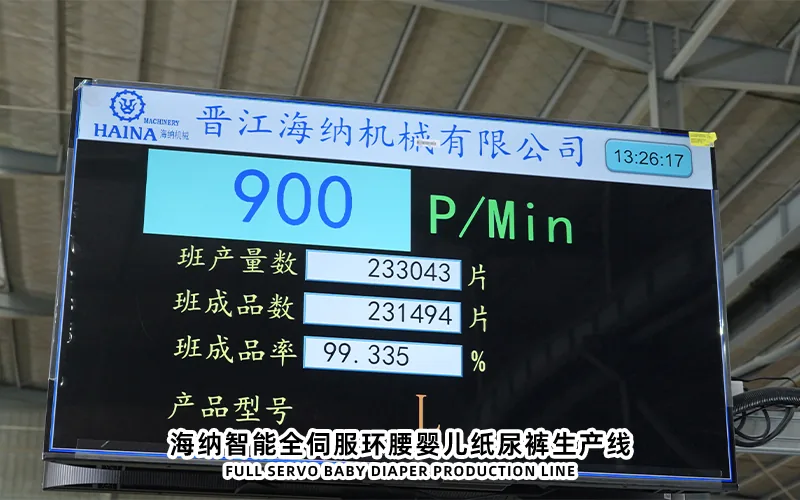
Do not reduce process capability to design speed. Design speed describes an engineering reference, while stable working speed depends on the validated product, materials, settings, operators, utilities, maintenance condition, and acceptance test. Operating speed can vary during startup and changeover. The contractual acceptance value must state its product, material, duration, quality criteria, exclusions, and measurement method. Keeping these terms separate prevents a headline number from replacing an application test.
Material behavior and product features determine the process capabilities that must be trialed.
Define Factory and Utility Boundaries
The receiving factory must support equipment access, material logistics, hygiene zoning, maintenance clearance, operator movement, finished-product flow, and waste removal. Confirm floor condition and loading through qualified site engineering. Verify doors, corridors, unloading, lifting arrangements, and equipment placement before shipment. Layout reviews should include roll staging, splice access, adhesive handling, spare storage, quality sampling, and safe intervention, not just the machine footprint.
Utility requirements are configuration-specific. Establish voltage, frequency, earthing arrangement, distribution boundary, compressed-air quality and demand profile, vacuum or extraction responsibilities, environmental conditions, lighting, ventilation, and any thermal or adhesive support. Ask how utility variation affects controlled operation and what is monitored. The buyer should size site systems from supplier data and engineering review, not from unverified assumptions about a generic diaper line.
People and systems are also factory inputs. Define staffing by operating mode, material replenishment, splicing, quality checks, maintenance response, and packaging interface. Establish material traceability, recipe authorization, in-process sampling, nonconforming-product segregation, and shift records. Automation can reduce manual handling at particular stations, but it does not replace material preparation, supervision, quality decisions, maintenance, or production planning.
Evaluate Commercial Application Scenarios
A new entrant usually needs a narrow launch matrix, robust training, supplier coordination, laboratory methods, and time for material qualification. An established diaper producer may prioritize compatibility with existing materials, formats, maintenance skills, spare commonality, and packaging systems. A private-label manufacturer may need frequent documented changeovers and stronger recipe and traceability control. A brand owner adding internal production may focus on translating product specifications into process windows and release evidence.
For each scenario, model demand by sellable product variant and realistic production calendar, but do not convert nameplate speed directly into saleable capacity. Account for format changes, planned cleaning, material replenishment, quality holds, maintenance, trials, packaging constraints, and expected operating pattern. Use scenarios to compare line fit, staffing, and risk; do not invent ROI or payback. Commercial viability also depends on product approval, material purchasing, market demand, working capital, and distribution beyond the converting equipment.
Commercial fit depends on product mix, operating calendar, staffing, and connected factory systems.
A business development manager should compare applications through evidence of fit. Review whether the proposed baby diaper manufacturing machine supports the intended construction, launch sizes, raw-material supply forms, inspection plan, and packaging interface. Score unresolved assumptions separately from confirmed capability. A low quotation with a broad but untested scope can carry more project risk than a clearly bounded configuration.
Validate Materials, Formats, and Output
Validation begins before FAT. Supply representative materials with specifications, roll dimensions, splice conditions, storage history, and enough quantity for setup and a meaningful run. Agree how substitutions will be controlled. Conduct focused trials for new or high-risk materials, particularly where friction, stiffness, thickness, elasticity, surface treatment, adhesive response, or registration behavior can affect feeding and bonding.
The FAT should identify the exact machine configuration, software and recipe versions, utilities, materials, product format, preconditions, test duration, sampling plan, quality criteria, alarms or stops treatment, output accounting, and open-item process. Witness startup, stable operation, changeover elements, detection and rejection, safety functions according to the approved plan, and controlled restart. Retain samples and records that can be compared during site commissioning.
Acceptance must distinguish equipment function from product release. The supplier demonstrates agreed machine capabilities under stated conditions. The buyer evaluates products using approved methods and decides whether the evidence meets the contract. Open items should have owners, due dates, closure evidence, and impact on shipment or site acceptance. Do not accept a video or a short burst of movement as proof of sustained application fit.
Recognize Limits Before Contracting
Common limits include product dimensions outside the mechanical range, materials that cannot be tensioned or bonded reliably, component designs without suitable applicators, format changes requiring new tooling, inspection features outside supplied sensor capability, and packaging interfaces that were never included. Utilities, environment, operator access, and maintenance skills can also limit stable use even when the machine can physically make a sample.
Create an assumptions and exclusions register. Each line should state the issue, current evidence, responsible party, required trial or document, decision date, and commercial effect. Include future products honestly: provision for later modification is different from installed capability, and space or control capacity alone does not prove that a future module will work. Require change-control and revalidation steps for every later extension.
Downstream presentation and quality evidence are part of the machine's usable application boundary.
Finally, verify documentation, training, spare identification, maintenance access, and support boundaries. Application value erodes when the factory cannot restore settings, identify parts, diagnose alarms, or repeat accepted setup. Agree which drawings and manuals reflect the final configuration, which training tasks are demonstrated, and what evidence closes commissioning. These items turn a machine application into an operable factory process.
Frequently Asked Questions
Can one diaper machine produce every baby diaper size?
No universal assumption is safe. Verify the dimensional range, material widths, guides, vacuum surfaces, applicators, cutting and folding parts, recipes, and packaging interface for every target size. Record required change parts and trial evidence.
Can a baby diaper line also make pull-on diapers?
Only if its configured architecture supports that construction and the supplier demonstrates the target product. Pull-on products can require materially different elastic, joining, forming, cutting, and handling processes, so a verbal flexibility claim is insufficient.
Which buyer materials should be used for FAT?
Use approved or genuinely representative production materials in the agreed supply form. Identify lots and specifications, control substitutions, and provide enough for setup, operation, sampling, and expected loss. Record any deviation from the intended material set.
Does automatic inspection guarantee product quality?
No. Sensors can check defined detectable characteristics within their validated capability. The factory still needs material controls, process checks, laboratory or product tests, sampling, challenge tests, reject segregation, and release authority.
Conclusion
The useful applications of a diaper manufacturing machine are bounded by a defined diaper architecture, compatible materials, included process modules, factory support, and verified acceptance evidence. The buyer should now issue a product-to-process matrix for every launch format and require the supplier to mark confirmed, optional, trial-dependent, and excluded capabilities. Review that matrix with HAINA, then witness the highest-risk material and format during FAT before accepting the configuration or its commercial application claims.