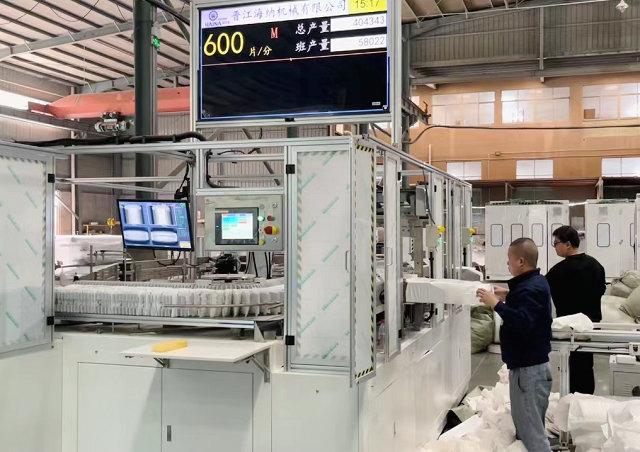
Adult & Baby Diaper Machine,Sanitary Napkins Production Line Blog
Choose a baby diaper manufacturing machine through product definition, configuration mapping, factory fit, material trials, FAT, and lifecycle evidence.
Choose a baby diaper manufacturing machine by defining the diaper products and materials first, then comparing how each proposed configuration can produce them under an agreed factory test. The right machine is not simply the one with the highest stated design speed. It is the line whose process modules, size-change method, controls, inspection points, utility needs, documentation, and support fit the buyer's product plan and factory. Require suppliers to separate design speed from demonstrated stable working speed and contractual acceptance values. Final selection should rely on a scored technical specification, material trials, FAT evidence, maintainability review, and a complete delivered-configuration record.
Define the Baby Diaper Product Before the Machine
A machine proposal can only be judged against a product definition. List the diaper styles, size range, target construction, absorbent-core concept, topsheet and backsheet properties, elastic arrangement, fastening system, acquisition or distribution layers if used, package interface, and critical finished-product characteristics. Mark what is fixed for launch and what may be added later. A broad statement such as "make several baby diaper sizes" leaves the supplier to choose assumptions that may not match the commercial plan.
Prepare a material matrix with supplier, grade, dimensions, basis or property information available to the project, roll build, splice condition, and approved alternatives. The purpose is not to claim that one material is universally superior. It is to expose how web behavior, tension, bonding, cutting, elastic handling, dust, and inspection requirements influence machine design. Materials intended for FAT should be identified early enough for compatibility review and trial planning.
Write measurable product acceptance criteria with the quality team. These may cover dimensions, component position, bond integrity, elastic placement, appearance, contamination, and other product-specific checks selected by the buyer. Define sampling and test methods, not just limits. If buyer and supplier use different measurement methods, the same diaper can produce conflicting results.
Product construction determines which processing modules and controls are required.
Map the Baby Diaper Manufacturing Machine Configuration
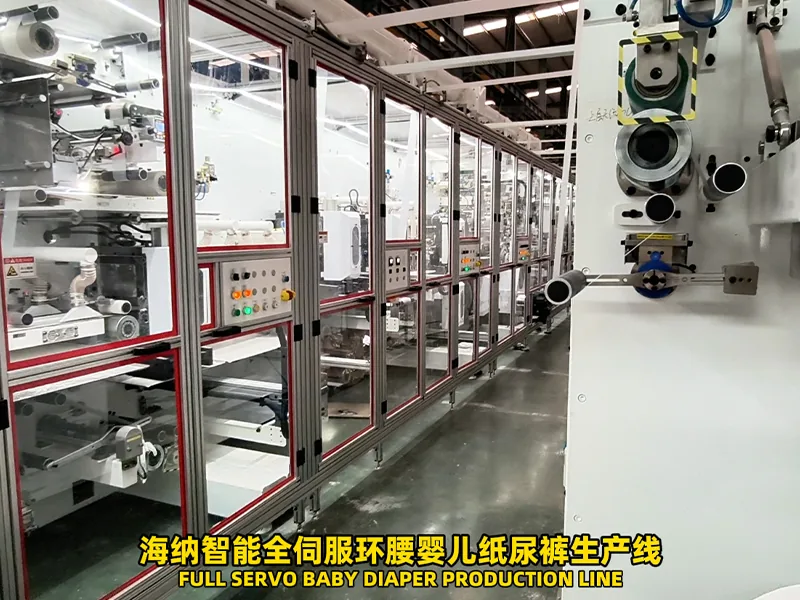
Turn the product definition into a process map from raw-material unwinding through forming, combining, bonding, cutting, folding, counting, and transfer to packaging. Identify every feed, accumulation or splice need, tension zone, adhesive application, elastic process, cutting station, inspection point, reject path, and operator intervention. Suppliers can then mark what is included, optional, excluded, or dependent on an external system.
This map prevents configuration gaps hidden by a single line price. One proposal may include automatic web guidance, material-end detection, inspection, reject tracking, and packaging communication, while another assumes manual checks or downstream equipment. Neither boundary is automatically wrong, but it must be visible. Compare equipment on the same defined scope and ask how omitted functions affect staffing, quality control, stoppages, and future integration.
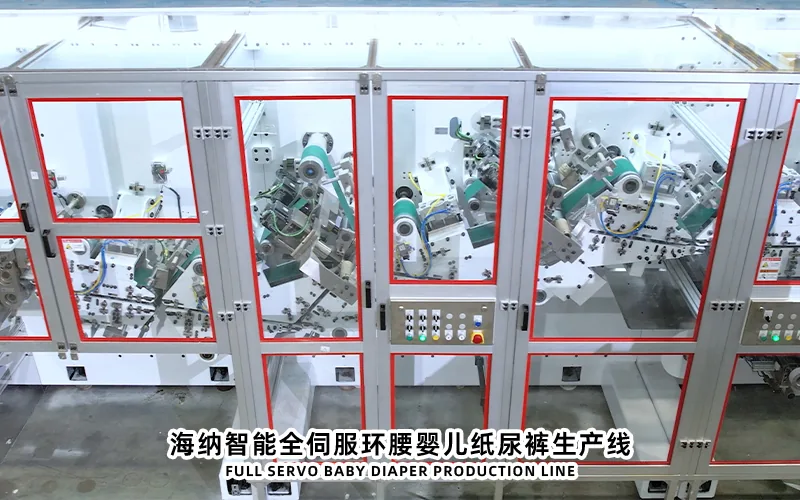
Review the baby diaper manufacturing machine at module level. For each station, ask what adjustment is needed between product sizes, which parts are dedicated, which settings are recipe-controlled, and which results depend on material properties. Request a configuration schedule that becomes part of the technical agreement and as-built record.
Compare Output Without Speed Traps
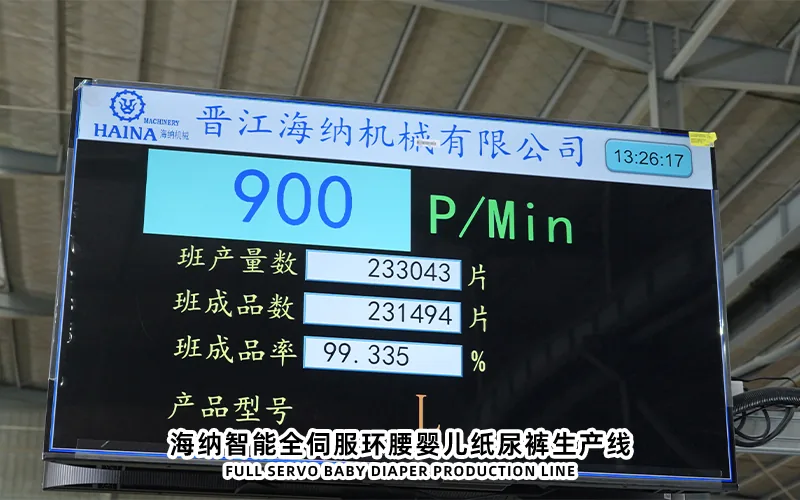
Capacity is a system result, not a catalog number. Design speed describes an engineering limit or reference. Stable working speed describes a condition demonstrated with stated materials and product format. Operating speed is the setting a factory uses to balance quality and reliability. Contractual acceptance value is the agreed threshold tested under the FAT protocol. Keep those terms separate in every supplier comparison.
Ask suppliers to state the conditions behind any output claim: product size, material set, line configuration, run sequence, quality sampling, acceptable product definition, planned stops, and treatment of rejects. Then build a planning model that includes scheduled production time, changeovers, cleaning, material replenishment, quality holds, maintenance, and unplanned downtime assumptions owned by the buyer. Do not turn an unsupported efficiency percentage into a guaranteed forecast.
Line balance matters. A fast forming section cannot deliver useful output if splicing, inspection, folding, counting, or packaging repeatedly constrains flow. Review buffers and stop propagation across the line. The FAT should observe the complete agreed boundary rather than a convenient isolated station.
Stable output depends on balanced modules, materials, quality results, and downstream handling.
Decision area
Supplier evidence
Buyer verification
Selection warning
Product fit
Configuration mapped to each format
Approved product and material matrix
Offer says only "customizable"
Stable output
Defined trial condition and test record
Witness FAT and recalculate accepted output
Only design speed is stated
Changeover
Part list, settings, sequence, trial evidence
Observe one representative conversion
Time excludes preparation and quality release
Factory fit
Layout, loads, utilities, interface list
Site survey and utility confirmation
Generic footprint omits service access
Lifecycle
Maintenance package, spares identity, backups
Sample documents against physical tags
Support promise lacks configuration data
Evaluate Changeover, Controls, and Operator Work
Changeover affects both flexibility and recoverable production time. Request a size-change matrix listing exchanged tooling, adjustable mechanisms, recipe parameters, web rerouting, adhesive changes, inspection settings, and quality checks. Clarify whether preparation, cleaning, first-off adjustment, and quality release are included when a changeover is demonstrated. A short mechanical exchange followed by a long stabilization period is not a short total conversion.
Controls should make normal work clear while protecting critical settings. Review operating modes, alarm information, interlocks, recipe management, user access, trend or event data, backup, and recovery. Ask operators to follow a startup, stop, fault recovery, and changeover sequence during the trial. Good automation does not remove the need for skilled operators; it gives them consistent information and prevents uncontrolled actions.
Inspect manual tasks at unwinders, splice positions, adhesive supply, elastic feeds, cutting areas, reject collection, and packaging transfer. Consider reach, lifting, visibility, housekeeping, lockout access, and clearance for tools. Ergonomic or maintenance obstacles discovered after installation are costly because the line layout and service platforms may already be fixed.
Fit the Line to the Factory and Utilities
Use a scaled layout that includes the machine, electrical cabinets, operator positions, material staging, waste removal, access doors, maintenance withdrawal space, lifting routes, finished-product flow, and emergency paths. Confirm floor condition and load information through the appropriate site professionals. A footprint rectangle without service clearances is not an installation plan.
Create a utility schedule with connection points, quality requirements, operating and peak demand definitions, permitted variation, and responsibility for distribution. Electrical supply, compressed air, extraction, environmental conditions, adhesive services, network links, and fire or safety provisions must match the selected configuration. Values belong in the supplier's verified project data; they should not be inferred from unrelated installations.
Interface ownership should be explicit. State who supplies cables, ducts, piping, foundations or anchors, platforms, material handling, packaging equipment, and data connections. Confirm signal lists and mechanical handoffs before final design. Unowned interfaces are a frequent source of commissioning delay even when the machine itself is complete.
Layout review must include material flow, maintenance clearance, utilities, and interfaces.
Use Material Trials and FAT to Verify the Offer
Material trials reduce uncertainty when new webs, elastic systems, adhesives, or product constructions are central to the project. Agree which materials are supplied, how they are identified and stored, what machine configuration is used, what observations are recorded, and who approves conclusions. A brief successful run can establish basic feasibility, but it does not automatically demonstrate stable production or all formats.
The FAT protocol should state prerequisites, test sequence, run conditions, sample points, acceptance methods, calculation rules, stop handling, and punch-list governance. Test representative products rather than only the easiest format. Include safety functions, controls, quality mechanisms, changeover elements, alarms, reject handling, documentation, and backup recovery as appropriate to the contract.
Record actual conditions and preserve samples or measurement records according to the agreed plan. If tuning is required, document the change and repeat affected checks. HAINA can work with the buyer to review product requirements and structure FAT activities for the offered line, while the buyer retains approval of its materials, product criteria, and factory acceptance decision.
Score Service and Lifecycle Evidence
Service evaluation should focus on usable evidence: manuals that match equipment tags, preventive-maintenance tasks, lubrication information, troubleshooting logic, spare and wear-part identification, electrical and pneumatic records, software backups, and training scope. Ask how support staff identify the delivered configuration when a future issue is reported. A general assurance of support is weaker than a demonstrated route from machine identity to engineering record.
Review consumables and critical spares by failure consequence, availability, replacement complexity, and storage needs. The supplier should explain recommended items and identification, while the buyer decides stocking levels from operating strategy and local supply conditions. Avoid arbitrary universal spare quantities.
Also define handover. Confirm document language, file format, revision status, backup media, training participants, practical exercises, open-item closure, and final acceptance. These details determine whether the factory can operate and maintain the equipment after the supplier team leaves.
Baby Diaper Machine Procurement Scorecard
Gate 1 - product definition: Do not compare final offers until formats, materials, quality methods, options, and future needs are documented.
Gate 2 - configuration: Require a process map and inclusion schedule showing every module, inspection function, interface, and manual task.
Gate 3 - verification: Approve the FAT protocol before testing and score evidence under known product, material, utility, and quality conditions.
Gate 4 - ownership: Close layout, utilities, installation interfaces, documentation, training, software backup, spares, and punch-list responsibility before shipment.
Selection is complete only when the offered configuration and acceptance evidence agree.
Frequently Asked Questions
Should buyers select the machine with the highest speed?
No. Compare stable output under defined conditions, accepted product quality, line balance, changeover, reliability evidence, and factory fit. A design-speed headline is not a production commitment.
How should future diaper sizes be handled?
Describe likely formats during design review, then document reserved capability, required new parts, settings, validation work, and any physical limits. Avoid relying on an undefined promise of flexibility.
Why send production materials for FAT?
Material behavior affects feeding, tension, bonding, cutting, elastic handling, inspection, and product results. Identified launch materials make the trial more relevant to the buyer's intended process.
What should remain after FAT?
Keep the signed protocol, conditions, results, samples or measurements as agreed, change history, punch list, closure evidence, and final machine and software configuration.
Conclusion
The perfect baby diaper manufacturing machine is the one that fits a defined product portfolio, converts approved materials through a complete and balanced process, fits the actual factory, and demonstrates agreed results during FAT. Replace broad claims with a requirements matrix and weighted scorecard, and compare suppliers on the same boundary. The practical buyer action is to freeze one representative launch product and material set, issue the process and factory requirements, then witness the proposed configuration producing that product while recording stable operation, quality results, changeover work, exceptions, and the delivered baseline.