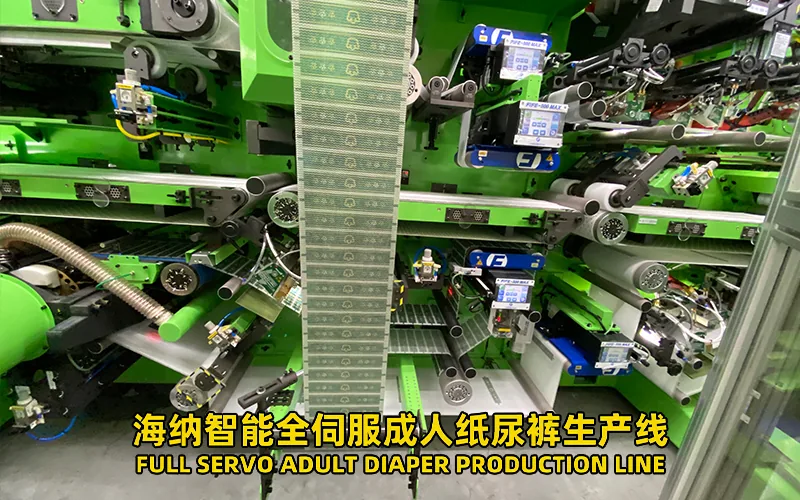
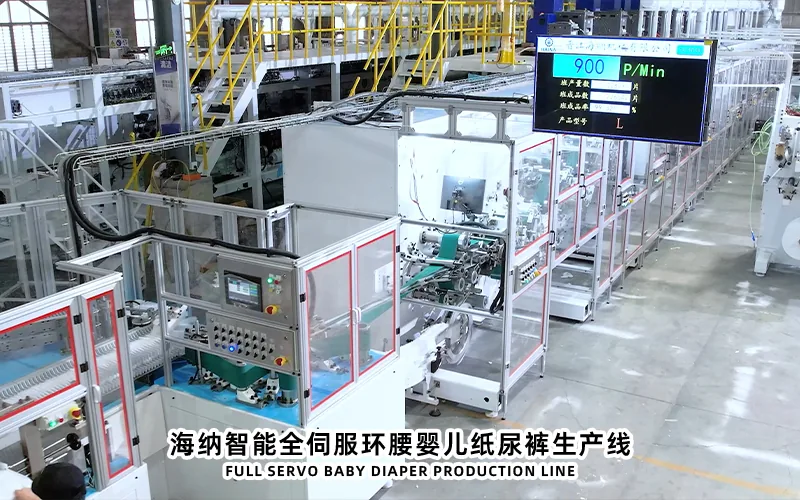
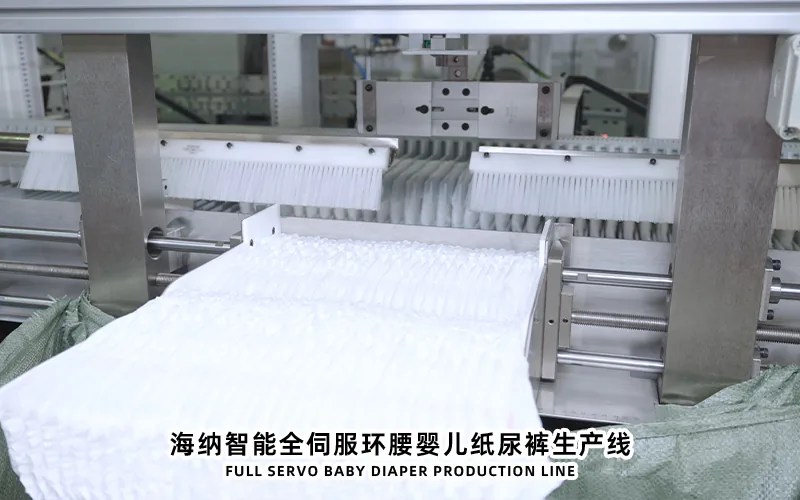
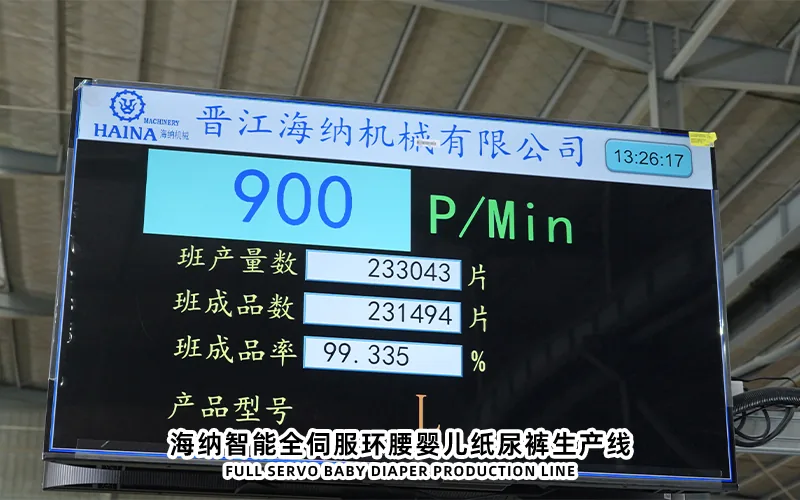
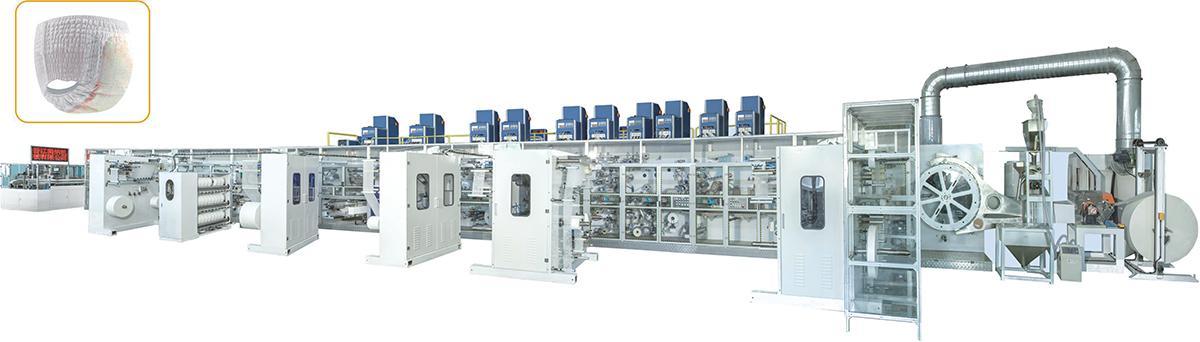
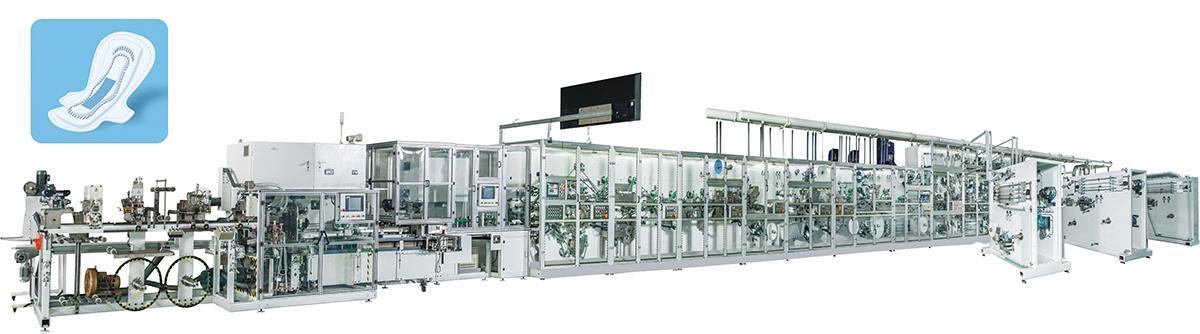
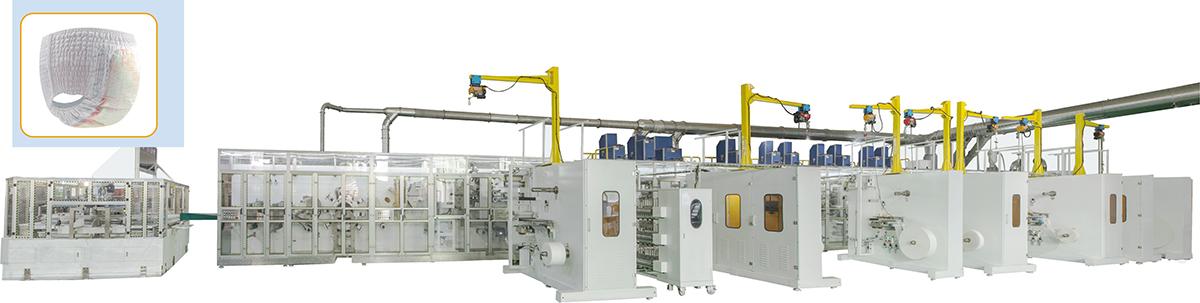
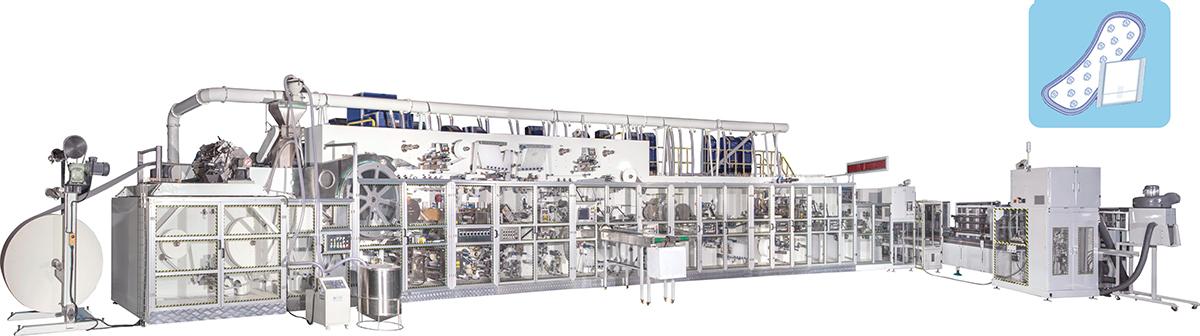
Failure types on an infant diaper manufacturing machine are best classified by functional zone and failure behavior: material supply, web control, absorbent-core processing, component application, bonding, cutting and folding, inspection, drives, controls, utilities, and safety systems. A reliability engineer should first stop or contain the process according to approved safety rules, protect suspect product, and preserve alarm and setting evidence. Then classify the observed symptom as intermittent, progressive, sudden, or recurring after intervention. This structure directs the right technical owner and prevents a symptom such as poor registration from being mislabeled as a sensor fault before material, tension, timing, mechanical condition, and control evidence are checked.
Classify Before Repair
Classification turns a vague complaint into a controlled investigation. Start with the observed effect: what changed, where it was detected, when it began, and which products may be affected. Record whether the event stopped the line, reduced quality, caused repeated adjustment, or activated a protective function. Keep the symptom separate from the proposed cause. "Web moves toward the operator side" is evidence; "guide sensor failed" is only one possible explanation.
Next identify the functional zone and the behavior over time. This helps decide whether operations, maintenance, quality, materials, controls, or engineering should lead. It also determines containment. A safety-system event requires authorized safety investigation; a product defect requires last-known-good tracing; and a utility disturbance may affect several stations at once.
Safety boundary: never reach into moving equipment, defeat guards, bypass an interlock, or energize an isolated zone to speed diagnosis. Use the machine's approved stop, isolation, stored-energy, and test procedures with qualified personnel.
Zone-based classification narrows the investigation while preserving a line-level view of interacting processes.
Failure Zones of an Infant Diaper Manufacturing Machine
Material-supply failures include damaged rolls, poor winding, incorrect splices, depleted consumables, and substrates outside the approved handling range. Web-control failures appear as wandering, wrinkles, slack, unstable tension, or registration drift. These can originate at an unwind, a contaminated or worn roller, a guide, a brake, a dancer, routing, or the material itself.
Core-process failures can involve feed inconsistency, formation variation, transfer loss, vacuum disturbance, containment, or dust accumulation. Component-application failures affect acquisition layers, elastics, leak barriers, ears, fasteners, films, and other placed materials. Bonding failures may come from application pattern, contamination, supply instability, pressure, contact, temperature where relevant, or incompatible materials. Cutting and folding failures include rough edges, incomplete cuts, timing errors, buildup, poor crease position, and unstable transfer.
Drive and mechanical failures include abnormal vibration, looseness, wear, misalignment, bearing distress, coupling problems, and timing movement. Electrical and control failures cover power distribution, sensors, wiring, communications, input and output devices, software state, parameter access, and feedback. Inspection failures include false accepts, false rejects, obscured sensors, incorrect inspection windows, delayed rejection, and count mismatch. Utility failures can affect compressed air, vacuum, extraction, electrical quality, or environmental conditions.
Tool condition, buildup, timing marks, transfer state
Higher force is the correct remedy
Control and inspection
Nuisance alarm, missed defect, wrong reject
Alarm history, input state, recipe, challenge result
A sensor is defective because its output changed
Utilities
Several zones become unstable together
Time-aligned supply trends and local indicators
Each station has an independent fault
Separate Sudden, Progressive, and Intermittent Behavior
A sudden failure has a clear transition, such as a broken component, tripped protection, lost signal, or material break. Investigate events immediately before the transition, including a splice, adjustment, collision, jam, utility change, or maintenance action. Preserve broken parts and system records where appropriate.
A progressive failure develops as wear, contamination, temperature, looseness, buildup, or material condition changes. Trend evidence is essential. Compare vibration, temperature, current, alignment, product position, bond results, or adjustment frequency using the factory's approved methods. Avoid inventing universal alarm limits; establish baselines and acceptance criteria for the installed component and operating state.
Intermittent failures appear and disappear. They often invite repeated resets, but resetting can erase useful state. Capture timestamps, machine mode, operating condition, recipe, material lot, environmental context, and input or alarm status before intervention. Look for patterns around acceleration, deceleration, splices, roll diameter, vibration, heat, cable movement, or certain product sizes.
Fault behavior over time helps distinguish an isolated event from degradation or an unstable interface.
A recurring failure after repair is a separate class because it challenges the previous diagnosis. Check whether the failed condition was confirmed, the replacement matched the approved specification, installation was verified, related causes were addressed, and post-maintenance tests represented the real operating load.
Follow a Safe Evidence-Preserving Triage
Protect: use the approved stop and isolation response; secure people and contain suspect products.
Describe: write the exact symptom, location, machine state, first occurrence, and affected SKU.
Preserve: save alarm history, recipe version, settings, samples, photographs, material identity, and recent work.
Localize: identify the earliest abnormal point in the material or signal path, not merely the final visible defect.
Compare: check against an approved drawing, baseline condition, known-good component, or controlled sample.
Test: change one justified variable under authorization and state what result would confirm or reject the hypothesis.
Recover: restore guards and controls, account for tools, run defined checks, inspect first-off product, and authorize release.
The earliest abnormal point is often more useful than the place where the line stopped. A displaced component detected near final inspection may have begun with unwind instability several stations earlier. Trace upstream through material position, tension, application, bonding, cutting, detection, and rejection.
For automatic baby diaper manufacturing equipment, the diagnostic plan should reflect the installed drives, sensors, inspection functions, and options. Generic diagrams can orient the team, but controlled electrical and mechanical documents should guide testing.
Test Root-Cause Hypotheses
A root cause explains the evidence, survives a controlled test, and supports an effective prevention. Use a hypothesis table with the suspected mechanism, supporting evidence, conflicting evidence, test method, safety condition, result, and decision. Rank hypotheses by evidence and risk rather than by convenience.
Controlled comparisons should isolate a suspected mechanism without introducing uncontrolled parameter changes.
Use structured comparisons: affected versus unaffected size, material lot, side of the line, speed range, operating temperature, or time since cleaning. Keep other variables controlled where feasible. If replacing a component, inspect and record the removed part before disposal. A replacement that appears to solve the issue may only reset alignment or disturb a connection; that is not yet proof that the part itself was the cause.
After correction, verify both machine function and product quality. Include the operating condition that previously exposed the failure and observe long enough to support the agreed claim. HAINA technical support can evaluate evidence against the supplied machine documentation when the factory provides clear timestamps, configuration, samples, and test results.
Build a Recurrence Prevention Register
Close the investigation with more than a repair note. Record the confirmed mechanism, affected assets and products, containment, correction, verification evidence, and preventive actions. Possible prevention includes an inspection point, condition trend, cleaning method, torque or alignment control, approved spare update, software revision, operator standard, material specification, training check, or design review.
Assign every action an owner, due date, and evidence of completion.
Update drawings, spare lists, settings, and procedures through change control.
Define what future signal will show recurrence before a major stop.
Review similar assets or stations for the same mechanism.
Confirm effectiveness during a later representative production run.
Retain failed-part and product evidence according to the factory's record rules.
Add consequence to the classification so response priority is consistent. Distinguish safety exposure, potential release of nonconforming product, complete loss of production, degraded operation, and a detectable condition that can be planned. Consequence does not prove cause, but it controls containment and escalation. A small intermittent inspection error may deserve immediate action when it can allow defects to pass, while a noisy noncritical cover can be isolated and planned if qualified staff confirm that it creates no safety or product risk.
Use recurrence review to test the classification system itself. If several work orders carry different labels for the same mechanism, normalize the failure codes without rewriting the original observations. Compare code, replaced part, corrective action, and verification. Repeated "unknown" entries signal missing evidence capture or training. Repeated component replacement with no measured defect signals weak diagnosis. The register should make these patterns visible before they become accepted as normal operating loss.
Post-repair release must confirm machine restoration, safety controls, and conforming product under representative conditions.
Frequently Asked Questions
What is the best first classification for a diaper-machine failure?
Start with the functional zone and observed behavior over time. This identifies likely evidence and ownership without prematurely declaring a component or person to be the cause.
Why should settings be saved before troubleshooting?
Settings define the machine state when the symptom occurred. Unrecorded changes remove comparison evidence, can create secondary faults, and make it difficult to prove which action actually corrected the condition.
How is a product defect linked to a machine fault?
Trace the defect upstream to the earliest abnormal material, process, or signal condition. Compare timestamps, samples, inspection results, settings, alarms, and machine condition, then test a specific mechanism.
When is a repair investigation complete?
It is complete after the cause is supported by evidence, safety and machine functions are restored, affected product is dispositioned, representative output passes release checks, and recurrence actions are verified.
Conclusion
A practical failure system combines zone, behavior, evidence, and consequence. Before the next incident, create a one-page response card for the infant diaper manufacturing machine that lists safe containment, required evidence, functional zones, technical owners, and product-release authority. Test it with a historical fault: can the team reconstruct the symptom, isolate the earliest abnormal point, explain the confirmed cause, and show effective prevention? The buyer or factory should also challenge this workflow during training or acceptance with an agreed simulated condition, verifying that alarms, records, escalation, recovery checks, and first-off release work as documented.