Maintenance and care for an infant diaper production line should combine safe daily observation with planned technical work, condition checks, controlled spares, and a tested recovery process. Operators should watch web tracking, material buildup, air leaks, abnormal sounds, alarms, and product changes without entering hazardous areas. Trained technicians should perform isolated cleaning, lubrication, inspection, adjustment, and replacement tasks at documented intervals. The maintenance supervisor should trend findings instead of waiting for breakdowns, verify product quality after intervention, and preserve settings and records. This approach keeps the infant diaper production line maintainable while avoiding unsupported promises about equipment life or uptime.
Start with Safe Machine Care
The first maintenance control is a clear boundary between observation during operation and intervention after safe isolation. Operators can identify unusual noise, odor, vibration, web movement, contamination, leakage, damaged guards, and alarm patterns from designated positions. They should never reach through guards, bypass protection, or clear material near motion because a short stop appears costly. The factory's approved energy-isolation and verification procedure governs technical access.
A pre-task review should identify mechanical movement, stored pneumatic or spring energy, hot adhesive equipment, sharp cutting parts, electrical hazards, elevated access, and materials that may move when tension is released. The technician confirms the correct machine station, isolates every relevant source, verifies the safe state, and controls keys and access. Where several people work on the line, the group isolation method must protect each person.
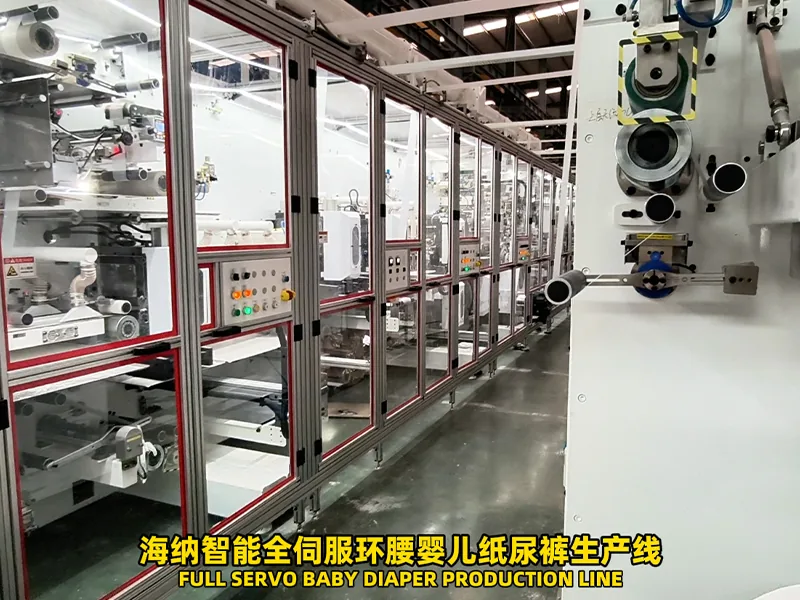
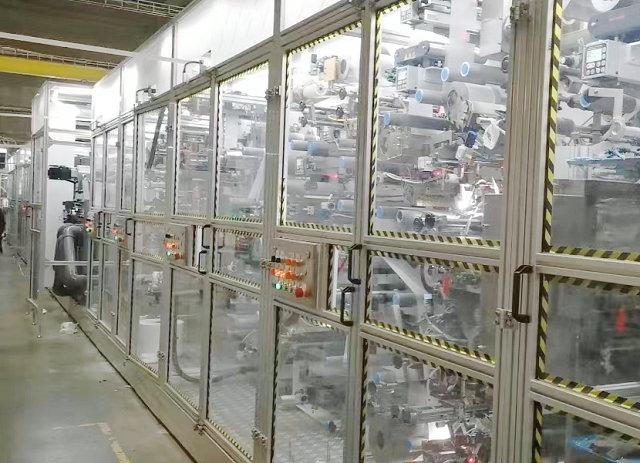
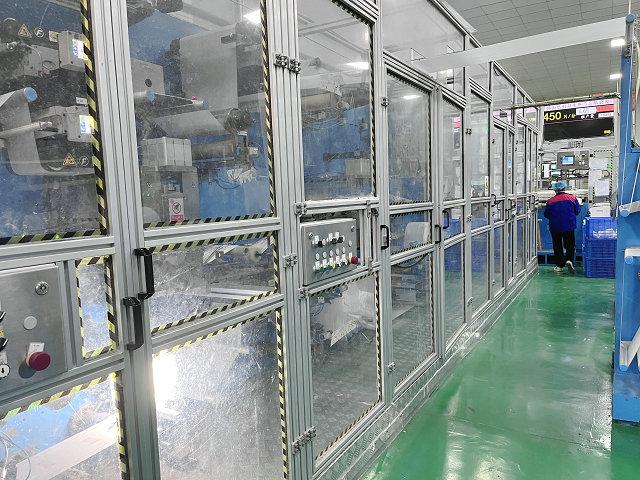
Safe care begins with defined station boundaries, isolation points, and service access.
Good housekeeping supports safe work but is not a substitute for isolation. Remove absorbent dust and web scraps using approved methods that do not spread contamination or damage sensors. Mark slippery areas, keep access routes clear, and return panels before release. Any damaged guard, interlock, emergency device, or warning should be escalated under the plant safety system rather than entered as an ordinary cosmetic defect.
Map Maintenance by Process Zone
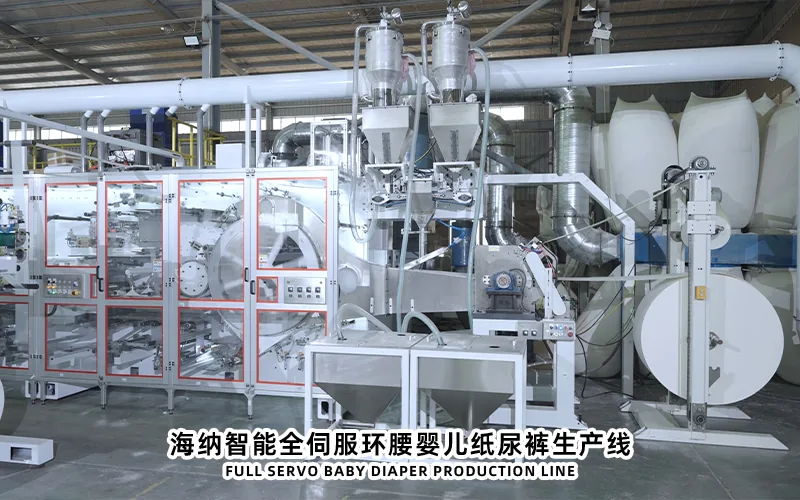
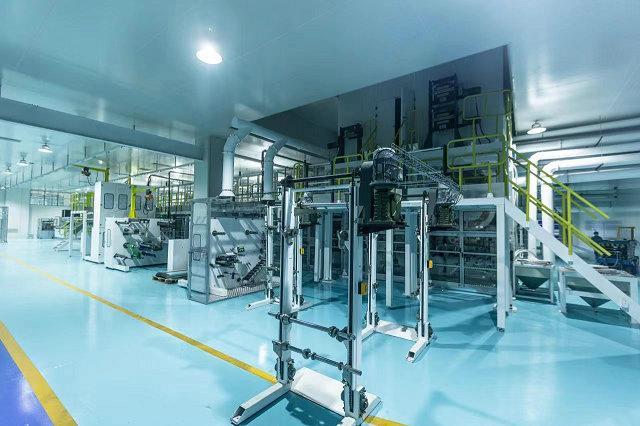
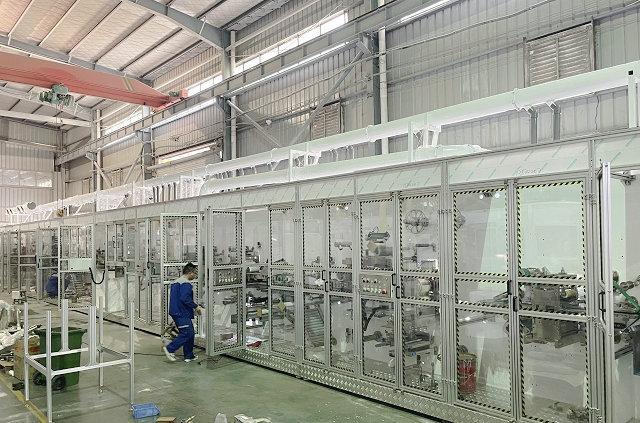
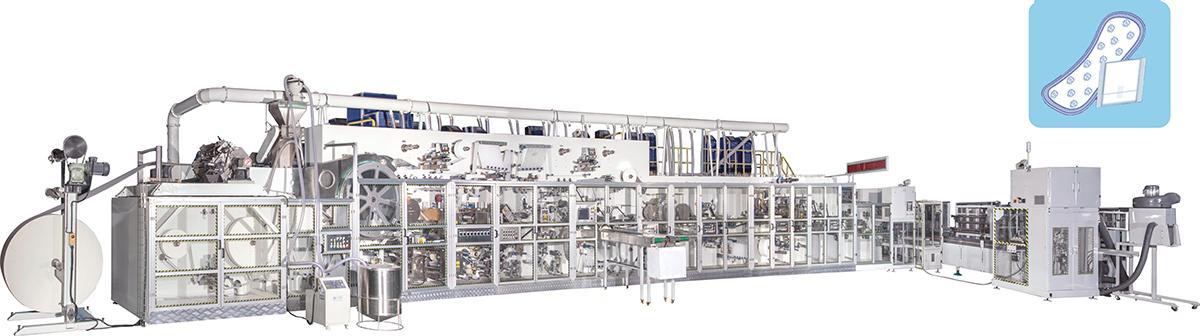
A line-wide route helps the supervisor avoid concentrating only on the station that stopped last. Begin at raw-material unwinds and trace the process through web guiding, tension control, core formation and dosing, layer placement, adhesive application, elastic handling, closure features, cutting, folding, inspection, rejection, transfer, and packing interfaces. The delivered configuration may differ, so the route should use actual station names and drawings.
At unwinds and transport paths, inspect roll support condition, brakes or drives, edge guiding, rollers, bearings, web contact surfaces, splice detection where fitted, and debris accumulation. In forming and dosing areas, inspect seals, vacuum paths, screens, rotating parts, and buildup according to the manual. Application and elastic stations need attention to nozzles, hoses, heated components, guides, tension elements, and residue without disturbing validated positions.
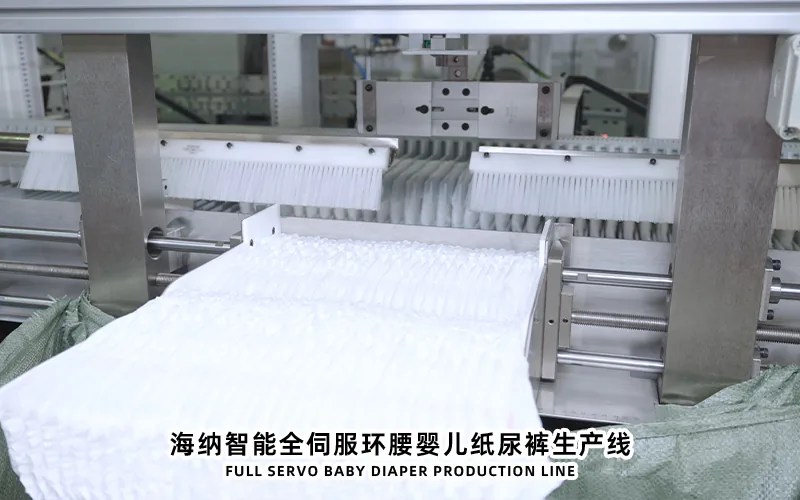
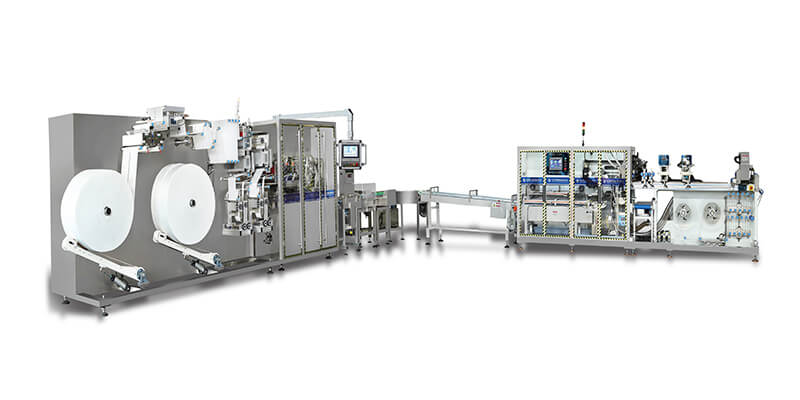
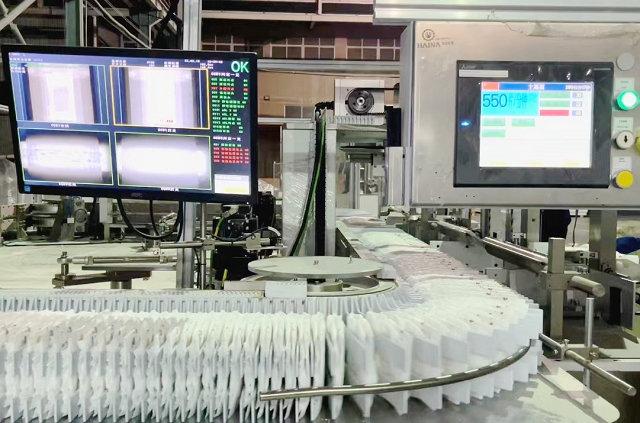
Cutting and folding areas deserve a controlled wear plan. Blade condition, anvil surfaces, timing, fastening, folding guides, belts, and transfers interact with final dimensions and appearance. Inspection sensors and reject mechanisms should be cleaned and function-tested using approved samples. Packing interfaces require checks of counting, grouping, compression, transfer, and signal handshakes so a converter repair does not merely move the constraint downstream.
Process zone
Condition to observe
Potential product signal
Maintenance evidence
Unwind and web guide
Tracking, roll support, roller surface, tension response
Use the manufacturer's maintenance information as the initial baseline, then classify tasks by consequence and deterioration pattern. Shift tasks address conditions that can change quickly. Weekly or planned short-stop tasks may cover accessible wear and function checks. Longer shutdown tasks can involve guarded drives, alignment, detailed electrical inspections, or replacement work that requires more preparation. Operating hours, cycles, changeovers, or measured condition may be better triggers than calendar dates for some components.
Every task needs a clear acceptable state. "Check belt" can produce fifteen different interpretations. A better instruction identifies which belt, the safe access method, what to inspect, how to assess tracking or damage, the adjustment authority, and what result to record. Photographic references or diagrams can help, but they should represent the actual revision. Measurements should use suitable instruments and consistent units.
Condition routes should cover each process module and record results that can be trended.
Review findings at a fixed cadence. Repeatedly clean inspections may support a documented interval review, while accelerating wear requires earlier action and cause analysis. Consider material abrasiveness, contamination, environmental conditions, operator practices, utility stability, alignment, and replacement-part quality. Do not extend an interval solely to reduce planned downtime, because deferred work can convert a controllable stop into a longer and less predictable failure.
Control Cleaning, Lubrication, and Calibration
Cleaning instructions should specify safe state, method, tools, agents, protected surfaces, and inspection after cleaning. Compressed air may spread dust into bearings, cabinets, or product zones and should not be an automatic choice. Aggressive solvents can damage seals, coatings, belts, lenses, or adhesive-system parts. The factory should approve cleaning materials with safety and equipment compatibility in mind.
Lubrication errors include the wrong product, mixed products, excess application, contamination, and missed points hidden behind covers. Create a line map that identifies each point, approved lubricant, application method, interval, and responsible role. Use clean, labeled equipment. Inspect for leakage after work, especially near webs or absorbent materials, and record any substitute only after technical approval.
Calibration should be distinguished from setting and verification. Calibration establishes the relationship between an instrument and a reference under the factory's system. Verification confirms that a sensor, gauge, detector, or measuring device remains suitable for an intended check. Process setting selects an operating value. The maintenance plan should state which activity applies, who may perform it, and what happens if the device is outside tolerance, including review of product made since the last acceptable result.
Prepare Spares and Maintenance Resources
A practical spare-parts list groups items by failure consequence, wear pattern, lead-time exposure, interchangeability, and storage needs. Format-specific parts and control components need exact revision references. Bearings, belts, blades, seals, sensors, heaters, pneumatic items, and electronic modules should not be stocked blindly; select them from the delivered bill, supplier recommendation, and factory risk assessment. Record shelf-life or preservation needs where applicable.
Spare planning is stronger when each item is tied to a station, revision, and failure consequence.
Stores discipline prevents good parts from becoming unusable. Protect items from moisture, dirt, impact, heat, and electrostatic risk as appropriate. Label location and revision, inspect receipts, rotate sensitive stock, and record issues. When a spare is consumed, the work order should identify where it went and whether replenishment is required. Quarantined or failed parts must not return to active stock accidentally.
Resources also include drawings, backups, tools, lifting aids, and trained coverage. Keep controlled machine parameters and software backups with access permissions and restoration instructions. HAINA can be asked during maintenance training to demonstrate selected service tasks on the delivered infant diaper production line and identify which actions require supplier engineering review.
When reviewing automatic infant diaper manufacturing equipment, verify that the offered maintenance package identifies actual service points, consumables, critical spares, safe access, and post-work tests for the final machine revision.
Diagnose Stoppages and Recover Production
When a stoppage occurs, make the area safe and preserve evidence before repeated resets alter the sequence. Record the first alarm, station state, material condition, current SKU, recent change, utility status, and time. Ask what changed immediately before the event: roll, recipe, operator action, maintenance task, cleaning, component, environment, or upstream tension. Separate the first cause from downstream alarms generated as the line stopped.
Use a controlled diagnostic sequence: confirm the symptom, check permitted basic conditions, compare with drawings and alarm guidance, isolate the affected function, test one hypothesis at a time, and record results. Replacing several parts simultaneously may restart the line but destroys learning. Escalate when work exceeds competence, affects protected controls, or presents safety and product risk.
Recovery includes physical restoration, guard and interlock checks, controlled startup, web threading verification, station synchronization, inspection-device challenge, and product review. Identify startup rejects and keep them from saleable stock. Release should be authorized by the roles defined for the intervention. For significant failures, schedule a later check to confirm that the correction remains effective.
Infant Diaper Production Line Maintenance Interval Plan
Each shift: Observe guards, leaks, web paths, residue, alarms, noise, and visible product signals; clean only designated accessible points; document abnormalities.
Planned short stop: Isolate the required zones; inspect high-contact guides, sensors, nozzles, belts, filters, reject devices, and accessible fastening according to station instructions.
Scheduled shutdown: Complete deeper guarded inspections, wear measurements, drive and utility checks, approved replacements, backup verification, and detailed functional testing.
After a format change: Account for change parts, verify mounting and settings, confirm web paths and detection, inspect first products, and record the released recipe.
After abnormal failure: Preserve evidence, document diagnosis, approve changes, test restoration, quarantine startup output, and review effectiveness at an agreed interval.
A layered interval plan balances rapid operator observation with prepared technical shutdown work.
The displayed labels are planning categories, not universal frequencies. The supervisor should populate them from the applicable manual, local risk review, actual running pattern, and trended condition. Each scheduled stop needs a frozen scope, parts and tools staged in advance, safety coordination, expected test sequence, and a named release authority.
Frequently Asked Questions
Can operators perform maintenance on the line?
Operators can perform approved care and observation tasks within their training and safe-access limits. Isolated technical work, adjustments, and replacement should be assigned by competence and risk. The task document must make the boundary clear.
Should every component use a fixed calendar interval?
No. Calendar, operating-hour, cycle, changeover, and condition triggers may all be appropriate. Select the trigger from the deterioration mechanism and consequence, then revise it using documented inspection history.
How can maintenance avoid causing product defects?
Control tools, lubricants, parts, settings, cleanliness, and configuration. After work, restore safeguards and run a verification plan linked to the affected station. Hold startup output until the designated quality and production roles approve release.
What information should accompany a support request?
Provide machine and station identity, revision, SKU, materials, first alarm, event sequence, recent changes, measurements, safe checks completed, and permitted photos or records. Structured facts help the supplier distinguish process, component, utility, and control causes.
Conclusion
Care for an infant diaper production line succeeds when safe work, process-zone inspections, condition limits, controlled resources, diagnosis, and product release operate as one maintenance system. The practical factory action is to walk the actual line with the supplier manual, assign every station to an interval plan, and test one complete breakdown-recovery record before normal production. Before acceptance, compare the maintenance map with the final configuration, witness critical care tasks, and close missing parts, instructions, training, or verification methods with named owners and dates.