Adult & Baby Diaper Machine,Sanitary Napkins Production Line Blog
Turn a diaper machine sale scope into efficient operation through startup release, stable running, material control, changeovers, and verified loss action.
Efficient use of a diaper manufacturing machine starts by converting the sale specification into a controlled factory baseline. Confirm the purchased configuration, accepted product sizes, materials, utilities, recipes, quality methods, staffing, packing interface, and FAT evidence before routine production. Train operators to release startup samples, hold a stable operating window, prepare roll and size changes, classify minor stops, segregate affected output, and record settings and material lots. Efficiency should be measured as conforming released product from planned time and material, not as the highest displayed speed. Repeated losses should lead to one verified corrective action, followed by product and process checks.
Convert the sale scope into an operating baseline
A machine offered for sale is described through a proposal, but the factory operates a specific delivered configuration. Reconcile the signed technical agreement, equipment list, layout, selected options, change parts, safety devices, inspection functions, software versions, recipes, manuals, spare parts, and open acceptance items. Mark buyer-supplied utilities, material handling, extraction, adhesive supply, packing, coding, laboratory checks, and production-data interfaces.
Preserve the FAT baseline. File the tested product drawings, material lots, settings, stable-run condition, samples, inspection results, alarm and reject tests, deviations, and closure evidence. Keep design speed, demonstrated stable working speed, the plant's chosen operating speed, and any contractual acceptance value as separate records. A sales data point without its test conditions is not an operating instruction.
Define who owns recipe approval, change parts, line clearance, startup release, material change, quality hold, maintenance intervention, software backup, and shift handover. Access rights should match these roles. Operators need enough authority to stop and contain an abnormal process, but technical settings and configuration changes should remain controlled.
Build the first production plan around proven formats and materials. New materials, sizes, closure systems, inspection thresholds, or pack interfaces require change review and trial. Do not combine several unproven variables during ramp-up. A staged release preserves evidence and reduces the chance that one incompatibility is mistaken for general machine instability.
The operating baseline should reconcile the purchased stations, options, recipes, materials, documents, and acceptance evidence.
Before startup, verify the production order, product code and size, current drawing, recipe, material lots, planned quantity, quality checks, pack format, and approved deviations. Inspect line clearance and remove previous product, materials, labels, waste, tools, and cleaning supplies. Confirm utilities, extraction, guards, access controls, emergency functions, and downstream readiness through the factory procedure.
At every unwind or feed, check material identity, width, orientation, roll core and diameter suitability, surface condition, splice, and route. Verify absorbent inputs, nonwovens, backsheet, core wrap, elastics, tapes, frontal component, adhesives, and optional materials. Confirm size parts and cutters against the recipe. Recipe recall cannot detect a wrong physical part or roll.
Thread and jog through the approved safe method. Observe unwinding, tracking, tension, core formation, containment, component placement, adhesive application, cutting, folding, transfer, inspection, reject route, counting, and packing handoff. Correct the first verified abnormality instead of carrying an error downstream and making several compensating adjustments.
Startup acceptance workflow
Segregate all startup output and record the initial material and recipe identity.
Check product construction, dimensions, core, elastic, barriers, closures, bonds, cut, fold, and appearance required by the release plan.
Authorize only a symptom-based adjustment within the controlled range.
Record previous and new settings, reason, operator, sample result, and final decision.
Repeat the required consecutive samples after the last change.
Identify the first acceptable product and obtain quality authorization before routine output is released.
Track startup time and material by phase: preparation, threading, first motion, adjustments, first acceptable sample, and formal release. If startup loss rises, compare the product, materials, parts, recipe, line condition, staffing, and defect that delayed approval. This produces an actionable problem statement.
Protect the stable operating window
Increase the operating condition in approved steps after first-piece release. Let the process settle and inspect samples at each step. Monitor web tracking, tension, core distribution, elastic placement, tape and frontal registration, adhesive application, cutting, fold, transfer, inspection, rejects, discharge, count, and packing accumulation. A line is stable when process trends and product results remain controlled without repeated intervention.
Do not chase momentary counter peaks. A higher displayed speed can increase minor stops, web breaks, placement drift, rejected output, held product, or downstream blockage. Compare accepted product over planned time while preserving quality, safety, material control, and maintainability. Record any operating condition at which a recurring loss begins.
Use role-based observation. Operators monitor immediate station behavior and alarms. Quality staff follow the sample plan and defect trend. Maintenance reviews condition indicators and repeat events. Production management reconciles accepted output, downtime, waste, and holds. A short review cadence helps the team react before a developing pattern consumes the shift.
Change one factor at a time where practical. If several settings move together, the team cannot prove which corrected the symptom or whether the defect moved elsewhere. Restore the approved baseline when an experiment fails. Changes outside authorized ranges need engineering review, risk assessment, product validation, and a controlled recipe revision.
Efficient operation holds a verified process window instead of repeatedly correcting downstream symptoms.
Control materials, waste, and product holds
Reconcile materials by useful cause categories. Separate startup, format change, planned splice, material defect, web break, placement defect, cut defect, bonding defect, inspection reject, maintenance trial, quality sample, and unidentified loss. Weight alone can hide a high-cost component or frequent small event, so preserve component and station context.
When a defect appears, identify the first observable failure and the process location where it originated. A misplaced tape can cause a later fold or pack problem; recording only the final symptom sends action to the wrong station. Label samples and retain material lot, time, recipe, operating condition, alarm sequence, and adjustments. Segregate output from the last known acceptable check according to the factory's containment rule.
Planned material events need controlled response. Stage the new roll, verify identity and orientation, prepare the approved splice, record the lot transition, and apply extra sampling or rejection rules where required. For a break, inspect the roll, splice, guide path, tension system, sharp edges, accumulation, and pull before rethreading.
Loss category
Evidence needed
Controlled correction
Verification
Startup material
Preparation, first motion, settings, failed characteristic
Correct parts, recipe, threading, or release sequence
First-pass samples after controlled setup
Repeated minor stop
Alarm order, station, duration, product and material
Remove verified cause rather than automatic reset
Sustained run without recurrence and acceptable samples
Component-placement reject
Sensor state, web tracking, registration, splice, samples
Restore reference and feed condition within authorization
Consecutive position checks pass
Material break
Break location, roll condition, path, tension, edge
Correct physical cause and rethread safely
Stable feed plus post-restart product checks
Quality hold
Last good check, affected interval, test result, traceability
Contain, investigate, decide disposition through authority
Documented release or rejection and recurrence control
Never reduce recorded waste by moving questionable product into an untracked hold. Accepted, rejected, sampled, held, reworked where allowed, and unidentified quantities must reconcile through the site's method. Honest categories make the next improvement possible.
Prepare size and roll changes
Prepare change work externally while the current run remains stable. Stage identified materials, cleaned and labeled size parts, tools, lifting aids, recipe, inspection gauges, sample labels, packing settings, and line-clearance documents. Assign mechanical, material, quality, and downstream responsibilities. Missing preparation should be recorded as a planning loss rather than hidden in machine adjustment.
For this purchased line, begin size-change timing when the outgoing diaper order produces its final released unit and finish after the incoming order yields its first approved unit. Divide the interval into clearance and isolation, parts exchange, adjustment, material changes and threading, recipe and inspection setup, trial production, sample measurement, and formal release. This reveals the actual constraint and protects verification from pressure to skip steps.
Roll changes have a narrower scope but still need identity and product control. Stage rolls in a protected condition, verify lot and winding direction, check lifting and loading tools, prepare the splice, and mark the transition. After an event that can affect appearance, placement, bond, or core, inspect the relevant characteristics before returning to the normal sample frequency.
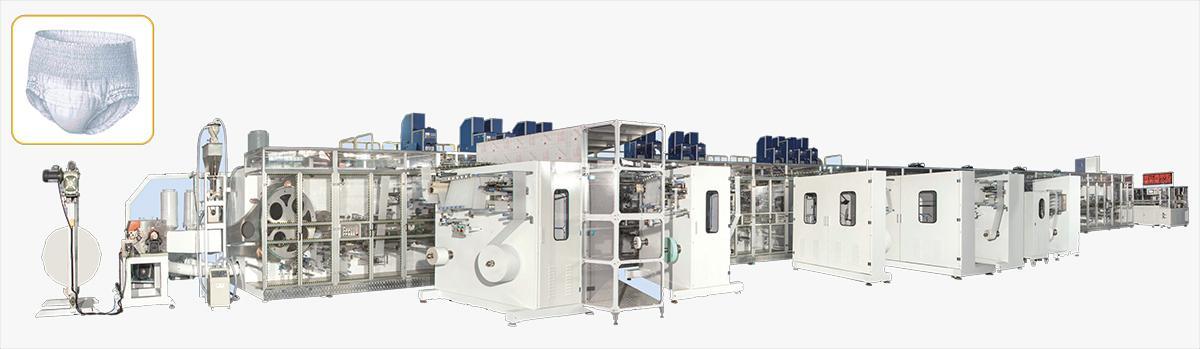
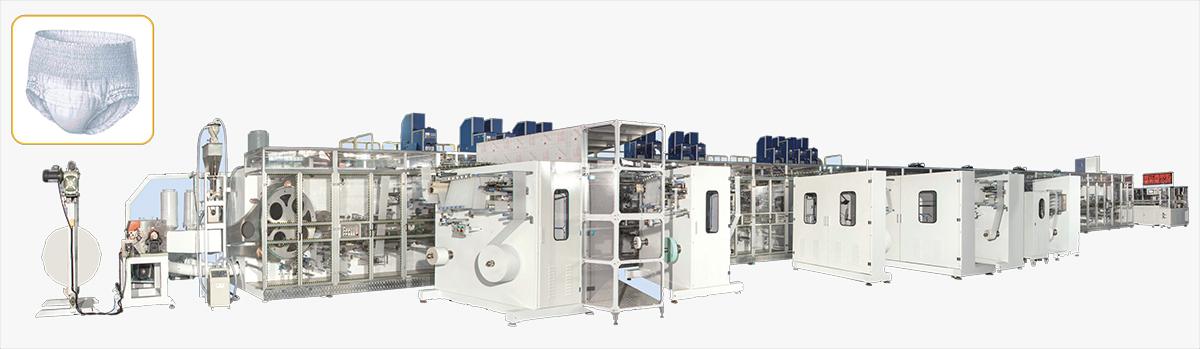
The automatic baby diaper manufacturing machine category provides the equipment context for the original sale inquiry. HAINA can review the buyer's product matrix, FAT baseline, changeover requirements, and training needs. The factory should then turn configuration-specific guidance into controlled operating tasks.
Prepared parts, verified rolls, controlled recipes, and release checks reduce change loss without weakening quality.
Recover from stops systematically
For post-sale production records, separate scheduled care and cleaning, roll loading, unsuitable material, a quality containment event, mechanical breakdown, control-system failure, missing utilities, inspection response, packer-side congestion, and delay for an authorized release. Define how recurring short stops are recorded so they remain visible.
At a stop, establish safety and contain product first. Preserve the alarm sequence, current operating condition, recipe, material lots, affected samples, and last known acceptable check. Diagnose from the first abnormal event rather than the last alarm produced as the line decelerated. Inspect adjacent components before declaring the correction complete.
Resetting does not establish recovery. Restore guards and safety condition, verify settings and materials, start through the controlled sequence, segregate output, and inspect characteristics related to the intervention. Record the first accepted product. For recurrence, open a problem record with evidence, owner, containment, cause analysis, corrective action, and follow-up under representative operation.
Review losses and verify action
A shift record should include product, size, recipe, materials, staffing, startup interval, stable periods, changeovers, stops by cause, accepted output, rejects, holds, samples, waste, setting changes, maintenance work, and open issues. At handover, both teams verify line condition, partly used rolls, temporary controls, alarms, work orders, quality status, and due checks at the machine.
Prioritize a recurring loss with reliable evidence and meaningful impact. Assign one action owner and define what success will look like: reduced recurrence, acceptable product, no new downstream defect, no safety compromise, and a sustained observation period. A list of many speculative actions disperses responsibility.
Use a simple test cycle: confirm baseline, state the cause hypothesis, make the controlled change, run representative product, inspect samples, compare loss and quality, and either standardize or reverse. Update the recipe, task, training, parts, or maintenance plan only after the result is verified and approved.
Loss review should convert specific station evidence into one owned action and a representative verification run.
Frequently Asked Questions
Does a machine offered for sale include every function needed for production?
Not automatically. Reconcile included options, change parts, inspection, auxiliaries, utilities, packing, software, documents, training, and buyer-supplied interfaces.
What is the best daily efficiency measure?
Use conforming released output against planned time and material, supported by startup, changeover, downtime, reject, hold, and waste categories.
When should a new material be introduced?
After technical data review, risk assessment, controlled trial, product inspection, approved settings, and recipe or document update where required.
How should a recurring minor stop be handled?
Preserve its sequence and context, identify the physical cause, correct it under authorization, verify sustained running and product, and track recurrence.
Conclusion
Efficient use of a diaper manufacturing machine for sale begins after procurement has turned the quoted scope into a verified operating baseline. Control startup release, stable running, material events, size changes, stop recovery, loss coding, and shift evidence around conforming product. The production manager should audit one complete order from material issue to released output and identify the largest evidence-backed recurring loss. Ask HAINA to review the relevant configuration and FAT baseline, then test one controlled corrective action with the actual diaper, material lots, recipe, samples, and shift records before standardizing it.