

Can the 350 ppm figure be used as the acceptance speed?
It is recorded as design speed, while 250-300 ppm is recorded as stable working speed. The signed FAT must define the accepted rate and its test conditions.


Factory acceptance plan
The CLK350 record cannot be accepted from a peak counter reading alone. A useful FAT begins by settling what the machine is being asked to make, then records the material lots, run condition, quality checks and scope boundaries that produced the result. This is especially important here because the title describes a sanitary napkin line while the page is filed in the menstrual-pants catalog and its legacy material field contains waist and leg-cuff components.
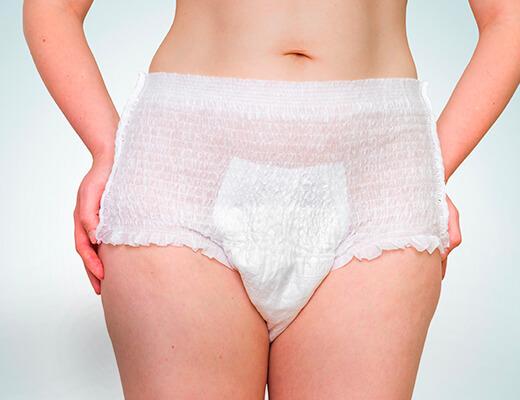
The old body refers to ultra-thin, regular and overnight sanitary napkins and lists unwinding, embossing, SAP application, folding, wing pressing and wrapping. The legacy material field, however, is labelled for a menstrual lady pad machine and includes waist inner nonwoven, waist outer nonwoven, waist elastic and leg-cuff items. Before tooling is accepted, the buyer should provide a signed product drawing or sample that resolves flat-pad versus pull-on construction.
The conflicting category and material records are historical evidence, not permission to assume a combined machine. The contract and FAT must state the actual product form.
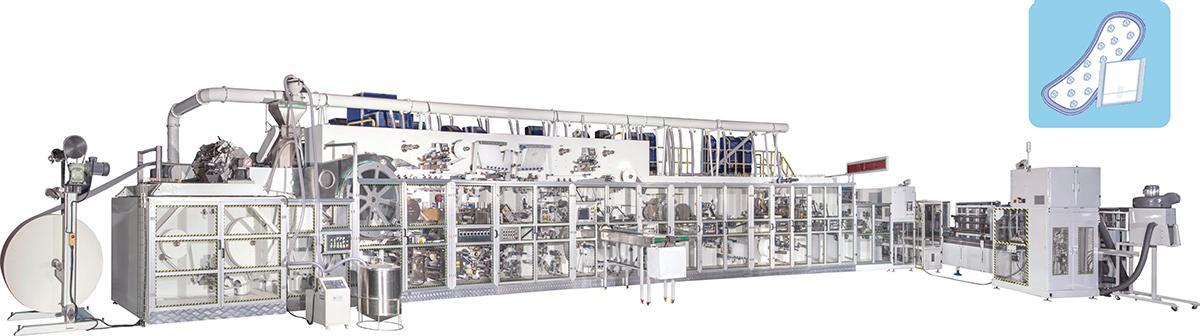
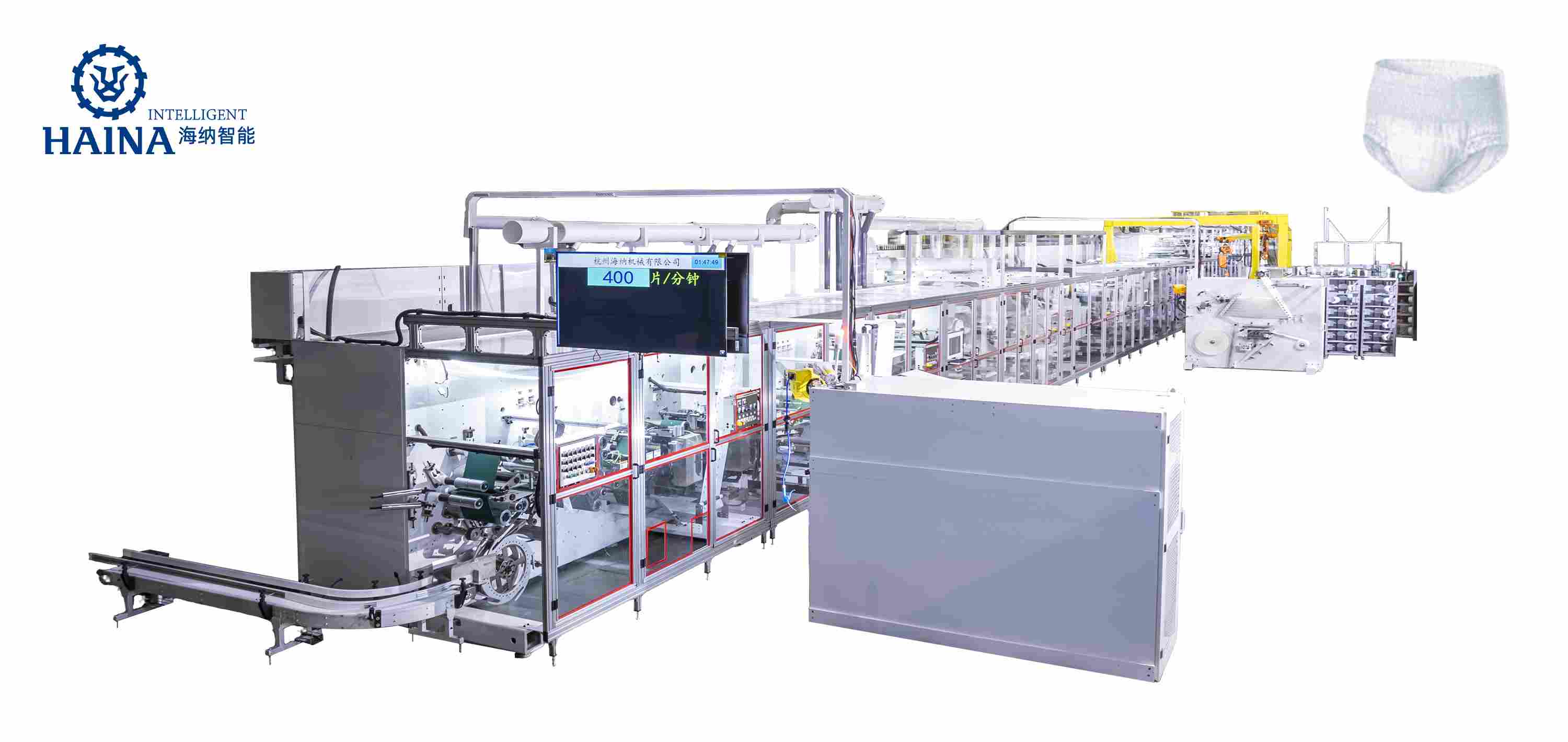
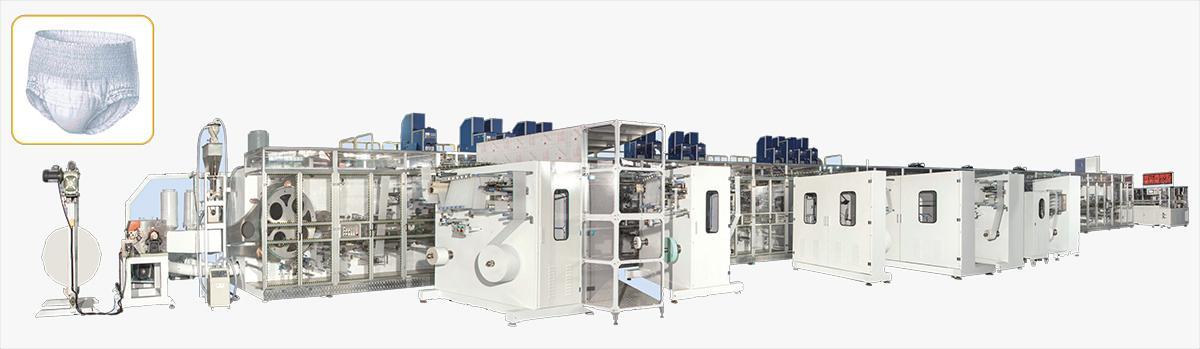
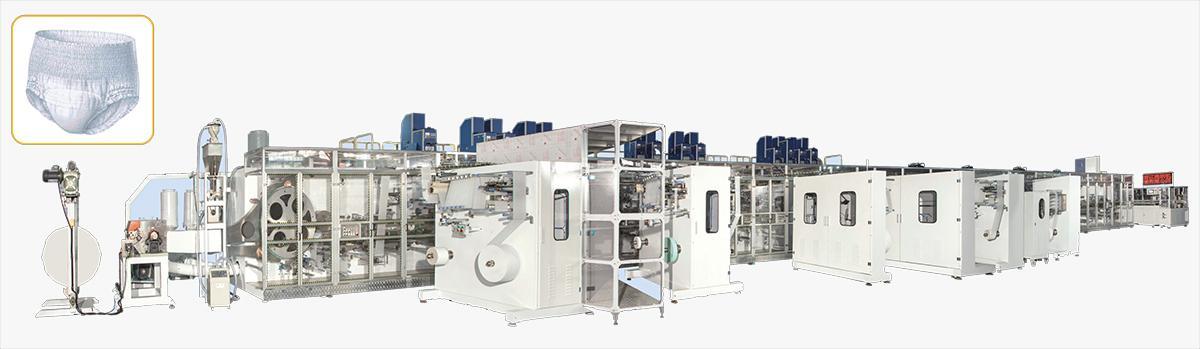
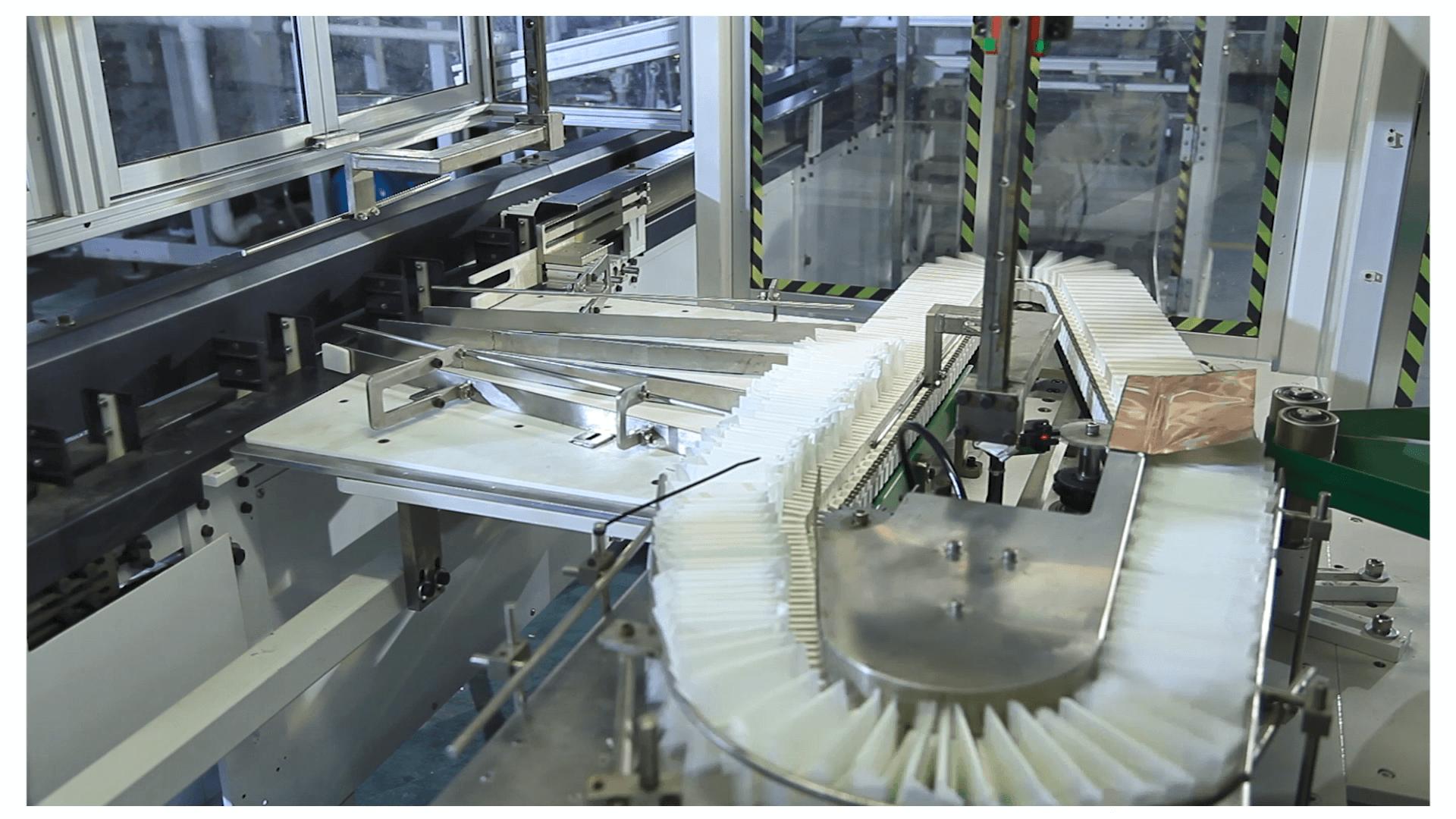
Automatic Lady Pad Machine. Design Speed: 350ppm. Stable Working Speed: 250-300ppm. Power Source: 380V,50HZ. Machine Capacity: 400KW. Air Pressure: 0.6-0.8Mpa. Machine Weight: 95 tons. The saved input list also names Hydrophilic NW (Topsheet). The older narrative lists a raw material unwinding machine, embossing unit, SAP application unit, folding unit, wing press unit, and wrapping unit, and says the line can make different types of sanitary napkins, such as ultra-thin, regular, and overnight napkins. These phrases are retained as source evidence; the signed sample still controls the actual configuration.
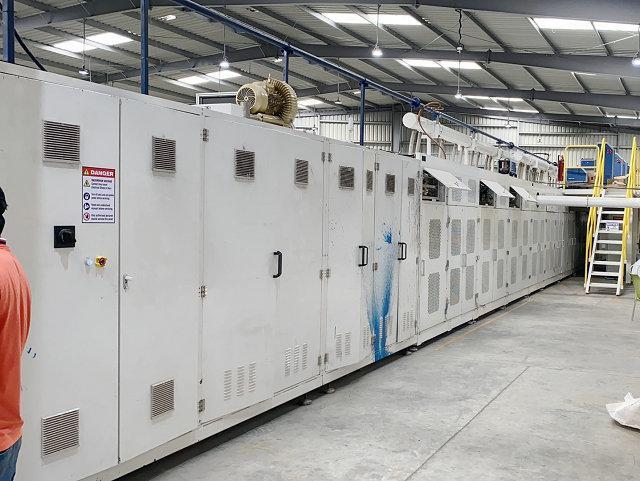
These four figures answer different questions. The FAT should state whether speed is measured at the cutter, transfer or accepted-product counter; how planned and unplanned stops affect efficiency; and which defects enter the rejection calculation. The source also lists a 45 m by 10 m by 4 m envelope and a 95-ton machine weight. Layout, foundation and service access should be checked independently from production performance.
| Recorded process area | Evidence to retain | Acceptance question |
|---|---|---|
| Raw-material unwinding | Roll IDs, splice log and tracking samples | Did each approved web feed without an unexplained change? |
| Embossing and SAP application | Set points and measured product samples | Does the agreed product construction remain consistent through the run? |
| Folding and wing pressing | Dimension checks before and after restart | Are fold and wing positions within the buyer-approved tolerance? |
| Wrapping and discharge | Pack presentation, count and stop record | Does the downstream boundary match the signed scope? |
Pass file
Accepted samples, measurements, recipe revision, material lots and timed-run summary.
Open-item file
Every deviation, owner, corrective action and date for recheck.
Handover file
Approved operating settings, training record, maintenance list and supply-boundary confirmation.
HAINA should not close this CLK350 FAT until the product identity conflict is resolved and the same approved construction is used in the test record. That protects both the buyer's product target and the machine acceptance boundary.
It is recorded as design speed, while 250-300 ppm is recorded as stable working speed. The signed FAT must define the accepted rate and its test conditions.
No. The title, catalog and material records conflict. Product form, tooling and included stations require contract confirmation before testing.
Use the same approved product drawing, input grades, recipe, downstream scope, counting rules and sampling plan, then retain the evidence with the result.
Automatic Lady Pad Machine
|
Dimensions(L×W×H8) |
45m*10m*4m |
|
Design Speed: |
350ppm |
|
Stable Working Speed: |
250-300ppm |
|
Rejection Rate: |
≤4% |
|
Efficiency: |
≥85% |
|
Power Source: |
380V,50HZ |
|
Machine Capacity: |
400KW |
|
Air Pressure: |
0.6-0.8Mpa |
|
Machine Weight: |
95 tons |
Automatic Menstrual Lady Pad Machine
| No. | Raw materials |
| 1 | Hydrophilic NW (Topsheet) |
| 2 | Hydrophobic NW (Legcuff) |
| 3 | Elastic for Legcuff |
| 4 | ADL |
| 5 | Fluff pulp |
| 6 | SAP |
| 7 | Upper tissue/NW |
| 8 | Lower tissue/NW |
| 9 | Pe film |
| 10 | Waist inner NW |
| 11 | Waist outer NW |
| 12 | Elastic for waist |
| 13 | Construction glue |
| 14 | Elastic glue |
| 15 | Wetness indicator glue |





Menstrual Pants Machine to anyone looking for a more sustainable and cost-effective solution for managing menstruation.Dylan 2024-05-31
Menstrual Pants Machine a great solution for busy individuals.Samuel 2024-05-31
Menstrual Pants Machine a one-time investment that pays off in the long run.Noah 2024-05-31
It's user-friendly and requires minimal effort to keep it running smoothly.Michael 2024-05-31