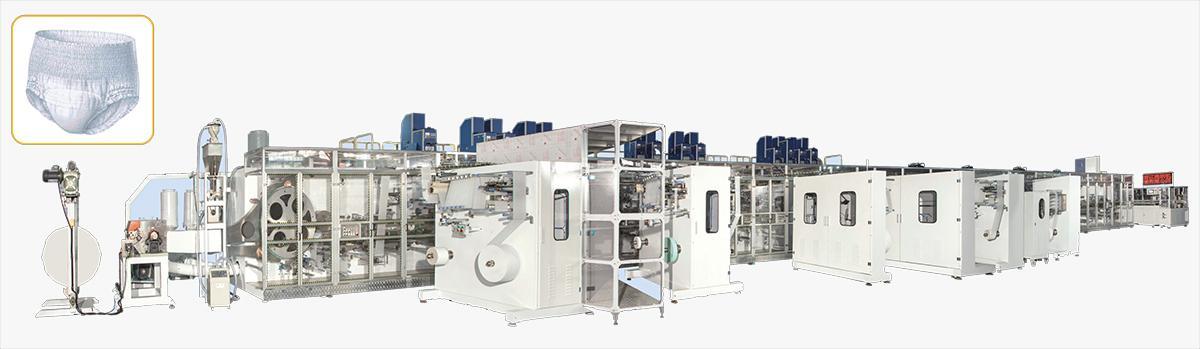
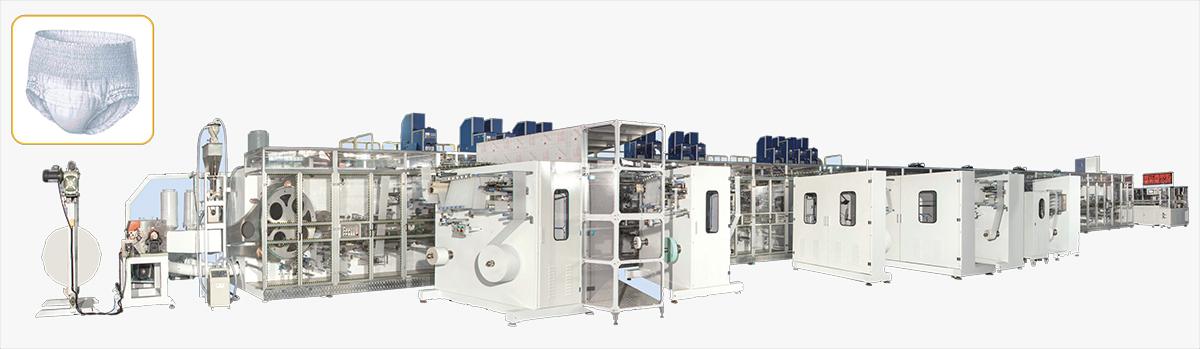
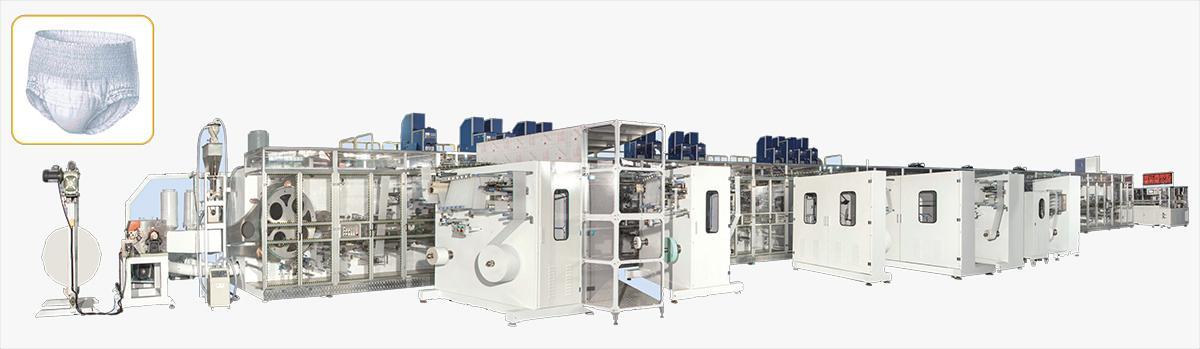
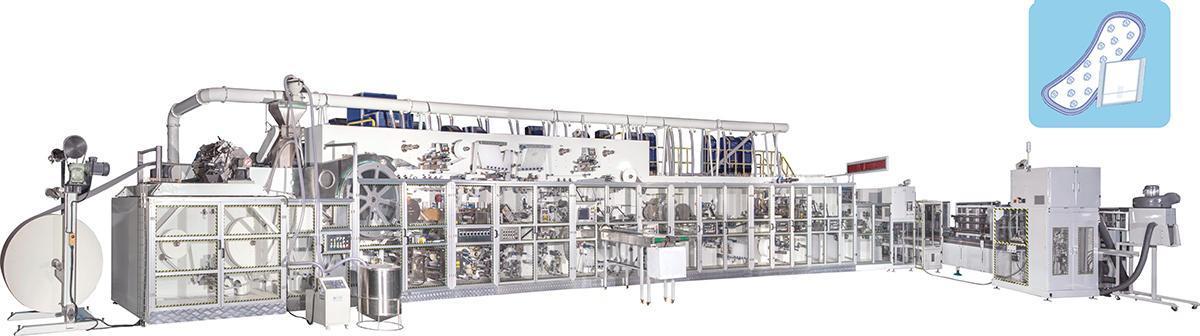
Adult & Baby Diaper Machine,Sanitary Napkins Production Line Blog
Use a diaper machine efficiently by transferring supplier evidence into daily controls, prepared changeovers, diagnostic escalation, and verified gains.
The title "Efficient Usage of Diaper Machine Manufacturers" is most usefully understood as how a factory uses a supplier's diaper machine and technical support efficiently. The answer is to freeze product and material requirements, convert FAT evidence into operating references, prepare startup and changeovers, record stops and waste by cause, maintain the line by condition, and escalate faults with complete evidence. A diaper machine manufacturer can clarify configuration, settings, spares, training, and diagnostics, but cannot replace the buyer's production, quality, maintenance, and material controls. Efficiency should be verified as stable conforming output under stated conditions, not assumed from design speed or automatic functions.
Supplier-Supported Diaper Machine Operation
Efficient use begins with a clear boundary between equipment capability and factory operation. The supplier provides an agreed configuration, documents, training, FAT evidence, and support scope. The buyer supplies approved materials, utilities, operators, maintenance, quality methods, production orders, packaging interfaces, and site governance. When either side assumes the other owns a task, startup delays and repeated adjustments follow.
A production manager should keep an as-built capability matrix. It lists validated diaper formats, material grades or approved groups, format parts, recipes, normal adjustment ranges, inspection functions, downstream presentation, and known restrictions. HAINA can help review this matrix against delivered equipment and FAT records. Future claims should remain conditional until the relevant product and material are trialed.
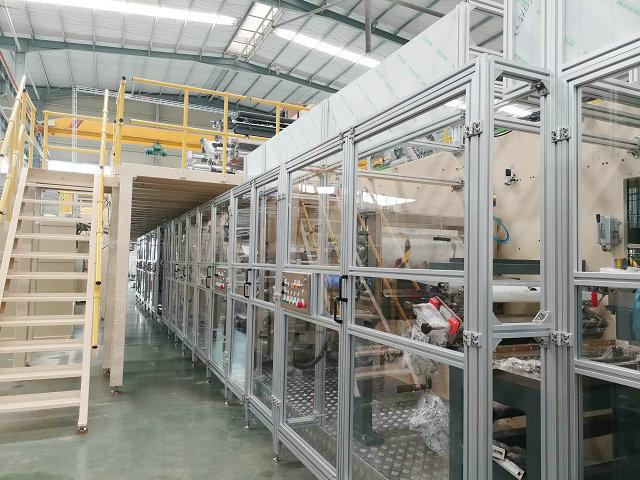
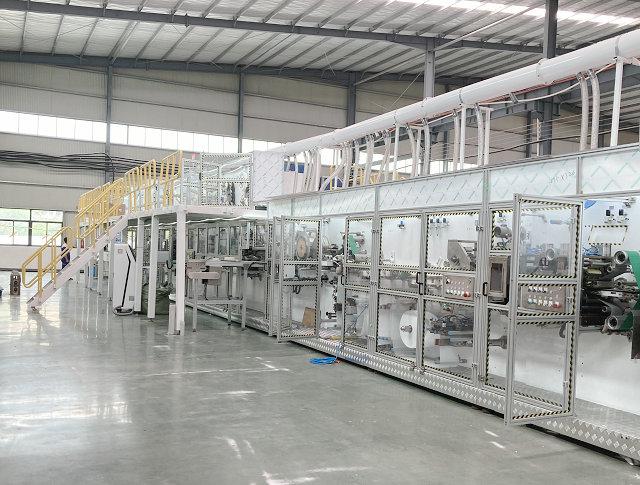
Efficient supplier-supported operation starts from the exact delivered configuration.
Define what efficiency means locally without inventing a universal percentage. Useful measures include conforming output under an identified condition, planned versus unplanned time, changeover phases, stop causes, setup and process loss, quality holds, repeat adjustments, and maintenance recurrence. Always preserve product mix, material, shift, and planned trials as context. Design speed is not a daily efficiency measure.
Convert Supplier Evidence Into a Factory Baseline
Take the FAT configuration, approved recipe, materials, stable-run observations, product samples, alarm behavior, and test records and turn them into controlled factory references. Confirm that site utilities and packaging integration do not alter the baseline. Keep versioned controller, drive, operator-interface, and recipe backups tied to machine identity. Store drawings and manuals where authorized users can retrieve the current revision.
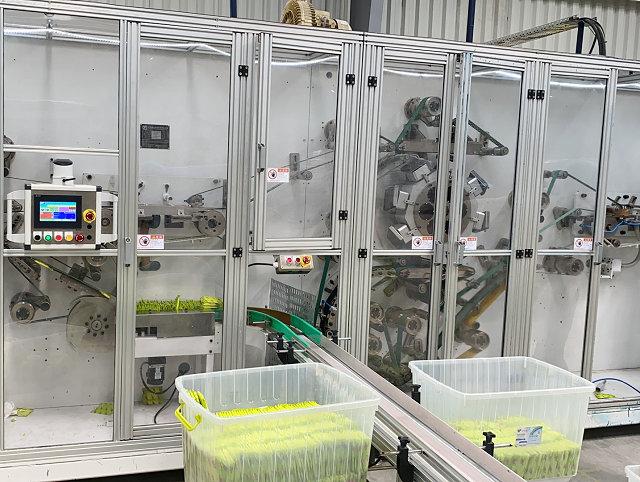
Create station reference sheets for unwinds, core processing, web paths, elastic and fastening application, adhesive and bonding, cutting, folding, detection, rejection, and discharge according to configuration. Show what good condition looks like, what the operator can adjust, the expected response, and when to stop. Include photos or samples only when they are labeled and controlled.
Train shifts using the same baseline. A supplier demonstration becomes useful only when local people can repeat the task safely and explain its limits. Verify competence for startup, threading, splicing, normal setup, quality response, controlled stopping, reject segregation, cleaning, handover, and first-line diagnosis. Technical tasks outside operator authority should have a clear escalation path.
Control Startup and Stable Daily Running
Before startup, verify product order, recipe, format tooling, materials and lots, line clearance, maintenance release, guards, utilities, adhesive readiness, quality plan, inspection and reject devices, waste routes, and packaging availability. Identify setup material. Bring systems to their approved states in the documented sequence and observe each material at the first control point.
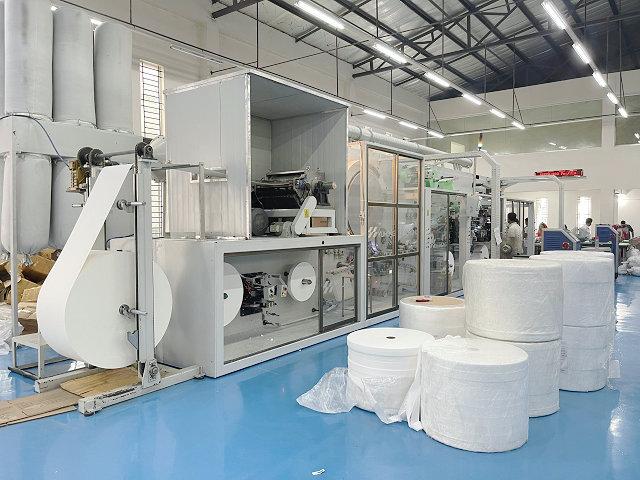
Stable operation depends on input and output together. Monitor roll condition, web tracking, tension response, core shape and transfer, component placement, adhesive pattern, bond or seal, cut, fold, product handling, alarms, rejects, and packaging stops. Compare against the product-specific reference. A line running without an alarm can still create nonconforming diapers.
Operating evidence
Factory owner
Supplier input when needed
Decision use
Recipe and material match
Production and quality
Configured range and setup clarification
Release startup
Web and process trend
Operators and process engineering
Reference behavior and diagnostic points
Hold stable condition
Alarm and stop history
Production and maintenance
Alarm logic and technical escalation
Prioritize root-cause work
Product samples and rejects
Quality
Machine-function evidence
Release or contain output
Change and repair record
Engineering and maintenance
Configuration and part guidance
Revalidate affected scope
Use stable working speed appropriate to the validated format and material, then verify output, intervention, and downstream behavior. Do not confuse design speed, momentary operating speed, stable working speed, configurable range, and contractual acceptance value. Where operation must slow, record the cause rather than making an unsupported claim that the machine lacks capacity.
Daily control uses the validated material and process references transferred from acceptance.
Reduce Changeover Loss Through Preparation
Prepare the next order while the current order runs where activities are safe and do not mix materials. Verify rolls, format parts, tools, recipe, drawings, samples, cleaning equipment, and packaging requirements. Define the last accepted unit of the current product and material disposition. An organized external preparation reduces time without compressing isolation, line clearance, or quality release.
Separate changeover phases: production stop, safe access, cleaning, mechanical conversion, material loading and threading, recipe and sensor checks, process stabilization, product sampling, quality release, and packaging release. Measure each phase. If most time is spent stabilizing, faster bolts will not solve the real issue; review references, material behavior, tooling repeatability, and sampling flow.
Control parts by product and position. Use identification that survives handling, protected storage, and a completeness check. Record wear or damage discovered during conversion. Independently verify high-consequence installations such as cutters, folding parts, sensors, and protective devices. Restore all tools and removed components before movement.
After changeover, start from the approved recipe and mechanical references. Adjust one variable at a time, retain samples, and record deviations. If a product requires settings outside the controlled range, stop and request engineering or supplier review. Do not overwrite a master recipe to save a single shift.
Escalate Faults With Diagnostic Evidence
Useful supplier support depends on a complete problem statement. Capture machine identity, module, product and recipe, material grades and lots, operating state, first alarm, alarm sequence, first product symptom, time, recent changes, settings, photographs or video if permitted, samples, tests already performed, and current safety status. Preserve backups and do not reset repeatedly before evidence is saved.
Classify the fault by first departure, not final jam location. Web wander, component drift, core variation, weak bond, bad cut, fold issue, false reject, or packaging disturbance each has a different diagnostic path. Check material, utility, contamination, wear, looseness, alignment, sensor mounting, timing, and prior intervention before replacing the component named in an alarm.
Specific fault evidence allows remote or factory support to focus on the initiating process zone.
When implementing supplier guidance, control access and changes through the factory method. Record original and revised settings, software or part identity, reason, and expected outcome. Test machine function and affected product attributes. A remote recommendation does not transfer the buyer's responsibility for safe execution and release.
Escalate repeat events with a timeline. Include frequency, operating context, replaced parts, temporary corrections, and whether the symptom moved. Ask for a cause hypothesis and test that can disprove it. This is more efficient than requesting a generic list of possible causes or replacing the same spare again.
Govern Training, Spares, and Supplier Support
Maintain a competence matrix by task and shift. Use supplier training to develop local trainers and technical owners, but verify observed performance. Refresh training after significant material, format, control, or hardware changes and where records show repeated operating error. Keep authorized parameter and maintenance boundaries visible.
Build spares from the final installed component register. Distinguish consumables, wear items, failure spares, repairable units, and strategic parts. Verify manufacturer, model, ratings, configuration, dimensions, and matched assemblies. Store items to protect electronics, precision surfaces, adhesives, elastomers, and lubricants. Record installation and failure cause; repeated consumption should trigger investigation.
Agree support inputs and channels. Define what evidence the factory sends, who triages locally, who can approve remote access, how software files are exchanged and controlled, and how parts are identified. Avoid assuming an unverified response time or warranty result. Review support effectiveness by whether issues are diagnosed, controlled, and prevented from recurring.
When evaluating a baby diaper machine, include practical support scenarios in FAT or training: restore a backup, identify a spare, diagnose a representative alarm, perform a changeover check, and release product after intervention. Demonstrated workflows reveal more than broad service language.
Verify Improvements With Product Results
Select improvements from evidence such as recurring stop minutes, repeat alarms, setup losses, adjustment trends, quality holds, process waste, and maintenance findings. Define one problem with product, material, format, station, and time context. Establish the baseline and target condition without inventing a guaranteed percentage. Assign owner, due date, test, and rollback.
Trial changes under controlled conditions. Protect safety and product status, change one factor where practical, collect machine observations and product samples, and include downstream effects. A modification that reduces one stop but weakens a bond or increases packaging jams is not an improvement. Evaluate multiple relevant runs before revising the standard.
Improvement is verified through repeatable conforming output, not machine motion alone.
Update recipe, work instructions, maintenance tasks, training, drawings, spares, and acceptance references affected by an approved change. Communicate the effective date and product scope. Review whether old settings or parts remain available and could be restored accidentally. Close the action only after an effectiveness check under the relevant production condition.
Frequently Asked Questions
What should a factory send when requesting supplier troubleshooting?
Send machine and module identity, product and recipe, material lots, first alarm and symptom, operating state, recent changes, settings, samples, clear media if allowed, checks completed, and the current safe condition.
Does automatic equipment require less process knowledge?
No. Automation coordinates actions, but operators and engineers must understand material paths, settings, signals, product effects, limits, and recovery. Otherwise automatic correction can hide drift until quality fails.
How can supplier training be retained after handover?
Use task-based records, local trainers, controlled work standards, observed competence, reference samples, and refresh training after changes. Record unanswered questions and close them with equipment-specific evidence.
What is a fair way to measure efficient use?
Track conforming output, operating context, stop causes, changeover phases, setup and process losses, quality holds, repeat adjustments, and maintenance recurrence. Compare like products and materials rather than one headline ratio.
Conclusion
Efficient use of a diaper machine and its manufacturer support comes from a controlled factory baseline, prepared operation, evidence-rich escalation, governed spares and training, and verified improvement. The production manager should now choose one recurring loss and build a complete event package from material and alarm through product disposition. Review it with HAINA, implement one approved action, and accept the result only after repeat production shows stable conforming diapers under the stated condition.