A fault message appears on the main line screen after an external unit has been changed. One supplier points to the other supplier's equipment, while the buyer needs a workable investigation. The location of the alarm is a starting observation, not a finding about responsibility. A joint evidence packet should reconstruct the last accepted configuration, the later changes and the sequence of symptoms before anyone turns an assumption into a claim.
The purpose here is to organise a technical enquiry across supply boundaries. Contract coverage, liability and remedies remain matters for the relevant agreements and authorised decision makers. This guide does not decide which party caused a fault.
Capture the Observed Symptom Without a Premature Diagnosis
Record what the operator saw, where it was displayed and what the line was doing at that moment. Preserve the original wording or an authorised screenshot of the message, with the relevant time reference and equipment identity. Distinguish the first observed symptom from later messages that followed. A sequence of alarms can be lost when a report simply lists every message visible after the event.
Keep direct observations separate from interpretations. “The main screen displayed an external-unit status message” is an observation; “the external unit caused the stop” is a proposed explanation. The latter needs evidence. Ask contributors to identify which statements they witnessed and which came from another person's account. This makes the report more useful without requiring everyone to agree immediately on a cause.
Site personnel should follow the approved response and safety procedures for the condition. Evidence collection must not encourage repeated unsafe operation or unauthorised access. The coordinator can request existing records and documented observations while competent personnel decide what further technical activity is appropriate.
Draw the Boundary That the Equipment Actually Crosses
Identify the main line, the external unit and any intermediate equipment involved in the reported interaction. Name the parties responsible for the relevant supplied functions and project documents. A simplified diagram can help the team distinguish physical connections, operating responsibilities and information exchanges without assuming that they share the same ownership boundary.
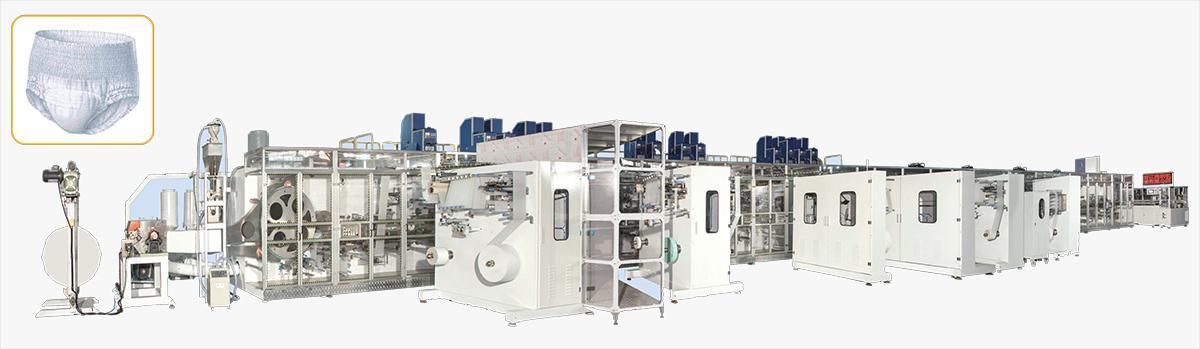
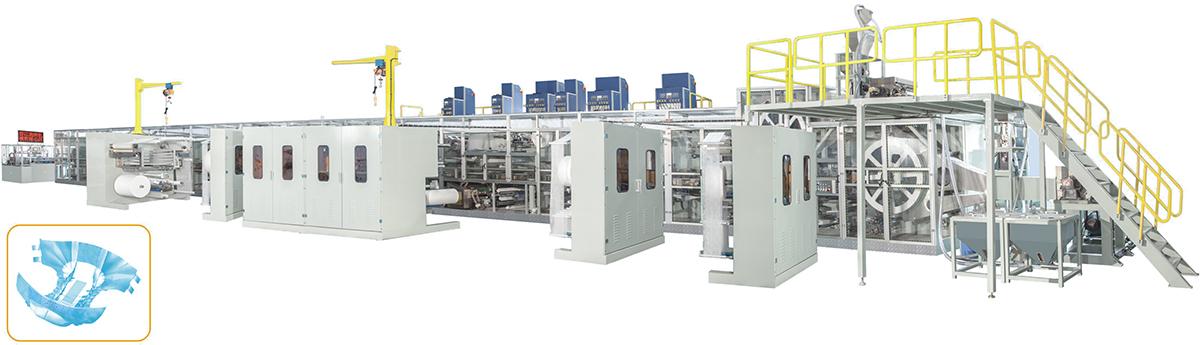
For a HAINA project, the adult diaper production line category establishes the general equipment family. It does not define the scope of a particular multi-supplier contract. Use the actual order documents, interface agreements and accepted configuration to describe who supplied what. Where an interface responsibility is unclear, record that as a project evidence gap.
Include buyer-supplied equipment and later integrations in the map. An investigation can miss a relevant change if it considers only the original supplier packages. At the same time, do not assume that the most recently added unit is responsible. The map identifies where evidence may be found; it is not a diagram of blame.
A supply boundary identifies evidence sources; it does not establish fault responsibility.
Recover the Last Configuration Supported by Acceptance Evidence
Find the most recent configuration for which the relevant interaction was documented and accepted. Record the equipment identities, applicable revisions and the particular function demonstrated. Avoid using “it worked before” as the entire baseline. The investigation needs to know what worked, under which conditions and which record supports that statement.
The available evidence may be limited. An earlier test may have demonstrated independent operation but not the current combined sequence. A commissioning note may identify a configuration without proving the reported function. State those limits openly. A weak baseline does not prove a supplier defect, but it changes what the team must establish during the enquiry.
Preserve configuration records through authorised project channels. Do not circulate credentials, access tokens or unrestricted system exports in a general fault packet. The technical participants should agree which relevant records can be shared and how. A useful packet provides enough traceable information to review the interface while respecting the actual access and confidentiality arrangements.
Reconstruct Changes and Symptoms on a Shared Timeline
List changes after the accepted baseline, including equipment substitutions, authorised configuration revisions, product changes and modifications to the external interface. Identify the source of each entry. A service record, change approval and operator recollection have different evidential value; retaining their provenance helps reviewers understand where uncertainty remains.
Align time references before comparing records from several devices or organisations. Where clocks were not synchronised or an event time is approximate, note the limitation. Do not manufacture a precise event order from incompatible timestamps. An interval or an explicitly uncertain sequence is more informative than a confident chronology that the underlying records cannot support.
Include the first known occurrence of the symptom and any documented observations before or after it. Temporal association can identify a useful investigation branch, but it does not by itself prove causation. A change preceding a fault may be relevant, incidental or one of several interacting conditions. The joint team needs a discriminating evidence action to decide among those possibilities.
Consider an illustrative disagreement: one account places a product change before the first fault, while another places an external-unit revision first. Keep both accounts with their sources until records resolve the order. Do not select the account that best supports the coordinator's initial theory. If the order remains uncertain, the investigation proposal should recognise that uncertainty and seek evidence capable of distinguishing the competing explanations. The packet can be useful even when it cannot reconstruct every event, provided it does not hide the limits.
Assign Owners to Evidence Requests, Not to Unproven Faults
A party can be responsible for supplying a record without being responsible for the incident. Use that distinction when assigning actions. The following illustrative schedule organises a joint enquiry; it does not describe a real event or allocate contractual liability.
Question in the enquiry
Evidence requested
Likely evidence holder to confirm
Decision supported
What state was last accepted?
Relevant acceptance record and configuration reference
Project commissioning owner
Define the documented baseline and its limits
What changed at the interface?
Approved change record and affected revision information
Organisation performing or approving the change
Identify differences requiring technical review
What was first observed?
Operator account and available event records
Site operations and authorised equipment specialists
Reconstruct symptom sequence without assuming cause
What would distinguish competing explanations?
Agreed investigation proposal and acceptance of its scope
Joint technical reviewers
Authorise a focused evidence-gathering action
For each request, record the expected document or observation and the question it will answer. “Supplier to investigate” is too broad to manage well. A bounded request lets the recipient respond with evidence, explain that the record does not exist or identify another appropriate source.
Give duplicate or conflicting records clear identities. Two exported files with the same descriptive name may concern different configurations or observation windows. Ask the authorised source to identify their scope before treating one as a replacement for the other. This document-level check can resolve an apparent technical disagreement that actually comes from the parties discussing different evidence.
Keep the baseline, later change records and observed symptoms distinguishable in the investigation packet.
Frame Joint Actions Around Competing Explanations
Ask the technical reviewers to state the explanations still consistent with the evidence. Then identify what observation could distinguish them. This encourages purposeful investigation rather than an open-ended series of adjustments. The coordinator should record the proposed action, its authorised owner, relevant conditions and the result needed to answer the question.
Any live investigation must follow the machine manufacturer's guidance and the site's approved safety process. This article does not recommend disabling interlocks, bypassing communication checks or modifying control settings. Qualified personnel should determine whether a proposed activity is permissible and what precautions and approvals it requires.
Preserve the starting configuration and document authorised changes made during the enquiry. If several things are changed together, acknowledge the resulting limit on causal interpretation. A symptom disappearing after combined changes may support operational recovery, yet leave the contribution of each change unresolved. That distinction matters when the team later decides what evidence supports a technical finding.
Separate Restoration, Technical Findings and Commercial Attribution
Restoring operation answers an immediate operational question. Establishing a cause answers a different question. The joint report should say which of those outcomes the evidence supports. A temporary arrangement may allow a permitted project activity to continue while a cause remains under review; its scope and approval should be recorded through the normal project process.
Describe findings using the demonstrated conditions. If an observation supports an interface mismatch in a particular configuration, retain the supporting configuration and evidence references. Avoid expanding the statement into a claim about an entire supplier's equipment range or service quality. Technical precision makes later review easier for both the buyer and the suppliers.
Commercial attribution should be handled by the authorised parties using the applicable agreements and established facts. A technical coordinator should not infer warranty coverage from the screen that displayed an alarm, or from who supplied the most recent replacement. The evidence packet can inform that discussion without pretending to decide contractual rights.
Close the Packet with Known Limits and Remaining Actions
At closure, index the symptom record, accepted baseline, change timeline, evidence responses and authorised investigation results. Identify which explanations were supported, excluded or left unresolved, with a reason for each conclusion. A reader who did not attend the meetings should be able to follow the logic from observation to finding.
Record the configuration now in service and the approval supporting it. If a temporary measure remains, identify its restrictions and the owner of the outstanding work through the established change process. Do not let a successful restart erase an unresolved documentation or verification requirement.
Finally, return any useful interface clarification to the controlled project documents. This could be a clearer ownership statement, a corrected configuration reference or an agreed evidence requirement for future changes. The value is a more understandable baseline for the next enquiry, not an unsupported promise that similar faults can never recur.
The final record should explain both the supported finding and the configuration returned to service.
Frequently Asked Questions
Does an alarm on the main screen identify the responsible supplier?
It identifies where a message was displayed. Responsibility needs additional evidence about the function, configuration, events and applicable agreements. Treat the display location as an observation, not a verdict.
What if the suppliers use different event clocks?
Record their time references and known uncertainty before combining logs. If exact alignment is unavailable, preserve that limit and avoid claiming a precise event sequence that the records cannot establish.
Must the buyer wait for a final cause before documenting recovery?
No. Record the authorised recovery activity and its result when it occurs. Keep any unresolved causal question distinct so that operational progress is not mistaken for a completed root-cause finding.
How should an unavailable record be handled?
State that it is unavailable, identify the question it would have answered and agree the next appropriate evidence action. An absent record should not be replaced with an assumption about what it would show.
Conclusion
A joint supplier investigation becomes more workable when evidence ownership is separated from fault attribution. Capture the symptom, recover the accepted state, describe subsequent changes and ask each party for the records it can supply. Authorised technical actions can then address specific unresolved explanations. The final packet should preserve what was established, what remains uncertain and which configuration has been approved for use.