Adult & Baby Diaper Machine,Sanitary Napkins Production Line Blog
Track five downtime data points on a fully automatic baby diaper machine to reveal stop sources, operating context, recovery loss, and verified actions.
Five downtime data points make a fully automatic baby diaper machine easier to improve: exact event duration, the first stop source, machine state at failure, product and material context, and recovery result. Together they show how long production was unavailable, where the event began, what the line was doing, which conditions were present, and when quality-released output returned. Alarm counts alone cannot provide that story. Plants should use synchronized timestamps and controlled reason codes, preserve the first-out event, and connect machine logs with operator observations and product samples before selecting maintenance or process actions.
Set One Downtime Boundary
Define when a stop starts and ends. The start may be the loss of quality-released production, the main-line stop command, or another controlled event. The end should normally be the return of conforming output, not simply motor movement. If startup stabilization and quality release are excluded, the report understates the production effect and hides recovery work.
Separate planned downtime, unplanned downtime, short stops, changeovers, material replenishment, cleaning, quality holds, utility loss, and downstream interruptions. These categories serve different owners and actions. Keep the threshold for a microstop explicit; events below the threshold still need aggregate visibility so frequent short losses do not disappear.
Use the same time basis across the PLC, HMI, vision system, bagger, historian, maintenance system, and manual forms. Check clock drift and time-zone handling. Where systems cannot synchronize, document the relationship and use a reliable reference during investigation. Event sequence is difficult to reconstruct when clocks disagree.
Measurement note: Downtime is a plant definition. Record the boundary and exclusions beside every report so teams do not compare unlike figures.
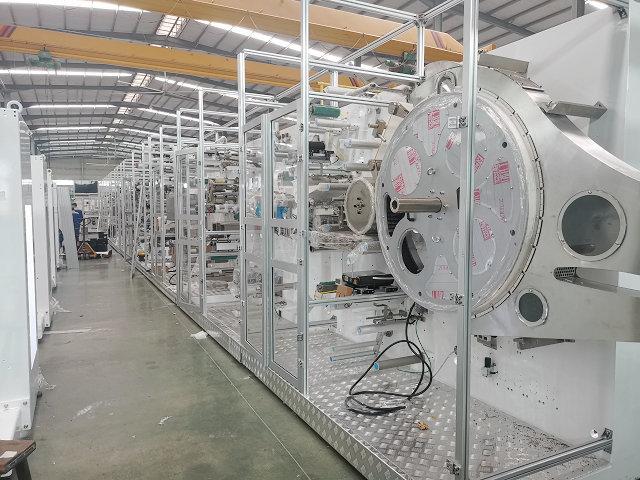
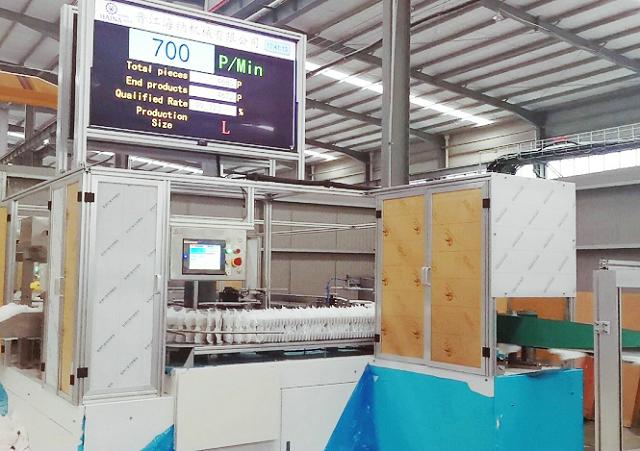
Reliable downtime analysis begins with synchronized machine and production records.
Data Point One Exact Event Duration
Capture at least the event start, machine motion restored, first complete product, and first quality-released product. These timestamps divide the loss into detection, waiting, repair or correction, restart, and stabilization. A ten-minute stop with immediate recovery has a different cause and opportunity than a short repair followed by a long quality adjustment.
Do not round every event to a broad interval. Automated timestamps can preserve precision, while operators can confirm periods not visible to the controls, such as waiting for a mechanic, a spare, material, or a quality decision. Use state transitions to avoid counting overlapping alarms as separate downtime.
Duration distributions are more useful than averages alone. Repeated brief events can have a low average but consume significant time and material. Rare long events need separate review because they may involve parts lead time, difficult access, or incomplete diagnosis. Show frequency, total duration, and recovery variation.
Data Point Two First Stop Source
Record the first condition that removed run permission or caused production to stop. A cascade may generate many later alarms: web break leads to low tension, missing product, vacuum timeout, bagger starvation, and downstream fault. Counting every alarm equally makes the largest alarm category look like the cause even when it is only a consequence.
Configure or derive a first-out record with module, device, alarm code, timestamp, and machine state. Preserve the event sequence long enough for investigation. Operators should not repeatedly reset before capturing evidence unless the safe procedure demands an immediate action. The HMI should use clear device and location names rather than unexplained code numbers.
A first stop source is not always the root cause. A guide-limit alarm can result from an off-center roll, poor threading, damaged edge, failed sensor, actuator problem, or frame alignment. It identifies where the line reacted; diagnosis still needs condition and context.
The first-out event separates the initiating stop from secondary alarm cascades.
Data Point Three Machine State
Record what the line was doing: setup, threading, warm-up, startup, acceleration, stable running, speed change, low-roll operation, splice, deceleration, normal stop, restart, changeover, cleaning, maintenance, or packaging hold. The same device fault can have different causes in different states. A sensor problem at startup may be setup related; at a splice it may be reference loss; during stable running it may be contamination or hardware.
Add relevant state variables without collecting uncontrolled volumes of data. Useful examples include line speed, recipe, roll diameter band, tension-zone state, guide position, vacuum condition, adhesive readiness, inspection mode, accumulation level, and bagger status. Choose variables that support a known decision and define sample rate and retention.
State data also reveals design weaknesses. If most failures occur during transitions, the steady-state process may be sound while sequencing, acceleration, tension transfer, or recovery logic needs work. If they occur after extended running, contamination, heat, wear, or material buildup deserves attention.
Data Point Four Product and Material Context
Attach SKU, size, recipe revision, package format, and material lot to the event. Include roll identity for the affected web, supplier code, winding direction, splice type, and any approved substitution. Product context helps distinguish a machine-wide weakness from a problem limited to a narrow material, large size, soft substrate, or particular construction.
Record environmental or utility context when relevant: compressed-air condition, vacuum, extraction, temperature, humidity, incoming power event, or network loss. Avoid filling every record with data that nobody checks. Instead, define automatic fields and an exception checklist for observations that can reasonably influence the failure.
Keep affected product samples when they provide evidence. Label them with time, machine side, defect, SKU, material lot, and disposition. Photos should include scale and location. A sample can reveal periodic cut marks, lateral drift, weak bonding, wrinkles, missing components, or contamination that alarm text alone cannot explain.
Context capture at the line
SKU, size, controlled recipe revision, and package count.
Relevant material and roll IDs, including the last splice.
Current machine state, speed condition, and affected module.
Recent maintenance, setting, software, or material changes.
Labeled defect samples, photos, trends, and alarm sequence.
Product and roll identity reveal whether downtime follows a particular material or format.
Data Point Five Recovery Result
Record the action that restored operation, the person or role, parts used, parameter changes, products rejected, and quality release. Distinguish temporary recovery from confirmed correction. Resetting an alarm, cleaning a sensor, replacing a component, adjusting tension, changing a roll, and editing logic have different follow-up requirements.
Define success as more than a running signal. Capture first complete product, first conforming product, waste during restart, repeated alarms, and whether the event returns within a review period. When a parameter is changed, preserve the previous approved value, authority, reason, backup, trial evidence, and rollback condition.
Recovery records improve spare and training decisions. Frequent waiting for one technician indicates a competence or access gap. Repeated temporary cleaning may indicate contamination control or sensor placement. Long quality-release delays may require faster measurement or a better startup sequence rather than another machine part.
Build a Useful Downtime Record
Data point
Required field
Decision it supports
Common data error
Exact duration
Stop motion restore and quality release times
Separate repair from stabilization loss
Ending the event at motor restart
First stop source
First-out module device code and sequence
Focus diagnosis before alarm cascade
Using the most frequent secondary alarm
Machine state
Startup splice stable run changeover or restart
Find transition-specific causes
Recording only running or stopped
Product context
SKU recipe roll and relevant recent change
Separate machine and material patterns
Using free text with missing lot identity
Recovery result
Action parts settings waste and verified output
Detect temporary fixes and support gaps
Closing the event as reset complete
Automate reliable fields, but keep operator input focused on observations the controller cannot know. Use short controlled reason codes with an optional note, then audit completeness. HAINA can review diagnostic and control information available for a fully automatic baby diaper machine; the plant should define how that information maps into its own production and maintenance systems.
Turn Events into Verified Actions
Review downtime at three levels. Shift review confirms containment and unfinished events. Weekly review identifies repeated stop sources and assigns focused investigation. Periodic engineering review examines chronic losses, long events, parts, material patterns, transition states, and whether previous actions remain effective. Keep separate views for frequency, total duration, longest event, and restart waste.
For a selected problem, verify the event definition and inspect first-out sequences, trends, material context, physical evidence, recent changes, and maintenance history. Reproduce the condition only when safe and controlled. Establish a cause supported by evidence, choose an action, and define what measurement will prove improvement.
Compare equivalent production after the action. A lower alarm count may simply mean an alarm was delayed or disabled. Confirm the original condition no longer occurs, quality remains within specification, no new stop source appears, and recovery is repeatable across shifts. Update procedures, training, spare plans, inspection intervals, and software backups as needed.
Protect the data from silent definition changes. If an alarm code, downtime threshold, machine state, recipe name, or reporting boundary changes, record the effective time and explain it in trend reports. Historical comparison otherwise produces a false improvement or decline. Periodically audit a sample of automated events against video, shift notes, maintenance work, and production counts.
Give supervisors a short exception report showing missing fields, conflicting timestamps, repeated temporary fixes, and events closed without quality release. Data quality must be managed before teams use the report to rank equipment or personnel.
Select one significant recurring or long-duration event family.
Confirm the five data points and collect missing physical evidence.
Test the suspected cause against the event state and material context.
Implement one controlled action with ownership and rollback.
Verify sustained production and product quality under comparable conditions.
Standardize the result or reopen the investigation with new evidence.
Downtime improvement closes with comparable stable production and quality-released output.
Downtime Data Questions
Is the alarm with the longest duration always the root cause?
No. It may be a secondary state that remained active. Use the first-out sequence, machine state, context, and physical evidence.
When should downtime end?
Use the plant's controlled definition. For production loss, first quality-released output is often more informative than the moment drives restart.
Should short stops be recorded?
Yes. Capture them automatically where possible and aggregate by source, because frequent short events can consume substantial time and material.
How much machine data should be stored?
Store the variables, resolution, and retention needed for defined decisions. More uncontrolled data does not replace synchronized, contextual records.
Conclusion
Useful downtime records tell one complete event story: duration, first stop source, machine state, product context, and recovery result. Standardize the boundary and clocks, preserve first-out information, and connect automated logs with operator evidence and samples. Review frequency and duration separately, then verify corrective action through comparable quality-released production. This turns alarm history into an improvement system.