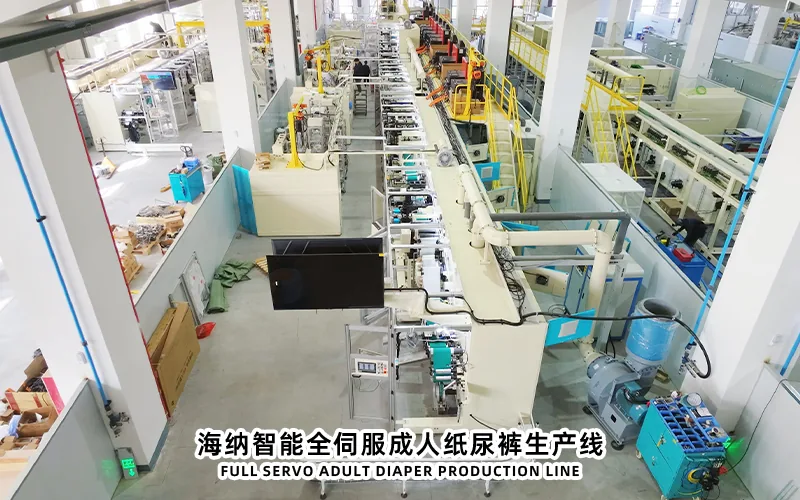
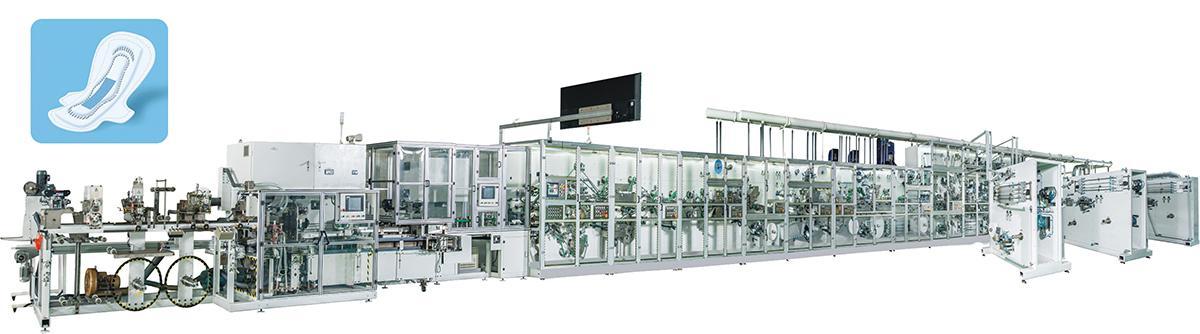
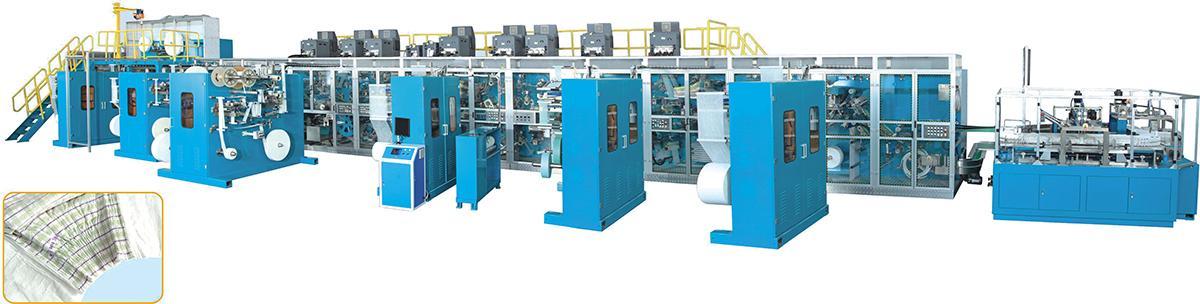
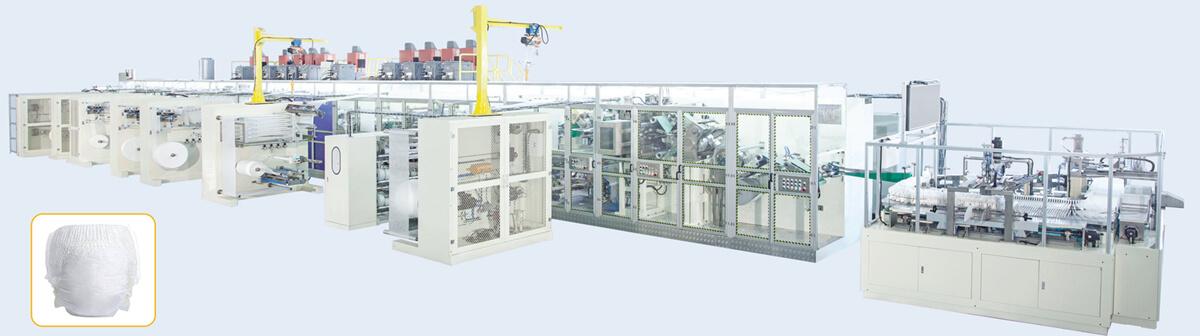
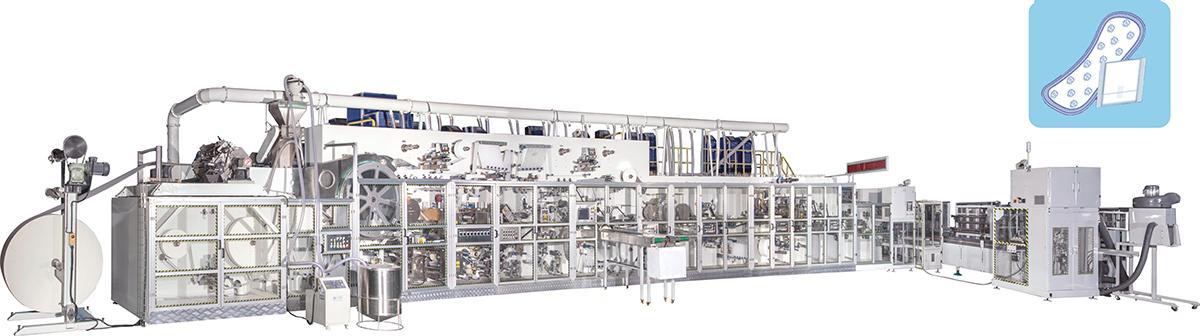
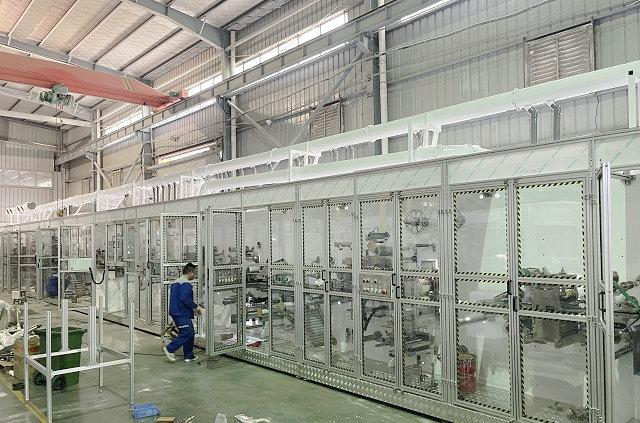
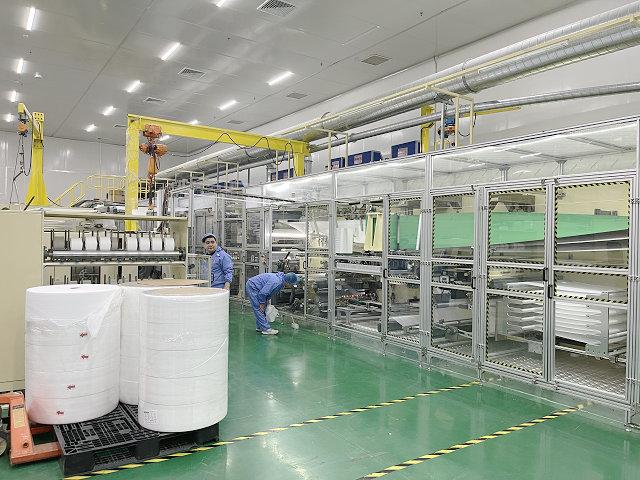
Choose a fully automatic adult diaper machine when stable demand, repeat products, trained maintenance, reliable materials, and integrated packaging justify automation across the complete flow. Choose standard automation when the factory needs lower complexity, more manual flexibility, or a phased investment and can manage additional intervention without harming quality or output. The meaningful comparison is not the label. Buyers must identify which roll changes, adjustments, inspections, rejection, counting, stacking, and bagging tasks are automated. They should then test good packed output, changeovers, fault recovery, staffing, utilities, and lifecycle support under the same product and material conditions.
Define What Each Automation Level Includes
Fully automatic and standard automation are not universal equipment classes. One supplier may use fully automatic for a servo-controlled converter that still requires manual roll splicing and packing. Another may include automatic web changes, inspection, rejection, counting, stacking, and bagging. Request a function schedule that describes the normal operator action at every material feed and product handoff.
Begin at raw material preparation. State how rolls are lifted, loaded, centered, tensioned, guided, joined, and removed. Continue through pulp and SAP handling, core formation, web lamination, elastic and cuff feeding, fastening parts, cutting, transfer, folding, inspection, rejection, counting, stacking, bagging, case handling, and data recording. Mark each function as automatic, assisted, manual, optional, or outside the supplier boundary.
A high degree of servo control can improve recipe coordination and reduce mechanical setting work, but it does not automatically provide unattended production. Materials still need preparation, quality still needs authority, and maintenance still needs safe access. Conversely, a standard line may use effective automatic controls in critical zones while leaving selected low-frequency tasks manual.
Use one product matrix for comparison. Automation value changes with adult diaper size, construction, material variation, order length, changeover frequency, pack format, and operating schedule. A feature that is valuable during long repeated runs may add complexity when the factory changes products frequently and lacks technical support.
The automation boundary should be traced from each material feed to packed product discharge.
Compare Material Continuity and Process Control
Material continuity often separates automation levels. Automatic or zero-speed splice arrangements can reduce interruption when a roll ends, but their value depends on roll preparation, joint quality, detection, accumulator capacity where used, and reliable tension recovery. A manual splice may be reasonable for a lower-volume line if the stop is controlled and the business accepts the lost time.
Automatic web guiding and closed-loop tension control can reduce frequent operator correction. They still require correct roll condition, clean rollers, suitable sensor references, calibration, and recipes. Compare the number of independent tension zones, the materials covered, and the response during startup, acceleration, splicing, stop, and restart. A broad feature name does not show whether lightweight webs remain controlled throughout the process.
Servo drives can coordinate phase, cut, placement, and product length through recipes. Standard automation may use a mix of servo and mechanical transmission. The decision should consider product range, changeover needs, access to technicians, spare drives, software backups, electrical environment, and diagnosis. Mechanical simplicity can be useful, while recipe control can reduce adjustment variation when maintained correctly.
Operating distinction: Design speed describes equipment capability. Stable working speed describes repeatable production under agreed conditions. Actual operating speed reflects the plant's current materials, people, maintenance, and downstream state. Automation should be compared using stable good output, not only design speed.
Evaluate Inspection Quality and Rejection
Standard automation may rely on basic presence sensors, material-end detection, web guiding, and operator sampling. A more fully automatic scope may add camera inspection, registration monitoring, adhesive checks where applicable, reject actuation, reject confirmation, and data collection. The useful question is which defined defects are monitored at which location.
Automatic inspection does not replace product release. Quality personnel still need approved specifications, sampling, measurement, functional tests, retained samples, deviation control, and authority over suspect production. A camera can only make decisions from configured features, lighting, timing, and limits. It may reject good products if the recipe is wrong or miss an unconfigured defect.
Require a challenge plan. Introduce controlled examples or signals for missing components, displacement, splice, registration, or another included function, then observe detection, line response, reject timing, reject confirmation, count reconciliation, and recovery. Challenges must be safe and appropriate to the machine; they should be agreed in the FAT protocol.
Trace products during a stop. If the line contains multiple pieces between inspection and rejection, the control logic must identify the correct items. After a power or packaging interruption, the team should know which products are automatically removed and which need manual segregation. This is often more important than the number of cameras listed in the quote.
Inspection value depends on defined defects reliable rejection and traceable stop recovery.
Connect Counting Stacking and Packaging
A converter can be highly automated while the factory still counts, compresses, loads, and seals bags manually. For a complete comparison, define the finished boundary. Standard automation may discharge folded products to a manual or semi-automatic packing station. A fully integrated line may count and stack products, transfer them to a bagger, manage compression, seal the bag, apply a code, and communicate faults.
Downstream automation is valuable when the product and pack range are suited to the equipment and production volume keeps it utilized. It can reduce repetitive handling and count variation. It can also introduce bag opening, stack transfer, sealing, coding, and format-change failure modes. Factories need operators and technicians who can restore these functions without creating a long upstream stop.
Review rate balance and accumulation. The bagger must accept the expected product thickness, fold, stack count, bag material, and size range at the required stable output. Define what the converter does during a downstream block: continue into accumulation, slow, stop, or reject. Signals, guarding, responsibility, and restart sequence should be shown on an interface document.
Good packed output is the most useful commercial boundary when automatic packaging is included. Count accepted bags or cases, then reconcile converter rejects, packaging rejects, startup waste, and suspect product. A peak upstream display cannot establish the capacity of the integrated system.
Match Automation to Factory Capability
Automation must fit the plant. Verify electrical supply quality, compressed air, vacuum, dust extraction, cooling, adhesive support, network, floor and access conditions, material handling, and environmental controls. Additional automatic modules can increase utility points, sensors, drives, control cabinets, software, and spare-parts requirements.
Review staffing by competence, not only headcount. A more automatic system may reduce continuous manual handling while increasing the need for technicians who understand controls, drives, sensors, networks, and integrated packaging. A standard system may need more operators but permit quicker local diagnosis with the skills already available. Training and staff retention affect both choices.
Product and supply stability also matter. Automated splicing, guiding, inspection, and bagging perform within defined material windows. If raw materials vary widely or packaging specifications change frequently, the factory needs strong incoming control and recipe governance. Otherwise, people may spend more time correcting automatic modules than the original manual task required.
Management should model downtime consequences. A connected automatic line can deliver coordinated production, but a failure in one critical downstream module may stop the whole system. Standard automation may permit temporary manual handling in some cases. Decide whether redundancy, bypass, accumulation, local support, and critical spares are justified for the production plan.
Use an Automation Decision Table
Decision condition
Standard automation may fit when
Full automation may fit when
Evidence before selection
Demand and product mix
Volumes are developing or formats change often
Demand supports repeated stable campaigns
Forecast by size product and pack format
Material handling
Planned stops and assisted splices are acceptable
Roll continuity has measurable production value
Roll data consumption and observed change sequence
Quality control
Basic sensors plus staffed sampling control risk
Defined online checks and rejection reduce exposure
Defect list challenge test and release plan
Packaging
Manual or semi-automatic packing supports output
Stable pack range justifies integrated bagging
Full product and bag trials with stop recovery
Technical support
Mechanical and basic controls skills are stronger
Controls packaging and data skills are available
Competence matrix training and spare plan
Investment approach
Phased scope protects cash and learning
Complete integration supports an established case
Total installed cost and scenario analysis
The chosen automation level should match factory capability and the required production boundary.
Test Five Operating Scenarios
Scenario-based verification
Normal stable run: record people, interventions, good packed output, quality checks, rejects, alarms, and utility behavior.
Planned roll change: observe preparation, splice, web recovery, suspect-product removal, and the actual need for operator assistance.
Size and pack change: record recipes, physical parts, tools, stopped work, first-good-product release, and packaging restart.
Defined process fault: use a safe agreed challenge to test detection, alarm clarity, reject handling, diagnosis, and recovery.
Downstream interruption: stop or block the packaging interface under the protocol and verify accumulation, converter response, segregation, and restart.
Run scenarios with the staffing level assumed in the business case. Supplier specialists may support the test, but their interventions should be logged. If a specialist repeatedly corrects web settings or packaging faults, the buyer must decide whether training, design changes, extra staffing, or a different automation boundary is needed.
When comparing a HAINA fully automatic adult diaper machine, buyers can use these scenarios to review the proposed main-line and downstream scope. Final automation functions and acceptance values must be stated in the project agreement and FAT protocol.
Plan a Phased Automation Path
Phased automation can be practical when future demand is credible but the first-stage operation needs learning and cash control. Reserve physical space, transfer height, controls, signals, utilities, guarding interfaces, and software provisions for defined future modules. A vague statement that a bagger can be added later is not enough; obtain an interface drawing and responsibility list.
Choose phases by operational value. Web guiding, tension control, recipe coordination, material-end alarms, and reliable rejection may protect process stability from the first day. A bagger may be deferred if manual packing can safely handle initial volume. Alternatively, labor availability may make downstream automation essential at launch even when some upstream roll changes remain assisted.
Track operational data after startup: material-change stops, manual interventions, false rejects, changeover time, pack-out labor, packaging blocks, maintenance hours, and good packed output. These records show where the next automation investment would remove a real constraint rather than add a feature with limited use.
Phased automation needs defined physical control utility and acceptance interfaces.
Automation Comparison FAQ
Does fully automatic mean no operators are required?
No. People still prepare and load materials, oversee quality, respond to alarms, manage packaging supplies, clean, maintain, and approve production. The actual roles depend on the complete supplied scope.
Is a full-servo line always a fully automatic line?
No. Servo control describes how selected axes are driven and coordinated. Roll changes, inspection, rejection, stacking, bagging, case handling, and logistics may still be manual or optional.
Which automation should be prioritized first?
Prioritize functions that address verified constraints in safety, quality, continuity, labor, or packaging. Use task and loss data instead of selecting the longest feature list.
How should two automation offers be accepted fairly?
Test the same product, materials, pack formats, staffing boundary, duration, quality limits, normal events, and fault recovery. Report stable good packed output separately from design speed.
Conclusion
A fully automatic adult diaper machine is the stronger fit when integrated functions solve documented operating needs and the plant can support their materials, skills, utilities, spares, and data. Standard automation remains a sound choice when flexibility, simplicity, and phased growth better match the business. Define every automatic and manual task, include packaging in the boundary, and compare both options through real operating scenarios. The right decision is the system that produces accepted packed products predictably under the buyer's actual conditions.