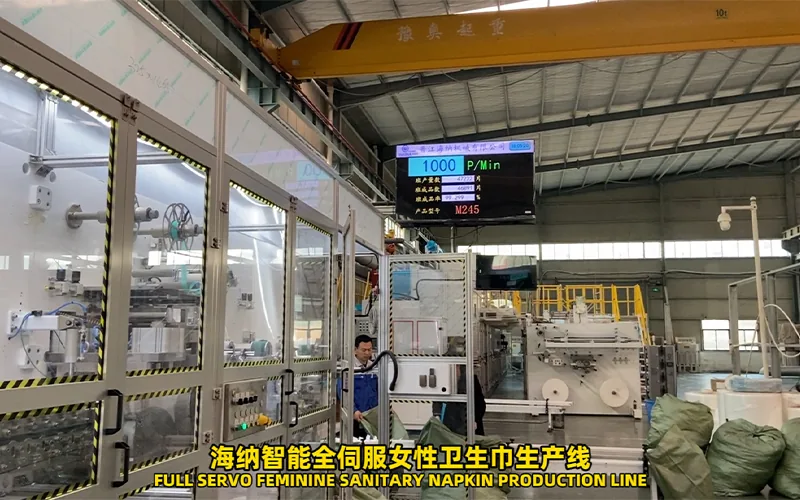
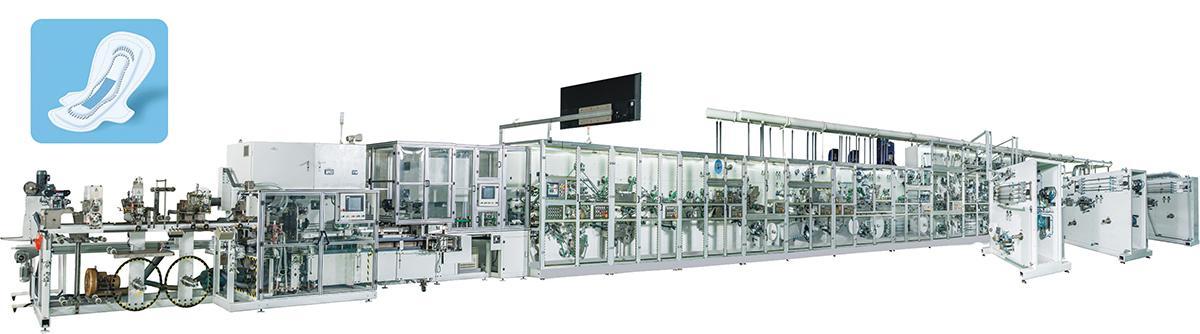
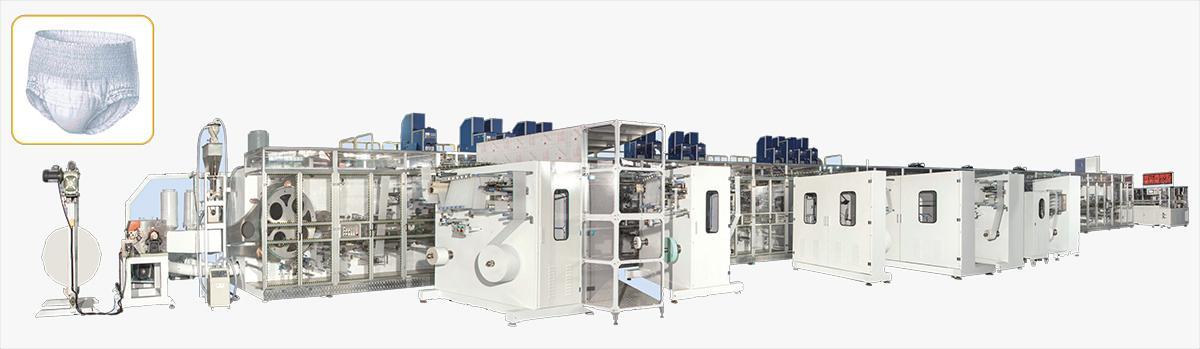
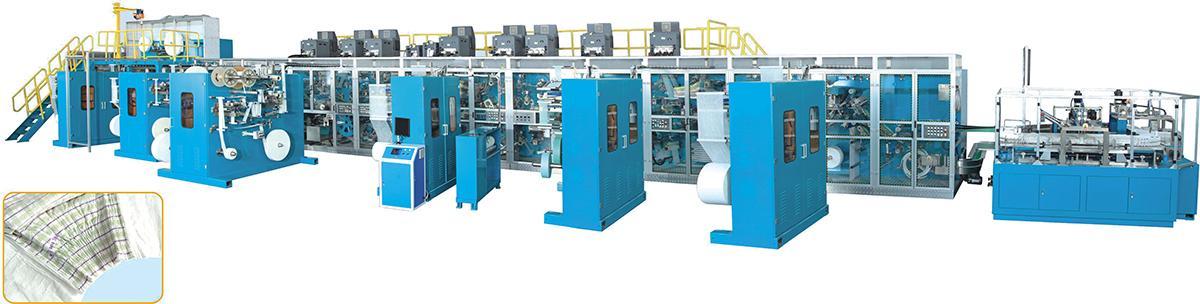
The functions that reduce manual handling on a fully automatic sanitary pad machine are automatic roll splicing, recipe-based motion control, web guiding, closed-loop tension control, online defect inspection, tracked rejection, automatic counting and stacking, and a properly integrated bagger. Their value depends on the plant's product mix, roll preparation, packaging format, material logistics, and maintenance capability. Buyers should map every operator touchpoint before selecting options, then verify the complete sequence with normal materials during FAT. Automation reduces repeated lifting, threading, sorting, counting, and transfer work only when upstream and downstream responsibilities are designed together.
Map Manual Touchpoints Before Choosing Functions
Begin with a shift-level work map rather than a list of equipment options. Follow every material from storage to the unwind and every finished pad from discharge to a sealed package. Record who moves the roll, prepares the splice, selects the recipe, threads the web, checks the first product, clears a reject, counts pads, supplies bags, removes finished packs, cleans process areas, and records a stop. Include frequency, duration, lifting method, travel distance, and the condition that starts each task.
This map separates repetitive handling from skilled decisions. Repetitive roll loading, counting, stacking, and transfer are strong automation candidates when their inputs are standardized. Product approval, root-cause diagnosis, maintenance isolation, and unusual material recovery still need trained people. A plant that tries to automate undefined work may install expensive functions while operators continue to intervene because roll preparation, bag supply, quality limits, or fault ownership remain unclear.
Calculate labor at the system boundary. A line-side operator may disappear from one station while work moves to material preparation, bag replenishment, reject sorting, or maintenance. Count all routine roles that support stable saleable output, not only people visible beside the main frame. Use the map again during factory acceptance testing to confirm which touches were actually removed and which were merely relocated.
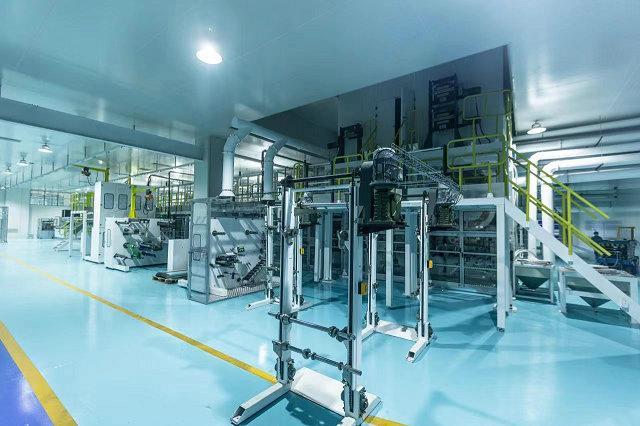
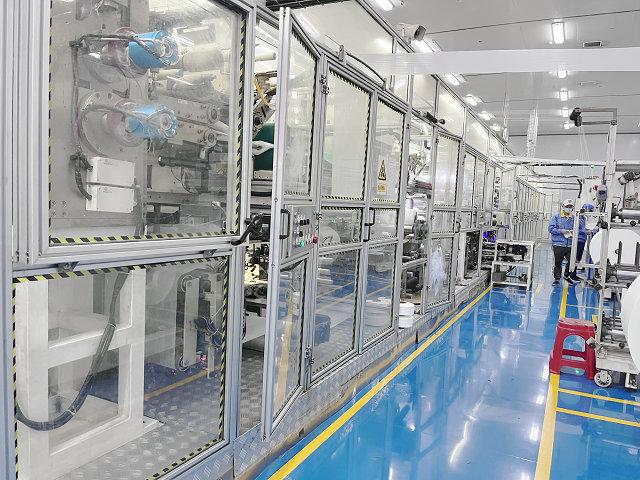
Map material, operator, quality, and packaging interactions across the complete line.
Reduce Roll Change Handling
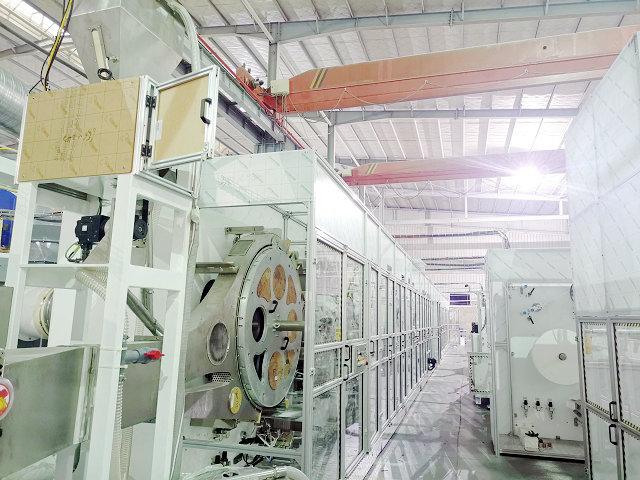
Unwind design affects both labor and interruption time. A basic unwind may require stopping the line, removing the depleted core, loading a prepared roll, aligning it, joining the web, and rethreading part of the process. An automatic or zero-speed splice arrangement can preserve web movement through an accumulator while the new roll is joined. However, it does not remove the need to stage, inspect, lift, center, and prepare rolls correctly.
Ask the supplier to define supported roll diameter, width, core, weight, winding direction, splice tape, edge preparation, and web behavior. Lightweight film, soft nonwoven, release paper, and wrapper material may need different tension and splice logic. Verify low-roll detection, splice initiation, accumulator capacity, joint tracking, and the machine response when a splice fails. A safe lifting aid or roll trolley may deliver more practical labor improvement than an automatic feature used with unsuitable material logistics.
Place roll staging and lifting paths on the factory layout. Operators should not cross moving traffic or block guards while preparing the next roll. Provide controlled storage for tape, shafts, chucks, and cores. The target is a repeatable replenishment method in which the next roll is identified and ready before demand, not an isolated automatic sequence surrounded by manual searching and transport.
Use Recipes and Closed Loop Web Control
Recipe-based control reduces repeated manual setting when the plant makes several pad lengths or material structures. A useful recipe stores approved motion relationships, cut positions, registration targets, inspection windows, folding settings, and packaging parameters that can be changed electronically. It should identify the product version and protect critical values through access levels. Mechanical change parts, web widths, and material-specific setup still need a controlled checklist.
Servo synchronization can coordinate process modules and simplify selected format changes, while closed-loop tension and web guiding reduce constant operator correction. The result depends on sensor placement, dancer or load-cell behavior, drive tuning, roller condition, and material consistency. Ask which zones are independently controlled and how a disturbance at one unwind is prevented from moving registration at cutting, sealing, or wrapping.
Recipe selection should never be the only verification. The operator must confirm installed tooling, material codes, web routes, adhesive condition, guide positions, and downstream pack format before production. Establish a first-off sample release and a second check after ramp-up. Automation can repeat an incorrect combination very efficiently, so positive line clearance and product identification remain essential.
Recipes and closed-loop controls reduce routine adjustment when their inputs are verified.
Automate Inspection and Reject Tracking
Online inspection can reduce continuous manual sorting by checking defined features such as position, presence, registration, shape, fold, or packaging condition. Buyers should not specify vision inspection as a general quality promise. List each defect to be detected, the inspection location, acceptable boundary, sample method, response delay, and machine action. Some product properties still require off-line measurement or destructive testing.
The reject system must connect detection to the correct physical product. Confirm tracking through variable speed, acceleration, planned stops, and restarts. Challenge the system with controlled examples and verify that a known defect is detected, tracked, removed, and recorded without rejecting the adjacent good product. Define what happens when the camera, light, encoder, air supply, or reject confirmation fails.
Inspection data can reduce labor only when it supports action. Trend repeated faults by zone and product recipe, then assign investigation to production, quality, or maintenance. Excessive false rejects create more sorting work and hide real process loss. Quality staff should approve detection limits and audit samples; operators should respond to alarms; maintenance should preserve calibration, lighting, cleaning, and backup settings.
Control Counting Stacking and Transfer
Automatic counting and stacking remove repetitive hand counting when product spacing and orientation are stable. Define the required count, stack compression, orientation, transfer height, accumulation capacity, and response to a missing or rejected pad. The system should prevent an incomplete stack from being presented as a normal pack and should make recovery clear after a stop.
Product handling matters because sanitary pads can be light, flexible, individually wrapped, or sensitive to compression and edge damage. Test representative day and night formats across the intended count range. Observe the transition from main-line discharge through any conveyor, diverter, stacker, pusher, and bagger infeed. A module that performs correctly alone can still create jams when timing and mechanical interfaces are combined.
Integrate the Auto Bagger as One System
An auto bagger can remove manual stack transfer, bag opening, insertion, sealing, and discharge, but only when the bag specification and production pattern are controlled. Define film or premade bag dimensions, opening behavior, print registration if relevant, seal construction, pack count, compression, coding, inspection, and finished-pack discharge. Confirm how bag changes and replenishment are performed.
Rate matching must use normal operating behavior rather than one peak figure. Consider product mix, planned sampling, roll splices, rejected pads, bag replenishment, sealing temperature recovery, and downstream case packing. Define whether accumulation is available and what the main line does when the bagger slows or stops. Shared speed reference, product tracking, fault codes, emergency-stop zones, and restart permission should be agreed between both controls teams.
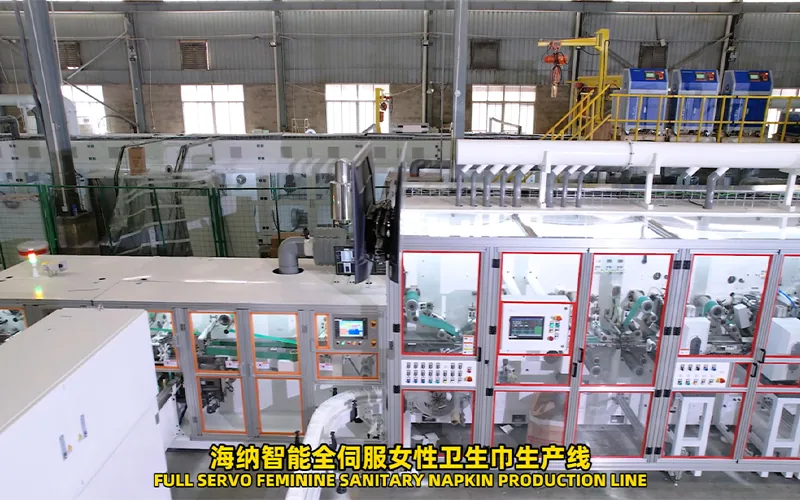
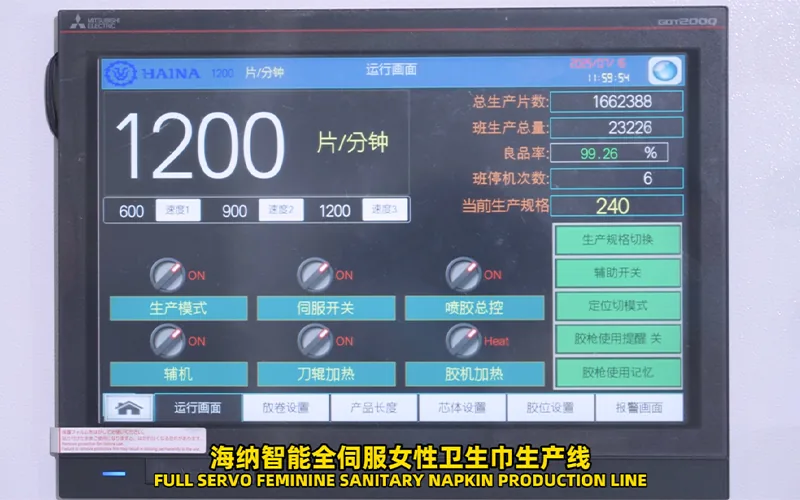
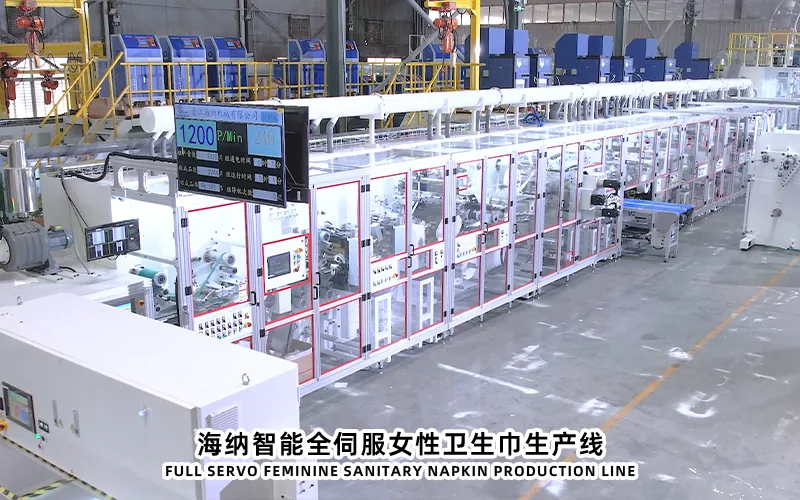
When reviewing HAINA's fully automatic sanitary pad machine, buyers can connect each automation option to their own touchpoint map, product range, and packaging boundary. The project-specific proposal should identify what is included, which partner owns each interface, and how the connected sequence will be accepted.
Downstream automation must be balanced with count, transfer, bag supply, and fault logic.
Retain Human Control for Abnormal Work
Automation changes job content rather than eliminating plant responsibility. Operators still confirm materials, approve first products, monitor trends, respond to alarms, and protect line clearance. Maintenance staff need stronger skills in sensors, drives, communications, software backups, and fault isolation. Quality staff must understand what online inspection can and cannot detect.
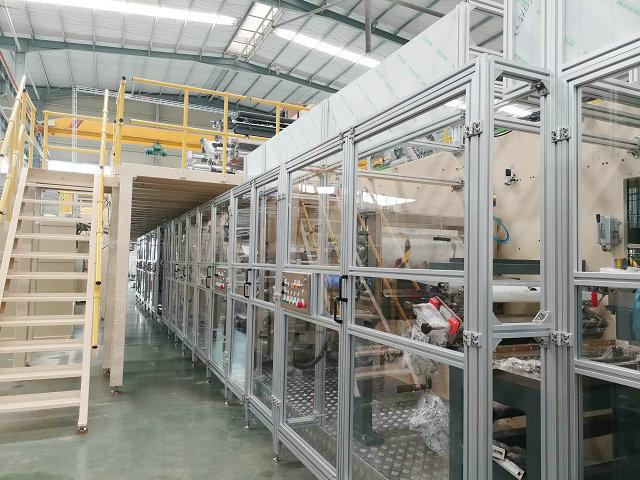
Design safe access for threading, cleaning, adhesive service, blade work, web-break recovery, and jam removal. Specify operating modes, speed limits, enabling devices, guard interlocks, isolation points, and restart warnings according to the project risk review. An automatic restart should not surprise a person working inside a controlled area. Recovery instructions should identify the product that must be removed or rechecked.
Track interventions after launch. Record the reason, zone, product, duration, and corrective action for manual stops. Repeated intervention at one sensor or transfer point signals an engineering issue, while repeated material preparation errors may require standard work or supplier control. Labor improvement becomes sustainable when the plant removes causes instead of depending on faster operator reaction.
Safe abnormal recovery and maintenance access remain part of an automated plant.
Use an Automation Decision Matrix
Function
Manual work addressed
Inputs that must be controlled
Acceptance evidence
Automatic roll splice
Stopping and rethreading at roll depletion
Roll preparation, web properties, splice material, lifting
Successful planned splices and controlled failed-splice response
Correct stacks across stops, rejects, and product formats
Automatic bagging
Bag opening, insertion, sealing, and transfer
Bag specification, rate balance, coding, downstream flow
Connected run with bag changes and induced stop recovery
Verify Labor Reduction in Five Steps
Observe the current or proposed work: create a task map by role, frequency, travel, lifting, and production condition.
Assign an automation purpose: connect every selected function to one measurable handling task, quality risk, or interruption.
Define required inputs: control rolls, recipes, bags, utilities, staffing, maintenance, and upstream or downstream interfaces.
Challenge the full sequence: test normal production, replenishment, rejects, planned stops, faults, restarts, and format changes during FAT.
Review work after startup: compare actual touchpoints and intervention records with the approved staffing and responsibility plan.
Automation Function FAQ
Does a fully automatic line operate without people?
No. It can reduce repeated handling, but people remain responsible for materials, quality release, replenishment, abnormal recovery, cleaning, maintenance, records, and internal logistics.
Which function should a plant automate first?
Start with the repeated task that creates the largest verified bottleneck, safety exposure, count risk, or production interruption. The answer depends on the plant's product and packaging flow.
Can an automatic splice work with every material?
No. Splice design and settings depend on web strength, thickness, surface, roll preparation, tension, and joint material. Representative rolls should be tested before acceptance.
How should labor savings be verified?
Compare the complete shift task map before and after automation at equivalent production conditions. Include material preparation, packing, quality, maintenance response, and handling outside the main frame.
Conclusion
A fully automatic sanitary pad machine reduces manual handling when automation is attached to defined work and supported by controlled inputs. Automatic splicing, recipes, web control, inspection, rejection, counting, stacking, and bagging can remove repetitive tasks, but each function introduces interfaces and recovery duties. Map the whole shift, select functions by evidence, verify normal and abnormal sequences during FAT, and train the roles that remain. That method produces a realistic staffing plan and a more stable production system.