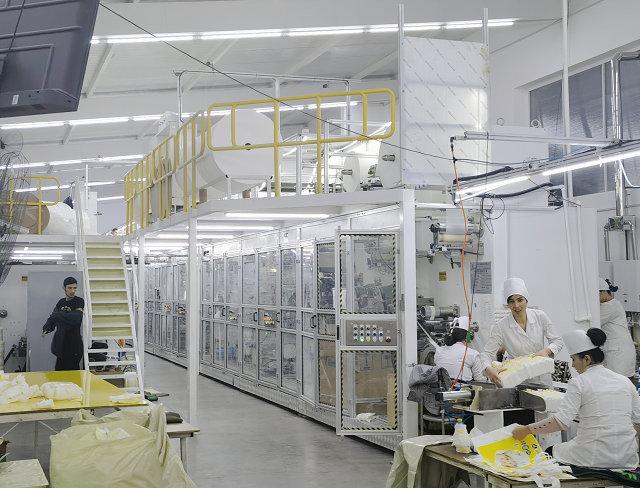
No. A diaper machine manufactures new absorbent hygiene products; it is not household disposal equipment, a recycling line, or a general waste processor. Feeding used diapers, organic refuse, plastics, or mixed waste into it would conflict with its clean raw-material paths, precision forming modules, adhesives, cutters, inspection logic, and product-safety controls. Some platforms may be engineered for another new absorbent product, but only after the product architecture, materials, dimensions, tooling, controls, guarding, and validation are reviewed. A project sponsor should treat product conversion as a formal re-engineering decision and use dedicated waste-processing equipment for collection, separation, recycling, or disposal tasks.
What a Diaper Machine Actually Does
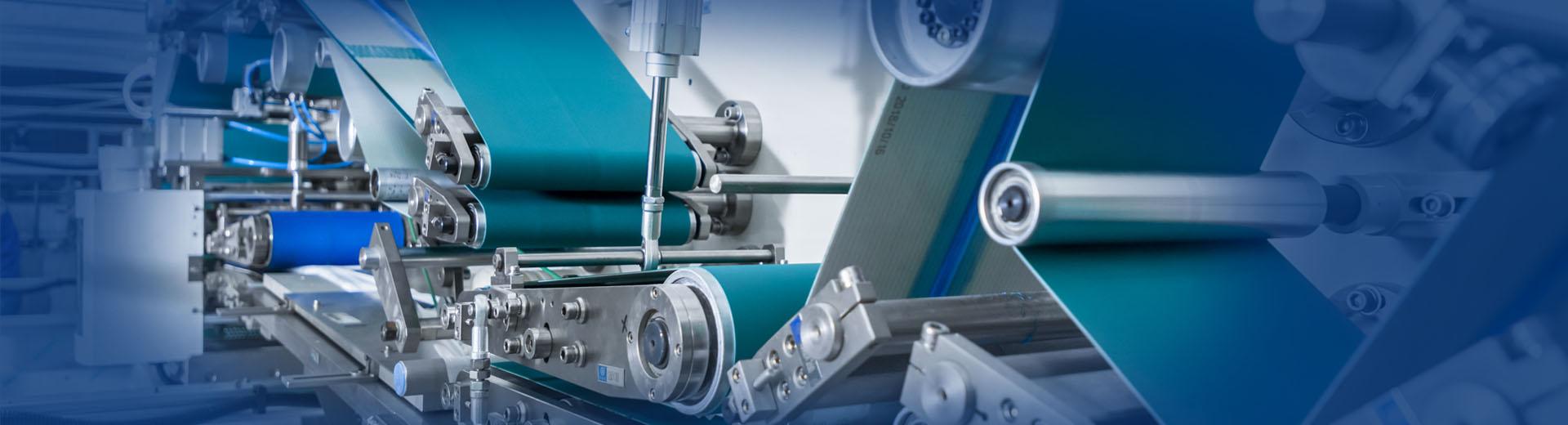
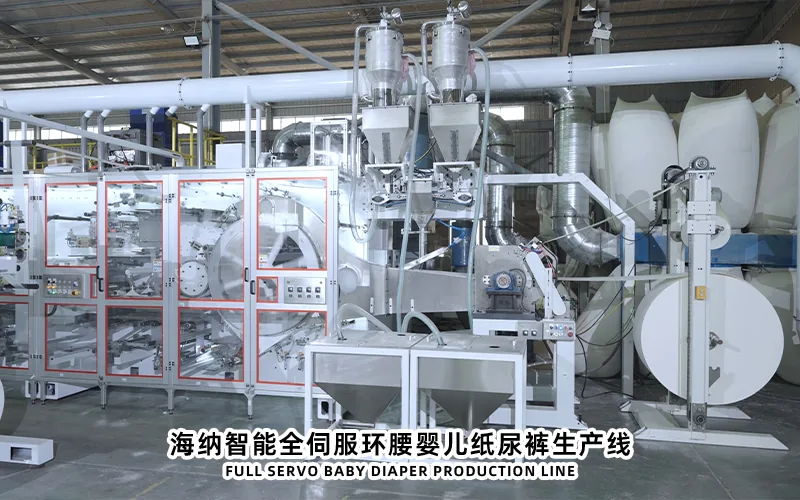
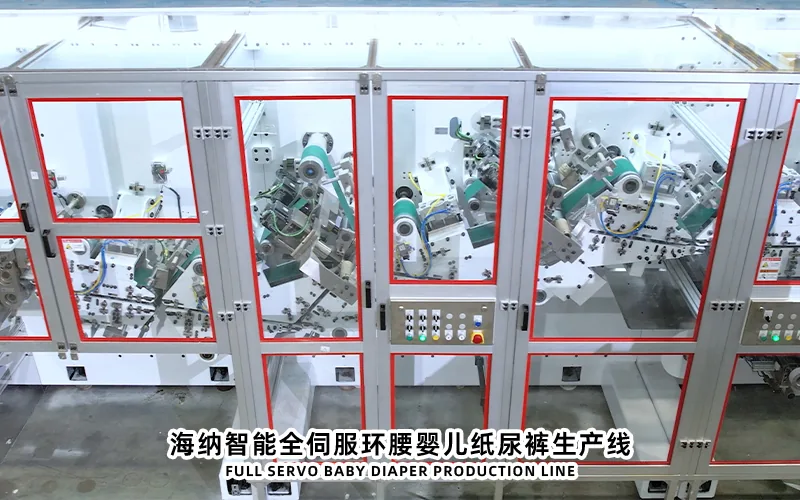
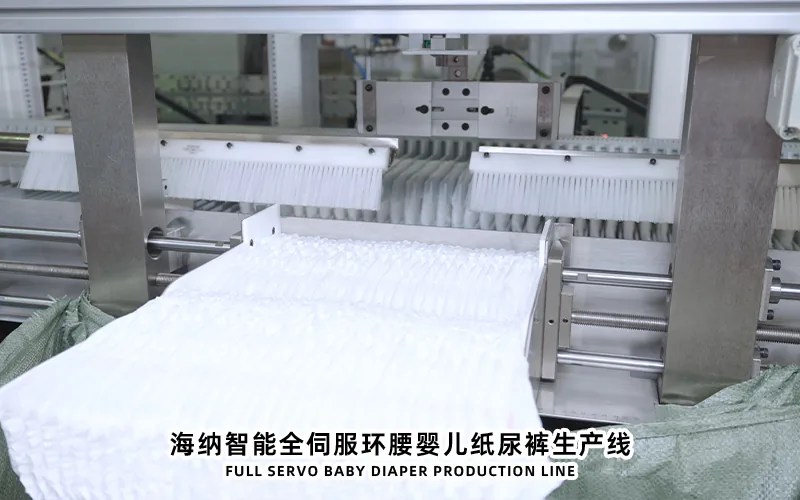
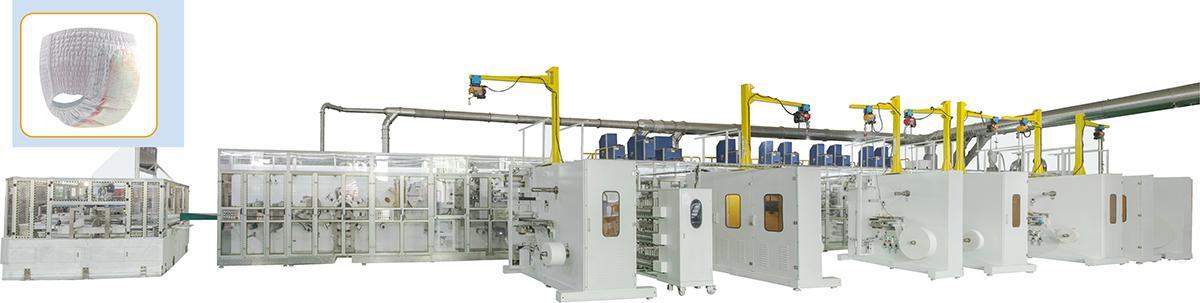
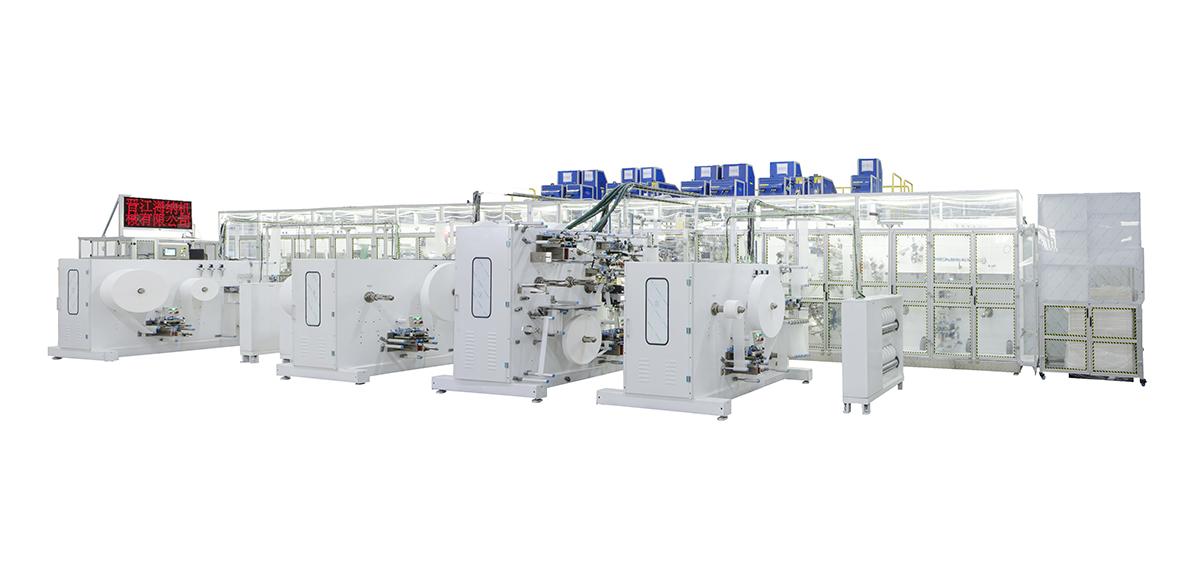
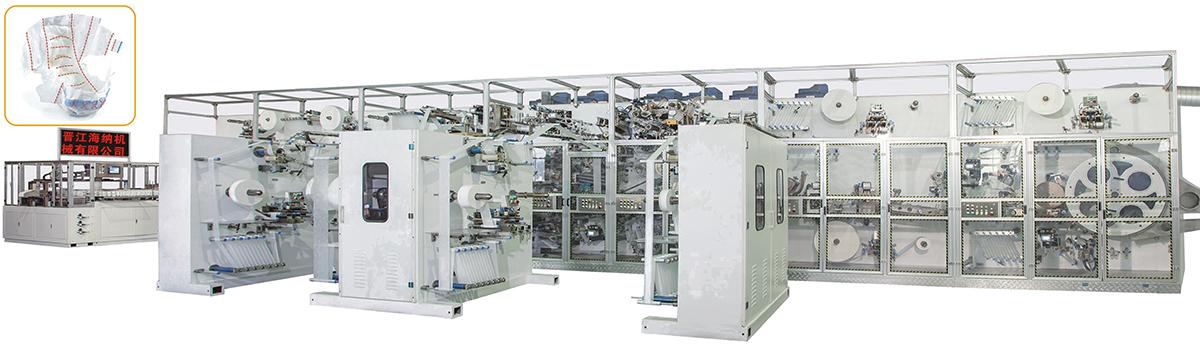
Industrial diaper equipment converts specified clean raw materials into a defined absorbent product. Material rolls and absorbent inputs are unwound or prepared, guided, formed, combined, bonded, cut, folded, inspected for selected conditions, rejected when required, and transferred toward packaging. The modules are designed around controlled material dimensions, web tension, product pitch, tooling geometry, adhesives, elastics, and a repeatable process sequence.
The intended inputs may include nonwoven webs, films, tissue or wrapping layers, absorbent components, elastics, fastening materials, adhesives, and other product-specific materials. They arrive with defined forms and handling requirements. The machine is not designed to identify unknown objects, open used products, remove contamination, separate mixed fractions, wash material, or neutralize biological and chemical hazards.
A review of baby diaper manufacturing equipment should therefore begin with the new product to be made. Ask for the construction drawing, bill of materials, size range, process map, quality checks, and packaging boundary. If the actual business objective is to process discarded diapers or municipal waste, the equipment category is wrong before speed, automation, or price is discussed.
The line forms new products from defined inputs rather than sorting or treating waste.
Why Waste Processing Is Outside Its Scope
Waste arrives with uncertain composition, shape, moisture, density, contamination, foreign objects, and hazard profile. A production line expects controlled webs and process materials. Waste processing may require receiving controls, enclosed conveying, size reduction, screening, metal or foreign-object removal, separation, washing, drying, odor management, effluent treatment, dust control, fire controls, and protected operator handling. Those are different engineering functions.
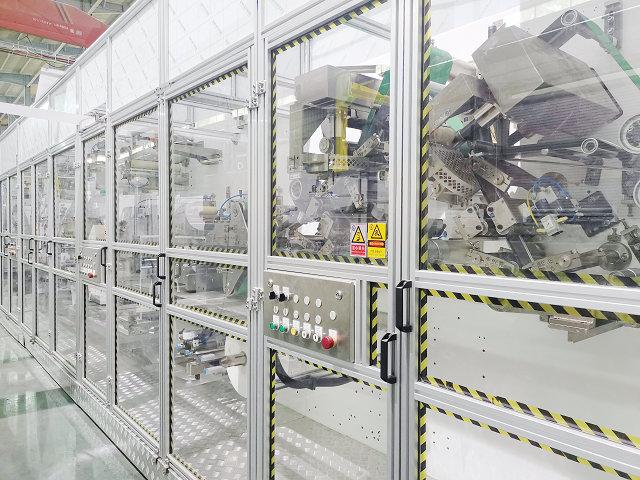
Mechanical incompatibility is immediate. Precision rollers, web guides, adhesive nozzles, elastic feeds, forming units, cutters, and wrapper stations are not designed for loose mixed items. Uncontrolled feed could jam nip points, damage tooling, overload drives, spread contamination, and create unpredictable fragments. Removing guards or bypassing sensors to force material through would increase risk and invalidate the intended operating design.
Control logic also differs. A diaper line synchronizes known product pitch and material positions. A waste line must respond to variable feed, blockage, load, separation performance, contamination, and abnormal objects. Detection and reject systems designed for missing product components cannot classify diverse waste fractions.
Finally, the hygiene boundary is incompatible. New absorbent-product manufacture needs controlled raw materials and clean process zones. Bringing used diapers or general waste into the same equipment and area introduces contamination routes that cleaning alone may not adequately address. Quality, environmental, occupational health, and local regulatory specialists should define the proper facility separation for any waste project.
New Absorbent Products Versus Waste Inputs
The phrase "other types" can reasonably mean another new absorbent hygiene product rather than waste. For example, a sponsor may ask whether a platform intended for one diaper style can produce another size, an adult format, a pull-on product, an underpad, or a different absorbent article. That is a product-conversion question, and feasibility varies by architecture.
Another size within the validated product family may require recipes, indexed adjustments, material widths, tooling, and change parts. A different style may require new web paths, modules, joining methods, cutting, folding, and packaging. A different product family can require a substantially different line. Shared raw materials or an absorbent core do not make the finished processes interchangeable.
Do not confuse trim or startup scrap generated by manufacturing with a feedstock for the same machine. Edge trim, rejected products, splice sections, and setup output need controlled collection and disposition. They should not be recirculated into the production process unless a specific engineered method, material-quality review, equipment capability, and approved product specification support it. General reuse claims are unsafe without evidence.
A different new absorbent product may need changed modules, tooling, controls, and validation.
Proposed input or output
Is a diaper line the right category?
Required decision
Evidence before approval
Defined clean materials for the designed diaper
Yes, within verified configuration
Confirm product and material range
Specification, trial, and FAT
Another size in the same product family
Possibly
Check tooling, settings, widths, and limits
Change matrix and accepted samples
Different new absorbent product
Only after engineering review
Compare complete process architecture
Module study, risk review, and validation
Clean manufacturing trim or rejects
Not as an assumed machine feed
Define collection and approved disposition
Material and process authorization
Used diapers or mixed waste
No
Select dedicated waste technology
Waste characterization and specialist design
When Product Conversion May Be Feasible
Conversion is most plausible when the proposed product stays inside the mechanical product envelope and uses compatible process steps. Check maximum and minimum web widths, product pitch, material paths, drive and tension ranges, forming dimensions, adhesive patterns, elastic placement, tooling envelopes, cut geometry, folding, inspection fields, reject tracking, and downstream transfer. Each limit should come from project engineering or trial evidence.
Separate four levels of change. A setting change uses existing controlled adjustments. A change-part conversion replaces approved tooling or guides. A module upgrade adds engineered hardware and controls within a prepared interface. A platform conversion changes core architecture. Suppliers should classify the proposal honestly because cost, downtime, risk, documentation, and validation rise sharply across those levels.
Product similarity in appearance is weak evidence. Two articles can use nonwoven and absorbent material yet require different forming, sealing, folding, and quality methods. Conversely, a size extension may look large but remain manageable if the platform was designed with the necessary envelope. Use drawings and process comparison rather than intuition.
Future capability should be stated as installed, reserved, or conceptual. Installed capability can be tested now. Reserved capability identifies engineered provisions but still needs later equipment and validation. Conceptual capability means further study is required. This wording keeps a possible future project from becoming a misleading present promise.
Engineering Review for a New Product
Begin with a side-by-side product architecture. List every incoming material, layer, placement, bond, elastic, fastening feature, cut, fold, wrapper, inspection, reject, count, and package handoff for the current and proposed product. Mark common, modified, added, and removed steps. This reveals whether the proposal is a format change or a new line concept.
Next perform mechanical, control, safety, and quality impact reviews. Mechanical review covers frames, modules, drives, tooling, web paths, loads, access, and interfaces. Control review covers recipes, motion, sensors, alarms, inspection, rejection, software, and data. Safety review covers new hazards and tasks. Quality review defines measurements, sampling, process windows, and validation.
Use identified materials for trials. Record machine configuration, settings, speed condition, observations, accepted product results, failures, and adjustments. A short feasibility sample can support further design but should not be presented as stable production evidence. Build a staged plan from bench or module trial to integrated test and formal acceptance.
HAINA can review whether a proposed new absorbent product fits the configuration of its supplied diaper equipment and identify study or trial needs. The project sponsor should not authorize modification until the revised scope, risks, responsibilities, documentation, and acceptance method are approved.
Feasibility review compares every process station and physical limit before modification.
Factory and Contamination Boundaries
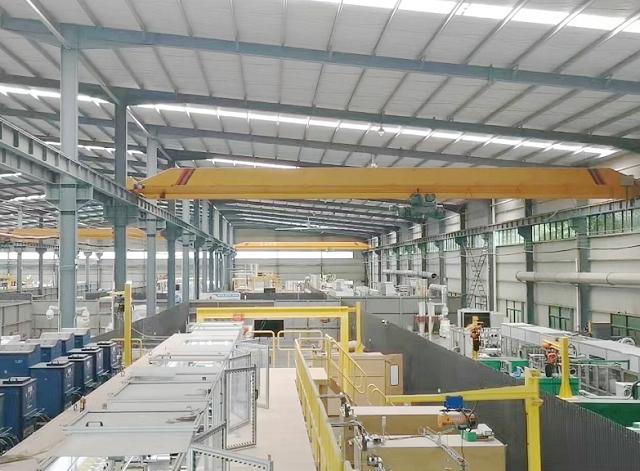
A clean manufacturing factory needs controls for incoming materials, storage, personnel and material flow, housekeeping, waste removal, maintenance, and release after intervention. Waste collection should move away from product and raw-material routes in controlled containers. The site quality and safety systems define segregation and disposition.
A separate waste project begins with characterization: source, composition, contamination, moisture, foreign objects, variability, volume, collection, storage, desired outputs, residuals, emissions, wastewater, and local legal requirements. Those inputs determine treatment steps and facility controls. A diaper-line supplier is not automatically the correct waste-system integrator.
If a company intends to operate manufacturing and waste treatment on one site, specialist review should define building separation, traffic, air and water pathways, utilities, fire strategy, worker protection, cleaning, pest controls, and emergency response. The objective is to prevent the waste activity from compromising people, product, or environment.
Select the Correct Equipment Category
If the objective is to manufacture a new diaper or absorbent article, choose converting equipment based on product construction and material trials. If the objective is to collect and package manufacturing scrap, select appropriate conveying, compaction, dust, and storage systems around a controlled waste route. If the objective is to recycle clean production trim, first define material segregation and the required recycled output, then evaluate dedicated processing and product-quality approval.
If the objective is to process used diapers, seek technology specifically engineered for that feed and desired outcome. The system may need opening, separation, sanitization or other treatment, water and effluent management, drying, odor control, and residue handling depending on the selected process. Do not infer a universal process; require a waste specialist to demonstrate the complete mass balance and hazard controls.
For mixed municipal, organic, medical, or industrial waste, use the corresponding engineered category and professional assessments. The project must meet applicable local requirements, which vary by jurisdiction and waste classification. A production-machine comparison is not an environmental approval.
Scope Screening Decision Tree
Question 1: Is the input a set of new, identified raw materials? If no, stop the diaper-machine inquiry and characterize the waste stream.
Question 2: Is the output within the documented diaper product family? If yes, verify format limits, settings, parts, and trial evidence.
Question 3: Is the output another new absorbent product? If yes, complete a process-by-process engineering and validation study.
Question 4: Is the goal recycling, disposal, separation, or sanitation? If yes, define the output and select dedicated waste-processing expertise.
Approval gate: No equipment trial begins until input hazards, process scope, facility boundary, responsibilities, and acceptance evidence are written.
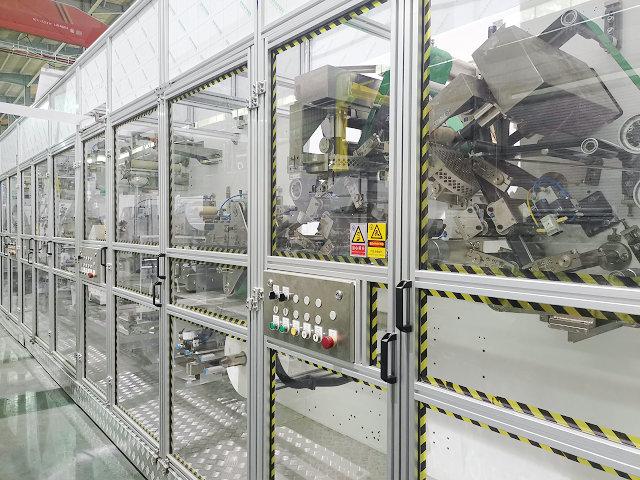
The production boundary should remain limited to approved clean materials and products.
Frequently Asked Questions
Can used diapers be fed into a diaper machine for recycling?
No. A manufacturing line is not designed to receive, sanitize, open, separate, or recover materials from used products. Dedicated engineered waste technology is required.
Can diaper production scrap go back into the same line?
Do not assume so. Segregation, contamination, material properties, process capability, and finished-product approval need a specific engineered and quality-controlled route.
Can a baby diaper line make adult diapers?
Only if the supplier proves that dimensions, loads, materials, modules, tooling, controls, handling, and quality methods support that family. Often the architectures require different equipment.
What is the first question for a waste project?
Define the incoming waste and desired outputs. Composition, hazards, variability, volume, residuals, emissions, and local requirements determine the process category.
Conclusion
A diaper machine cannot be used as general waste-processing equipment. Its purpose is to convert defined clean materials into new absorbent hygiene products through precise web, forming, bonding, cutting, inspection, and handling processes. Product conversion may be studied, but waste treatment needs a separate technology and facility basis. The practical next action is to write a one-page input-output statement: identify whether the feed is new material, clean manufacturing scrap, used diapers, or mixed waste; define the desired output; then ask the appropriate equipment specialist to verify hazards, process steps, interfaces, residuals, and acceptance before any trial or purchase.