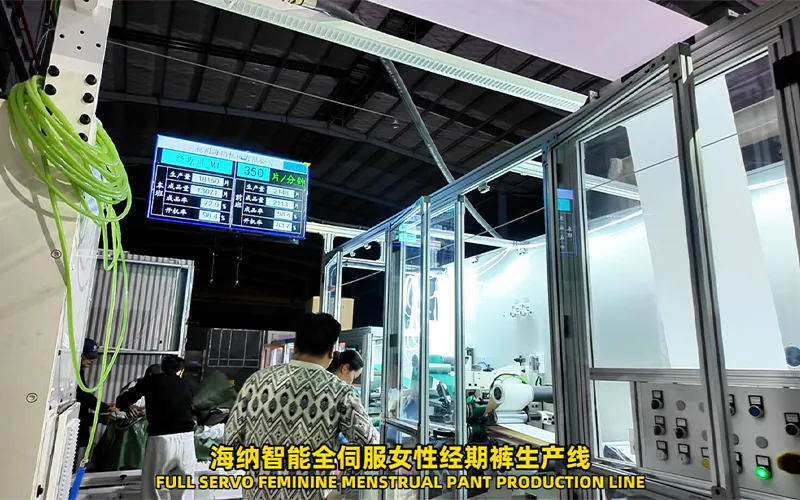
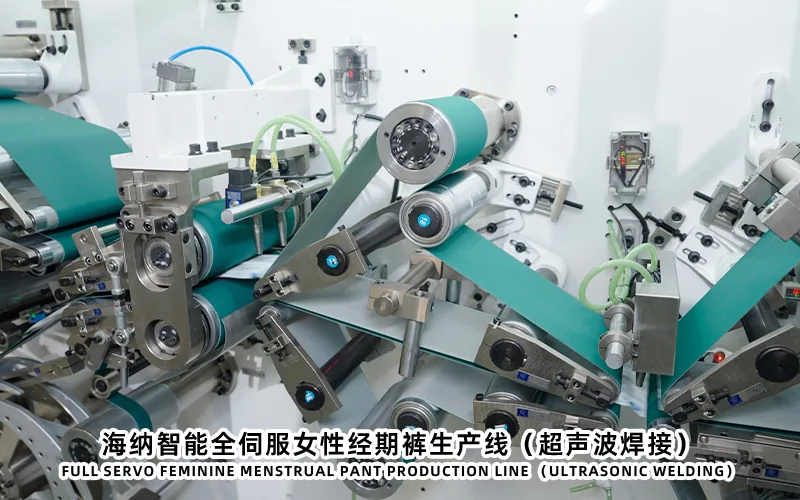
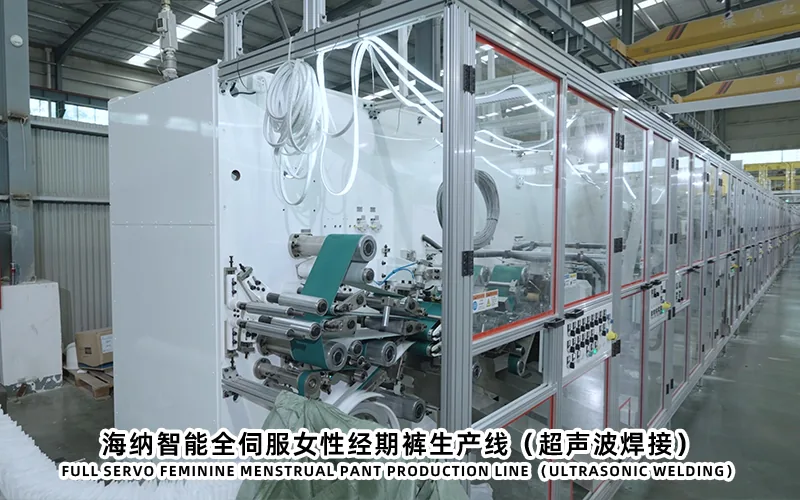
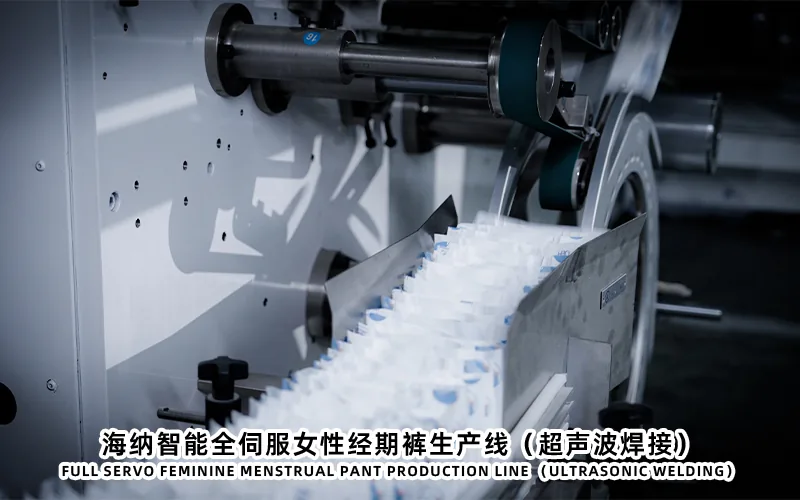
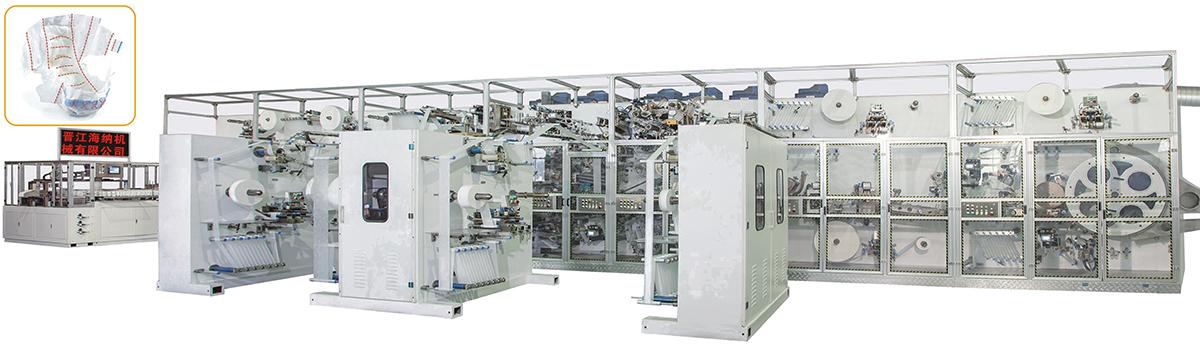
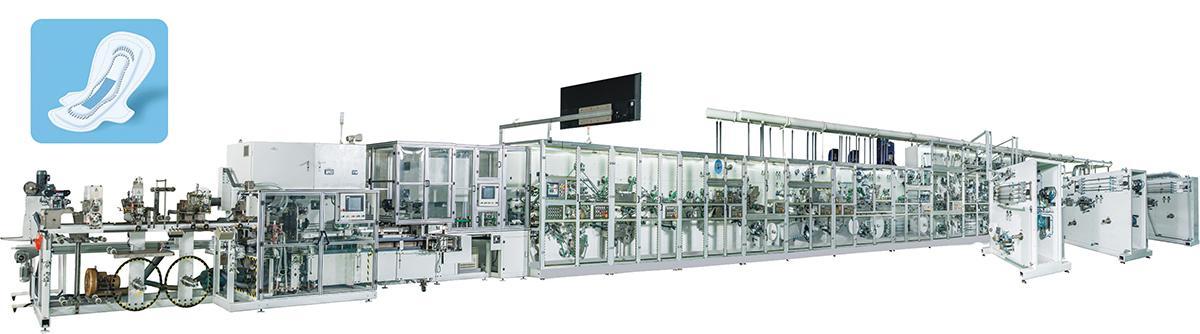
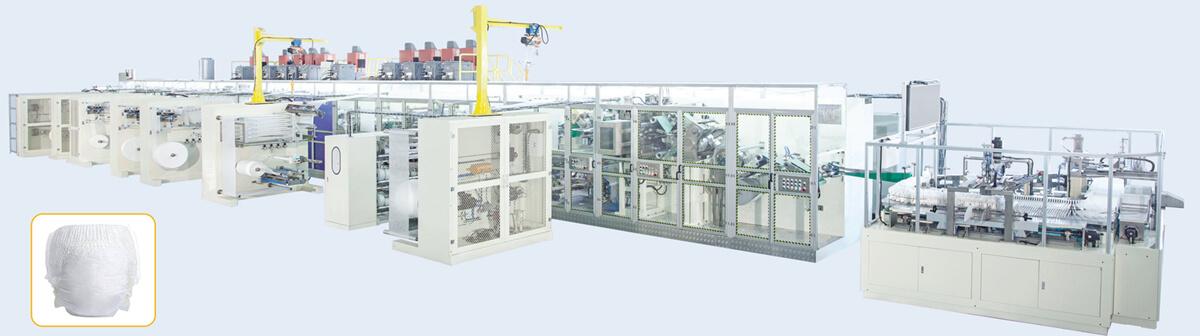
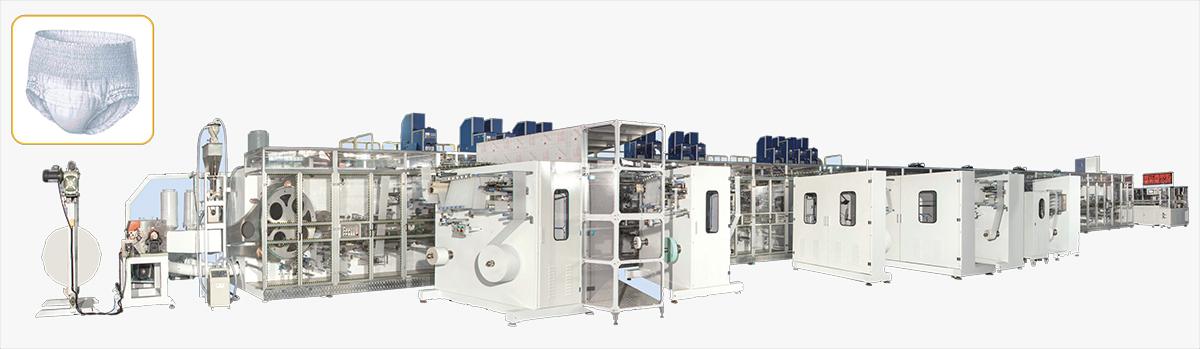
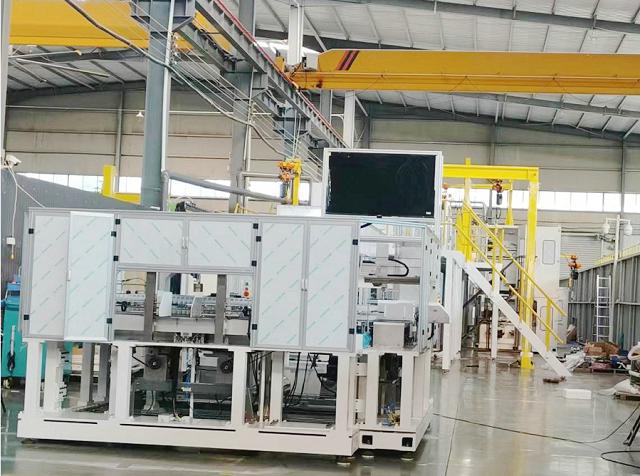
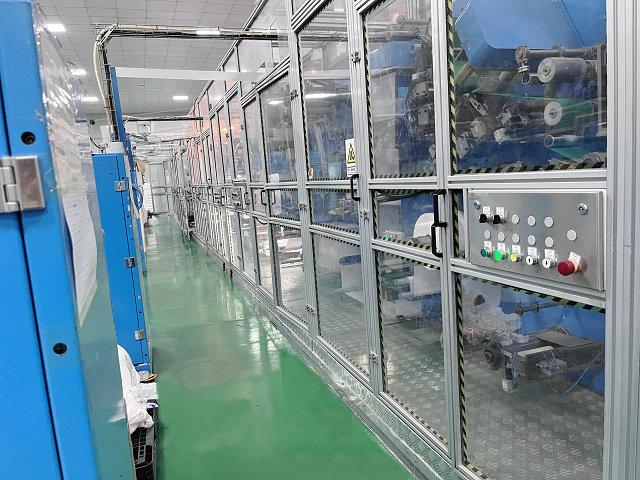
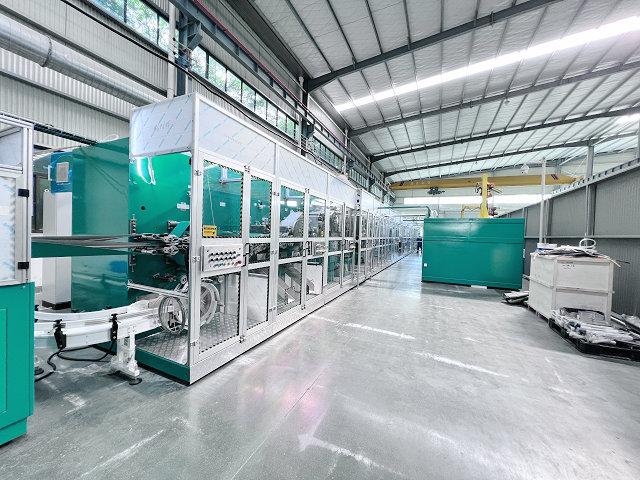
Efficient operation of a female diaper production line, understood here as a line for menstrual pants, depends on disciplined startup, stable web control, controlled size changeovers, rapid defect response, and complete shift records. A production manager should judge efficiency by conforming output and predictable recovery, not by machine motion alone. Before each run, verify materials, recipes, tooling, utilities, guards, inspection systems, and first-off approval. During production, trend critical placement and bond checks with stops, rejects, and adjustments. At handover, reconcile materials and explain every abnormal event. This operating method makes the diaper production line easier to stabilize and exposes losses that need engineering action.
Define Efficient Running for Menstrual Pants
Menstrual pants combine absorbent-product conversion with an elasticized wearable chassis. Their operating risks include core position, body-facing layer handling, leak-barrier geometry, elastic distribution, seam formation, contour cutting, folding, inspection, and transfer. Efficient running means these functions remain within the approved product limits while the team responds consistently to splices, stops, and material variation.
Use a balanced definition. Track conforming output, quality variation, planned and unplanned stops, material reconciliation, changeover duration by activity, and recurring alarm causes. Do not combine them into one unexplained percentage. A higher motion rate can increase defects or downstream congestion, while a slower controlled run may produce more accepted packs. Keep design speed, current operating speed, stable demonstrated speed, and contractual acceptance values distinct.
Efficient operation requires the complete converting sequence to remain synchronized around product quality.
Operating rule: when quality trends move toward a limit, correct the cause before increasing speed. A setting change without a recorded reason makes later diagnosis and shift comparison unreliable.
Control Startup and First-Off Release
Startup begins before materials move. Confirm the production order, product drawing, approved bill of materials, material lot status, recipe version, installed size parts, adhesive readiness, utility condition, inspection devices, reject path, guards, and area clearance. Any open maintenance work must be formally handed back. Operators should know which startup material is quarantined and who can authorize saleable production.
Use a staged sequence: inspect at rest, energize according to the approved procedure, test safety and basic functions as required, jog or dry-cycle relevant mechanisms, thread materials, run at a controlled condition, and take first-off samples. The first-off check should cover critical dimensions, component placement, core condition, elastic and barrier appearance, seams or bonds, cut quality, folding, and product identification. Release only after the defined quality owner signs the record.
Startup waste should be categorized, not hidden in a total. Separate material used for threading, adhesive or thermal stabilization, registration adjustment, first-off sampling, and abnormal troubleshooting. These categories point to different improvements. Better roll preparation may reduce threading loss; clearer centerline marks may help registration; recurring bond stabilization may require process or equipment review.
Hold the Diaper Production Line in a Stable Window
Stable running is active control, not an absence of alarms. Operators should monitor material roll condition, edge guidance, tension, splice progression, adhesive delivery, vacuum behavior, temperature where applicable, component registration, cutting condition, reject operation, and downstream accumulation. The exact checks depend on the installed configuration, but each one needs a normal range or observable acceptance condition.
Trend observations by process zone so small changes are addressed before they become repeated defects.
Control zone
Leading observation
Product signal
First controlled response
Unwind and guiding
Edge movement, roll damage, tension variation
Wrinkle or lateral displacement
Hold affected output and inspect roll path
Core handling
Feed stability, dust, vacuum condition
Core shift or uneven profile
Check supply and transfer before changing recipes
Elastic chassis
Feed, tension, and placement trend
Uneven contraction or fit geometry
Verify routing, material, and applicator condition
Bonding or seams
Application pattern and equipment condition
Open seam, contamination, weak attachment
Isolate products and confirm process inputs
Cut, fold, transfer
Blade condition, timing, accumulation
Rough edge, poor fold, handling mark
Reduce disturbance and inspect mechanical timing
Sampling frequency should increase after startup, a splice, an adjustment, a stop, a maintenance intervention, or a material change. Automatic inspection supports control but does not remove the need to verify detection and rejection. Operators should know what the system can detect, what remains manual, and how to reconcile rejected products.
For the relevant menstrual pants manufacturing equipment, review the proposed web path and inspection boundary with actual product drawings. This makes standard work specific enough to use at the line.
Make Size Changeovers Repeatable
A changeover is a controlled configuration change, not just a tooling swap. Preparation should begin while the current order is still running: verify the next materials, clean and identify change parts, stage approved tools, review the recipe, and confirm the quality plan. The outgoing product and materials must be reconciled so mixed sizes or components cannot enter the next run.
Close: stop under the approved sequence, isolate energy where the task requires it, and clear outgoing product.
Configure: install identified size parts and adjust guides, applicators, cutters, folders, and inspection regions as documented.
Verify: use independent checks for part identity, fasteners, settings, and mechanical clearance.
Load: select the authorized recipe and verify that displayed settings match the changeover record.
Release: produce first-off samples, inspect all changed characteristics, and obtain quality authorization.
Measure changeover time by stage rather than only recording total duration. Waiting for parts, cleaning, mechanical adjustment, recipe verification, first-off correction, and quality approval have different owners. A stage record prevents pressure from encouraging skipped checks and gives the production manager a practical improvement list.
Prepared and identified change parts support repeatable setup without weakening release controls.
Link Defects, Downtime, and Waste Response
When a defect or abnormal machine condition appears, protect people first, then contain product. Record the last known good check, the detection time, affected material or product range, machine state, alarm history, settings, and recent changes. Do not repeatedly restart until evidence disappears. Short cycles of reset and failure often destroy the information needed for root-cause work and create more suspect product.
Use fault categories that connect operation and quality: material supply, web handling, core process, component application, bonding, cutting, folding, inspection, controls, utilities, and downstream transfer. Record the symptom separately from the suspected cause. "Elastic out of position" is an observation; "bad sensor" is a hypothesis until checked.
Waste reconciliation should connect each loss category to an event. Count or estimate by the factory's approved method, but keep definitions stable across shifts. HAINA support discussions are more productive when the factory provides alarm timestamps, product photos, sample status, recipe version, material details, and actions already attempted. Clear evidence reduces remote guesswork and helps determine whether the next step belongs to operations, maintenance, quality, materials, or engineering.
Use a Shift Control Board and Handover
A shift control board should be compact enough to maintain and detailed enough to explain performance. Include the production order and SKU, start and finish status, material lots, recipe version, output disposition, quality trends, stop categories, adjustments, maintenance activity, open risks, and ownership. Compare current information with the agreed target or control range, not with an unqualified previous shift.
Shift handover should transfer line condition, product status, settings, and unresolved actions at the equipment.
The outgoing and incoming leads should walk the line together. Confirm rolls in use, splice preparation, adhesive or consumable status, quarantined products, bypasses, temporary controls, unusual noises or heat, tooling status, and work permits. The incoming lead repeats critical information instead of merely signing a log. Any temporary change needs an expiry or escalation condition.
Daily review should select a small number of losses for action based on evidence, recurrence, and effect on conforming output. Assign an owner and due date, then verify effectiveness on a later run. This closes the loop between shift records and sustained operating improvement.
Define escalation thresholds in operational terms. Examples include repeated adjustment of the same setting, a quality trend approaching its approved limit, multiple stops with the same symptom, an unexplained count difference, a bypass request, or a condition that changes after a material splice. The threshold should state who is called, whether product is held, which evidence is saved, and who decides to resume. It should not encourage operators to continue until a large defect total accumulates.
Review the board at two time scales. The shift meeting protects the current order by resolving immediate constraints and communicating product status. A weekly cross-functional review examines recurrence, changeover stages, material-specific behavior, maintenance findings, and actions that require engineering. Keep temporary workarounds visible until removed. When a new standard is issued, verify it at the machine on another shift; a document update without observed use does not establish sustained control.
Frequently Asked Questions
What does female diaper production line mean in this guide?
It refers to equipment for menstrual pants, an absorbent pull-on product. The exact construction and process scope must be defined because it is not the same as a taped baby or adult diaper line.
Should the line start at full operating speed after a stop?
No universal restart condition applies. Follow the approved recovery sequence, inspect the cause, run under a controlled condition, verify first-off quality, and increase operation only within the validated window.
How can changeover efficiency improve without skipping checks?
Stage verified materials, clean change parts, tools, recipes, and inspection documents in advance. Measure waiting, mechanical work, verification, adjustment, and release separately so each delay receives the right action.
Which shift record is most useful for troubleshooting?
A time-aligned record that connects alarms, settings, material lots, quality results, stops, adjustments, maintenance actions, and product disposition is more useful than a total output figure or free-text summary.
Conclusion
Efficient menstrual-pants production comes from controlled transitions and an observable stable window. For the next operating review, choose one representative SKU and follow it from pre-start verification through first-off release, steady production, a material splice, a planned stop, and shift handover. Measure conforming output, quality trends, event losses, and recovery evidence at each stage. Then revise standard work only where the records show a gap. Before accepting or changing a diaper production line process, the factory should witness the sequence with its materials and approve the quality, downtime, waste, and release records that operators will use every shift.