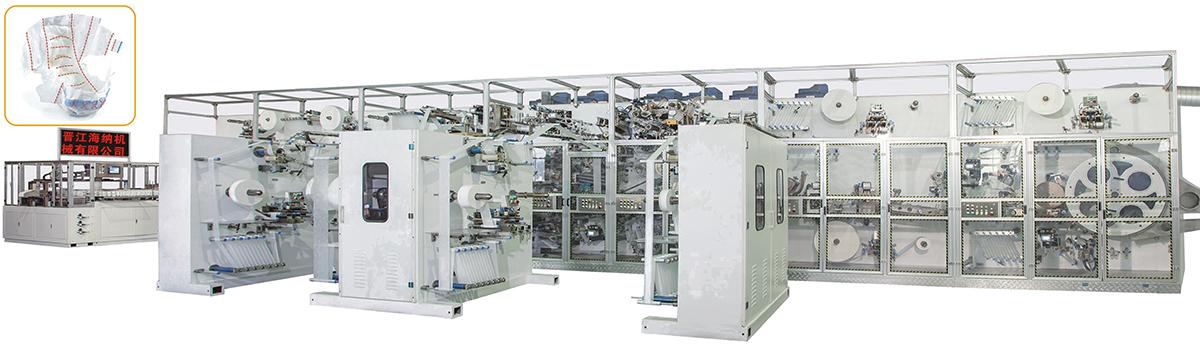
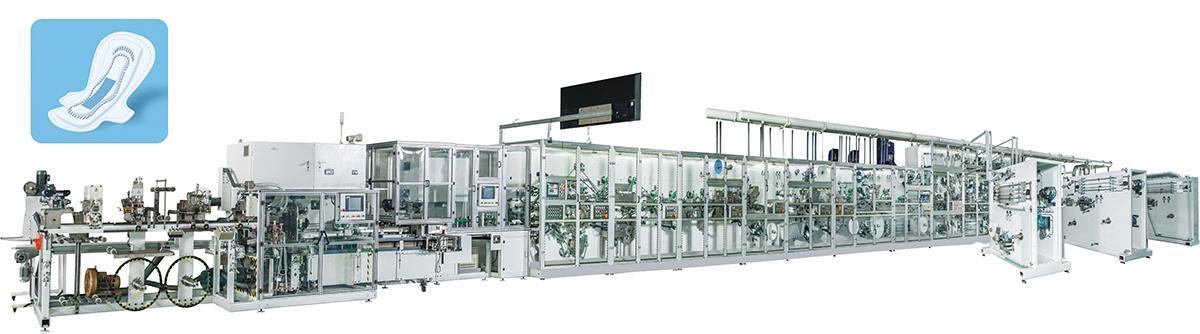
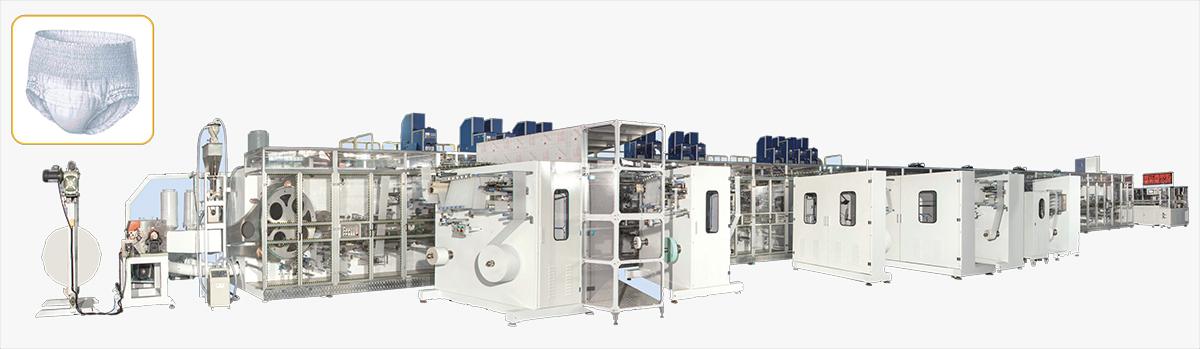
For this equipment topic, "female diaper" should be defined precisely as the intended menstrual pants or other specified feminine absorbent pant, because product architecture controls the line choice. Select a diaper production line only after fixing the pull-on product sizes, absorbent body, elastic waist, side seams, leg opening, materials, folding, and packing handoff. Then verify how the line forms the chassis, applies stretch components, creates and checks seams, controls fit-related dimensions, rejects defects, and changes sizes. The right choice demonstrates stable acceptable products with production-intent materials and a documented FAT, rather than relying on a generic diaper label.
Clarify the Female Diaper Product
The locked title uses a broad phrase, so the inquiry must correct ambiguity before equipment comparison. Menstrual pants are pull-on feminine hygiene products and differ from taped baby or adult briefs. A supplier cannot choose the correct architecture from "female diaper" alone. State the product category, user range, intended sizes, day or night positioning where relevant, absorbent structure, side-seam concept, waist design, leg opening, acquisition components, back sheet, and folded presentation.
Prepare a controlled specification for each launch size. Include flat and relaxed dimensions where the product method requires them, component positions, material codes, elastic arrangement, absorbent body geometry, seam location, folding sequence, and pack orientation. Define which measurements are made before and after conditioning according to the buyer's product method. Do not invent universal fit limits; product development and quality must approve the values.
Separate launch products from experiments. A future ultra-thin structure, alternative elastic laminate, or different seam may change feeding, joining, tooling, controls, and testing. Ask the supplier to identify whether each concept is supported by the base design, needs options, or remains unassessed. This keeps the purchased scope truthful while preserving a route for later qualification.
The line architecture should follow the defined pull-on feminine hygiene product, not a broad product nickname.
Map the Diaper Production Line Architecture
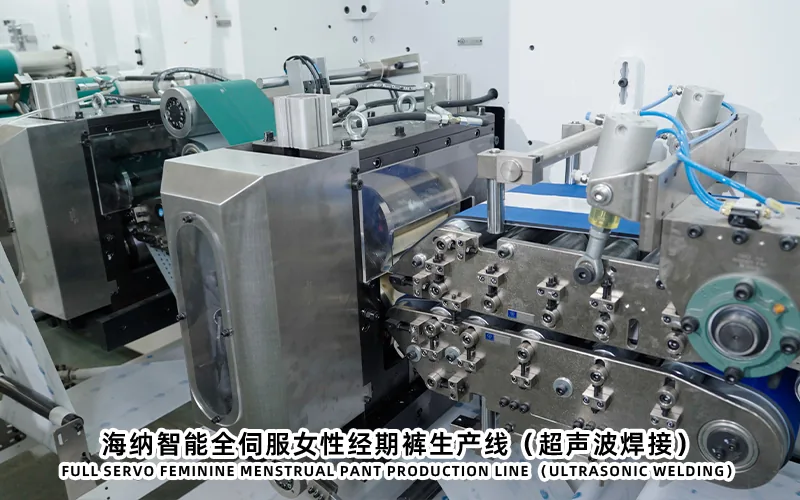
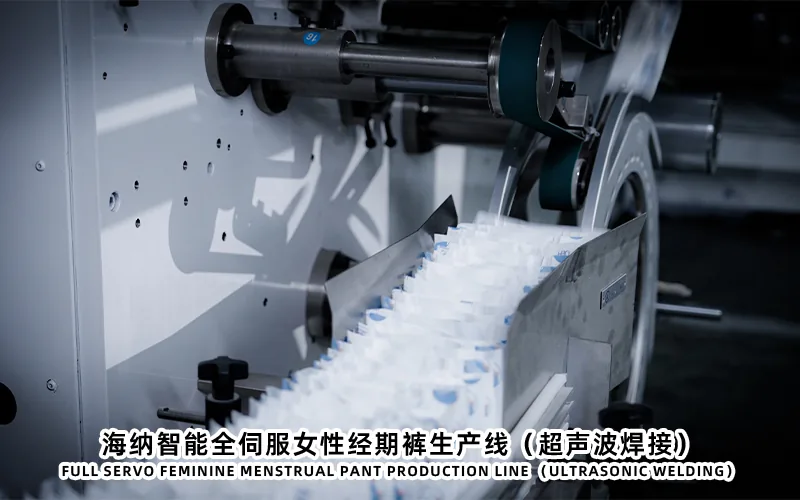
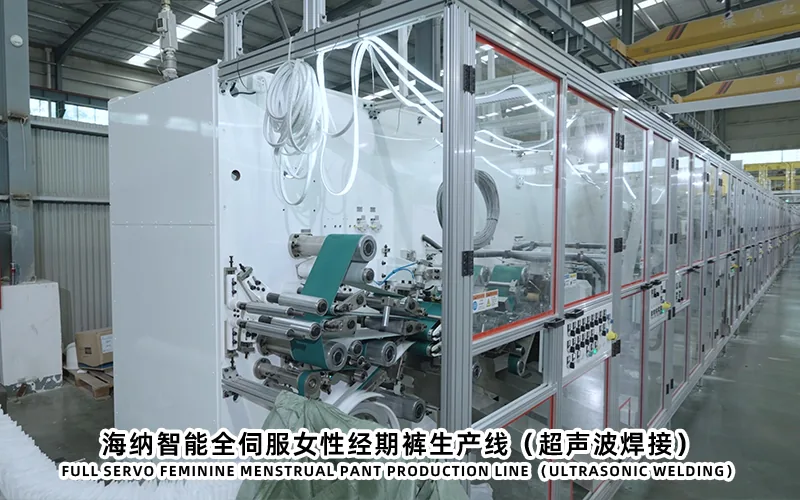
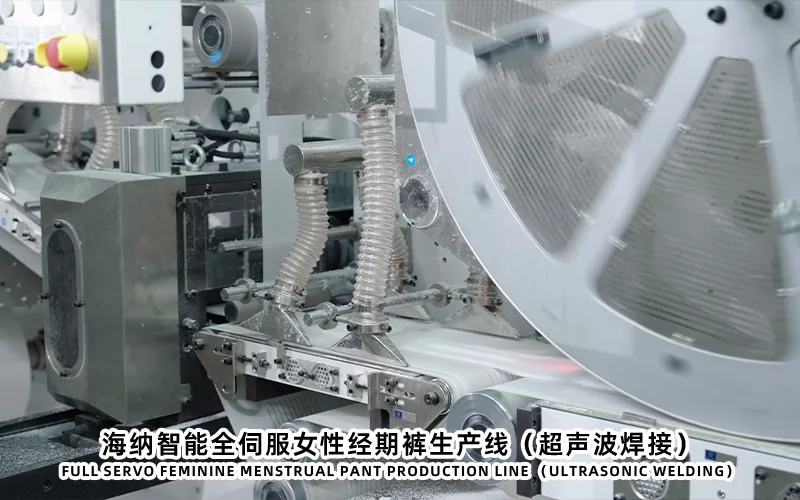
Trace every layer and function from unwind to discharge. The proposal may include absorbent-core preparation or feeding, core wrap, top and back sheet handling, acquisition-layer placement, leak-guard and leg elastic functions, waist stretch material, chassis assembly, cutting, turning or folding operations, side-seam formation, inspection, rejection, final folding, counting, and packing transfer. Require an included-module list and a marked process drawing.
Pull-on products require careful sequence coordination. Ask where the web changes direction, where stretch is introduced, how components are registered to the absorbent body, how the pant shape is formed, and how seams are presented for joining and inspection. The buyer need not demand proprietary detail, but each critical characteristic should have an identified control point and witness method.
Set the automation boundary. People may still load rolls, prepare splices, replenish adhesives, remove scrap, collect samples, manage rejects, and support packing. Define utilities, extraction, adhesive equipment, conveyors, data interfaces, and packer signals. A fully coordinated converter is not automatically a complete packaged-goods line.
Translate Fit Into Process Controls
Fit is influenced by dimensions, elastic placement and condition, waist construction, leg opening, absorbent-body position, seam geometry, and folding. Convert each design characteristic into a drawing value or approved comparison method, then identify the station that creates it. Build a characteristic-to-control matrix so quality problems can be traced to plausible functions instead of being described only as "poor fit."
Sampling should cover time and machine sides or positions where relevant. Label products with format, material lot, test period, and sample sequence. Measure using the buyer's approved method and retain representative products. Check that folding and compression do not hide a dimensional or seam issue that appears after product recovery.
Online inspection has defined limits. Confirm which component positions, seams, dimensions, stains, joins, or other conditions can actually be detected. Witness challenge tests approved by the supplier, the resulting rejection, and repeated-fault response. Characteristics outside automatic coverage remain in the offline plan. Do not infer complete quality assurance from the presence of a camera.
Fit-related dimensions should trace to material control, component registration, joining, and measurement.
Qualify Materials and Seams
Provide production-intent material data: widths, roll diameters, cores, winding, basis weights, stretch or recovery characteristics where controlled, thickness, splice type, and surface information relevant to bonding. Elastic laminates and flexible webs can behave differently under storage and line tension. Record trial conditions and lots, and define how alternative grades will be reviewed after startup.
The joining method must match the product design and supplied equipment. Define seam appearance, location, strength or opening behavior through the buyer's validated method, and skin-facing comfort checks where applicable. Ask how the process monitors or controls joining conditions and how startup products are contained. If a seam process uses consumables or controlled settings, include them in the material and maintenance plans.
Observe splices and roll changes during a sustained trial. A line may run smoothly on fresh rolls yet lose registration after an uncontrolled join. Record web tracking, component position, seam results, rejects, interventions, and recovery. Trial evidence should show normal material handling, not only a short period after expert tuning.
Compare Size-Change Strategies
For every pant size, identify recipe parameters, guide settings, applicator positions, cutters, drums, folders, inspection regions, conveyors, and count recipes. Obtain a change-parts register with item identification, included quantity, storage, and handling. Clarify whether product width changes require different base materials or slitting plans. These decisions affect inventory as well as machine setup.
Witness a size change through first accepted product. Record old-product clearance, cleaning, tooling, recipe selection, web path, settings, setup units, measurements, seam checks, folding, and release. Classify waiting separately. Require local operators to participate after training so the result does not depend entirely on the supplier's most experienced engineer.
A changeover is successful only when output returns to an approved process window. Keep recipe versions and setup sheets controlled. If the first products need repeated unrecorded adjustments, investigate tooling identification, centerlines, material state, or training before accepting a fast change time.
Balance Converting, Folding, and Packing
Count acceptable output at the agreed line boundary. Stable converting does not guarantee packed output if folding, compression, counting, bagging, or manual handling cannot receive the product. Define stack orientation, count, accumulation, blocked-state behavior, reject routing, and restart. Where another supplier provides packing, use a shared interface specification and combined test.
Distinguish design speed, demonstrated stable working speed, actual operating speed, and contractual acceptance output. Connect each value to a product size, material set, quality plan, staffing arrangement, duration, and stop rule. Wider or more demanding formats may have different demonstrated conditions. Do not allow one convenient size to represent the entire portfolio without a documented engineering basis.
Review the plant layout for roll staging, stretch-material storage, operator access, tooling carts, quality sampling, scrap, maintenance, accepted-product transfer, and emergency routes. Check environmental and utility conditions through project data. Product stability can be affected by material handling before the web reaches the line.
Converting capacity has value only when folding, counting, and the packing boundary remain balanced.
Apply a Product-Risk Scorecard
Product risk
Supplier evidence
Buyer verification
Decision trigger
Ambiguous product type
Signed format and process map
Trace every component to a module
Clarify before quotation comparison
Fit variation
Control and sample plan
Measure labeled products across run
Require correction and repeat evidence
Seam inconsistency
Joining method and monitored settings
Test startup, steady run, and restart
Hold affected output until approved
Size-change loss
Tooling and recipe register
Witness change through quality release
Revise staffing or scope
Packing imbalance
Interface and accumulation logic
Stage block and recovery
Modify integration plan
Female absorbent pant evidence pack
Exact product terminology and controlled launch-size drawings.
Layer, elastic, seam, absorbent, fold, and pack specifications.
Production-intent material list with traceable trial lots.
Format-to-module and format-to-tooling compliance matrices.
Fit, seam, inspection, stable-run, and changeover records.
Factory layout, utility, packing, training, and support responsibilities.
Accept Evidence, Not Labels
Build FAT around the highest product risks. Confirm equipment completeness and safety functions, then test materials, recipes, alarms, inspection, rejection, sustained production, seam quality, fit dimensions, size change, controlled stop, recovery, and packing handoff. Agree material quantity, duration, staffing, samples, stop accounting, and retest rules in advance. Preserve machine state and software versions with the results.
Documents should include process and layout drawings, utility schedules, operating and maintenance information, tooling lists, parts identification, backups, and training records. HAINA can review the menstrual-pants engineering and FAT boundaries with the buyer, but only the signed project pack defines contractual performance. General product names or promotional videos are not acceptance evidence.
Use the menstrual pants machine configuration to frame the technical discussion. Mark which product layers, sizes, seam approach, inspection functions, and packing interfaces apply to your project, and request a deviation response. This resolves the title's terminology before it becomes a purchasing error.
Acceptance should prove the named feminine absorbent pant and its critical fit, seam, and output conditions.
Frequently Asked Questions
Is a female diaper line the same as a baby diaper line?
No. The phrase is ambiguous. Menstrual pants have a pull-on product architecture and intended use that must be specified. Equipment modules and controls should be evaluated against that exact design.
Can fit be approved from one sample?
No. Use controlled dimensions, approved functional methods, and samples across the run, material changes, and startup conditions. One sample cannot show process stability.
What makes the side-seam test important?
The seam contributes to product assembly and use. Its position, appearance, and approved performance must remain controlled through startup, stable production, and size changes.
Should the fastest size define the line capacity?
No. Capacity planning should consider the product mix and verified conditions for representative sizes, quality rules, changeovers, material events, and the downstream packing boundary.
Conclusion
Choosing the right female diaper production line begins by replacing an ambiguous label with an exact menstrual-pants product specification. The equipment must then prove chassis formation, stretch control, fit dimensions, seams, folding, size changes, and packing transfer with traceable materials. Before approval, have product development, quality, production, and engineering sign the format-risk matrix. Require the supplier to manufacture the representative launch size, measure fit-related samples across the trial, challenge seam inspection and rejection, change to a second size, and recover from a downstream stop. Close every result against written acceptance criteria before releasing the project.