Place of Origin: CHINA
Brand Name: HAINA
Configuration: Confirmed per project
Model Number: HJ-MN2
Payment & Shipping Terms:
Order Scope: Confirmed equipment modules
Quotation: Based on product and automation scope
Export Packing: Confirmed in offer
Lead Time: Confirmed in contract
Payment Terms: Confirmed in contract
Delivery Scope: Confirmed in technical agreement
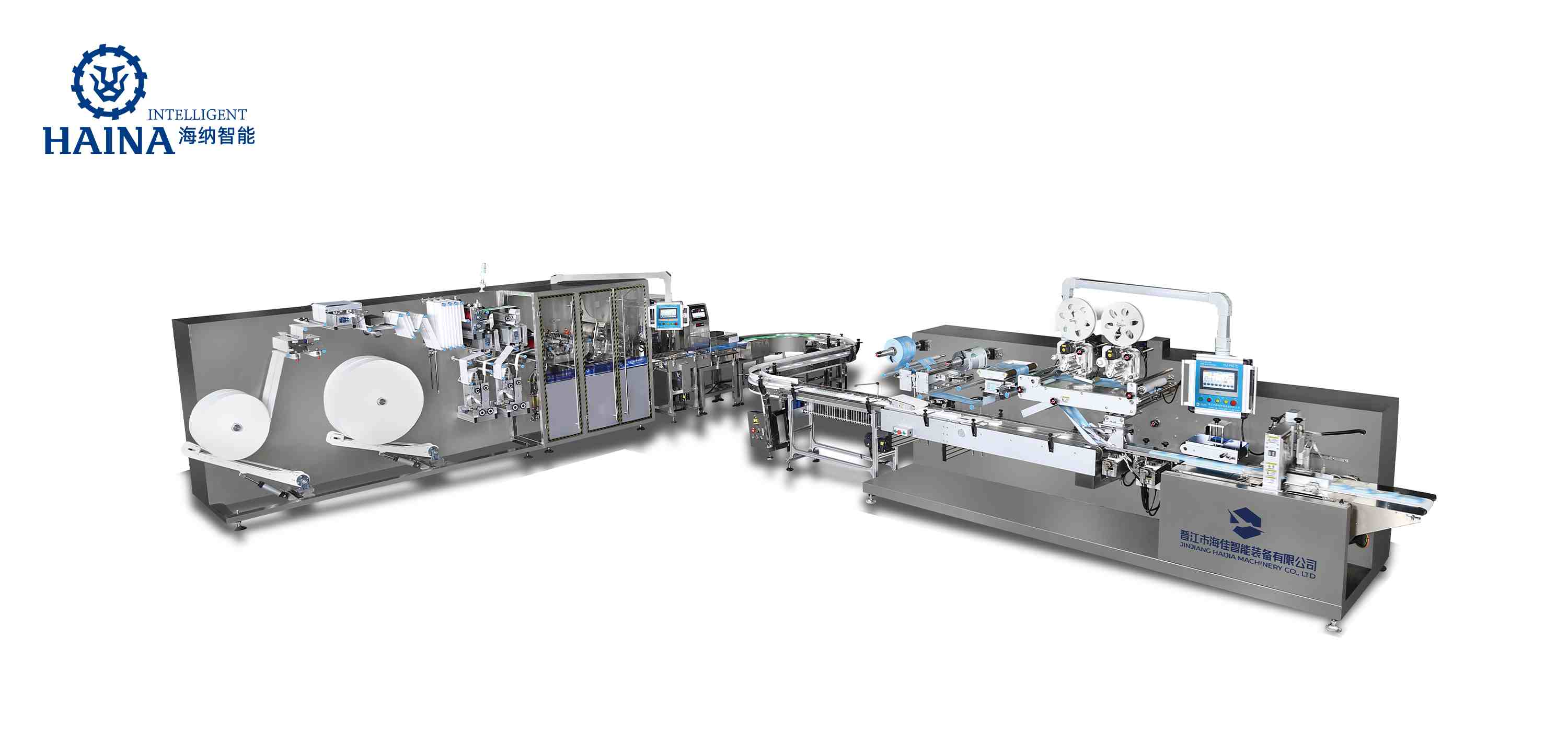
HJ-MN2 is a converting machine for folded wet wipes, so its useful output is not just a moving web. The line has to turn an approved substrate into a repeatable fold, apply the specified liquid, build the right count and release a stable stack to the next machine. The recorded figures below describe that route; the final contract should connect them to one wipe sample and one acceptance method.
Material: Spunlace nonwoven fabric, calender bonded nonwoven fabric etc.Material Basic Weight: 35-80g/m²Jumbo Roll Spec.: Max W205*2( same paper core)mm*Φ1200mmUnfold Dimension: L140-200mm, W130-205mmFold Dimension: L70-100mm, W38-70mmStack quantity: 5-30 pieces ( height ≤ 60mm)Production Speed: 80 bags/min ( for 10 pcs)Production Speed: 50 bags/min ( for 20 pcs)
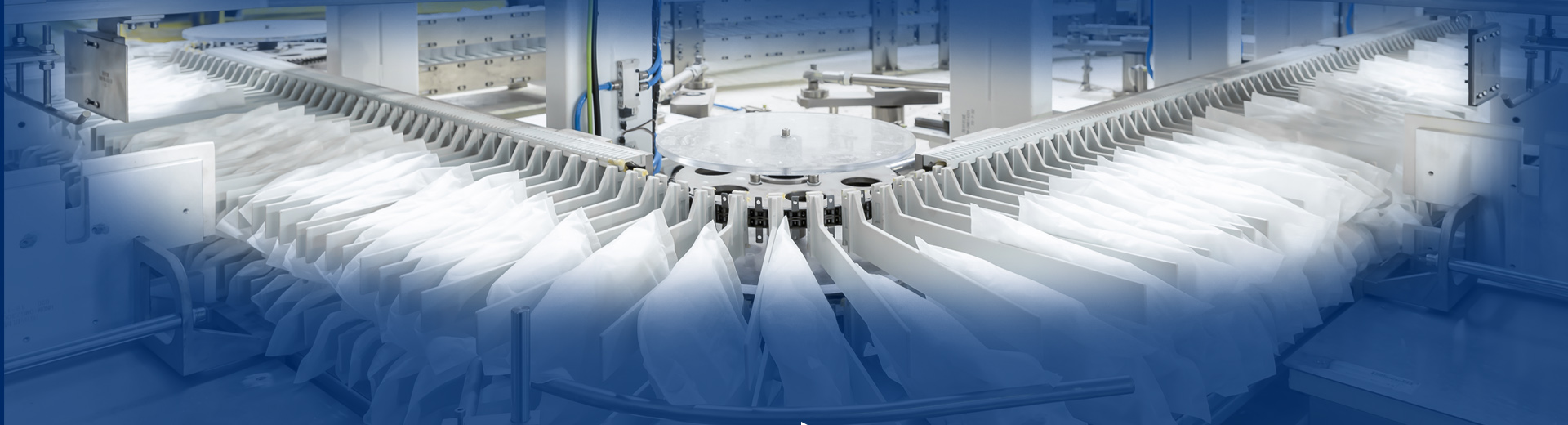
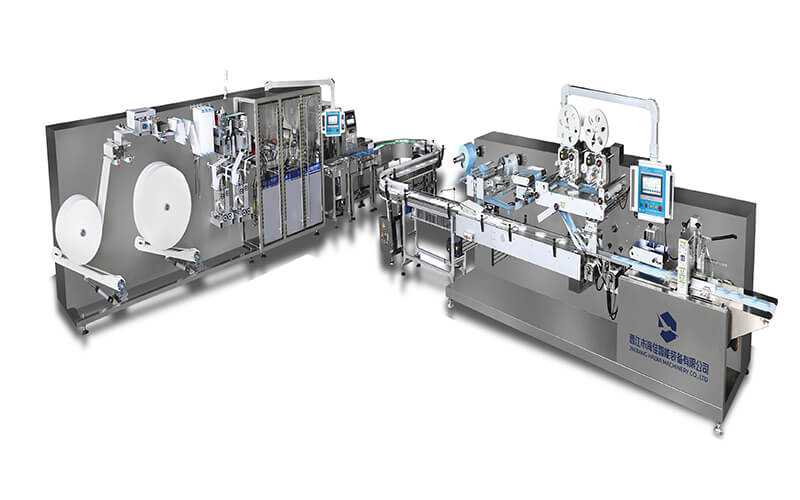
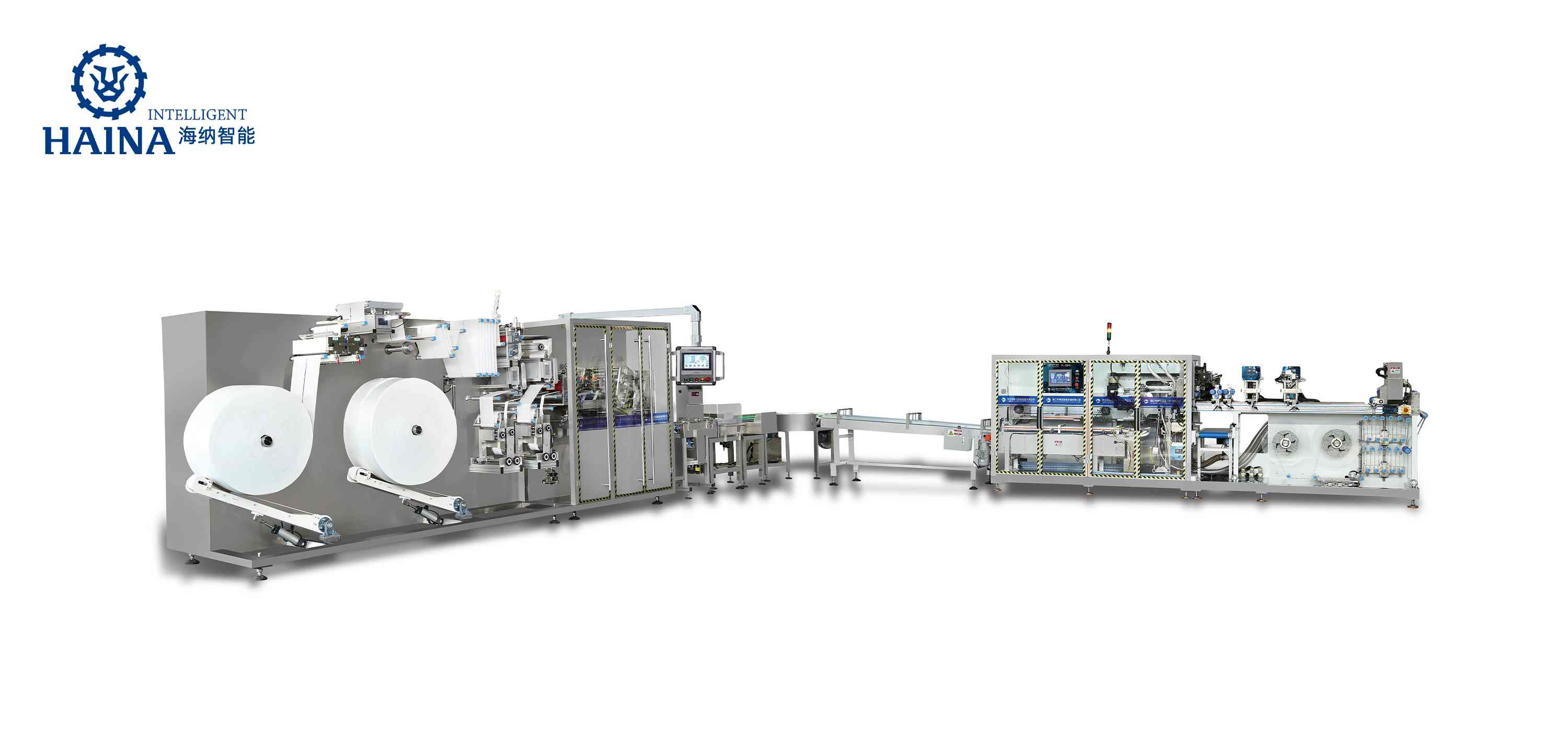
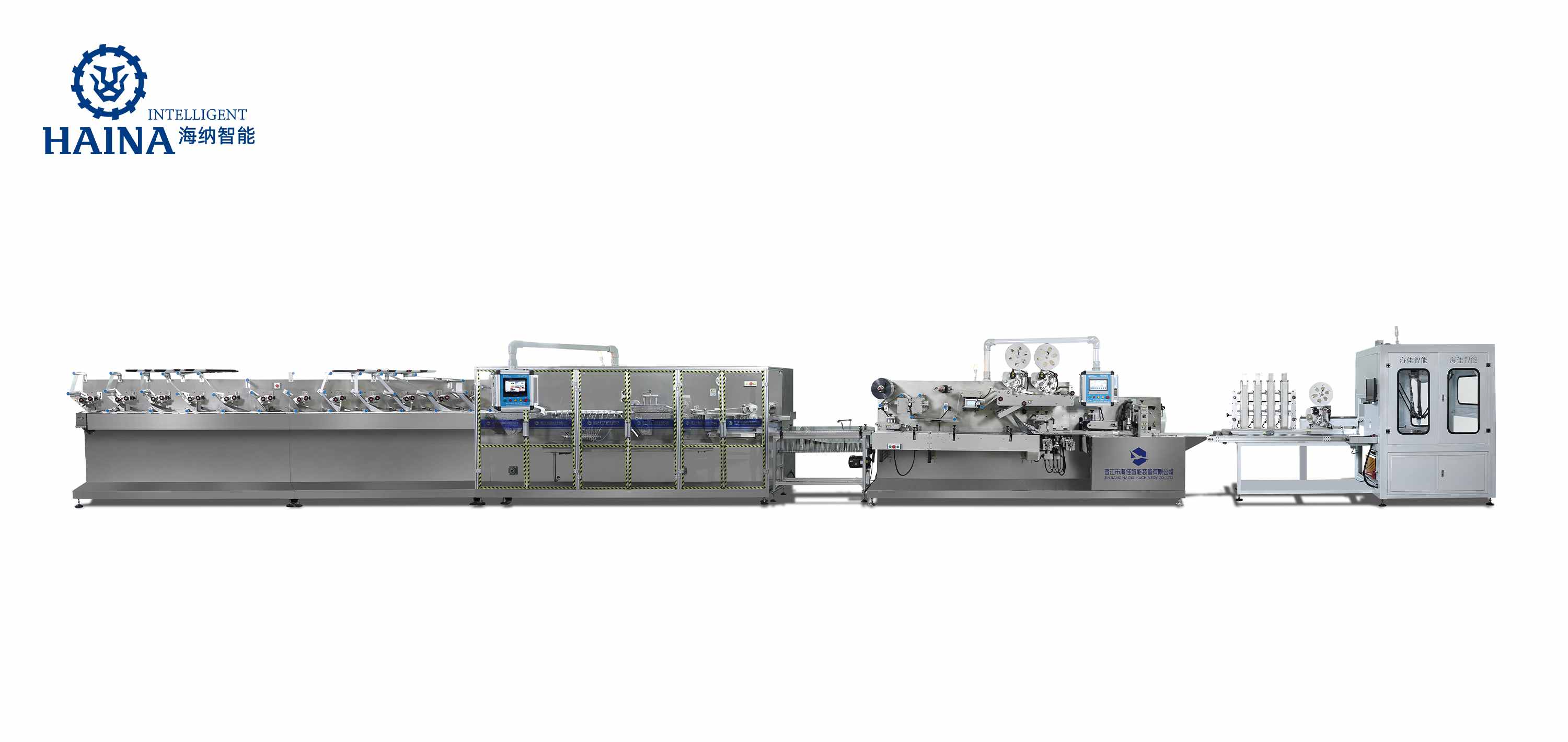
HJ-MN2 converting section, viewed as a sequence from roll loading to stack discharge. Detail used to review web path, slitting access and fold control. Discharge-side reference for stack condition and downstream handoff.
Production route at a glance
01
Load and join
Prepare paired substrate rolls and define the approved splice.
02
Slit and fold
Form the selected V, N or half fold within the recorded size window.
03
Add liquid
Choose immersion or spray according to the substrate and recipe.
04
Count and transfer
Build the selected stack, detect splice joints and hand off accepted output.
Stage 1: prepare the paired rolls
The legacy specification accepts spunlace nonwoven and calender-bonded nonwoven at 35-80 g/m². It records a maximum roll arrangement of W205 x 2 on the same paper core, with a diameter of 1200 mm. Two jumbo-roll axes use 3-inch cores and are described as splicing without stopping the machine. Before FAT, the buyer should provide the actual roll width, winding direction, core condition and splice tape; a nominal material name does not prove that the splice will track cleanly.
Release condition
Both lanes run without edge wander, the splice is detected, and the approved roll can be loaded using the planned factory handling method.
Stage 2: slit and fold to the approved geometry
The source records an unfolded range of L140-200 mm by W130-205 mm and a folded range of L70-100 mm by W38-70 mm. Available fold descriptions are V fold, N fold and one-half fold. These are alternatives to configure around the sample, not three simultaneous outputs.
Slitting is described as screw cutting with six knives. Knife setting, edge quality and fold symmetry should be inspected together because a width error entering the folder will appear later as an uneven stack.
Stage 3: apply liquid and build the stack
HJ-MN2 records immersion or spray liquid addition, selected according to material. The saved specification also lists liquid-addition detection at 2.5-4 times, touch-screen weight setting, real-time bucket-level monitoring and a 650 L hygienic-grade stainless-steel tank. Those entries define control points, but the buyer still needs a liquid recipe, target pickup method, sampling position and tolerance. Stack quantity is recorded as 5-30 pieces with height no more than 60 mm.
Substrate lotFold sampleLiquid targetStack count
Stage 4: detect splices and release a controlled stack
Recorded output changes with count: 80 bags per minute for 10 pieces and 50 bags per minute for 20 pieces. These are separate conditions and should not be blended into one headline rate. The source also identifies splice-joint detection and automatic rejection, while an independent servo controls stacking. FAT should therefore count good stacks after a splice, after a controlled stop and after restart, then record how rejected material is separated from acceptable output.
Factory trial checkpoints
Site data
Recorded size is L6180 x W1300 x H2100 mm; power is 11 kW at AC380 V, 50/60 Hz, three-phase five-wire, with voltage customizable.
Utilities
Air supply is recorded as 0.6-0.8 MPa at 130 L/min; machine weight is about 3000 kg.
Optional scope
Online slitting, web guiding, and metal and weight detection with rejection are listed as optional devices and must be identified in the quotation.
Run record
Keep material lots, fold choice, liquid setting, count, good output, rejected output and every stop reason.
Questions about HJ-MN2
Does one speed apply to every stack count?
No. The legacy record gives 80 bags/min for 10-piece stacks and 50 bags/min for 20-piece stacks. The ordered count and test material must be named in FAT.
Which liquid-adding method is standard?
The source lists immersion or spray according to material. The selected method, recipe responsibility and measurement procedure should be written into the project file.
Is downstream packaging included?
This page defines converting through stack release. The receiving packer, transfer timing and reject boundary require separate scope confirmation with HAINA.
HJ-MN2 is best evaluated as a controlled sequence. When each stage has an input, release condition and recorded result, the buyer can distinguish a real production trial from a brief no-load demonstration.