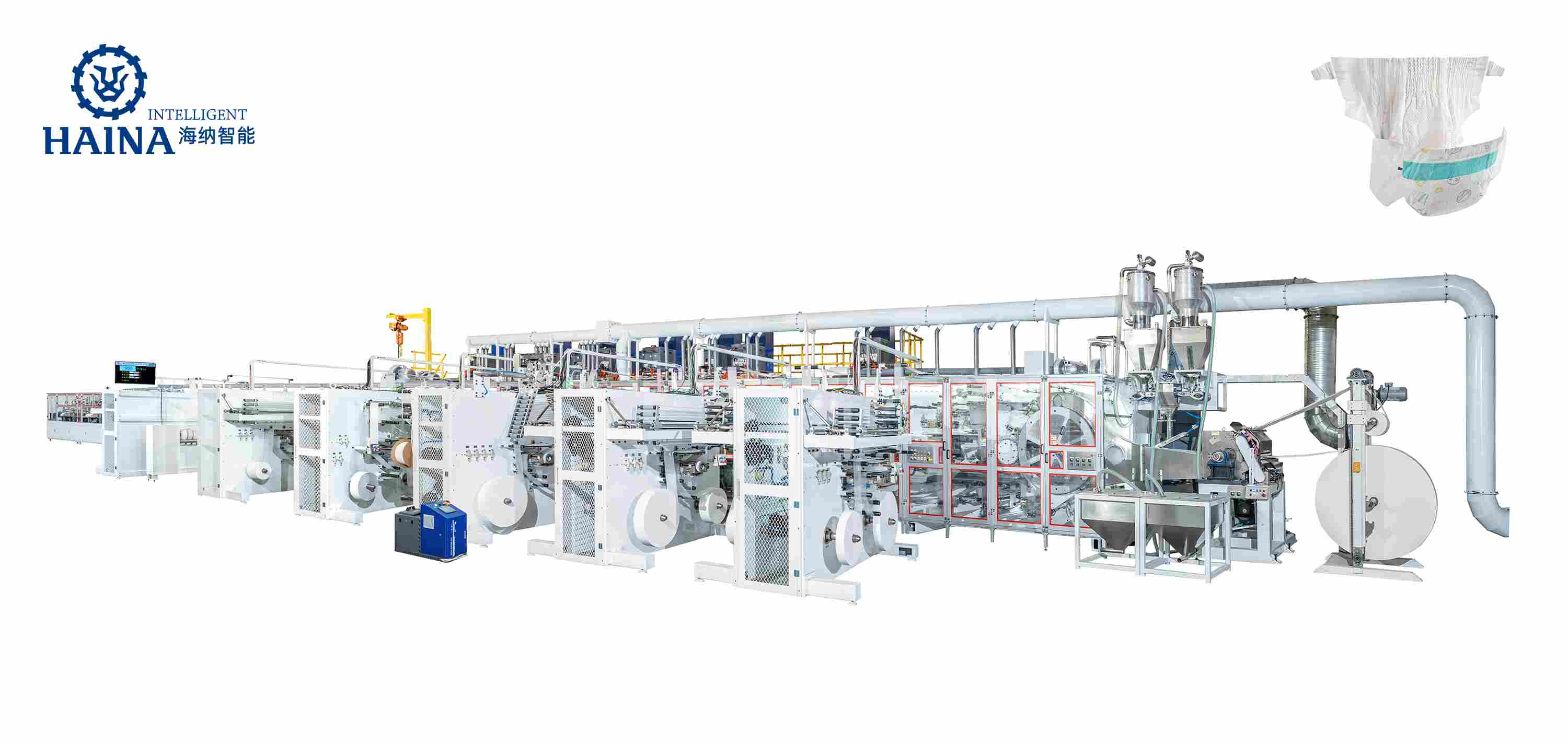
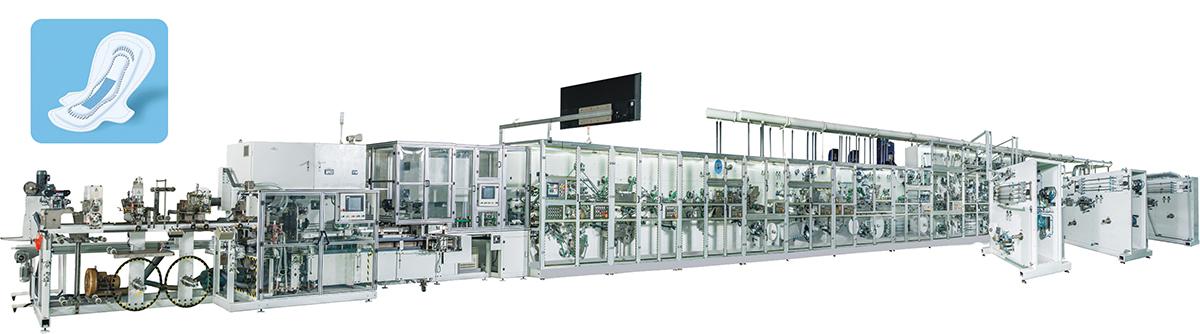
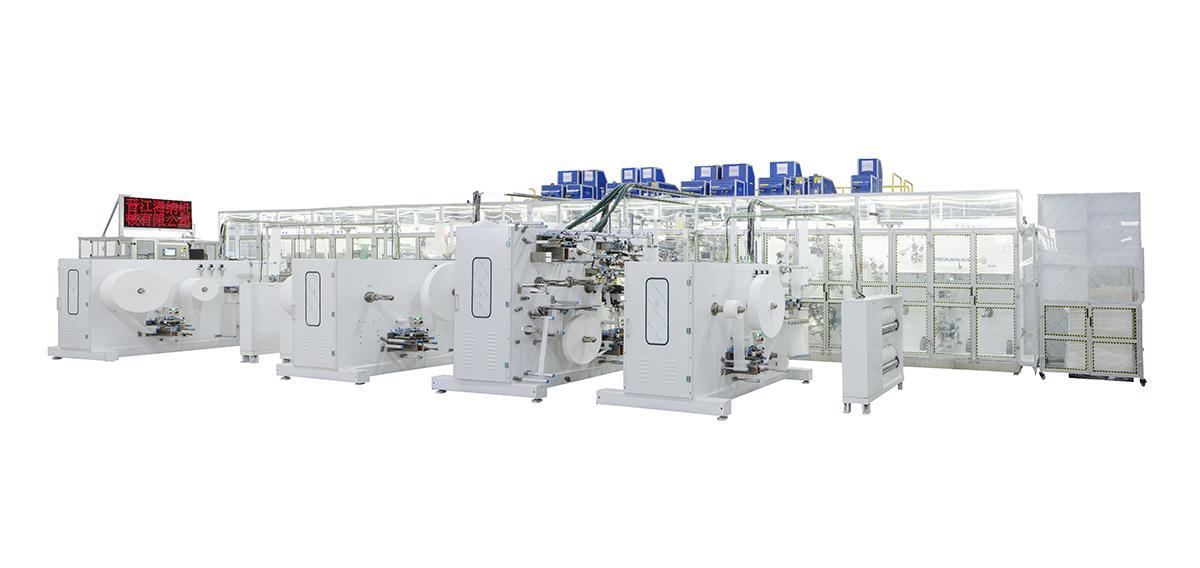
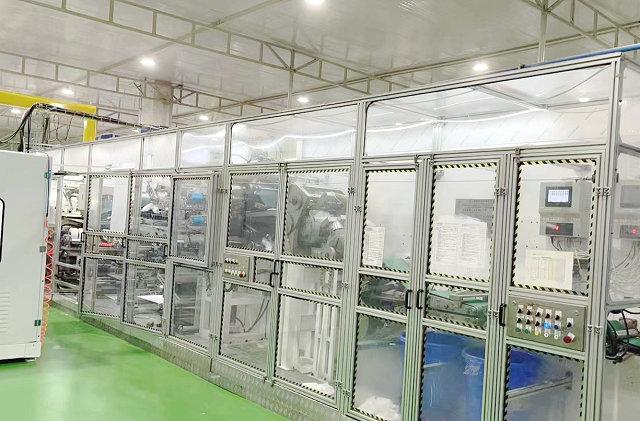
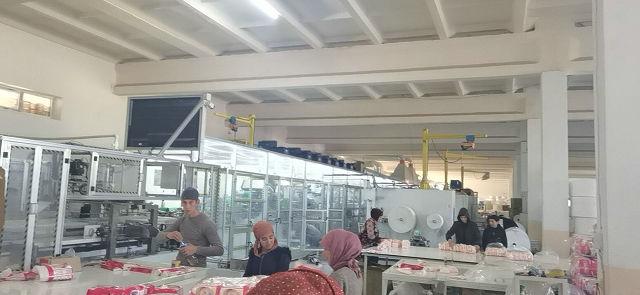
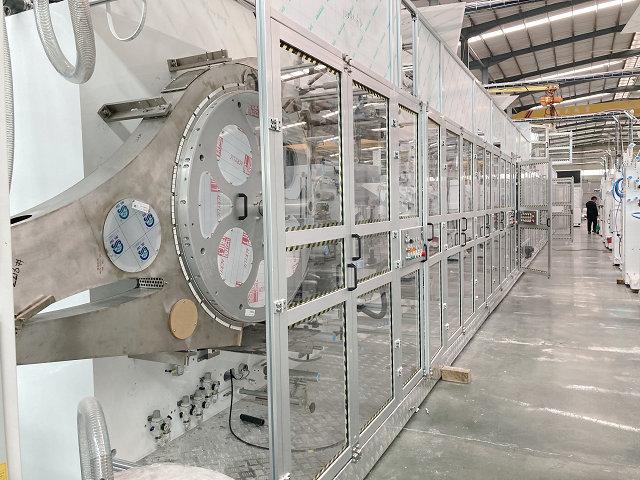
Choose a lady diaper manufacturing machine by defining the intended menstrual pants product before comparing equipment. Specify wearer size range, absorbent core construction, body and barrier materials, elastic layout, leg opening, release criteria, pack format, and expected changeover pattern. Then confirm that each required component has an included feeding, placement, bonding, cutting, inspection, and reject function. Compare stable conforming output under identified materials, not design speed alone. Require a witnessed FAT that covers startup, sustained operation, representative size change, quality samples, alarms, controlled restart, and document delivery. Selection should follow verified product fit and lifecycle support, not a generic diaper-line claim.
Clarify the menstrual pants product
The locked title uses the phrase lady diaper, but the relevant industrial product is disposable menstrual pants, also called period pants in some markets. This is not a taped baby diaper with a different label. The waist opening, body construction, absorbent area, elastic distribution, side treatment, leg openings, and wearer requirements create a distinct converting process. Procurement should preserve that product boundary from the first request for quotation.
Prepare a controlled product package for each planned size. Include unfolded and finished dimensions, absorbent core position and geometry, topsheet, distribution layer if used, tissue or core wrap, backsheet, side or body materials, waist and leg elastic arrangement, barriers, adhesives, side-seam or joining construction, cutting profile, and final fold. Mark critical component locations and tolerances on drawings rather than relying only on a physical sample.
Define product-release checks with the quality team. These may cover dimensions, core distribution, elastic position and recovery, leg opening, barrier continuity, bond or seam condition, visual cleanliness, component placement, weight or absorbent-input checks selected by the factory, and pack count. The requirement should state the method, instrument, sample frequency, acceptance value, and response to a failure. Machine selection cannot be separated from the evidence needed to release product.
Selection starts with a menstrual pants construction and the process functions required to form it.
Scope of a lady diaper manufacturing machine
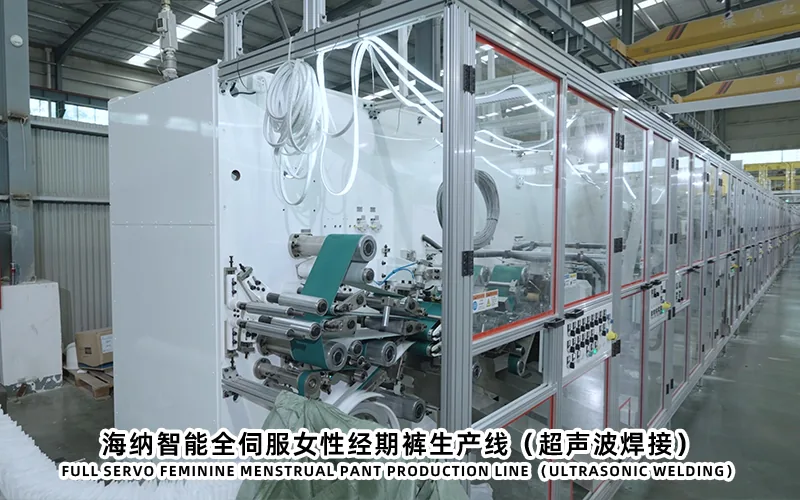
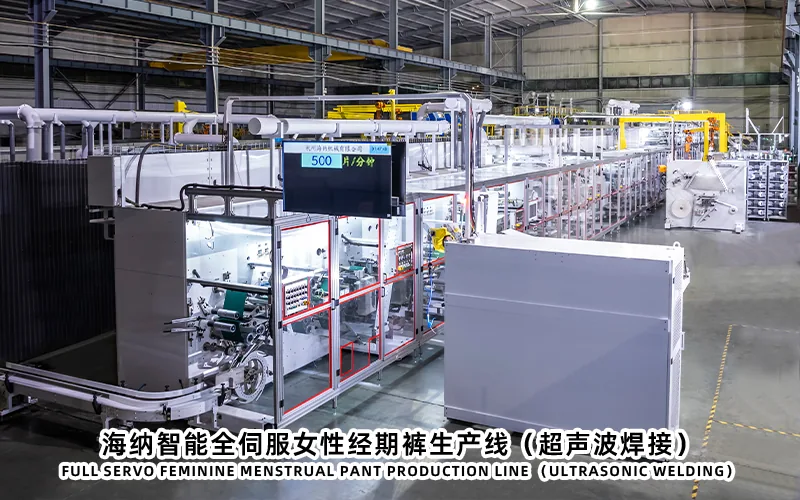
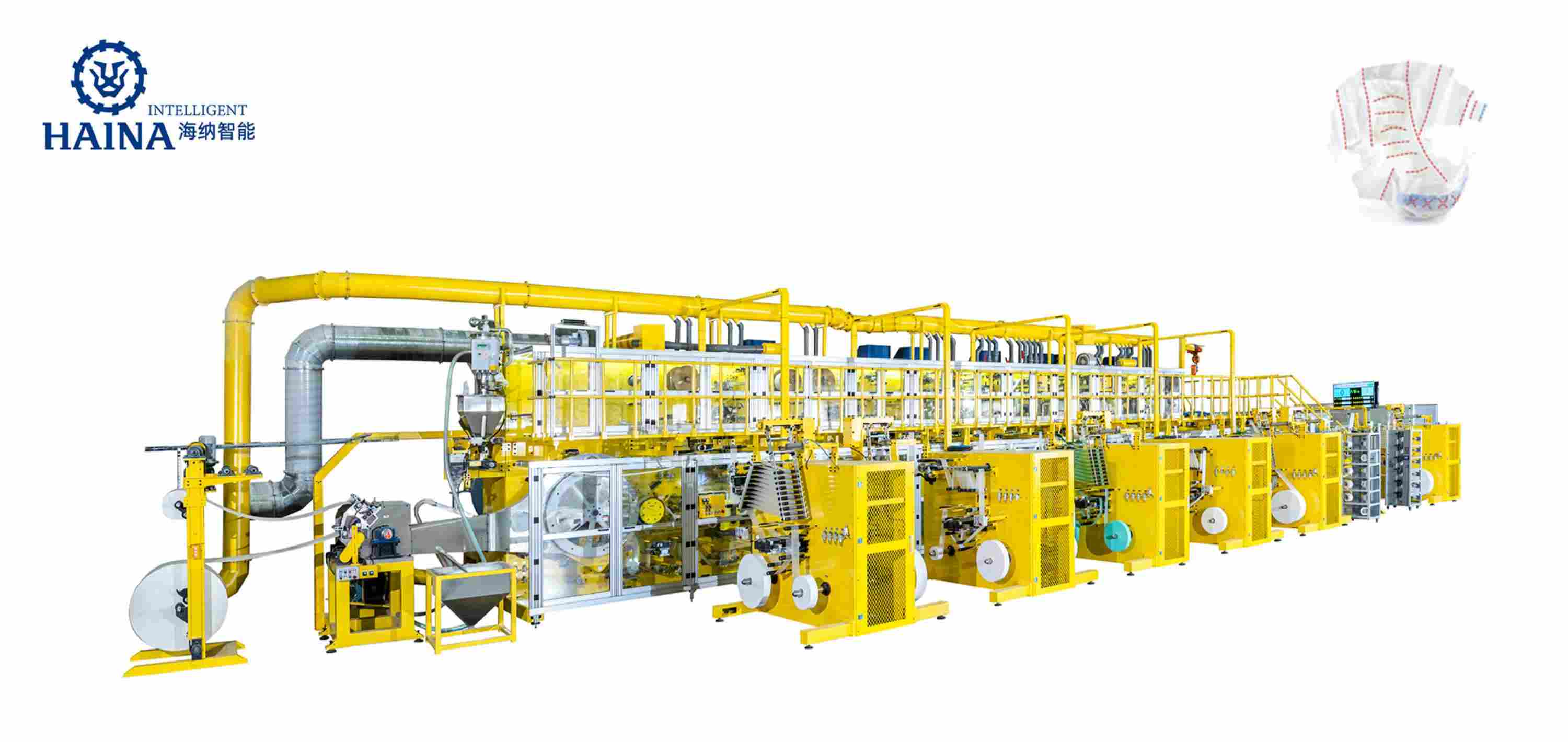
Translate the product into an equipment scope station by station. For these menstrual pants, confirm absorbent dosing and core preparation first, followed by core wrapping, continuous body-web feed, path and tension management, elastic-zone application, barrier work where required, adhesive delivery, contour cutting, side joining, final pants forming, inspection, rejection, discharge, counting, and packaging transfer. Ask the supplier to identify which functions are standard, selected options, future provisions, buyer supplied, or excluded.
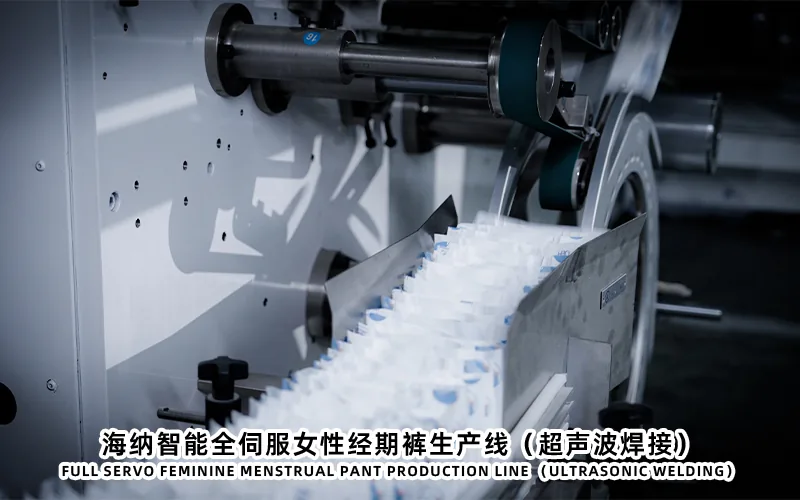
Pay special attention to the pants-forming sequence. The product must progress from continuous materials through controlled placement and joining into a wearable shape with defined waist and leg openings. The supplier should explain orientation changes, folding, side processing, cutting, transfer, and reject handling in a process narrative. A catalog statement that the line is fully automatic does not explain which manual loading, splicing, inspection, changeover, or downstream handling tasks remain.
Review the boundary at both ends of the line. Upstream responsibilities may include roll storage, conditioning, lifting, preparation, adhesive supply, absorbent input handling, dust extraction, and utilities. Downstream responsibilities may include counting, stacking, bagging, coding, case packing, conveying, and production-data exchange. Capture signal, elevation, orientation, accumulation, and safety responsibilities where another supplier provides the package system.
The receiving factory must fit the configuration. Check access routes, floor and service conditions, operating space, roll delivery paths, material staging, operator positions, maintenance clearance, change-part storage, waste removal, laboratory sample flow, and emergency access. Require a coordinated layout review before the purchase boundary is frozen.
Verify material and process fit
Material compatibility controls whether the proposed configuration can produce the defined article consistently. Build a matrix for every roll or input: description, function, supplier reference, width, diameter, core, winding direction, splice form, surface characteristics, mechanical behavior relevant to tensioning, storage condition, and planned test lot. Include elastic, adhesive, and absorbent inputs with the handling data available from their suppliers.
For each material, ask what the machine must control. A soft body web may need stable unwinding and guiding without damaging its surface. Elastic elements require controlled feed, extension, placement, bonding, and relaxation. Absorbent components require repeatable formation and containment. Joining materials must withstand the intended handling and product checks. Cutting and side treatment must produce acceptable edges without contamination or uncontrolled fragments.
Do not accept compatibility based only on nominal material names. Similar nonwovens can differ in friction, stretch, thickness, stiffness, surface treatment, roll quality, splice behavior, or bonding response. A material trial should use identified production-intent lots where possible. If substitute materials are necessary during engineering, list the differences and define a later confirmation trial.
Selection question
Menstrual pants evidence
Limitation to record
Verification action
Can the line form the planned body and openings?
Process drawing, station list, folding and joining narrative
Supported geometry and change parts
Inspect formed products and witness the sequence
Can it apply the elastic design?
Feed count, layout drawing, controls, material data
Elastic type, position range, approved process window
Measure placement and product recovery on labeled samples
Challenge agreed conditions and reconcile rejected products
Production-intent material trials reveal feed, tension, bonding, cutting, and forming behavior that data sheets cannot prove alone.
Compare the size and changeover strategy
Size range should be expressed as a matrix, not a broad minimum-to-maximum claim. For each size, list product dimensions, core and body geometry, elastic arrangement, cutting profile, relevant stations, recipe, dedicated mechanical parts, material widths, inspection settings, and downstream format. Mark boundary sizes or constructions that place the greatest demand on the configuration.
Ask the supplier to divide changeover into clearance and isolation, parts removal, mechanical adjustment, material replacement or threading, recipe selection, sensor and inspection setup, trial production, sample measurement, and release. This identifies which steps are internal to the stopped machine and which can be prepared externally. It also exposes the labor, tools, lifting, storage, and quality participation the factory must provide.
Use the final released pants from the outgoing size as the starting timestamp, and stop timing only when quality accepts the first pants in the next size. A mechanical adjustment time alone is not enough for production planning. Require labeled parts, an illustrated changeover instruction, controlled recipes, setup references, tool lists, verification points, and a method for protecting cleaned or calibrated components in storage. Review the risk of installing a part in the wrong orientation or recalling the wrong recipe.
A representative change should be observed during FAT when product mix is an important selection factor. Capture task duration by phase, material used, interventions, first-pass sample result, and unresolved problems. Do not turn a witnessed demonstration into a guaranteed future time unless the contractual test conditions and value are expressly agreed.
Inspect the quality-control architecture
Quality architecture includes prevention, detection, segregation, and records. Prevention comes from stable material control, recipe access, setting limits, correct part identification, sensor references, and maintenance condition. Detection may include web-break, component-presence, registration, splice, vision, or other configured functions. Segregation requires traceable reject logic, physical removal, confirmation, and a response when a reject fails. Records connect the event to product identity and corrective action.
Map each critical product feature to its control method. Some characteristics may be continuously monitored, others sampled offline, and some verified through incoming material control. The supplier should not claim that inspection covers all quality unless the defect list and limits demonstrate it. Identify blind spots and place them in the factory inspection plan.
Recipe governance is especially important for multiple sizes. Confirm user levels, authorized ranges, version identification, backup and restore, audit information available from the controls, and the handling of local changes. At FAT, select the correct recipe, attempt agreed access challenges, verify setting restoration, and inspect the first output after a change. Preserve the accepted recipe reference and sample results for site commissioning.
Inspection claims should name the defect, detection point, threshold control, reject route, and release record.
Prove output with a product-specific FAT
Write an FAT protocol that makes the intended menstrual pants product the center of acceptance. Identify the line configuration, installed options, drawing revisions, material lots, product sizes, recipes, instruments, quality methods, stable-run condition, observation periods, samples, stop rules, and expected records. Record the engineered speed ceiling separately from the sustained FAT condition, the plant's planned daily setting, and the contract test target.
Product-specific FAT sequence
Inspect the installed equipment and documents against the signed configuration schedule.
Reconcile every test material and confirm its roll orientation, lot, storage, and product-size assignment.
Witness startup, record adjustments and material consumed, and label the first accepted products.
Observe the agreed stable run while recording stops, rejects, held output, recipe changes, and quality samples.
Measure body, core, elastic, opening, joining, and other released characteristics with agreed methods.
Test alarms, inspection, reject handling, normal stopping, and controlled restart where safely included.
Perform a representative size change and repeat the required sample release.
List every deviation with objective closure evidence and a retest route where needed.
Reconcile results instead of reporting only the counter. Review accepted, rejected, sampled, and held product; test materials; interruptions; and any manual interventions required by the protocol. Preserve raw measurements, sample identity, alarms, recipe references, and signed observations. A successful run proves only the documented product, material, configuration, and conditions. Other combinations remain subject to engineering review.
The menstrual pants manufacturing machine category gives buyers the correct product context for this title. HAINA can review the proposed pants construction and FAT evidence plan during requirement engineering. Any accepted capability should then be stated in the technical agreement and supported by witnessed samples.
Score delivery and lifecycle support
Use a weighted scorecard with mandatory gates. Product construction support, required size range, essential safety scope, site fit, and acceptance commitment can be pass or fail. Score material validation, quality controls, changeover, maintainability, documents, training, spare parts, software governance, warranty, and support workflow. Every score needs a reference to a drawing, trial, sample, document, or binding response.
Review delivery details that affect operational readiness. Request a document index, drawing schedule, manuals, parts lists, preventive tasks, changeover instructions, software backups, parameter or recipe handling, training plan, installation responsibilities, commissioning sequence, and acceptance records. Inspect samples of these deliverables before award. A promise to provide manuals later gives little evidence of their accuracy or usability.
Training should be role-based. Operators need material loading, startup, normal production, quality reaction, size change, cleaning, and safe stop skills. Maintenance personnel need isolation, inspection, alignment, component replacement, control diagnostics, backup restoration, and controlled recovery. Quality staff need sample points, defect classification, inspection methods, and release records. Define competence demonstrations and sign-off evidence.
Commercial comparison should use a common scope including options, change parts, inspection, auxiliaries, installation support, test materials, spares, tools, software, training, and buyer site work. Do not build a return model from unverified speed, efficiency, waste, energy, or service assumptions. Mark each planning input as supplier-quoted, FAT-tested, buyer-estimated, or unresolved and test the decision against conservative scenarios.
Lifecycle scoring should connect equipment evidence with documents, skills, spares, software, and escalation responsibilities.
Frequently Asked Questions
Is a lady diaper machine the same as a baby diaper machine?
Not for this procurement context. The title refers to menstrual pants equipment, whose body formation, waist and leg construction, joining, and wearer requirements differ from taped baby diapers.
Can one configuration support every menstrual pants size?
Only the agreed size matrix is established. Verify dedicated parts, recipes, material widths, station ranges, changeover tasks, and accepted samples for representative and boundary sizes.
What should buyers bring to a supplier trial?
Bring controlled product drawings, production-intent materials, quality methods, calibrated or agreed instruments, labeled sample plans, acceptance values, and personnel authorized to decide deviations.
How should a supplier's stable-output claim be compared?
Compare the tested product, material lots, quality criteria, run duration, stops, rejected and held output, manual intervention, downstream condition, and accepted sample results.
Conclusion
A lady diaper manufacturing machine should be selected as a menstrual pants production system, not as a generic hygiene line. The procurement engineer must freeze the product construction, material matrix, size strategy, factory interfaces, inspection plan, and lifecycle responsibilities before comparing offers. The next action is to send HAINA a controlled requirement and scorecard, require each item to be marked with its configuration and evidence status, and witness an FAT using identified production-intent materials. Approve the project only after representative size change, product measurements, stable operation, reject checks, records, training deliverables, and deviation closure confirm the promised scope.