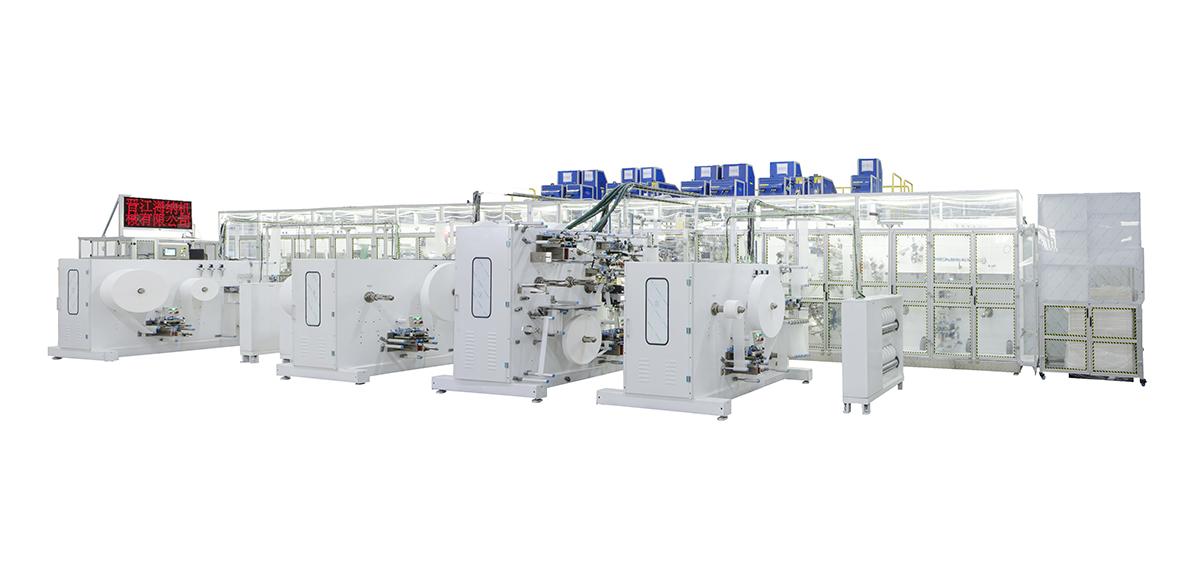
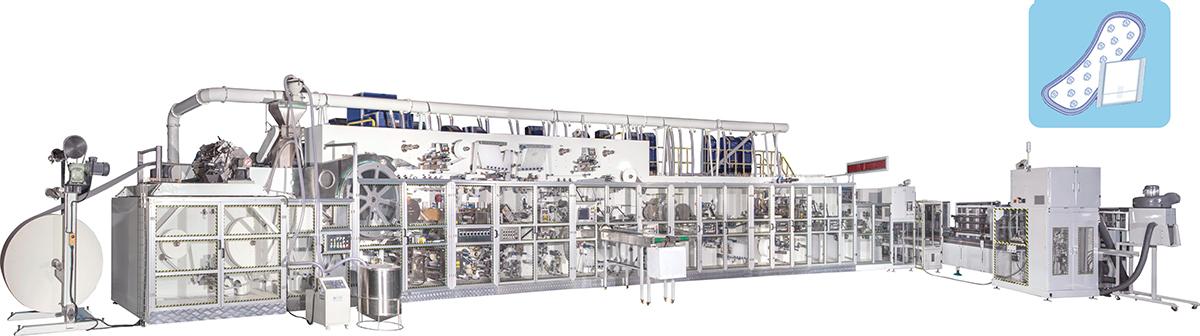
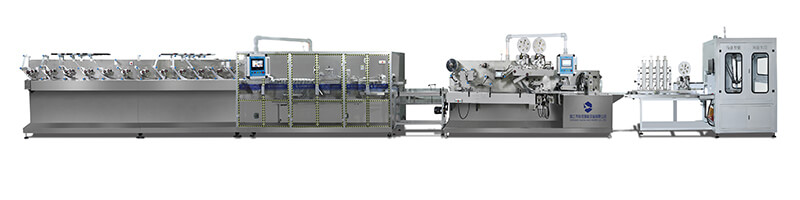
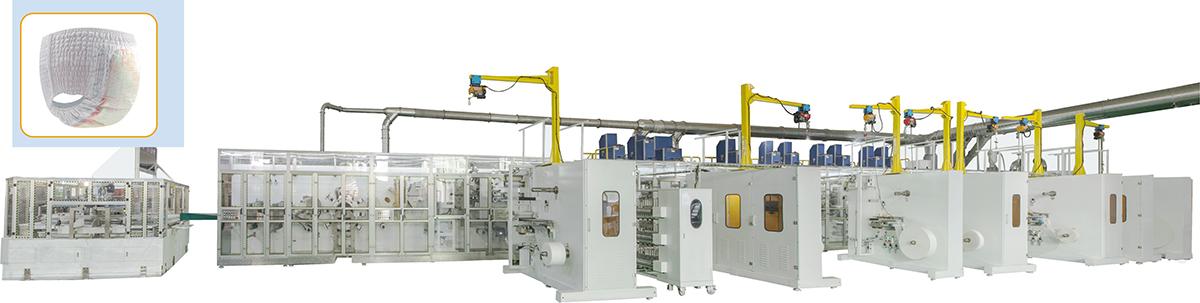
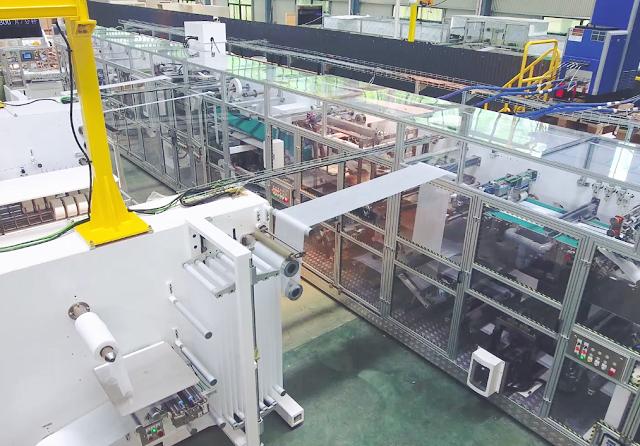
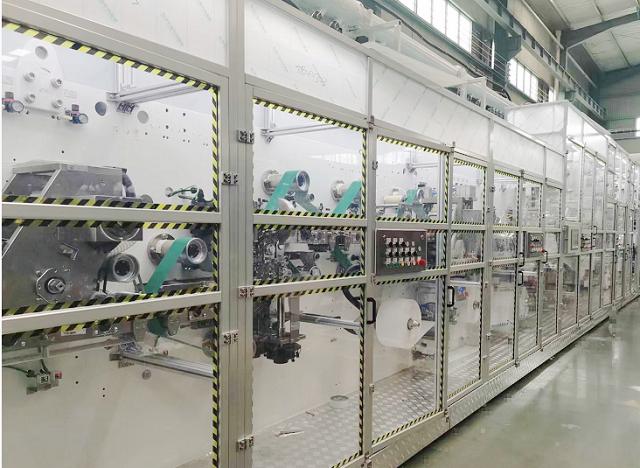
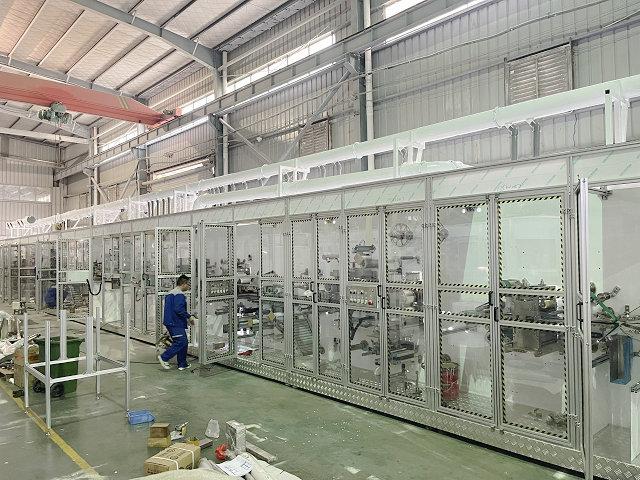
An adult diaper making production line is used to manufacture taped adult briefs for continence care, institutional supply, home care, and related private-label programs. Its main benefit is repeatable conversion of absorbent materials into defined sizes and constructions, with controlled placement, bonding, cutting, folding, inspection, and counting. The commercial value depends on product-market fit, material compatibility, factory utilities, trained staffing, and validated operating conditions rather than automation alone. A business development manager should first define target users and channel requirements, then confirm which formats the proposed line can produce, what change parts are required, and how each claim will be demonstrated with the buyer's materials.
Define the Application Boundary
The first boundary is product type. A taped adult brief normally combines a liquid-permeable body-facing layer, absorbent core, liquid-resistant backsheet, elasticized containment features, fastening components, and a shaped chassis. The line converts and assembles these materials. It is not automatically suitable for pull-on adult pants, underpads, sanitary pads, or every other absorbent format. Those products can require different chassis formation, elastic application, sealing, cutting, folding, or packaging processes.
The second boundary is the approved SKU range. Adult care markets can differ in user mobility, waist range, absorbency positioning, pack count, channel labeling, and caregiver expectations. A broad statement such as "multiple sizes" is not enough for planning. List each launch SKU, its finished dimensions, core concept, component widths, fastening arrangement, fold pattern, and pack interface. Ask the supplier to mark whether it is standard, requires change parts, requires engineering review, or sits outside the proposed scope.
Application limit: machine capability does not establish medical suitability or market acceptance. Product performance, labeling, user evaluation, and local compliance remain responsibilities that the brand owner must define and verify.
Match Adult Care Formats to Market Opportunities
Taped briefs are often selected where adjustable fit and caregiver-assisted changes are important. Institutional programs may emphasize repeatability, pack identification, and supply continuity. Retail and private-label programs may add demands for surface feel, discrete appearance, printed films, or differentiated absorbency. The same equipment concept may address several channels, but each channel creates a different requirement set.
Format planning should begin with a defined taped-brief construction and its intended care channel.
Application context
Likely product priority
Line question
Validation evidence
Care facility
Consistent fit and clear size identification
How are size parts, recipes, and counts controlled?
Which films, prints, and component options are compatible?
Material trials and approved appearance standard
Value program
Controlled specification without hidden complexity
Which features can be simplified without process instability?
Requirement review and representative run
Expanded size program
Coverage across planned user ranges
Which formats share parts and which need dedicated kits?
SKU-to-tooling matrix and witnessed changeover
This matrix prevents a common planning mistake: treating all demand as interchangeable units. Commercial forecasts should be divided by construction and size because changeovers, component inventories, material widths, and quality methods differ. A line can support a portfolio only when those differences have been engineered into the scope.
Evaluate Adult Diaper Making Production Line Capability
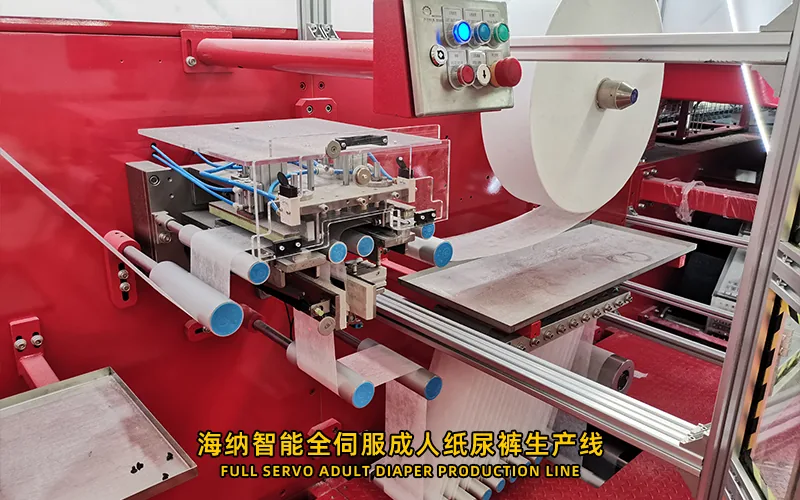
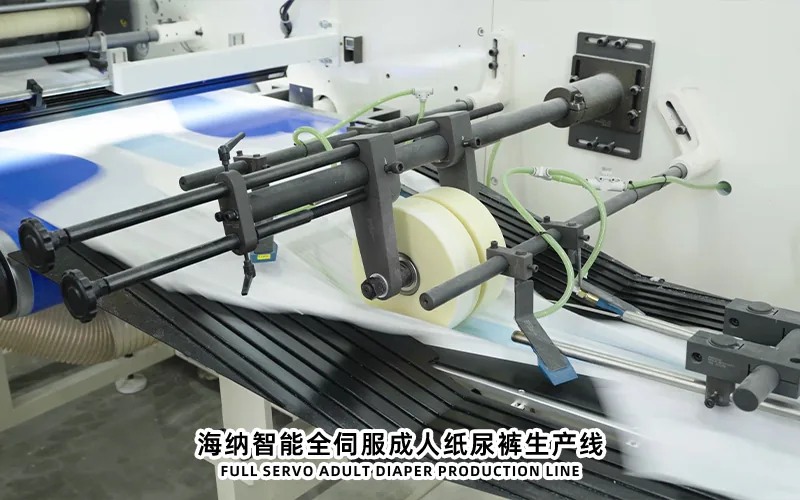
Process capability starts at material handling. Confirm the unwind arrangement, splice method, web guiding, and tension control for every proposed substrate. The supplier should review actual material specifications, including width, basis characteristics, roll dimensions, winding condition, surface behavior, and any printed registration requirement. Compatibility inferred from a generic material name is not enough.
Core preparation and containment deserve separate verification. Ask how absorbent inputs are metered, formed, transferred, wrapped, and monitored. The buyer should define the product attributes to check and the sampling method. Downstream, review adhesive application, elastic placement, barrier formation, fastener registration, contour cutting, folding, rejection, and counting. Each station needs an acceptance criterion connected to the finished product.
Capability is the verified interaction of material handling, assembly, inspection, and transfer stations.
When reviewing automatic adult diaper manufacturing equipment, distinguish design capability from stable working conditions and contractual acceptance. A maximum design statement cannot replace a sustained trial using an agreed SKU, materials, staffing, and quality plan. Document how startup, normal running, splices, stops, and restarts are represented in the test.
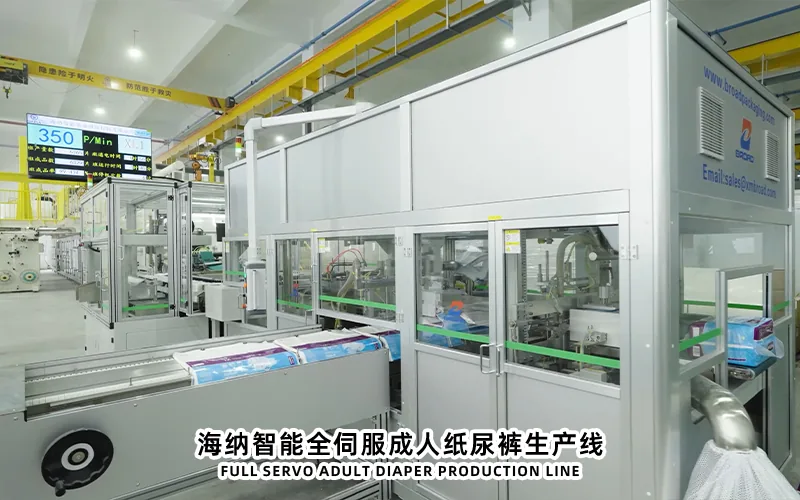
Also define the interface after product counting. If packaging is outside the line scope, specify the discharge orientation, accumulation, operator handling, and required synchronization. A technically acceptable converter can still create a factory bottleneck if downstream assumptions remain vague.
Confirm Factory and Workforce Enablers
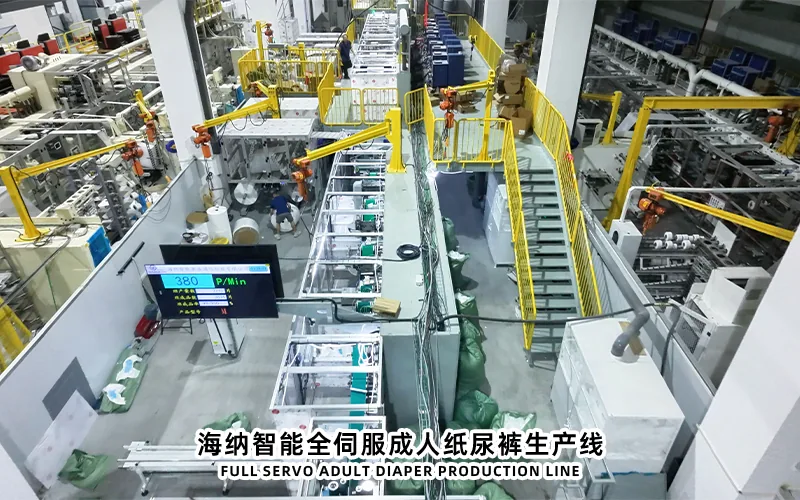
The benefits of automation depend on a prepared factory. Request an approved layout showing machine envelope, working aisles, maintenance access, material routes, waste removal, electrical cabinets, operator positions, and downstream equipment. Floor condition, loading points, ventilation, environmental control, and fire and safety provisions should be reviewed by qualified local parties. Utility requirements must identify quality and stability as well as connection values.
Factory fit includes access, logistics, utilities, and safe maintenance space around the complete line.
Staffing is another enabler. Define who loads materials, monitors controls, performs in-process checks, clears safe stoppages, completes changeovers, maintains equipment, and authorizes production release. Headcount assumptions should be tested against the exact automation and packaging boundary. Training should combine classroom explanation with supervised tasks and competence checks; attendance alone does not show that a person can thread a web, inspect a defect, or recover from an alarm safely.
Material supply also affects business continuity. Qualify proposed substrates and critical consumables before treating them as interchangeable. A source change can alter tension response, bonding, static behavior, dust, roll quality, and finished feel. Build receiving specifications and trial rules into the launch plan so commercial sourcing decisions do not bypass process validation.
Convert Claimed Benefits into Validation Evidence
The relevant benefits are consistency, repeatable assembly, traceability, scalable workflow, reduced manual variation, and a platform for planned SKU production. None should be accepted as a universal guarantee. Convert each benefit into a measured question. For consistency, identify critical dimensions and component positions, then review variation over a sustained run. For traceability, reconstruct a sample from material lots, recipe, shift record, inspections, and disposition. For changeover flexibility, observe an agreed size transition and first-off approval.
Waste and efficiency claims require an agreed boundary. Separate startup material, changeover material, splice events, quality rejects, trim, test samples, and unplanned losses. Similarly, separate design speed, demonstrated stable working speed, and accepted output of conforming products. HAINA can support a requirement review and FAT protocol for the proposed configuration; the buyer should supply SKU definitions, representative materials, and measurable acceptance rules.
A witnessed trial should collect product, process, stop, reject, and count evidence under agreed conditions.
Commercial evaluation should also include limits. Record products outside scope, materials not yet trialed, options not included, manual checks, and assumptions about utilities or packaging. An explicit limit is useful planning information; an unstated limit becomes a launch risk.
Build a Product-to-Launch Roadmap
Demand definition: segment forecasts by SKU, size, channel, pack format, and product construction.
Requirement freeze: approve drawings, material specifications, inspection criteria, tooling, and interfaces.
Factory readiness: close layout, utilities, logistics, staffing, safety, and environmental actions.
Material validation: run representative rolls and document compatibility, settings, and exceptions.
Handover: receive controlled documents, spare references, training evidence, recipes, and open-item ownership.
Ramp review: trend quality, losses, downtime causes, and training needs before adding product complexity.
Use decision gates between stages. A demand forecast should not release tooling until the construction is defined. Equipment shipment should not precede essential site readiness. Commercial launch should not rely on products made before quality methods and release authority are active. These gates align business development promises with factory evidence.
Before expanding the range, run a boundary review. Identify the widest and narrowest webs, largest product geometry, most demanding registration feature, most sensitive substrate, and most complex fold among the planned SKUs. Confirm that guides, unwind positions, application widths, vacuum support, inspection regions, cutters, transfer devices, and downstream handling cover those conditions. A midpoint sample cannot establish performance at the edges of a proposed operating range.
The commercial model should preserve these technical distinctions. Forecast sellable units by SKU, then translate them into production campaigns that include planned changeovers, sampling, sanitation, maintenance, and material availability. Do not fill a demand gap by assuming unverified speed or perfect utilization. Create a downside case for delayed material qualification, slower ramp-up, or a product that requires redesign. This does not weaken the project; it shows which evidence must be closed before commitments are made to customers or distribution partners.
Frequently Asked Questions
Can one adult diaper line make every continence product?
No. A taped brief line has a defined assembly and chassis concept. Pull-on pants, underpads, and other formats can require materially different processes. Confirm each proposed SKU and necessary change parts in writing.
What is the strongest benefit to validate during FAT?
Validate repeatable production of conforming products under agreed conditions. Collect product measurements, process records, stops, rejects, and counts rather than relying only on a short visual demonstration.
How should a buyer plan multiple sizes?
Create a matrix of finished dimensions, material widths, recipes, dedicated tooling, shared parts, inspection methods, and changeover steps. Witness at least the agreed representative transitions before acceptance.
Why must the buyer provide actual materials early?
Substrates with similar names can behave differently in unwinding, tension, bonding, cutting, static, and dust generation. Representative rolls let the parties identify settings, limits, and sourcing risks before launch.
Conclusion
The applications and benefits of an adult diaper making production line become credible when they are tied to a defined product portfolio and verified factory conditions. Before purchase approval, issue a SKU capability matrix that identifies construction, materials, tooling, inspections, packaging interfaces, and excluded formats. Then turn expected benefits into FAT checks for repeatability, traceability, changeover control, reject handling, and sustained conforming output. The practical next step is a joint requirement workshop followed by representative material trials and a signed acceptance protocol, so the investment decision rests on evidence for the intended market rather than broad equipment claims.