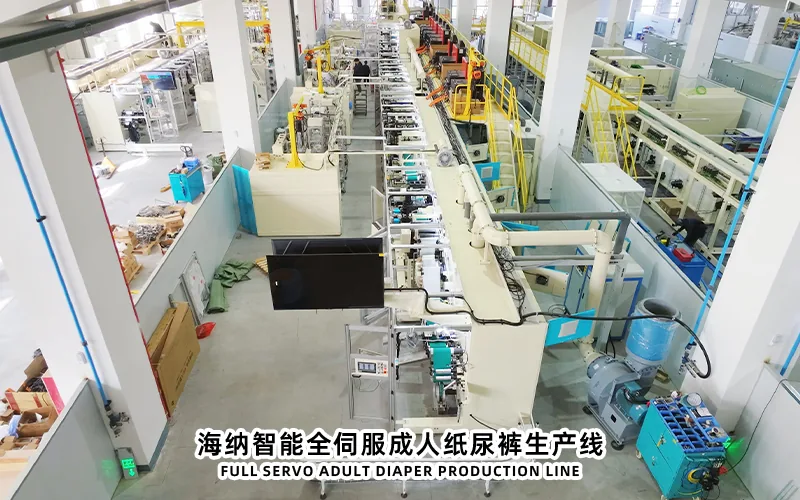
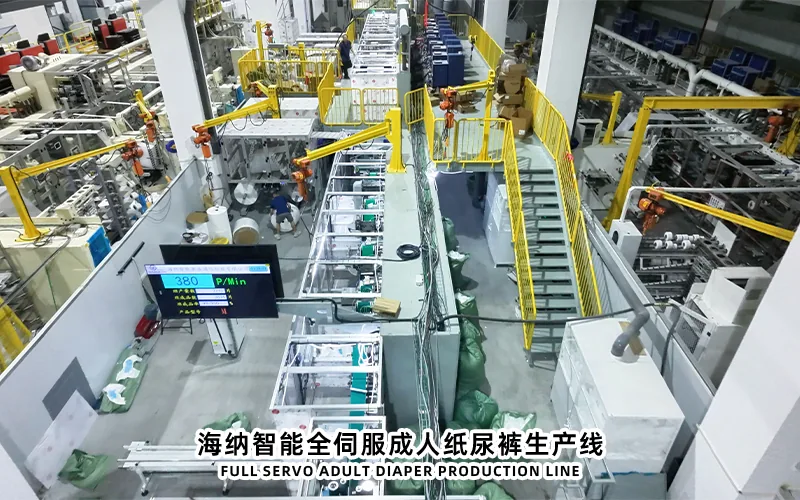
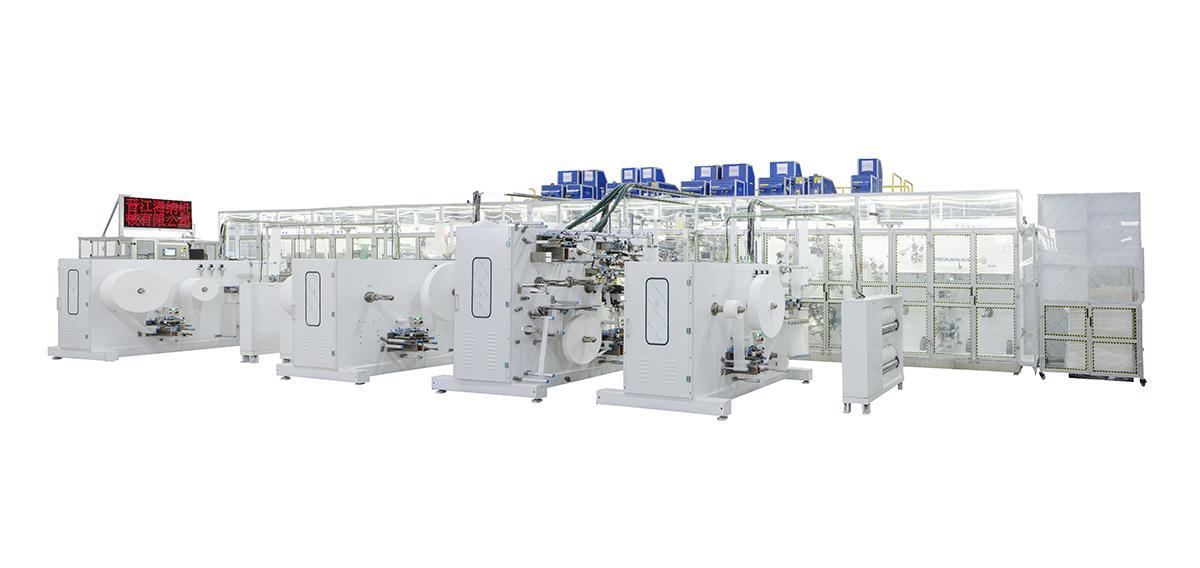
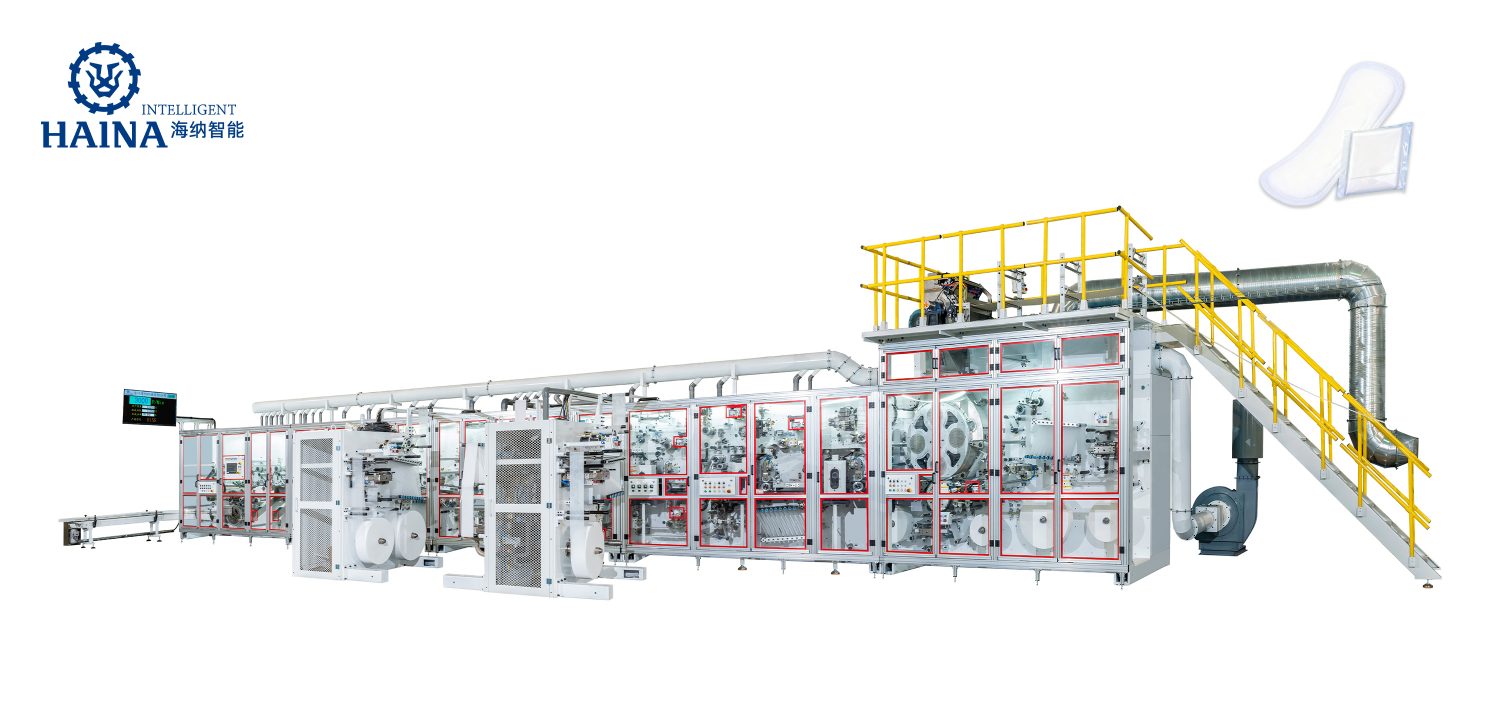
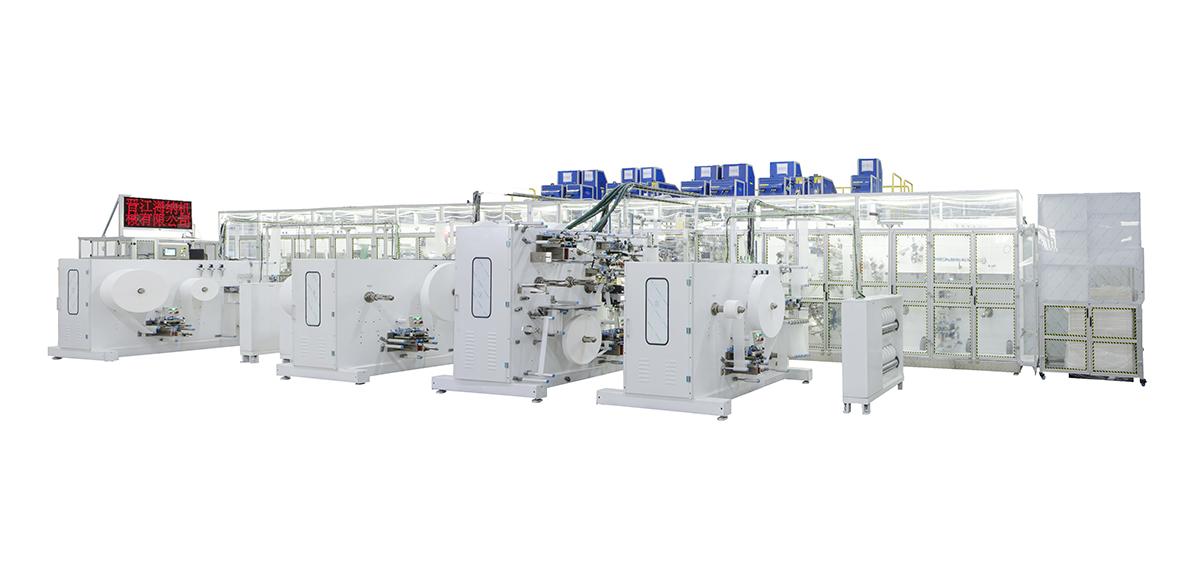
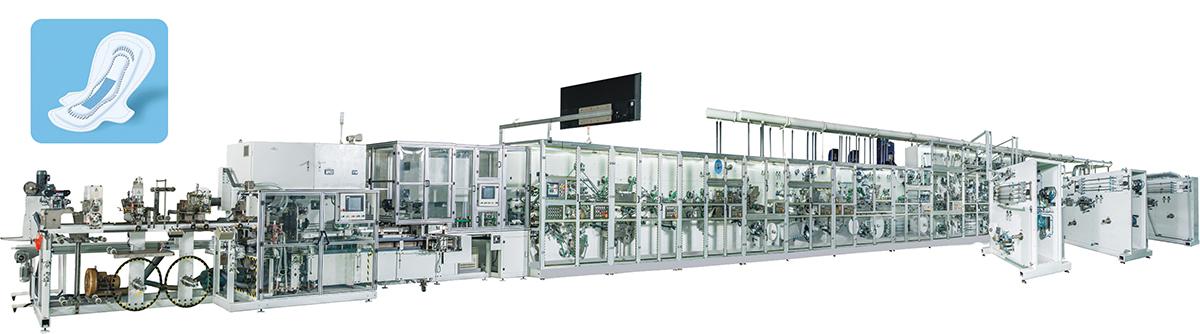
Maintenance and care for a fully automatic adult diaper machine should reflect the wide webs, large product geometry, absorbent-core handling, fastening components, and repeated size changes used for taped adult briefs. The supervisor needs a zone-based plan that links material loads and machine condition to fit, containment, bond, cut, fold, inspection, and count quality. Safe cleaning, alignment checks, vacuum and web-control inspection, drive condition, fastening-application care, approved spares, and traceable recovery are all required. Because defects may appear only on a large size or particular material combination, post-maintenance verification must use representative adult-product conditions rather than an unloaded test or the easiest SKU.
Set an Adult-Product Maintenance Scope
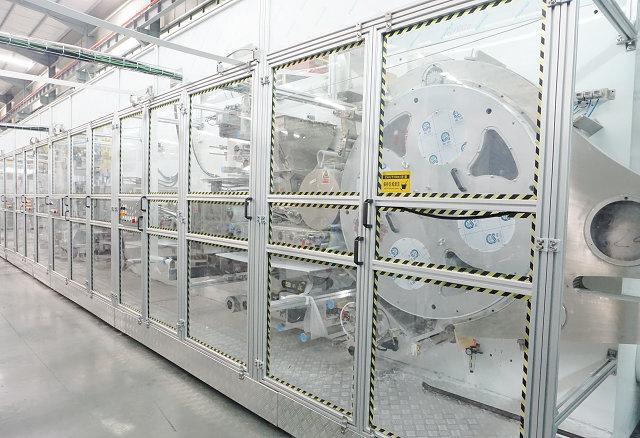
Taped adult briefs commonly use broad substrates, substantial absorbent structures, elasticized barriers, side or fastening components, contour cutting, folding, and counting. The installed machine may include automatic splicing, web guidance, inspection, rejection, and downstream transfer. Create an asset hierarchy from the actual configuration and connect each asset to the product features it can affect.
Maintenance priority should consider safety, product-release risk, likelihood of further damage, availability of a controlled operating condition, and access opportunity. A minor guide movement can matter when it shifts a wide web into a product limit. A small vacuum leak can matter when it destabilizes a large core. A fastening applicator with increasing correction may create brief attachment failures even before it produces a machine trip.
Verification boundary: the largest or most material-demanding SKU is not automatically the only critical test. Select the size, construction, and operating state that place the relevant serviced function under representative load.
Adult-product maintenance should trace wide substrates and large chassis features through the complete line.
Care for Wide Webs and Absorbent-Core Zones
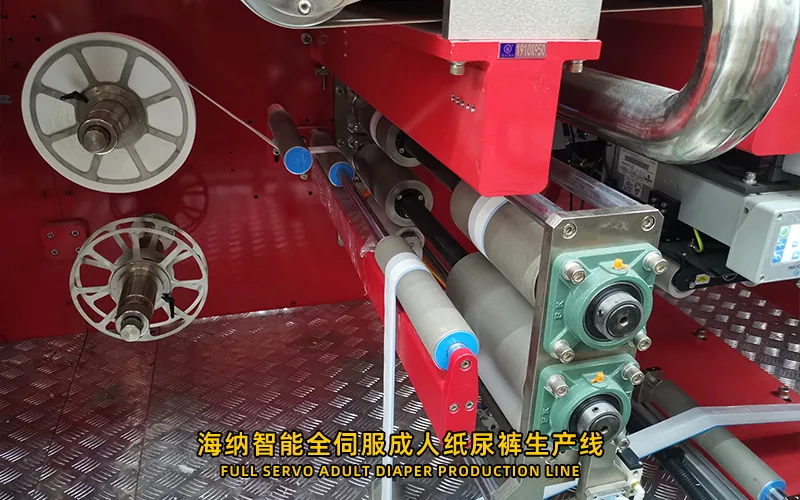
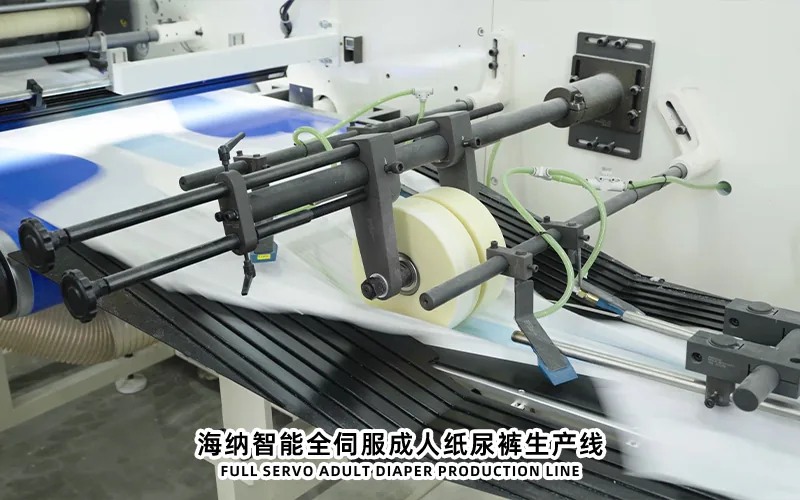
Inspect unwinds for roll support, chuck or shaft condition, brakes, splice devices, guide references, and damage that can disturb a wide material. Check roller surfaces for buildup, cuts, or contamination and verify mounting condition using approved methods. Record whether edge movement changes with roll diameter, splice passage, acceleration, or a particular material lot. These patterns help separate roll, routing, tension, guide, and mechanical causes.
Core-process care should cover raw-material feed, formation or distribution, transfer, wrapping, vacuum, extraction, filters, seals, ducts, and dust accumulation. Cleaning should not push absorbent dust into bearings, controls, or product areas. A decline in transfer stability may originate in restriction, leakage, worn surfaces, improper assembly after cleaning, or material variation. Preserve baseline readings and sample evidence before adjusting a recipe.
Connect maintenance findings to core product checks. Depending on the approved quality plan, these may include mass, profile, position, containment, dimensions, and visual integrity. A machine can appear mechanically stable while a core trend moves toward its limit. Maintenance and quality should review aligned timestamps so they can see whether cleaning, filter condition, material changes, or mechanical work correspond with the trend.
Vacuum, transfer, extraction, and web condition should be evaluated with core-quality evidence.
Maintain Fastening, Cutting, and Folding Functions
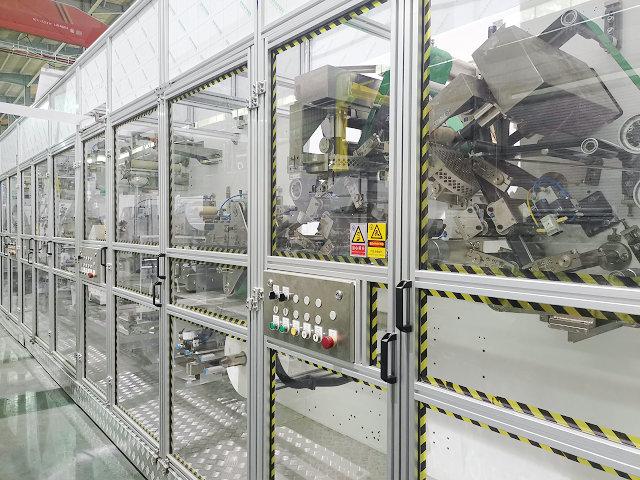
Fastening components create a distinct maintenance zone. Inspect material routing, unwind condition, applicator mounting, guide surfaces, alignment references, cutting or placement tools, bonding inputs, cables and hoses, sensors, and inspection regions. The product effect can include lateral or longitudinal displacement, rotation, incomplete cut, weak attachment, contamination, or a missed component. Record the exact symptom instead of a general "fastener problem."
Contour cutters and cross-cutting systems require controlled cleaning, tool inspection, fastening checks, approved clearance or alignment methods, lubrication where specified, and safe handling of sharp parts. Never compensate for poor cutting by an arbitrary force or pressure increase. Inspect buildup, support surfaces, timing references, material condition, and wear. Replacement parts must match the approved geometry, material, balance, mounting, and revision.
Folding and transfer equipment must handle the adult product without marking, opening, or losing orientation. Check belts, rollers, guides, timing elements, vacuum, accumulation, and downstream handoff. A fold problem may begin with upstream product geometry, air entrapment, inconsistent core, or poor cutting rather than the folder alone. Trace the earliest abnormal condition.
Adult brief function
Maintenance focus
Release evidence
Representative load question
Wide web handling
Unwind, roller, guide, tension, splice condition
Edge and registration trend
Does behavior change across roll diameter?
Large absorbent core
Feed, vacuum, transfer, extraction, containment
Core profile and position samples
Does the planned construction expose instability?
Fastener placement
Applicator, cutter, mount, signal and bond inputs
Position and attachment test
Does the widest size use a different setup?
Contour cutting
Tool, support, buildup, clearance and timing
Edge and dimension inspection
Does material stack alter cut behavior?
Fold and discharge
Belts, guides, timing, accumulation and transfer
Fold geometry, orientation, count
Does a larger brief stress downstream handling?
Plan Fully Automatic Adult Diaper Machine Condition Checks
Condition checks should have a named point, machine state, method, baseline, action rule, and record. Useful evidence can include defined visual condition, noise comparison, temperature or vibration by approved measurement, drive load, vacuum indication, alignment, belt or coupling state, leakage, fastener security, and adjustment frequency. Avoid universal limits copied from unrelated equipment; use component information, installed baselines, product effects, and engineering review.
Group tasks by access. Operator care can capture safe external observations, cleanliness, leakage, and product-linked symptoms during each run. Planned stops enable guarded-zone inspection and cleaning. Condition triggers can release targeted work. Larger shutdowns support deep inspection, concealed areas, drive alignment, safety validation, and difficult replacements. The supervisor reviews whether the interval still fits duty, environment, and findings.
Automation data can support condition decisions, but it needs context. A rise in drive load may follow a larger product, material change, mechanical drag, or control setting. Registration corrections may follow a splice or guide issue. Reject counts may reflect real material defects or inspection instability. Compare equivalent SKU and operating conditions and preserve recent maintenance and setting changes before concluding that an asset is deteriorating.
For automatic adult diaper manufacturing equipment, ask for inspection points and service access on the proposed layout. A task that cannot be performed safely or measured consistently needs an engineering resolution before the maintenance plan is approved.
Integrate Size Changes with Maintenance
Size changeovers expose and disturb machine elements, so they are useful inspection opportunities and a source of maintenance risk. Identify change parts with a controlled reference. Store them clean and protected. Inspect contact surfaces, fasteners, alignment marks, wear, and damage before installation. Quarantine unmarked parts or improvised substitutes.
Separate routine changeover adjustments from maintenance corrections. If a setup repeatedly requires extra shimming, unapproved parameter changes, or extended trial output, create a defect record. Do not allow repeated workaround knowledge to live only with one technician. Review whether change-part condition, installation method, recipe, base-machine alignment, material specification, or drawing needs correction.
Verify outgoing product, tooling, materials, and recipe are removed or closed before the next setup.
Inspect shared base points and dedicated parts before installing the new size.
Use independent verification for critical part identity, fastening, and settings.
Record maintenance findings separately from normal changeover completion.
Inspect every product characteristic affected by the changed geometry.
Trend first-off corrections by size to identify hidden deterioration or unclear standards.
Changeover records should distinguish normal configuration work from maintenance findings and repairs.
After a size-part repair or replacement, verify interchangeability only to the approved drawing. Trial the affected size and, where a shared base or datum moved, assess whether another size also needs confirmation. Update part records and drawings through change control before returning the kit to storage.
Use a Loaded Release Workflow
Close the work: verify parts, fastening, clearances, routing, lubrication, cleanliness, and tool accountability.
Restore protection: reinstall guards and complete approved checks of affected safety functions.
Test in stages: use manual motion or dry cycle where required before introducing adult-product materials.
Run representative load: observe the serviced zone at the SKU and condition selected in the job plan.
Release product: inspect affected characteristics and reconcile detection, rejects, and counts.
Recheck condition: inspect after sustained operation when heat, load, settling, or roll diameter can matter.
The maintenance supervisor, production lead, and quality representative should agree on release depth before work begins. Replacing an external cover differs from servicing a core transfer, fastener applicator, drive, cutter, inspection system, or reject mechanism. The work package should name the evidence required so production pressure cannot shrink the test after completion.
Representative product load verifies adult-line maintenance under the condition the serviced asset must support.
HAINA can review post-maintenance tests for the supplied configuration when evidence identifies the asset, part, SKU, materials, settings, alarm history, and affected product checks. Site release authority remains with the factory's approved roles, and local safety rules govern every intervention.
Frequently Asked Questions
Why is adult diaper machine maintenance different from a generic line plan?
Adult brief geometry, broad substrates, absorbent structure, fastening zones, fold, and downstream handling create specific load and quality conditions. Tasks and release tests should represent those conditions.
Which size should be used after maintenance?
Use the SKU that best challenges the serviced function. It may be the largest size, a dedicated tooling setup, a sensitive material, or the condition linked to the original fault.
Can a repeated changeover adjustment be treated as normal?
No. Record recurring extra adjustment as a condition to investigate. It may indicate wear, damaged change parts, unclear standards, material variation, recipe drift, or base-machine alignment.
What evidence should be saved after a cutter repair?
Save part identity, observed damage, installation and alignment checks, settings, safety restoration, edge and dimension samples, operating condition, follow-up inspection, and product disposition.
Conclusion
A strong adult-line care plan recognizes that equipment condition and product construction interact. Map the fully automatic adult diaper machine by wide-web, core, fastening, cutting, folding, automation, and transfer zones; then assign safe tasks, condition evidence, approved spares, and product-linked release checks. Select one recent intervention and verify whether its post-work trial represented the affected adult SKU, material, roll state, and load. Before the buyer accepts the maintenance package, witness a planned task and loaded recovery with factory technicians, closing any gap in access, drawings, change parts, inspection methods, or responsibility.