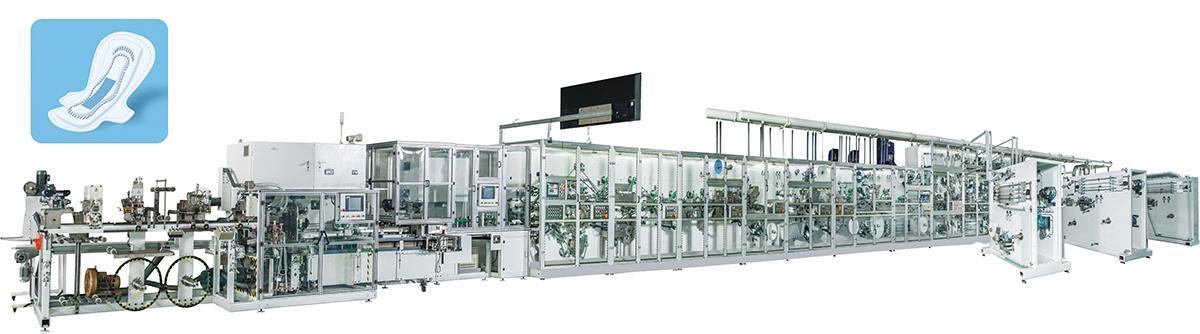
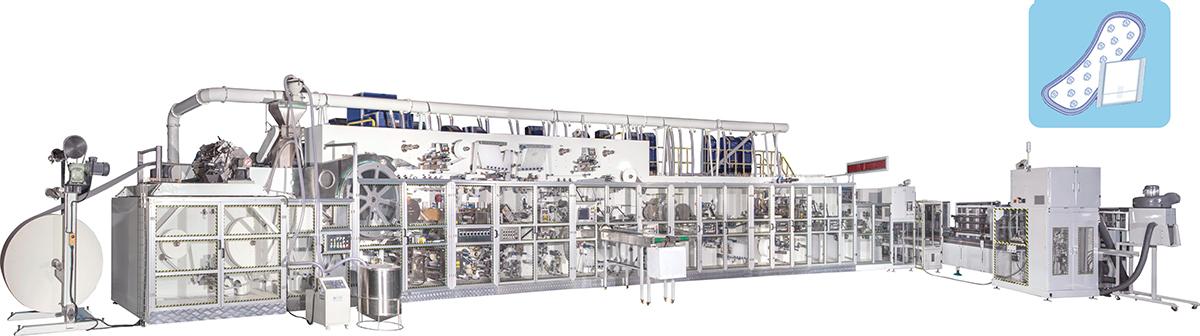
Bearing failure on a fully automatic sanitary pad machine should be addressed by safe isolation, symptom preservation, condition comparison, root-cause testing, controlled replacement, and loaded verification. Noise, heat, vibration, looseness, drive load, and product-timing changes can indicate bearing distress, but they can also come from belts, couplings, imbalance, misalignment, rubbing, poor mounting, or the driven process. Do not replace a bearing solely because it is nearby. Record the operating state and trend, inspect lubrication and contamination controls, identify the bearing and fit requirements, and examine the removed part. Recurrence prevention depends on correcting the mechanism that damaged the bearing, not only installing a new component.
Recognize Bearing-Related Symptoms without Guessing
Bearing distress can present as a new tonal noise, rough rotation, increasing vibration, localized temperature change, lubricant leakage, discoloration, looseness, unstable shaft position, higher drive load, or recurring trips. On a sanitary pad line, secondary product symptoms may include web movement, registration variation, poor cutting, unstable folding, or timing changes. These symptoms locate an investigation area; they do not identify the cause by themselves.
Capture the symptom under a defined state. Note the SKU, materials, operating condition, time since startup, roll diameter where relevant, recent changeover, recent maintenance, drive load, alarm history, and whether the condition appears during acceleration, steady running, deceleration, or coastdown. Compare with an approved baseline or a similar known-good position when the machines and conditions are genuinely comparable.
Immediate response: stop and isolate according to site rules when bearing condition may create unsafe motion, seizure, fire risk, component release, damage escalation, or uncontrolled product quality. Only qualified personnel should diagnose energized or rotating equipment under an approved method.
Bearing symptoms should be recorded with the exact rotating asset, operating state, and related product effect.
Isolate the Bearing and Preserve Evidence
Confirm the asset identity using controlled mechanical drawings, part lists, and location references. Do not rely on a handwritten label alone. Review the drive train and load path: motor, coupling, belt, pulley, gearbox, shaft, roller, cutter, fan, pump, or other driven element. A symptom transmitted through a frame can sound strongest away from its source.
Before disassembly, preserve as-found evidence. Photograph permitted features, mark orientation and position, record fastener condition, belt tension or coupling alignment by the approved method, check for rubbing and debris, note seal condition, and retain lubricant samples when the site's diagnostic plan requires them. Record whether the housing or shaft appears to have moved. Avoid cleaning away evidence before inspection.
Contain: protect personnel, isolate energy, and identify potentially affected product.
Confirm location: trace the drive and load path and compare adjacent sources.
Record state: capture operating context, measurements, alarm history, and recent work.
Retain evidence: label removed parts and preserve orientation and failure surfaces for review.
Product containment matters when the bearing can influence placement, cutting, bonding, detection, or transfer. Quality should identify the last known good check, affected time window, additional samples, and disposition. A mechanical repair does not automatically clear products made while the condition was developing.
Test Root Causes on a Fully Automatic Sanitary Pad Machine
Lubrication is one hypothesis. Investigate lubricant identity, compatibility, application method, quantity control, interval basis, delivery path, contamination, seal condition, storage, and task records. Too little, too much, mixed, contaminated, or incorrectly applied lubricant can all be harmful. Use bearing and lubricant supplier guidance for the installed condition rather than a universal interval or quantity.
Fit and installation are another hypothesis. Check the approved bearing reference, shaft and housing condition, dimensional or tolerance evidence, seating, shoulders, retention, mounting force path, heating method where approved, and tool use. Force transmitted through rolling elements during installation can cause damage. A loose or overly tight fit can change movement, load, and temperature. Qualified personnel should compare findings with controlled engineering requirements.
Alignment, belt or coupling condition, imbalance, shaft deflection, structural looseness, process buildup, and external load can damage a healthy bearing. Contamination can enter through damaged seals, poor storage, dirty tools, open housings, washdown, dust, fibers, or adhesive. Electrical effects may require specialist investigation on relevant driven assets. Do not assign a cause until evidence supports the mechanism.
Hypothesis
Evidence to examine
Common conflicting evidence
Prevention to verify
Lubrication problem
Identity, condition, delivery, quantity method, records
Correct lubricant present with damage pattern elsewhere
Point labeling, clean method, interval and delivery control
Contamination
Seal state, particles, storage, open-work practice
Clean surfaces and protected handling
Seal correction, clean tools, storage and work controls
Incorrect fit or mounting
Shaft, housing, seating, marks, tool and force path
Verified dimensions and undamaged mounting surfaces
Coupling, belt, shaft, frame, process load, buildup
Alignment and loading remain within approved condition
Correct root load and verify under operation
Wrong bearing selection
Part reference, revision, rating, clearance and seals
Installed part matches controlled design
Spare governance and engineering approval
Inspect the complete load path because bearing damage can originate outside the bearing housing.
Failure-surface interpretation should be performed by personnel with appropriate bearing knowledge and good evidence. Damage can evolve after the initiating event, and severe secondary damage may hide the first mechanism. Record confidence and unresolved alternatives. Sending a part for specialist review is preferable to declaring an unsupported cause.
Control Bearing Removal and Replacement
Prepare the replacement before removing the failed unit. Verify the exact reference and approved alternative, condition of packaging, storage history where relevant, seals or shields, internal clearance or other specified characteristics, lubricant requirement, installation tools, and drawings. Keep the new bearing protected until the clean installation point is ready.
Use an approved puller, press, heater, sleeve, or other method suited to the design. Apply mounting force through the correct ring so force does not pass through rolling elements. Protect shaft and housing surfaces. Record unexpected looseness, fretting, scoring, discoloration, debris, damage to shoulders or retention, and dimensional findings. Replacing the bearing without correcting a damaged seat can lead to recurrence.
Install seals, retention, lubrication, coupling, pulley, belt, covers, guards, and sensors to the controlled requirements. Verify free or expected movement by the approved method and check clearances, alignment, routing, fasteners, and tool accountability. If a bearing reference, fit, lubrication method, guard, or drive configuration changes, process the modification through engineering change control.
When evaluating automatic sanitary napkin manufacturing equipment, ask the supplier to identify critical rotating assets, approved bearing references, special tools, lubrication points, access, and post-replacement tests. HAINA can review this maintenance handover for the supplied configuration, while the factory controls local work authorization and condition records.
Replacement readiness includes the correct part, clean tools, protected surfaces, controlled fit, and recovery plan.
Verify Function under Representative Load
Begin recovery with mechanical completion and safety restoration. Verify fastening, lubrication, covers, guards, affected protective functions, tools and loose parts, and housekeeping. Release isolation through the site procedure. Use manual rotation, jog, or a controlled no-material test only when the approved method allows it. Watch and listen from safe positions.
Increase operation in stages and compare the same approved condition indicators used before repair. Monitor noise, vibration, temperature, drive load, leakage, alignment, and adjacent components. The relevant observation period depends on when the original symptom appeared. A bearing that failed only after warm operation cannot be cleared by a brief cold spin.
Introduce representative materials and verify product characteristics connected to the asset: web position, registration, cut, fold, bond, inspection, or transfer as applicable. Confirm that automatic detection, rejection, and counts remain correct if timing or shaft position could affect them. Quality release should identify samples, limits, results, and product disposition.
Schedule a follow-up after a defined loaded condition to check settling, fastening, heat, lubricant leakage, belt or coupling state, and condition trend. Keep the work order open when the root-cause hypothesis requires longer evidence. A successful startup proves restoration at startup, not permanent elimination of the failure mechanism.
Use a Bearing Recurrence Control Scorecard
Evidence quality: symptom, operating context, measurements, and removed-part condition are preserved.
Cause confidence: supporting and conflicting evidence are recorded, with alternatives still open.
Installation control: part, fit, tools, force path, cleanliness, alignment, and lubrication are verified.
System correction: external load, seal, structure, belt, coupling, or process condition is addressed.
Product protection: affected output is traced, inspected, and dispositioned by the proper role.
Loaded proof: condition and product checks represent the state that exposed the failure.
Learning transfer: tasks, spares, drawings, training, and similar assets receive the required update.
Recurrence review connects bearing evidence to drive condition, process load, product quality, and maintenance controls.
Review the scorecard after the next comparable production campaign. If condition trends return, reopen the hypothesis rather than repeating the same replacement automatically. Compare sister assets only after confirming design, duty, material, speed, environment, and maintenance are comparable.
Frequently Asked Questions
Does abnormal noise prove a bearing has failed?
No. Noise can come from belts, couplings, rubbing, looseness, gears, process buildup, or transmitted vibration. Localize the source and compare condition evidence before disassembly.
Should a replacement bearing always receive more lubricant?
No. Use the approved lubricant, compatibility, amount or application rule, and method. Over-lubrication, mixing, contamination, and incorrect delivery can all create problems.
Why retain the removed bearing?
Its surfaces, seals, lubricant, fit marks, and damage progression may help distinguish contamination, mounting, load, lubrication, or secondary damage. Label it and preserve orientation for qualified review.
When can the sanitary pad machine return to production?
After work and safety restoration, staged function checks, representative loaded condition monitoring, affected product inspection, quality authorization, and a defined follow-up when the original symptom was time-dependent.
Conclusion
Bearing maintenance is successful when the failure mechanism is understood and controlled. For the next suspected event on a fully automatic sanitary pad machine, preserve the operating state, trace the drive and load path, inspect lubrication, contamination, fit, mounting, alignment, and external load, and retain the removed part. Use a controlled replacement package and test the repaired asset at the SKU and loaded condition that exposed the symptom. Before closing the job, the maintenance engineer should review the recurrence scorecard with production and quality, then update tasks, spares, drawings, and training where the evidence requires it.