Adult & Baby Diaper Machine,Sanitary Napkins Production Line Blog
Specify the located usable band, edge exclusions and continuous coverage a baby diaper material needs, rather than accepting the roll label width alone.
For a baby diaper machine, specify material width around the component's required functional band, not the roll label alone. A web can meet the ordered overall width while an excluded edge, off-center coating or interrupted usable region leaves insufficient coverage for the intended barrier, bonding or other specified function. Define the physical span, each exclusion and the usable band's position from a named reference on the same material face. Then check that the required continuous component or approved lanes fit that arrangement. Material conformance and compatibility with the proposed converting path are related decisions, but one does not automatically establish the other.
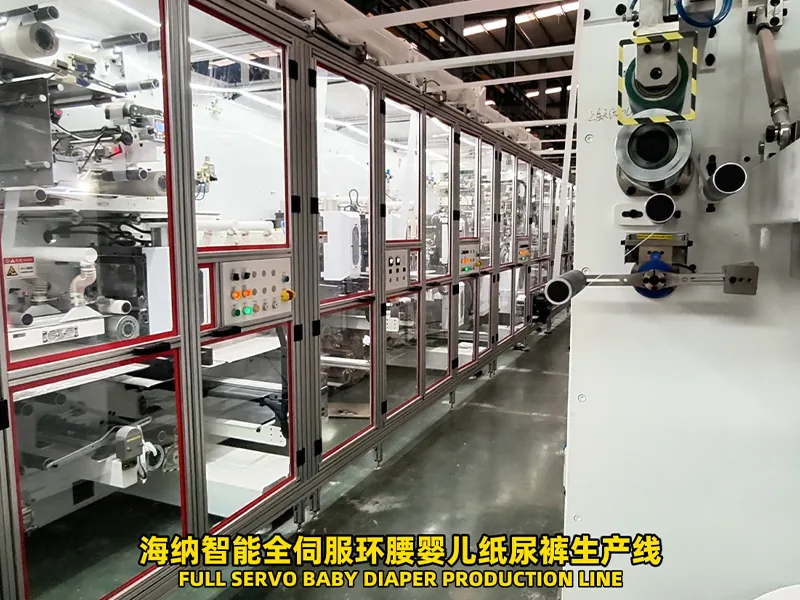
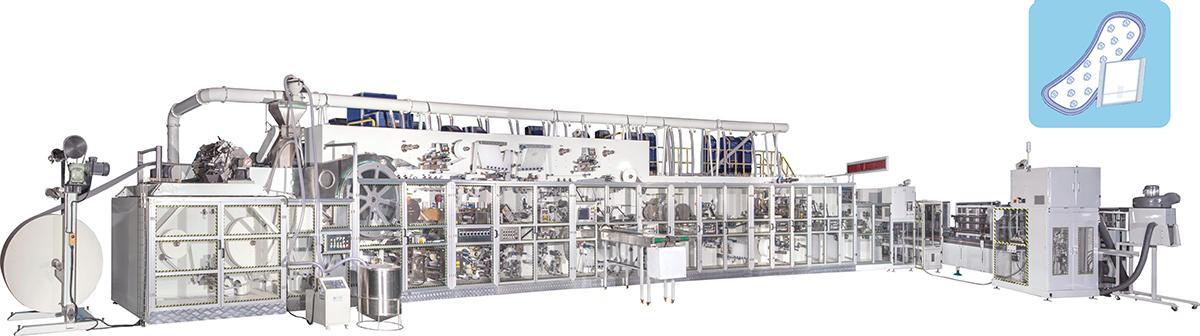
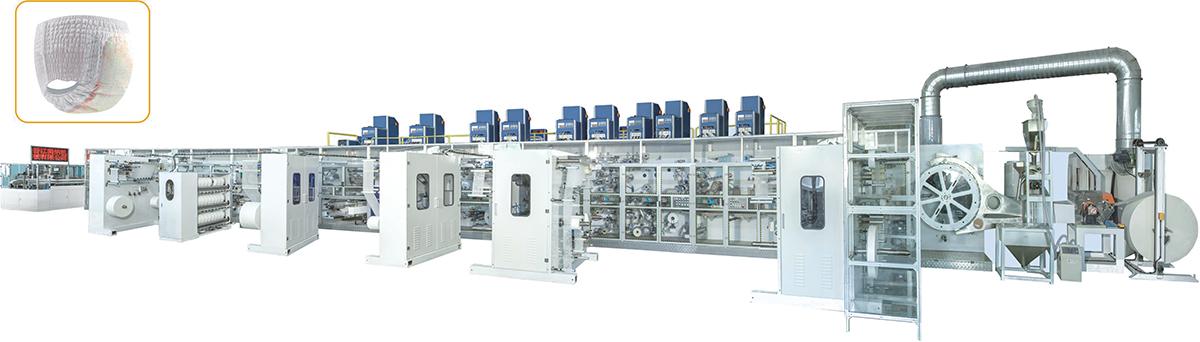
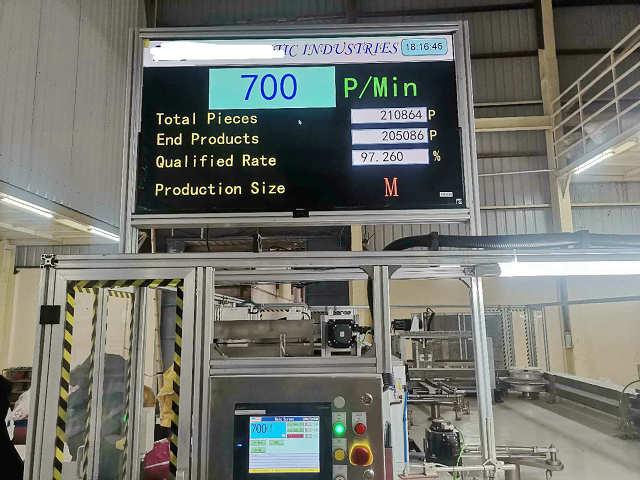
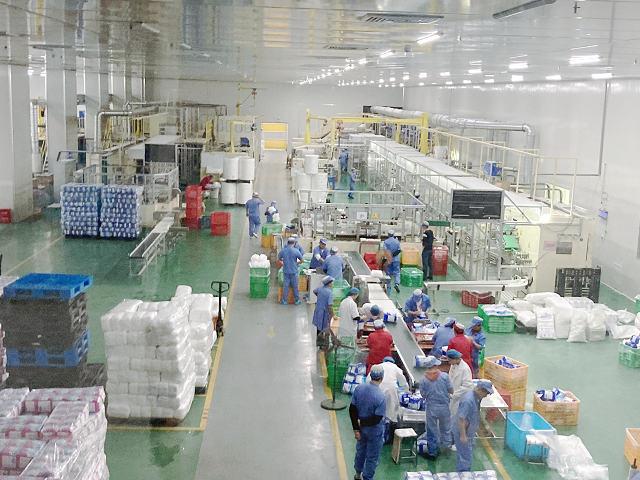
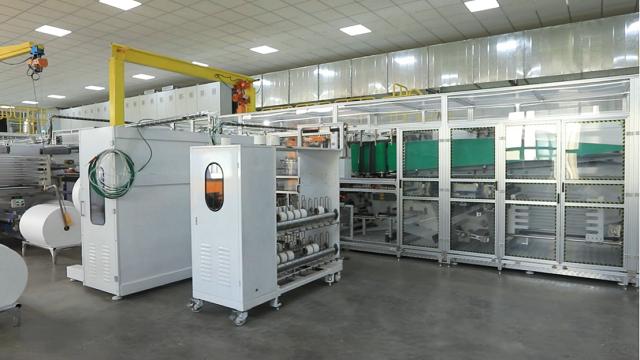
The equipment family image does not establish a permitted material width.
Separate physical span from functional span
A physical width requirement answers whether the supplied web has the specified overall dimension under the agreed measurement condition. A usable width requirement asks whether enough material meets a particular functional definition. That definition may concern barrier coverage, treatment, print, bonding suitability or an accepted material condition. The relevant function comes from the product construction, not from an assumption that every visible part of a roll is interchangeable.
Use three different concepts in the purchasing discussion: nominal supplied width, acceptable supplied width variation and required usable span. A nominal value is the ordered description; its permitted variation still needs agreement. The functional span can have a separate location and acceptance rule. Treating all three as one number can produce a technically compliant delivery that does not support the intended component.
Overall web
The physical material across the supplied edges.
Excluded region
A defined region that cannot be credited to the specified function.
Usable band
The located span satisfying that function under the agreed conditions.
Name the excluded edges
Not every edge exclusion has the same cause or commercial meaning. A deliberately uncoated edge can be part of the supplied design. An edge damaged during transport is a condition issue. An area reserved for registration or handling can be useful to the process without belonging to the final functional component. The contract should distinguish these situations rather than calling every excluded strip “waste.”
For the intended material, ask what feature makes the edge acceptable or unacceptable. A frayed edge might matter differently for one construction than a small visual shade difference. Specify the functional consequence being controlled, and avoid creating arbitrary exclusions merely because another material used them. The material supplier and converter should understand the same boundary.
Also distinguish expected exclusions from occasional defects. A defined edge band can be represented on a drawing. Sporadic damage along the roll cannot always be reduced to a single continuous trim allowance. If occasional defects interrupt an otherwise acceptable region, the supplier's defect and disposition rules need to address them separately.
Locate the usable band
Enough total acceptable material is not necessarily enough in the required position. For the specified component, compare the drawing requirement with the supplied material using the same face and reference edge. Complete the fields below with the actual drawings and agreed conditions; the table supplies no width, tolerance or machine range.
Drawing field
Component requirement to identify
Supplied-material record to compare
Decision before ordering
Face and datum
Named viewing face and reference edge or center: ____
Supplier's corresponding face and datum: ____
Resolve opposite-face or left/right ambiguity before comparing positions.
Overall span and permitted variation
Required supplied-web description and assessment basis: ____
Offered nominal width and agreed variation: ____
Keep physical roll conformance separate from the functional span.
Each excluded region
Function that cannot use the region: ____
Location and reason: designed band, handling allowance or condition issue: ____
Do not assume equal edge deductions or combine deliberate exclusions with damage.
Usable band and location
Continuous functional band and its position from the datum: ____
Offered band extent and location: ____
Confirm both sufficient coverage and the correct position, not width alone.
Continuity or lanes
Uninterrupted component or defined lane arrangement: ____
Separate regions and any identified interruptions: ____
Do not add disconnected acceptable areas as though they formed one usable component.
Material state and equipment interface
Specified assessment state and intended conversion reference: ____
Represented sample condition and project drawing: ____
Identify a state or interface mismatch for material/equipment review instead of inferring compatibility from maximum roll width.
A cross-web sketch can identify the viewing face, reference edge, excluded regions and functional band without making the document complicated. If edge names are used, define their orientation. “Left edge” is ambiguous when the supplier and buyer view opposite faces. A named material datum is more useful than a verbal instruction to center the roll.
Consider an illustrative coating band that shifts sideways while its own width remains constant. A certificate reporting only coating width could remain unchanged, yet the distance from one supplied edge to that band would differ. If that edge is the agreed product reference, the difference matters. The order therefore needs both the band's extent and its permitted location relationship, as defined by the responsible material and product teams.
Width compatibility should be resolved on the material and project drawings.
Check continuous coverage and lanes
A component requiring continuous coverage cannot use two separated acceptable areas merely because their combined width is sufficient. An interrupted coating, printed exclusion or central unsuitable strip can divide the web into regions. The buyer should specify whether the requirement is one continuous band or several located lanes. This distinction changes the answer even when overall material dimensions remain identical.
Where more than one lane is proposed, each lane needs its own relationship to the material datum and intended conversion. A total usable width figure does not establish that the arrangement fits the planned cutting or combining layout. Nor does it establish that adjacent lanes behave identically. Their edge conditions and functional boundaries can differ.
Think through a hypothetical material with acceptable regions on both sides of an unsuitable center band. It may be useful for separate narrow components if the approved conversion allows that arrangement. It may be unsuitable for a single wider barrier component. The material has not changed; the intended use has. This is why usable width must always name the function and component it is intended to support.
State the material condition
A flexible web's apparent span can depend on its condition. Wrinkles, relaxation and applied restraint can change what a reviewer sees, while nonuniform stretching can change the relationship between the edge and a functional region. The agreed width description should therefore reference the applicable material assessment method. This article does not prescribe a measuring force or a universal conditioning period.
Keep an incoming material value separate from a width observed in conversion. If a web narrows under the intended process conditions, a certificate reporting the incoming width does not automatically explain the resulting functional coverage. The equipment and material teams should determine whether that behavior is compatible with the proposed component and its placement.
The important purchase question is not simply whether a ruler can repeat a label value. It is whether the material specification and the intended use refer to compatible states. When evidence is available only for a prepared sample, identify the preparation and avoid silently treating it as a result for every roll state.
There is also a difference between a locally acceptable cross section and continuity along the supplied length. A band can satisfy the requirement at one inspected position while an intermittent edge intrusion changes it elsewhere. The material agreement should explain how such interruptions are described and assessed. This is separate from selecting an instrument or prescribing a general sample count.
Keep machine width claims separate
An equipment proposal may state a material width range, maximum roll width or applicable product width. Those expressions are not automatically equivalent. A space that accommodates a roll does not establish that every process station can use the entire span for every component. The relevant path, guiding reference and conversion function need confirmation in the actual proposal.
Likewise, usable material width does not mean the machine should consume the full supplied span. The approved product arrangement may require defined edges, positioning tolerance and conversion allowances. These should have named purposes. Calling every difference between roll width and product width a machine loss can obscure material design and product requirements.
When discussing a HAINA baby diaper machine, provide a cross-web material drawing for each critical component. Ask how the proposed machine interface relates to the supplied edges and functional band. Confirm the actual equipment scope through the project documentation; a product family description cannot establish compatibility with an unspecified laminate or width arrangement.
Compare purchase yield honestly
A wider supplied roll can have a lower quoted unit cost while offering no more acceptable material for the intended component. Compare offers using the functional output they can support, with the stated exclusions and conversion arrangement. This does not require a universal yield formula. It requires that the commercial denominator match the material function being purchased.
Separate predictable excluded bands from unpredictable unusable sections. The former may belong in the planned material balance. The latter may be subject to a defect claim or agreed disposition. Combining both into a generous general allowance can make one offer look economical while transferring unknown condition risk to the buyer.
Confirm that both offers describe the same component function and continuous coverage need.
Compare located usable regions rather than overall width alone.
Identify which exclusions are designed, tolerated or subject to separate disposition.
Keep machine conversion allowances visible instead of charging them silently to the material.
These distinctions also help explain a later disagreement. If the supplier delivered the specified total width but not the agreed functional band, the issue differs from a machine layout that never matched the supplied design. Clear boundaries make responsibility assessable without assuming either party caused every loss.
Resolve the order drawing
The final material order should connect the supplied span to its functional regions. Show the relevant face and datum, each excluded band, the intended continuous usable area and the agreed variation rules. Name the product construction supported by that definition. If multiple constructions share a roll specification, confirm that the same usable region supports each intended arrangement.
Ask for an annotated supplier response where an important term is unclear. “Full width usable” should explain which function is guaranteed across that width. “Edge trim included” should identify whether it refers to supplied excess material or an exclusion already deducted from the quoted value. Resolving those phrases before ordering is more effective than discovering their different meanings after delivery.
Reorders need the same clarity. A supplier's revised edge treatment can preserve the nominal width while changing the usable band. A product revision can require different coverage without changing the familiar material name. Link the current drawing to the order so the two sides do not rely on an old commercial description. Where the functional requirement has stayed the same, retain that continuity explicitly; where it has changed, identify the affected band or datum rather than requesting a generally “better” roll.
Equipment photographs provide context; they do not define functional material boundaries.
FAQ
Is usable width always overall width minus equal edge trims?
No. Exclusions can be asymmetric, and a functional region can be displaced or interrupted. Equal trim is only one possible design. Identify the required continuous band and its position from an agreed datum rather than assuming that the remaining acceptable material is centered.
Can two rolls with the same label width serve different purposes?
Yes. Their coatings, treatment boundaries, print areas, edge condition and functional faces can differ. The overall dimension says little about those distinctions. Compatibility depends on the located functional region and the intended component, not only on the outside span.
Does a machine's maximum web width guarantee usable coverage?
No. It describes an equipment boundary whose precise meaning needs confirmation. The material must also present the required acceptable region to the intended process. Review the component layout and machine interface together before treating a width claim as an application approval.
What should a supplier mean by an acceptable edge?
The answer should follow the material's role and approved acceptance conditions. An edge can be dimensionally present but unsuitable for bonding or barrier coverage. Ask which feature is controlled and whether an exclusion is deliberate, permitted variation or damage requiring disposition.
Conclusion
A useful width specification explains what can be converted, where that region lies and under which material condition the claim applies. Overall width remains necessary, but it cannot replace a located functional span. Resolve edge exclusions, continuity and machine references before comparing offers or placing the material order. This connects the purchased roll to the intended baby diaper component and gives both supplier and converter a clear basis for judging compatibility.