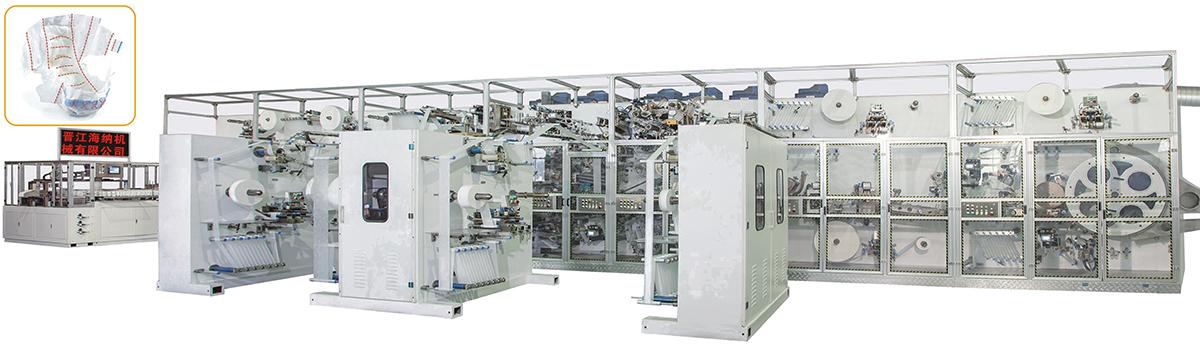
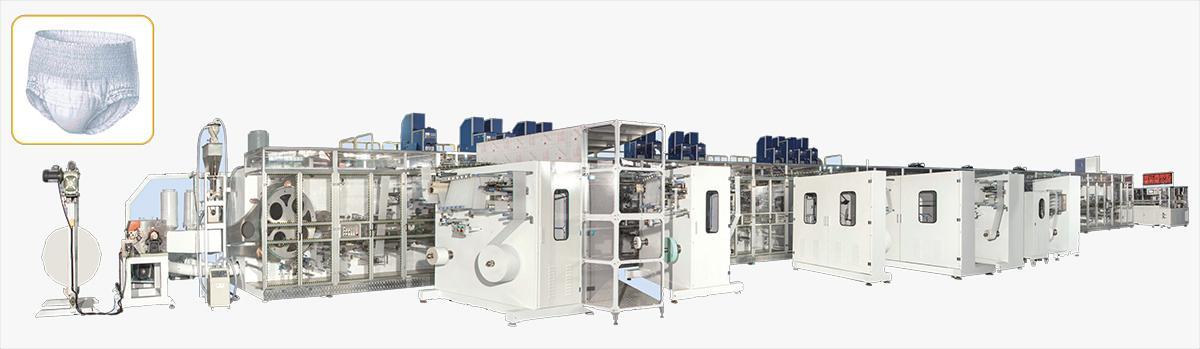
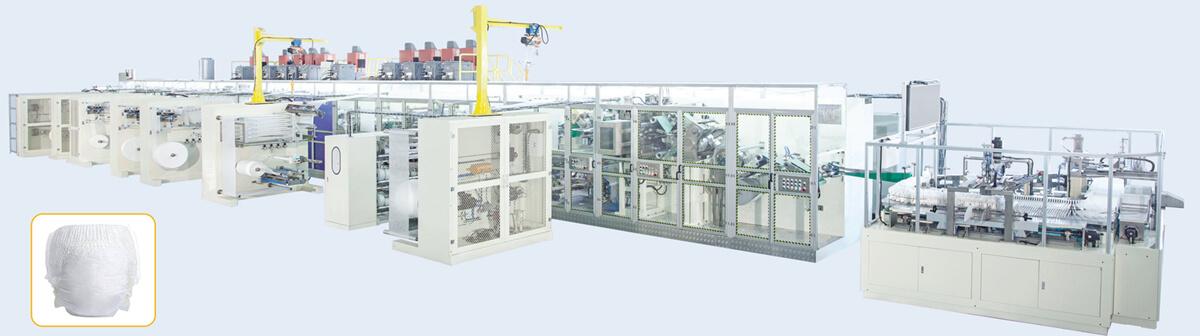
A baby diaper making production line can cover NB through XXL only when the size program is designed around real product drawings, material widths, elastic locations, tooling limits, and packaging formats. The size names alone are not enough because brands use different dimensions and constructions under the same label. Buyers should freeze a controlled size matrix, identify common and size-specific parts, test the smallest and largest products at FAT, and measure changeover loss. The right line is therefore the one whose usable range, registration control, change parts, and downstream handling match the approved product portfolio.
Define NB to XXL with Product Drawings
Begin with a product matrix rather than a list of commercial size names. For every planned SKU, approve finished length and width, core dimensions, front and rear waist geometry, tape or ear position, leg opening, cuff height, elastic spacing, and folded dimensions. Add target product weight and package count where these affect handling. The drawing revision and sample revision must be controlled together so purchasing, engineering, quality, and the machine supplier are discussing the same article.
NB and XXL create the boundary conditions. The smallest product can expose limited adjustment resolution, short pitch control, narrow material guidance, and compact folding issues. The largest can expose maximum web width, longer pitch, higher component consumption, cutter loading, wider folding, and downstream stack volume. Middle sizes may run comfortably even when a boundary size is impractical, so testing only one popular size does not establish the advertised range.
Record which constructions are truly common. A buyer may expect every size to use the same topsheet, backsheet, cuff, elastic, tape, and waistband design, while marketing plans may require different materials or component positions. Each difference can create another recipe, unwind width, applicator setting, tooling set, inspection tolerance, or packaging program. The matrix turns these hidden changes into an engineering scope.
A multi-size line should be reviewed against controlled drawings for the smallest and largest planned products.
Map Material Widths and Component Positions
Translate every product drawing into an incoming-material schedule. Include roll width, outside diameter, core diameter, basis or unit weight, winding direction, splice method, surface sensitivity, and approved supplier. Also identify slit materials and any component that arrives preformed. This schedule establishes whether an unwind, edge guide, tension zone, applicator, cutter, vacuum transfer, or folding device has enough usable adjustment.
Material utilization changes by size. A wider roll may support several SKUs, but that decision can create extra trim on smaller products. Separate theoretical consumption from startup scrap, splice loss, trim, rejected product, and material left on a roll at changeover. Procurement can then compare the benefit of standardized roll widths with the cost and complexity of size-specific inventory.
Component position is as important as width. Leg elastics, standing cuffs, acquisition layers, frontal tape, side tapes, and waistband materials need defined centerlines and tolerances. Ask how the line establishes a center reference and how each module moves when a recipe changes. An HMI value is useful only if the mechanical datum, sensor position, and applicator adjustment remain repeatable.
Boundary check: Require a marked-up web path for NB and XXL. It should show each material edge, product centerline, component centerline, trim boundary, sensor field, and adjustment limit.
Separate Fixed Settings from Change Parts
Classify every size-dependent point as recipe controlled, manually adjustable, or changed by tooling. Recipe-controlled values may include servo phase, cut pitch, tension setpoints, registration offsets, alarm windows, and packaging counts. Manual adjustments may include guide positions, glue nozzles, folding rails, sensor brackets, and air settings. Tooling can include cutter rolls, forming parts, drums, folding plates, transfer elements, or product-specific fixtures.
Ask the supplier to identify the valid adjustment range, scale or reference, locking method, and verification method for each point. A slide that can physically move is not necessarily accurate across its full travel. Check backlash, parallelism, repeatability, access, and the possibility of installing a component in the wrong orientation. Clearly engraved references and positive location reduce dependence on one experienced technician.
Change parts need identification, storage, lifting, preservation, and inspection instructions. The commercial quotation should state which sets are included and which future sizes require additional engineering. Buyers should also confirm whether controls, electrical capacity, guarding, and frame space support those future additions. Leaving a vague promise of expandability creates a difficult contract boundary.
Adjustment ranges must be linked to repeatable references rather than assumed from available slide travel.
Control Registration Across the Size Range
A longer or shorter product pitch changes the timing relationship among cutting, elastic application, tape placement, core transfer, waist application, folding, and discharge. The controls must preserve phase while webs stretch, rolls change diameter, and splices pass through. Review which axes are servo controlled, which are mechanically linked, and where registration sensors provide correction.
Do not evaluate registration by looking at one average sample. Define measurement locations and tolerances for each critical component, then sample through startup, acceleration, stable running, roll splice, speed change, and restart. Record both the center of the distribution and variation. A setting that produces acceptable averages but frequent edge failures will create unstable sellable output.
Web tension zones should suit materials that may change between sizes. Lightweight nonwoven, breathable film, elastic laminates, tissue, and release materials respond differently to tension and acceleration. Verify dancer or load-cell range, braking behavior, low-roll response, splice disturbance, and guide authority. A recipe should not compensate for poor mechanical alignment or damaged rolls.
Plan a Repeatable Size Changeover
A controlled changeover has a defined start condition, task sequence, owner, quality release, and end condition. List safe isolation steps, roll changes, tooling work, manual settings, recipe selection, threading, adhesive adjustment, waste removal, trial pieces, measurements, and packaging changes. Separate machine stopped time from stabilization time and material loss so improvement work targets the actual constraint.
Prepare: stage verified materials, labeled parts, tools, drawings, recipes, and the first-package specification.
Secure: stop and isolate the required zones under the plant safety procedure before entering guarded areas.
Convert: install parts and set every manual reference according to the controlled changeover sheet.
Confirm: select the authorized recipe and cross-check size, material, code, count, and inspection limits.
Start: produce controlled trial pieces, inspect critical dimensions, and adjust one documented variable at a time.
Release: quality approves the product and packaging before normal output is counted as good production.
During supplier review, ask two operators who were not involved in setup to repeat the procedure. This reveals unclear references and hidden expert knowledge. Photograph approved positions where appropriate and keep a revision history when tooling or product drawings change.
Clear references and controlled recipes make size conversion easier to repeat across shifts.
Match Folding Stacking and Packaging
The converting line does not finish its work at the final cutter. NB and XXL products differ in folded thickness, stack height, compression behavior, bag dimensions, count per package, sealing condition, and case pattern. Confirm the complete transfer from product discharge through counting, stacking, compression, bagging, coding, inspection, case packing, and pallet handling.
Rate balance must be assessed in products and packages. A larger package may need more accumulation or a different bag cycle, while a small product with a high count can create another constraint. Define what happens when packaging pauses: the main line may slow, stop, reject, or use controlled accumulation. The response should protect product quality and prevent count mixing after restart.
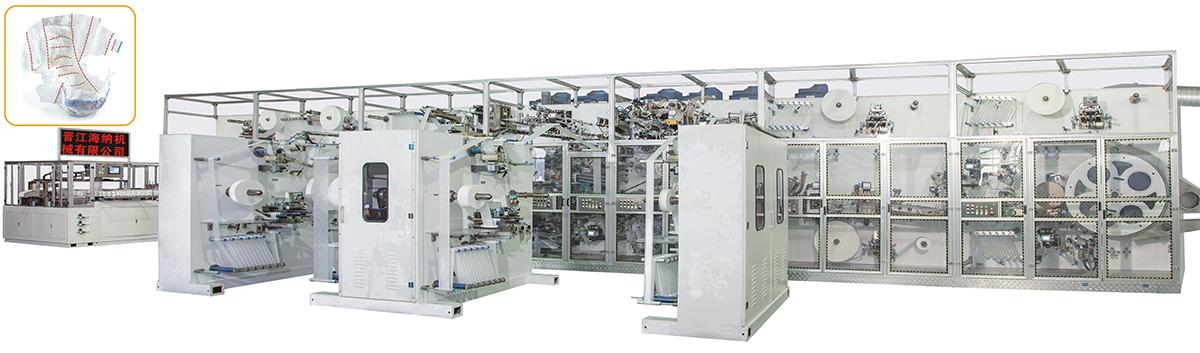
For a project review, HAINA can discuss its automatic baby diaper manufacturing machine against the buyer's approved sizes, materials, factory arrangement, and packaging boundary. The project specification should still record the exact included formats and acceptance conditions.
Use a Size Range Decision Table
Decision area
NB boundary question
XXL boundary question
Evidence to approve
Product pitch
Can short pitch remain registered and handled?
Can long pitch remain inside drive and cutter limits?
Running samples and phase trend at agreed conditions
Material width
Can narrow webs be guided without wandering?
Do wide webs have adequate guide and frame clearance?
Marked web maps and physical range check
Component placement
Are close features measurable and adjustable?
Can applicators reach the outer positions?
Capability samples for every critical location
Change parts
Are small parts identifiable and safely installed?
Can large parts be lifted and stored correctly?
Complete parts list and witnessed changeover
Packaging
Can small products stack without overturning?
Can bulky stacks transfer and seal consistently?
Finished packages from boundary-size trials
This table should become a signed decision record. Engineering owns the line range, quality owns measurement and release, production owns the work sequence, procurement owns scope clarity, and the supplier owns the agreed machine demonstration. Open points should have an owner and due date rather than being buried in meeting notes.
Validate Boundary Sizes During FAT
Factory acceptance testing should use approved production materials in sufficient quantity to expose roll changes, operating variation, and packaging interaction. Agree the operating condition, sampling frequency, defect definitions, stoppage treatment, and calculation method before the test. Design speed is a machine design reference; stable working speed is demonstrated under defined conditions; operating speed belongs to the buyer's later plant reality; and an acceptance value is only what the contract explicitly defines.
Run the smallest and largest included sizes, plus any construction that introduces unique components. Witness startup, acceleration, steady production, deceleration, restart, splice response, size change, quality checks, alarm recovery, and controlled shutdown. Retain samples from identifiable periods and link them to machine records. Confirm drawings, recipes, change-part lists, spare parts, manuals, maintenance instructions, and training records before release.
Unresolved observations should be classified by impact and closed with evidence. A cosmetic label issue is not equal to unstable registration, inaccessible adjustment, or missing packaging logic. The buyer should define what blocks shipment, what may close before installation, and what requires site verification.
Boundary-size FAT should connect machine settings with measured products and complete records.
Questions About Multi-Size Baby Diaper Lines
Does NB to XXL mean every market size can run?
No. Size labels are commercial names, not engineering dimensions. Approval must refer to controlled product drawings, materials, tooling, and package formats.
Can one material width be used for every diaper size?
Sometimes, but it may increase trim or limit component positions. Compare purchasing simplicity with utilization, guiding, and product construction requirements.
Which sizes should be tested during FAT?
Test the smallest and largest contractual sizes and any middle size with a unique construction. The test plan should also include a witnessed changeover.
Why can packaging limit a multi-size line?
Folded dimensions, stack behavior, bag counts, compression, and sealing vary by size. Downstream equipment must be validated with the same boundary products.
Conclusion
Planning a baby diaper making production line from NB to XXL is an exercise in controlled boundaries. Define each SKU by drawing, map every material and component position, distinguish recipes from manual settings and tooling, and protect registration through the complete web path. Then verify changeover and packaging with the smallest and largest included products. A signed matrix, witnessed FAT, and clear responsibility record provide better evidence than a broad size-range statement.