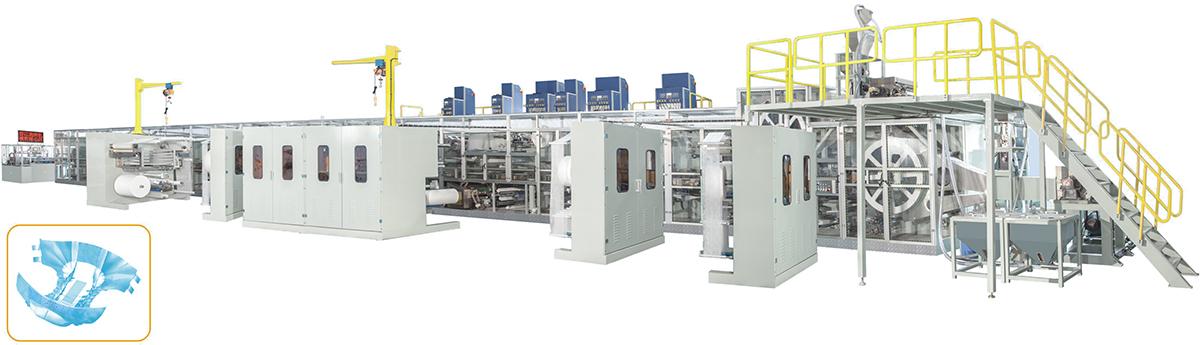
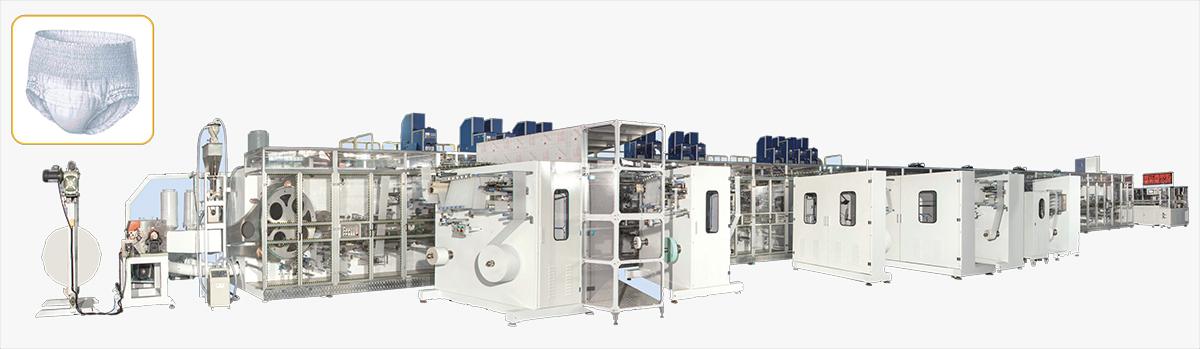
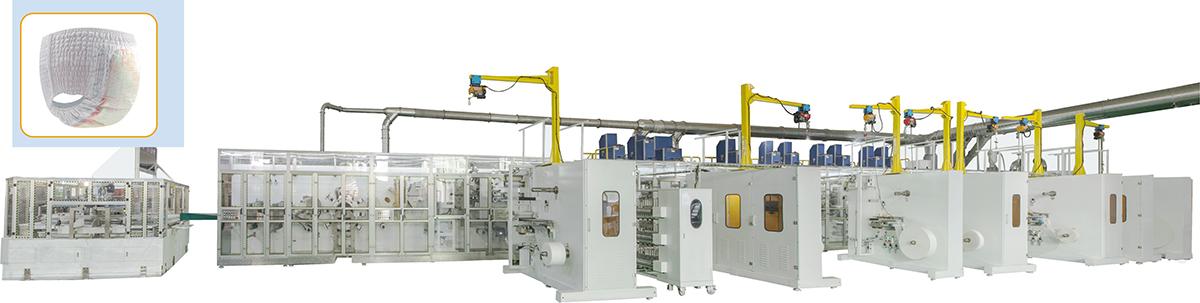
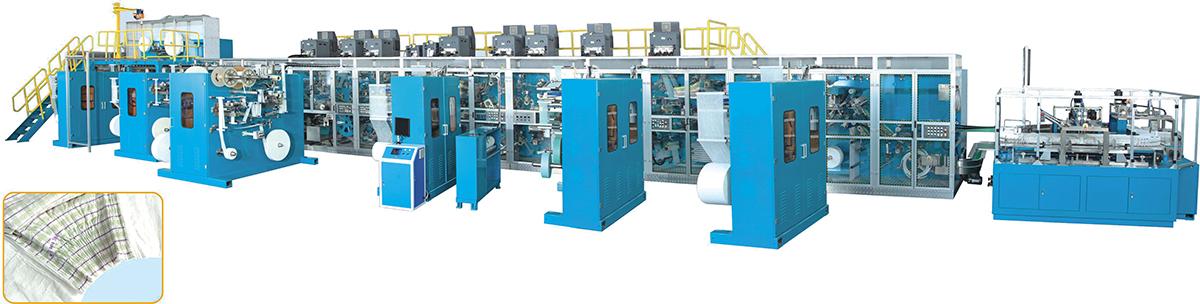
Choose an infant diaper machine when the target product uses refastenable side tapes and caregivers are the main users; choose a baby pull-up line when the product needs an elastic waist opening, pants-like application, and a process designed around waist joining and body folding. The decision is not based on age labels alone. Buyers should compare the approved product drawing, material structure, size range, package format, market channel, operator skills, changeover plan, and downstream automation. Before ordering, run representative materials and confirm the complete conversion and packing route for the exact product family.
Define the Finished Product Before Selecting a Line
Begin with a controlled product specification, not a machine name from a quotation. State whether the product is opened and fastened with tapes or pulled over the legs through a closed waist. Add front and back orientation, target sizes, finished dimensions, absorbent core shape, leg cuffs, elastic zones, waistband construction, tape or side-seam design, folding method, and package count.
The commercial team should provide evidence for the intended product family. Review reference products sold through the target channel, consumer use conditions, expected package sizes, retailer requirements, and planned brand position. This does not mean copying a third-party product. It means translating the market brief into measurable product drawings and materials that engineering can evaluate.
Caregiver-applied taped diapers and pull-up products can overlap in user age, but they serve different changing routines. Taped products allow the waist to open completely and can be easier for lying changes. Pull-ups support standing application and a pants-like experience, but waist elasticity and seam behavior become central. Select the machine around the use design that the brand has approved.
The finished product drawing is the first input to equipment selection.
Compare the Two Construction Routes
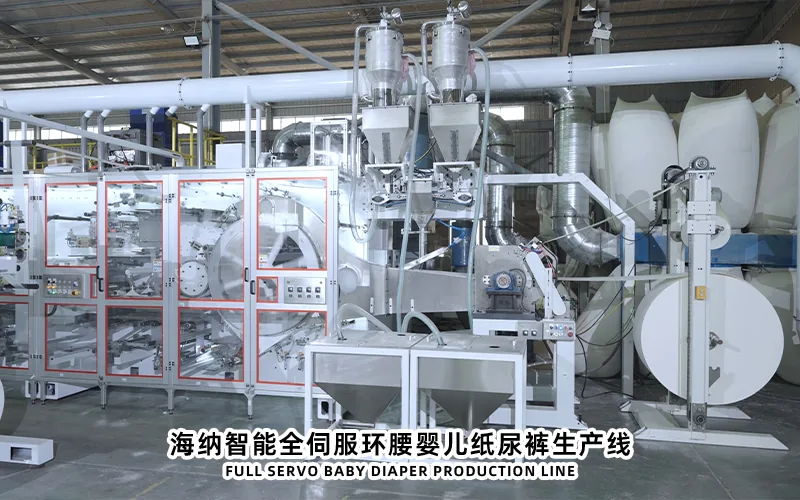
Both product families can share absorbent-process principles: pulp preparation, SAP dosing, core formation, tissue or wrapping, topsheet, backsheet, acquisition materials, cuffs, leg elastic, adhesive, cutting, inspection, and folding. The important difference is how the waist and sides are formed and how the product is presented at discharge.
A taped infant diaper normally needs frontal tape or landing material and left and right fastening components positioned so a caregiver can adjust the fit. Registration, adhesive placement, cut accuracy, and tape integrity are key checks. The product remains open through the waist before final folding.
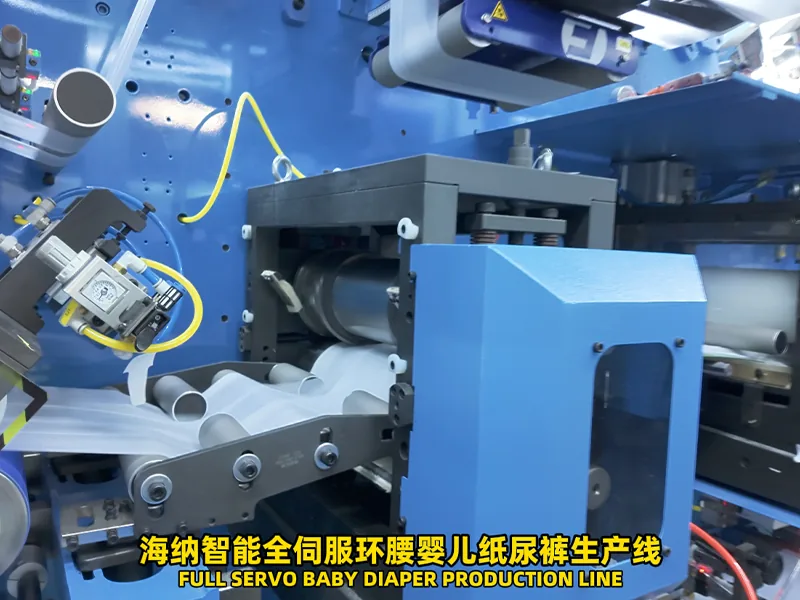
A baby pull-up product requires a continuous elastic waist or side structure that becomes a closed garment. Depending on the approved design, the process may involve elastic composite formation, body turning, longitudinal or transverse folding, side joining, seam cutting, and ejection. Heat sealing or ultrasonic joining must be matched to the selected materials and seam geometry. These operations change machine layout, controls, tooling, and quality tests.
Terminology note: Do not assume that baby pants, pull-up diaper, training pants, and elastic waist diaper describe one identical construction. Attach the actual product drawing to every supplier discussion.
Match Materials to Feeding and Joining Systems
Prepare separate bill-of-material matrices for the taped and pull-up concepts. Record roll width, basis-weight range, extensibility, roll diameter, core size, winding direction, splice method, surface treatment, and storage condition. Add pulp, SAP, adhesive, elastic strand or elastic film data, tape systems, and packaging film. The machine should be reviewed against representative approved grades, not a generic material description.
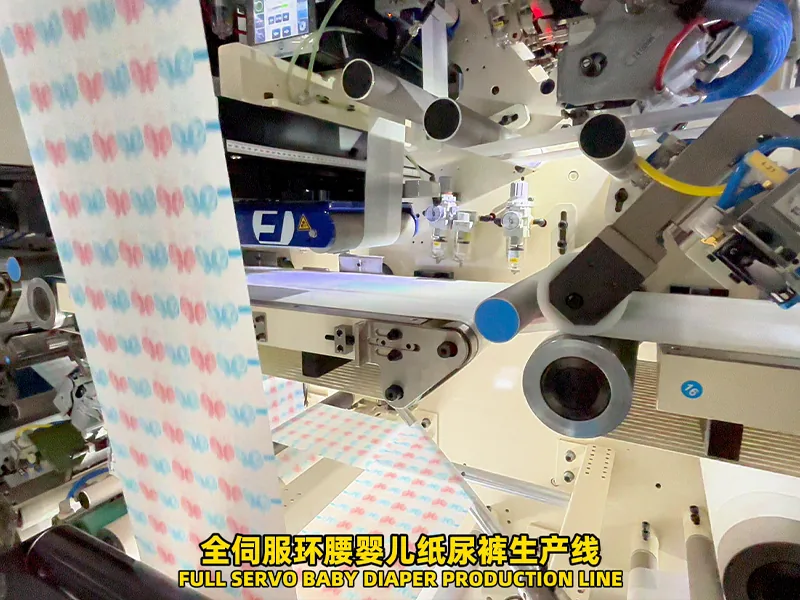
Material behavior affects feeding and conversion. Lightweight nonwoven can respond to tension and air differently from thicker stock. Breathable film can stretch or curl. Elastic materials need controlled draw ratios and stable bonding. Tape components require accurate release and placement. Pull-up side materials need a joining window that produces acceptable seam strength without damaging softness or appearance.
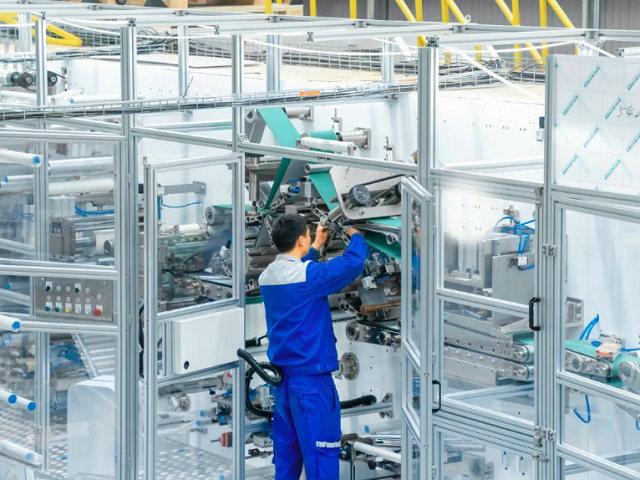
Ask the supplier to identify unwind control, tension zones, web guiding, splicing approach, adhesive application, elastic handling, inspection, and rejection for each material. A compatible width does not prove process compatibility. Trial threading and production samples should confirm tracking, bonding, cutting, cleanliness, and finished-product quality.
Roll behavior, elasticity, and joining method shape the machine configuration.
Evaluate Size Range and Changeover Work
List every launch size and credible future size. For each one, identify changes to core forming, web width, elastic position, tape or waistband length, cutter phase, folding, side joining, stack count, and bag size. Ask which settings are recipe controlled, which use indexed adjustment, and which require physical change parts.
Pull-up products can require more construction-specific changes around elastic waist formation, folding, and seam stations. Taped products can require tape position, frontal tape length, and fold changes. The actual workload depends on the chosen product family and machine design, so request a demonstrated changeover between two representative sizes.
Measure changeover in stages: last accepted product, safe stop and cleaning, mechanical changes, material repositioning, recipe loading, threading, startup, adjustment, and first quality release. Tool count and motion time alone understate production loss. Include change-part identification, storage, lifting, and verification in the assessment.
Changeover evidence to request
Size matrix showing every station affected by each product change.
Controlled procedure with tools, parts, settings, owners, and quality checks.
Recipe list and rules for access, backup, revision, and restoration.
Demonstration from last accepted product to first accepted new-size product.
Identification and protected storage plan for all removable tooling.
Samples measured after restart using the approved product specification.
Plan Packaging Labor and Product Handling
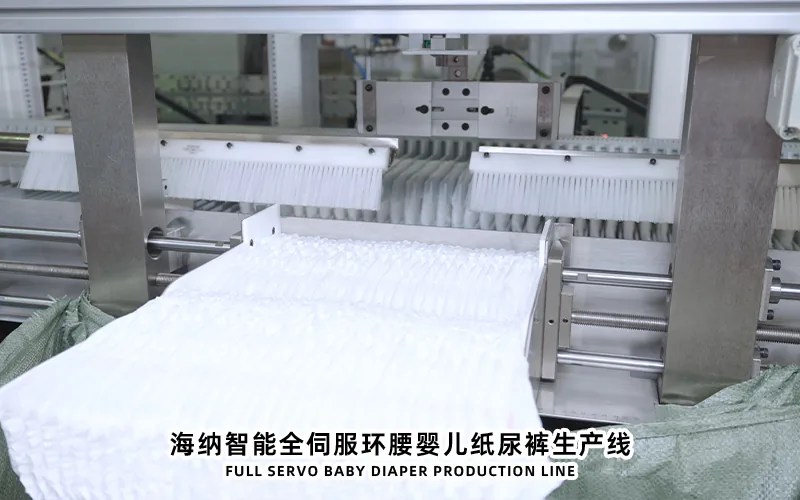
The converting choice changes the downstream task. Confirm final fold dimensions, product orientation, stack behavior, compression needs, count range, bag opening, loading direction, seal location, coding, rejection, case packing, and pallet flow. Pull-up products and taped diapers may not share the same stable stack or compression behavior.
Separate main-line design speed from stable working speed and packaging acceptance. The system output is limited by the slowest connected operation and by the frequency and recovery of stops. A machine can display a high set point while sellable bags remain limited by manual stacking, bag replenishment, seal faults, or blocked discharge.
Estimate labor by task and time, not by a headline automation label. Include roll preparation, material loading, process observation, quality sampling, waste removal, changeovers, bag supply, case packing, pallet movement, cleaning, and maintenance. Automation may move labor to different work rather than remove it. Verify staffing during a representative connected run.
Line selection should include how the chosen product is counted, stacked, and packed.
Use a Product Line Selection Matrix
Decision variable
Taped infant diaper route
Baby pull-up route
Buyer evidence
Application method
Open waist with refastenable side components
Closed elastic waist pulled over the legs
Approved use brief and product drawing
Critical side process
Tape placement and landing-zone function
Elastic waist formation and side joining
Reference samples and quality criteria
Material sensitivity
Tape release, position, adhesive, and film tracking
Elastic draw, softness, bond window, and seam strength
Representative material trials
Changeover focus
Core, tape position, cut, fold, and package
Core, waist system, fold, seam, and package
Demonstrated size conversion
Downstream behavior
Open product folded into controlled stacks
Pants shape compressed and oriented for packing
Connected packing trial
Primary selection reason
Caregiver access and adjustable fastening
Pants-like application and elastic waist use
Market and user requirement
Weight the matrix according to the business, but do not hide a mandatory requirement inside an average score. If the product must have a closed elastic waist, a taped line is not made suitable by scoring well on unrelated factors. Use pass conditions first, then compare productivity, flexibility, service, and cost among technically suitable proposals.
Verify the Choice with Samples and Trials
Send suppliers a compact requirement package containing product drawings, target size matrix, bill of materials, reference samples, quality checks, package formats, factory utilities, and desired line boundary. Ask each supplier to return a marked response that identifies included functions, assumptions, exclusions, change parts, buyer-supplied systems, and tests.
Review sample capability before final acceptance values are fixed. For taped products, inspect core placement, cuff formation, elastic position, frontal tape, side tape, folding, and appearance. For pull-ups, add waist elasticity, seam consistency, opening dimensions, body orientation, and side-join integrity. Test representative sizes and materials rather than accepting a sample made with an easier substitute.
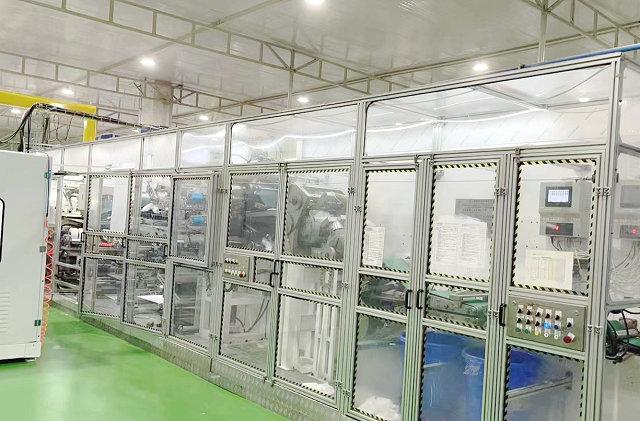
Plan a FAT around the selected architecture. HAINA can review product inputs for an infant diaper machine project and identify process and test boundaries for discussion. The buyer should place the final product matrix, accepted materials, stable-run method, quality limits, changeover, and packing interface in the signed project documents.
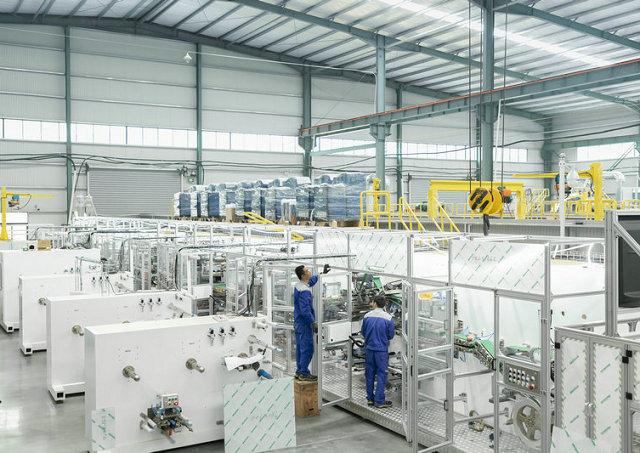
Representative trials connect the product concept to the proposed machine route.
Protect Future Options Without Overbuying
A buyer planning both formats should not assume one line can convert economically between them. The waist, side, folding, joining, and downstream processes can require substantial architecture changes. Ask for a station-by-station explanation of any claimed conversion, including parts, controls, time, performance limits, and untested conditions.
Future readiness can still be practical. Reserve floor space, electrical capacity, compressed air, extraction, material storage, quality tools, and packaging routes based on a defined second-phase concept. Standardize selected components, documentation methods, maintenance tools, and operator training where useful. These choices can reduce expansion friction without forcing one machine to serve incompatible product routes.
Build the investment in phases tied to evidence: approved concept, material trial, signed samples, equipment scope, FAT, site acceptance, and stable production records. Review actual demand and operating data before adding modules or a second line. Capacity that cannot be staffed, maintained, supplied, packed, or sold is not useful flexibility.
Infant Diaper and Pull Up Line FAQ
Can one machine make taped diapers and baby pull-ups?
Only if the supplier proves the exact architectures, conversion scope, materials, tooling, changeover, quality, and accepted performance. The two side and waist processes are fundamentally different.
Is a pull-up line always more automated?
No. Automation depends on the specified feeding, splicing, inspection, rejection, counting, bagging, and material handling functions, not on the product name.
Which line has the faster changeover?
There is no universal answer. Compare the actual size matrix, affected stations, physical parts, recipe handling, threading, startup waste, and first-quality-release time.
Should packaging be ordered with the main line?
It should at least be specified and interface-tested with the main line. A separate purchase can work when rate balance, transfer, stop logic, product orientation, and responsibilities are controlled.
Conclusion
The correct choice starts with whether the approved product opens with tapes or functions as a closed elastic garment. Compare construction route, materials, waist and side processes, size changes, packing behavior, labor tasks, and test evidence. Treat equipment labels as a starting point only. A controlled product matrix and representative trial let buyers select the infant diaper or baby pull-up line that fits real manufacturing and market requirements.