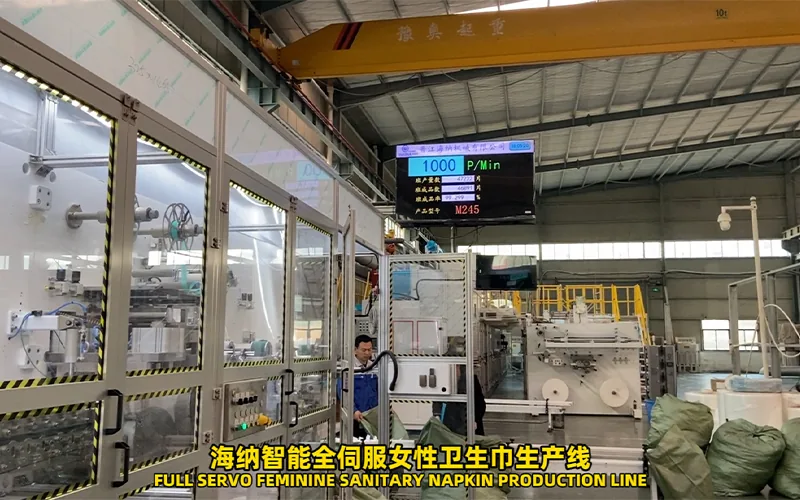
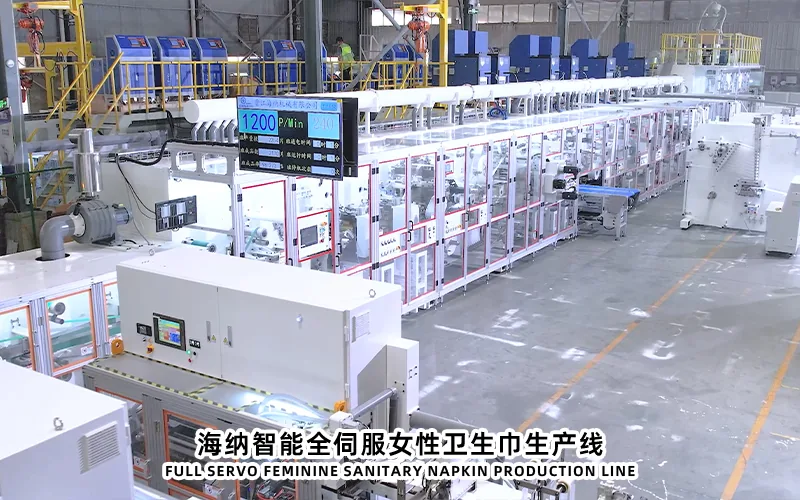
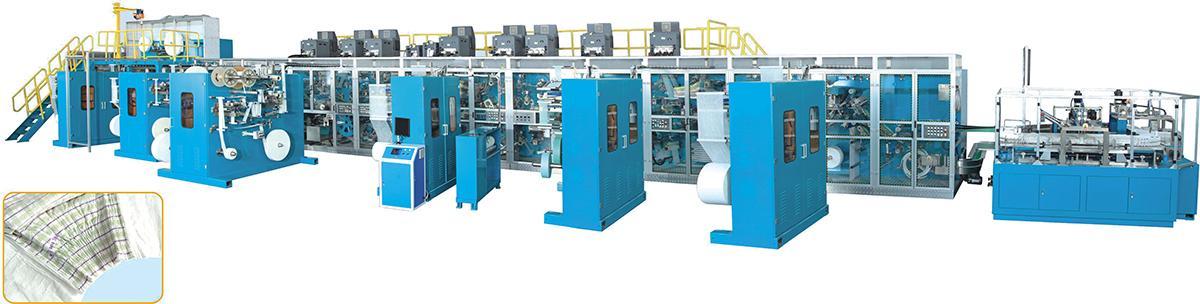
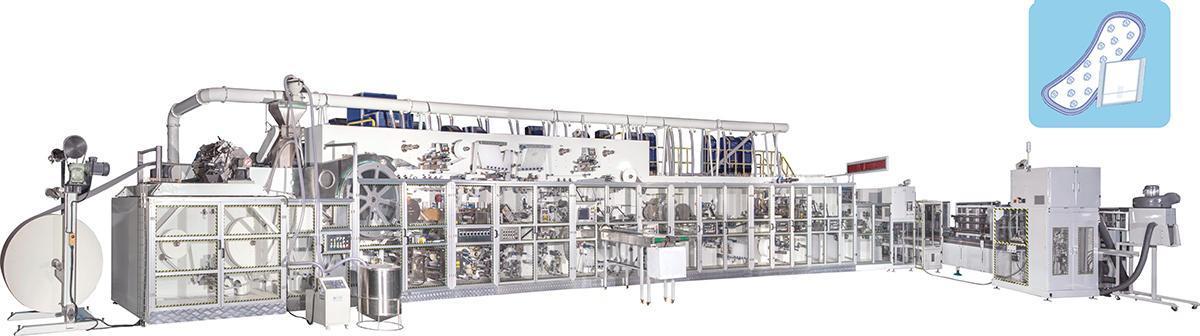
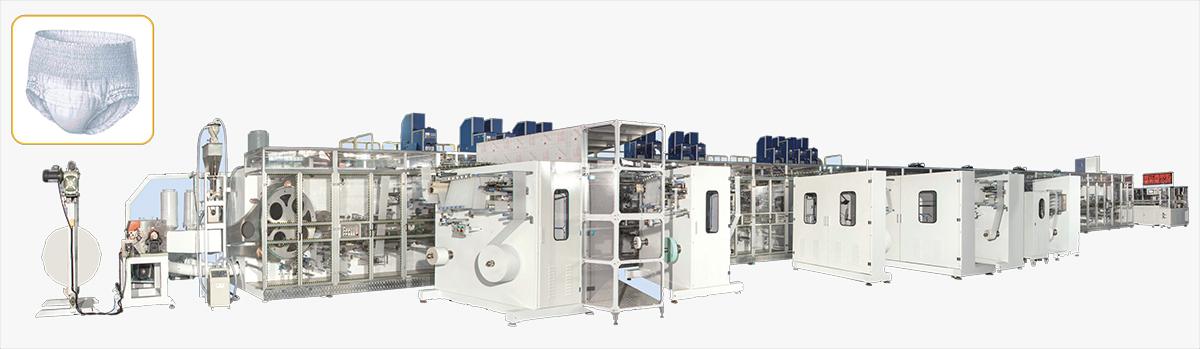
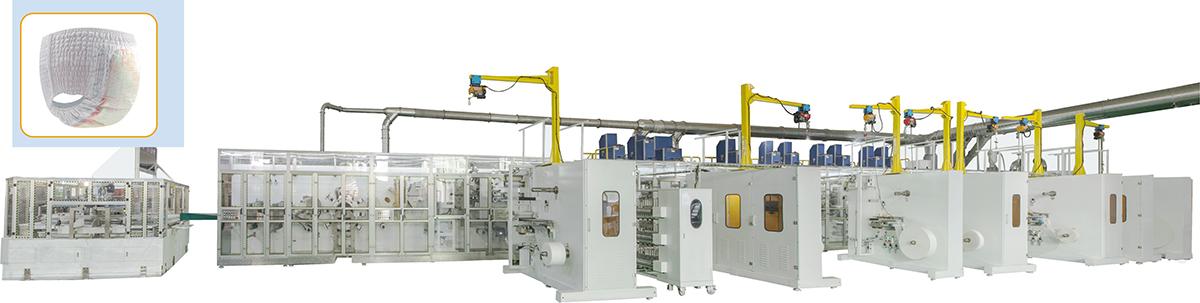
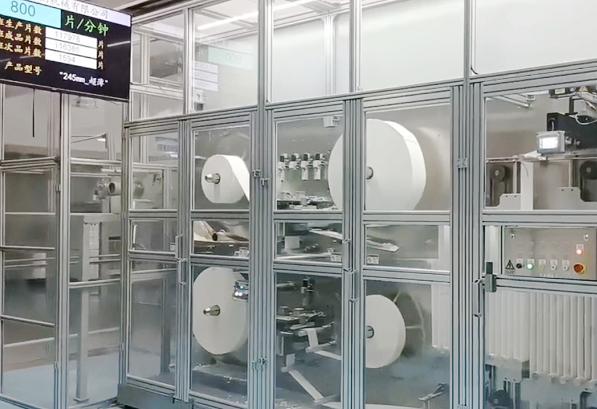
Producing thick and ultra thin pads on one sanitary pad machine requires more than changing the finished length. The two constructions can differ in absorbent-core feed, bulk, web tension, adhesive pattern, compression, embossing, contour cutting, folding, wrapper clearance, inspection limits, and packaging behavior. Buyers should define separate product and material recipes, identify shared and dedicated modules, conduct representative material trials, and verify a complete format change. One machine can support both styles only when its process range, tooling, access, controls, and downstream equipment are confirmed for each approved product.
Define the Two Product Structures
Start with controlled drawings and bills of material for each product family. Record finished length, width, thickness target or measurement method, wing shape, absorbent-core dimensions, layer sequence, acquisition or distribution materials, topsheet, backsheet, tissue or airlaid, release paper, individual wrapper, fold pattern, and final pack. A commercial name such as ultra thin does not provide enough engineering information.
Identify what creates bulk and absorbency in each design. A thicker pad may use a different core route, layer combination, compression condition, or wrapping allowance from a thin structure. An ultra thin pad may depend more strongly on accurate placement of a prepared absorbent layer and on gentle handling of low-bulk webs. These are product-development choices; the machine supplier should confirm how the selected construction passes through the proposed process.
Build a compatibility matrix with four outcomes: common setup, recipe change, dedicated change part, or separate module required. Include every unwind, guide, core station, adhesive application, embossing or sealing, cutter, folding device, wrapper, detector, stacker, and bagger. Keep future concepts outside the accepted scope until material and tooling requirements are known.
Assign an owner to every unresolved row. Product development should approve construction, quality should define measurements, material suppliers should provide controlled data, and the machine supplier should state process limits and trial needs. This prevents an open product question from becoming an assumed equipment promise.
Configuration begins with controlled product structures rather than broad thickness labels.
Match the Absorbent Core Route
The absorbent-core section is often the largest process difference. Depending on the approved product, the line may form a core, meter and distribute absorbent materials, place a prepared core web, combine layers, wrap the structure, or use another defined route. Buyers should describe the desired result and materials, then ask the supplier to map each feed and control function.
For bulky structures, review material storage, feeding consistency, dust extraction, core distribution, containment, compression, and transfer. Excessive bulk can disturb registration or create unstable folding downstream. For thin prepared layers, review unwind tension, edge protection, placement, cutting, static behavior, and the risk of stretching or delamination. A shared transport section may need different vacuum, nip, guide, or acceleration settings.
Do not assume that the same consumption or compression setting can serve both products. Define which parameters are recipe controlled and which require mechanical adjustment. Ask how operators verify the core after a change and what samples are retained. A material trial should inspect distribution, dimensions, appearance, leakage paths, bonding, and process waste using the buyer's measurement methods.
Control Bulk Tension and Web Tracking
Different structures create different drag, inertia, surface friction, and elasticity. Divide the line into tension zones and identify the controlling drive, dancer, load cell, brake, guide, and feedback for each critical web. Thin film and soft nonwoven can wrinkle or stretch under excessive tension, while bulky combined structures may need stable support to prevent lateral movement.
Test acceleration, deceleration, roll diameter change, splice passage, and planned stop. A setting that is stable at one steady speed may create registration movement during ramping. Verify that web guides correct gradual edge drift without hunting. Roller cleanliness, alignment, wrap angle, traction, and bearing condition should be part of the setup standard because controls cannot compensate for every mechanical problem.
Recipe values require material identification. A replacement with a similar commercial description may have a different coefficient of friction, thickness, stiffness, or winding condition. Require a controlled approval when vendors or specifications change. The operator should be able to return to the last accepted setting while engineering evaluates the new material.
Separate tension zones help protect both lightweight webs and thicker combined structures.
Adjust Bonding Embossing and Compression
Adhesive patterns should be developed for the specific layer combination. Review coating location, width, application condition, open time, nozzle clearance, startup behavior, and cleaning. Too little bond can permit layer movement; too much can add stiffness, contamination, cost, or strike-through risk. The machine configuration should support controlled pattern changes and safe service access.
Embossing, sealing, and compression interact with material bulk. A thicker structure may require a different gap, pressure, pattern, temperature, or dwell condition where applicable. An ultra thin structure may show surface marks or damage if the same mechanical load is retained. Treat settings as process-development values subject to sample approval, not universal machine specifications.
Check how the line handles thickness transitions at joints and restarts. A splice or double layer can pass differently through nips, seals, and cutters. Define whether the joint is tracked and rejected. Inspect residue buildup and cleaning frequency during trials, because a configuration that produces acceptable early samples may drift after adhesive or material accumulates.
Configure Cutting Folding and Wrapping
Contour cutting depends on the product pitch, material stack, support, blade condition, vacuum, registration, and waste removal. Thick products can require careful stabilization through the cutter, while thin products may be more sensitive to flutter or static. Identify dedicated dies, blades, anvils, pads, folding plates, guides, and timing settings for every format.
Folding and individual wrapping must provide enough clearance for bulk without losing control of a thin product. Define fold sequence, release-paper position, wrapper width, seal position, registration mark, product orientation, and discharge. Test both products after extended running, not only at slow setup speed. Inspect wrinkles, trapped edges, exposed adhesive, open seals, and movement inside the wrapper.
Packaging creates another range limit. Stack compression, pack count, bag dimensions, pusher travel, and sealing may differ by thickness. A fixed pack count can create a very different stack height. Confirm whether change parts, recipes, or bagger adjustments are needed and who supplies the final bags for FAT. The main line and downstream equipment should be accepted as one sequence when automatic transfer is included.
Cutting, folding, wrapping, and pack handling must be verified for each product bulk.
Protect Changeover Repeatability
Write a changeover standard that begins with line clearance and ends with released product. Separate internal work performed while stopped from preparation that can safely occur beforehand. Pre-stage identified tooling, approved materials, wrapper rolls, bags, cleaning supplies, and inspection forms. Use positive part identification so thick and thin product tooling cannot be mixed.
Record mechanical references, recipe version, guide position, unwind setup, adhesive pattern, nip or embossing condition, cutter, fold, wrapper, inspection window, reject timing, stack count, and bagger recipe. Photographs can support the standard but should not replace dimensions or named settings. Protect critical HMI values through authorization and keep a change history.
During supplier review, buyers can ask HAINA to map the desired thick and ultra thin products to the process range of a sanitary pad machine configuration. The project must still be closed through drawings, materials, trials, change parts, and acceptance records specific to those products.
Verify Separate Quality Windows
Do not apply one visual checklist to both products. Define dimensions, core position and distribution, layer registration, contour, wing symmetry, release-paper placement, embossing or seal appearance, fold, wrapper result, and relevant performance tests for each design. State measurement method, sampling frequency, decision authority, and response to a failed sample.
Online inspection windows may need separate recipes because contrast, position, product outline, and wrapper marks can change. Challenge the system with controlled defects for each product. Confirm tracking and rejection through speed changes and restarts. False rejects should be trended separately from real process defects.
Distinguish startup waste from stable-run rejection, and define the boundary before trials. Compare material input with accepted product, planned samples, tracked rejects, and remaining material. Do not claim one universal waste rate. Use the trial to identify where each construction creates loss and which setup or material action can address it.
Each pad construction needs its own approved quality and inspection recipe.
Surface marks, stiffness, heat or pressure sensitivity
Approved samples after sustained run
Cutting and folding
Stabilization, clearance, waste removal
Flutter, edge control, fold registration
Tool list and changeover check
Wrapping and packing
Wrapper clearance and stack height
Product control and compression limit
Connected packaging challenge
Quality control
Bulk, core and fold acceptance window
Position, surface and thin-layer integrity
Separate inspection recipes and samples
Use a Material Trial Sheet
Record for each product recipe
Product drawing revision, bill of material, sample code, and intended package.
Every roll specification, batch, width, diameter, core, and winding direction.
Installed tooling, mechanical references, recipe version, and process settings.
Threading, ramp, splice, stable run, planned stop, and restart observations.
Sample times, quality results, inspection challenges, rejects, and interventions.
Packaging count, stack, wrapper or bag result, and downstream stop response.
Approved limits, unresolved risks, corrective actions, owners, and retest needs.
Thick and Ultra Thin Pad FAQ
Can one sanitary pad machine make both products?
It may, but compatibility must be confirmed for the actual cores, webs, tooling, bonding, cutting, folding, wrapping, inspection, and packaging. Product names alone do not prove range.
Is a recipe change enough for format conversion?
Not always. Servo positions and inspection windows can be stored, but different materials or dimensions may require tooling, guides, unwind setup, wrapper parts, or packaging changes.
Which product should be tested first?
Test the product that presents the greatest known process risk, then test the other approved recipe and a full changeover. The risk may be core handling, thin-web control, folding, or packaging.
Can the same packaging count be retained?
Only if the resulting stack, compression, bag, transfer, and seal remain within the approved range. Different product bulk often changes downstream settings or pack design.
Conclusion
A sanitary pad machine can support thick and ultra thin products when the configuration is designed around both real constructions. Define the material and product structures, confirm the core route, control each web, adjust bonding and compression, verify cutting and packaging, and create repeatable changeovers. Separate recipes and quality windows preserve clarity. Representative trials and a documented format change provide the evidence needed for a sound purchase decision.