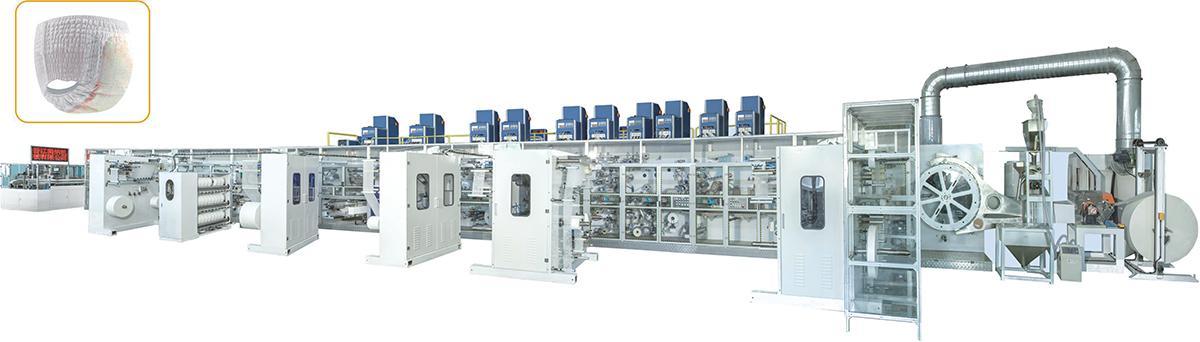
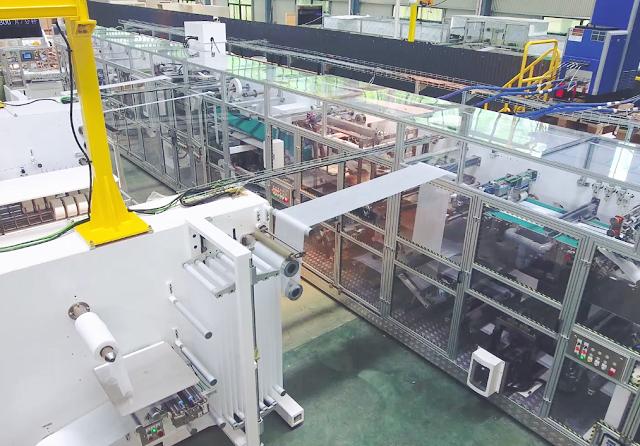
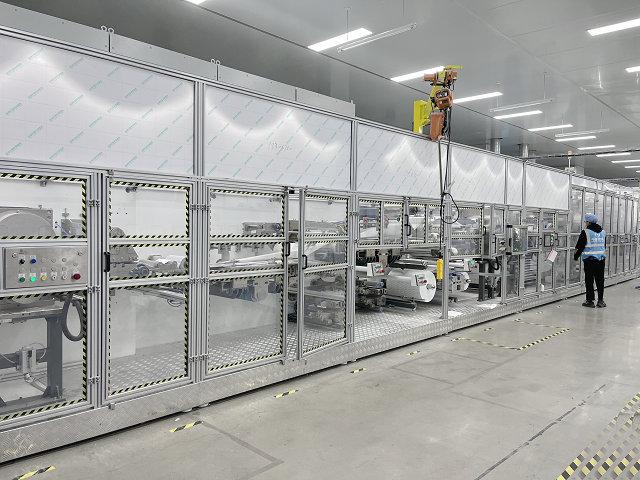
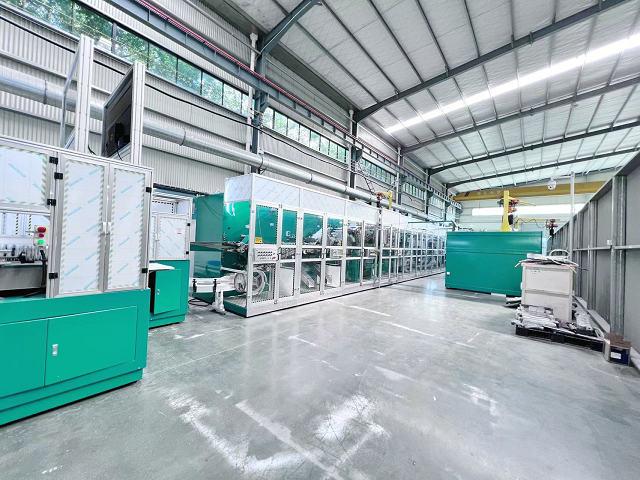
A diaper machine does not compare directly with traditional diaper disposal methods because the two serve opposite stages of the product lifecycle. Industrial diaper machinery manufactures new absorbent products from controlled raw materials; it is not household disposal equipment, an incinerator, a compactor, a sterilizer, a recycler, or a general waste processor. Disposal methods handle used products after consumers discard them and must follow local public-health, workplace, environmental, and waste rules. Buyers should select manufacturing equipment for product conversion and select waste-handling systems separately through qualified local specialists, with no assumption that either system can perform the other's task.
Correct the Manufacturing and Disposal Confusion
The title combines manufacturing and end-of-life handling, but there is no like-for-like equipment comparison. A production line sits in a controlled factory before sale. It receives specified rolls and process materials and forms unused diapers. Disposal happens after use, often in homes, care facilities, collection systems, or waste-treatment operations governed by local rules. Their objectives, inputs, hazards, operators, and evidence are fundamentally different.
This boundary matters commercially. A buyer seeking to manufacture baby diapers needs converting machinery, quality systems, materials, packing, utilities, and trained production staff. A municipality, hospital, care facility, waste contractor, or household asking how to discard used diapers needs advice from competent local waste and public-health authorities. A production-equipment supplier should not be treated as the authority for local disposal compliance.
Use precise terminology in inquiries. Say "baby diaper manufacturing line" for new-product conversion. Say "production trim extraction" or "off-spec unused-product handling" for factory waste. Say "used diaper collection and treatment" for post-consumer waste. These phrases help route each problem to the correct technical and regulatory owner.
This equipment converts controlled new materials into unused diapers; it does not process post-consumer waste.
What a Diaper Machine Actually Processes
A diaper production line receives materials specified by the product design. Depending on configuration, these may include nonwovens, back-sheet film or laminate, tissue or core wrap, pulp or another absorbent structure, absorbent polymer where applicable, acquisition materials, elastics, tapes, side panels, landing material, adhesives, and packaging inputs. Each arrives in a controlled form with dimensions, grades, roll data, handling requirements, and lot traceability.
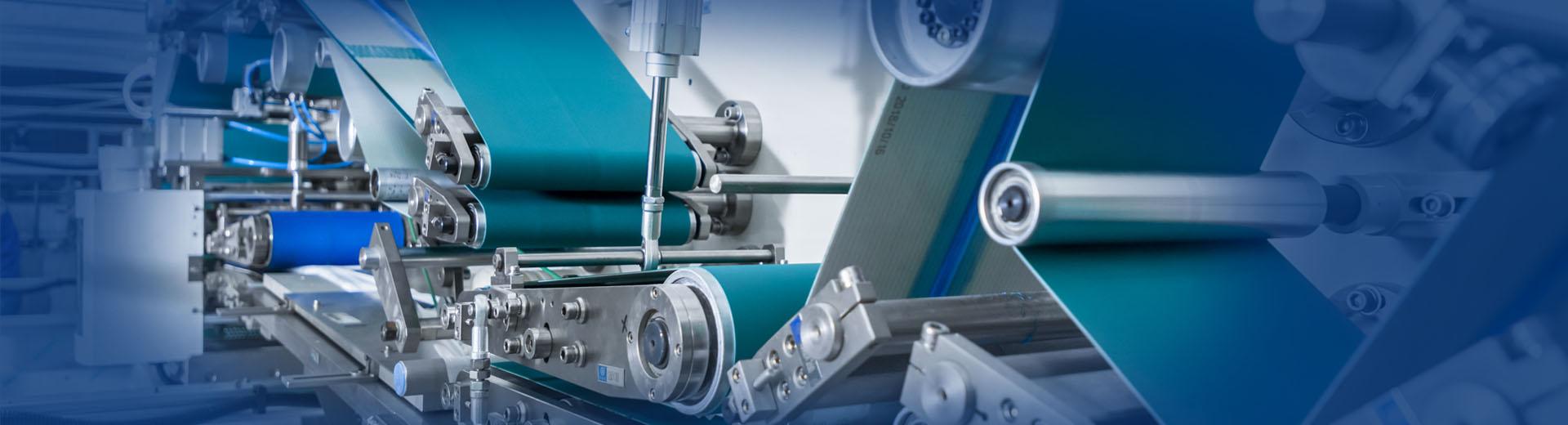
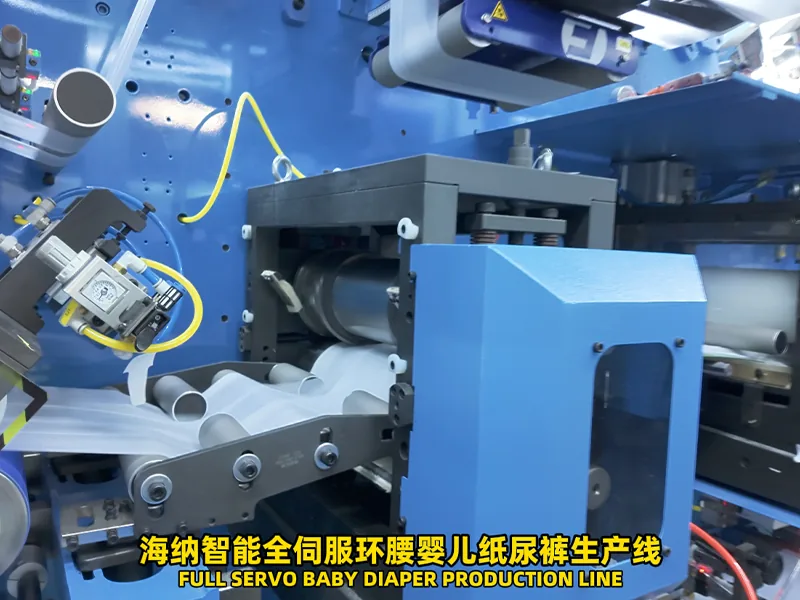
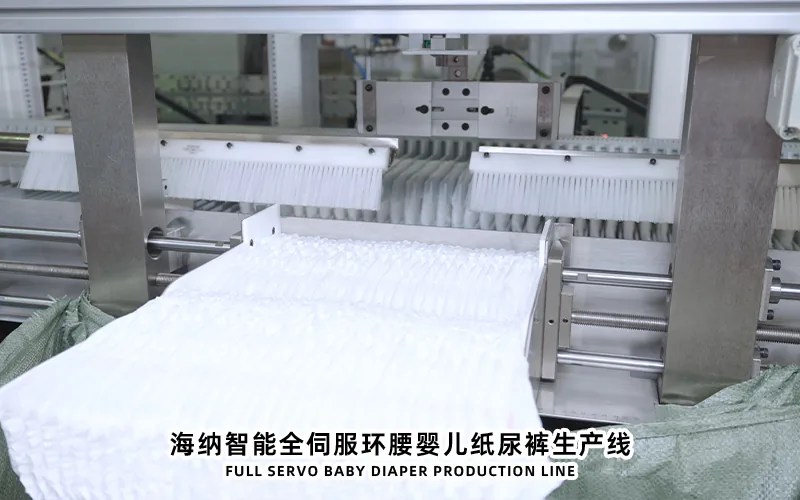
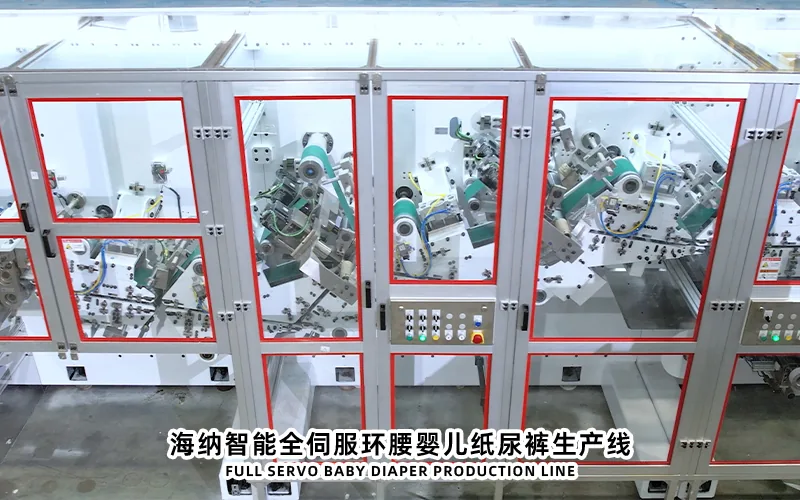
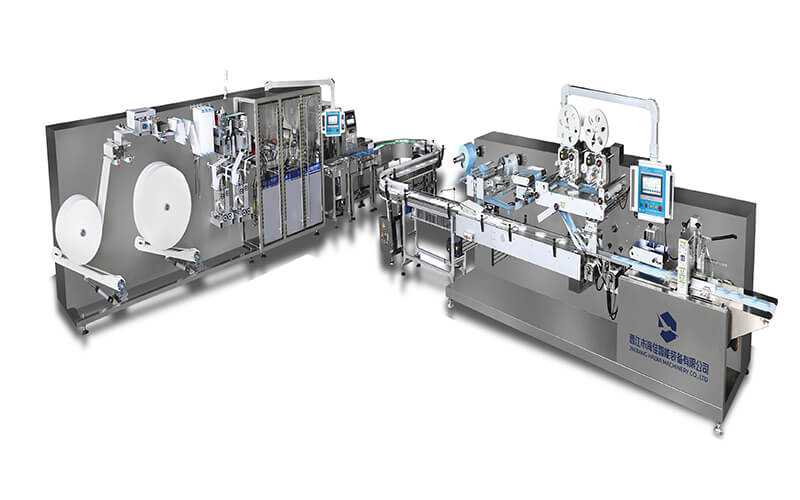
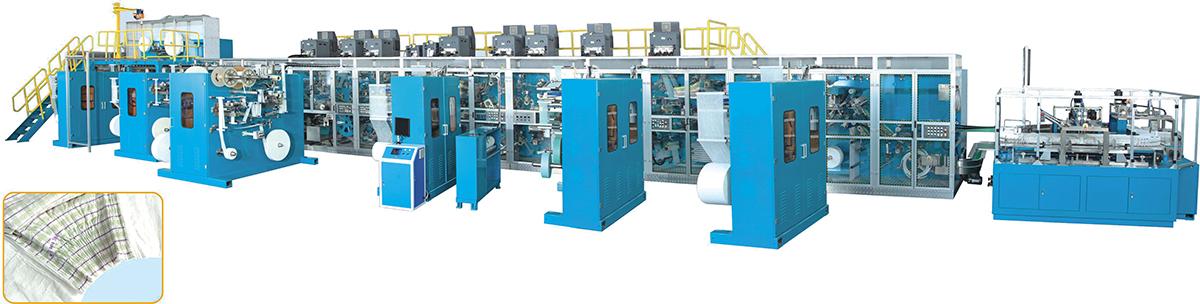
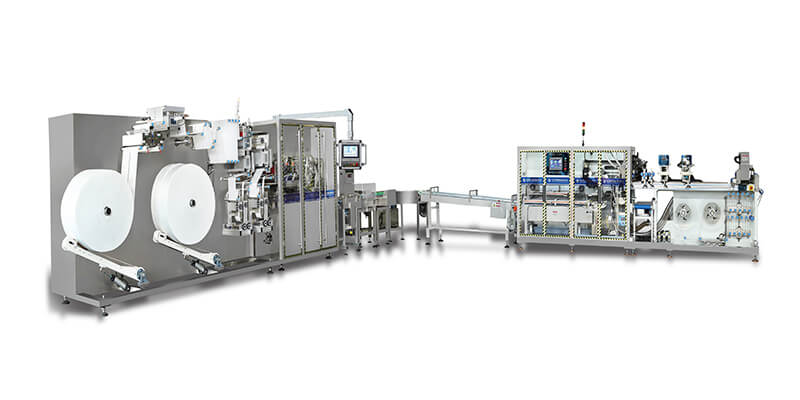
The machine may unwind and guide webs, prepare an absorbent core, place components, apply elastics and adhesives, form leak guards, compress, cut, fold, inspect, reject, count, and transfer products to packing. The process is engineered for dry, identified, production-intent materials and unused articles. Guards, extraction, controls, cleaning methods, and inspection functions are designed around that manufacturing duty.
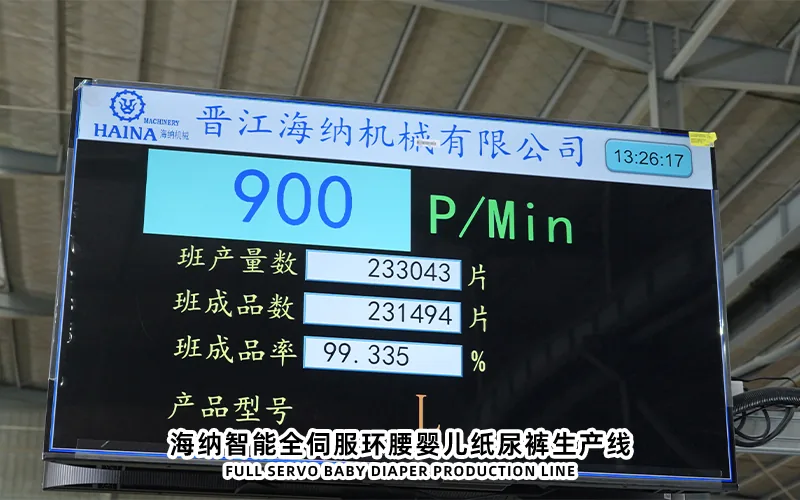
Quality evidence includes material identification, recipe and tooling status, product dimensions, component positions, core integrity, folds, fastening, visible contamination, online inspection results, and offline tests defined by the manufacturer. Stable production is demonstrated under specified product and material conditions. None of these functions or tests establish capability to sanitize or destroy used diapers.
What Traditional Disposal Methods Address
Traditional disposal describes how used diapers are contained, stored, collected, transported, and treated or discarded within a local waste system. Specific routes can differ by jurisdiction and facility. They may involve ordinary municipal waste, regulated healthcare-related procedures in certain settings, or specialized treatment determined by authorities and licensed service providers. The correct route cannot be generalized globally from a machinery article.
Used products can contain bodily fluids, microorganisms, medicines, cleaning chemicals, foreign objects, and mixed household or facility waste. Their condition is variable and uncontrolled. Collection containers, handling procedures, worker protection, storage times, transport, and treatment obligations must be established through local risk assessment and law. Production equipment is neither designed nor validated for those inputs.
Claims about recyclability or special treatment require careful evidence. A material may be technically recoverable under controlled research or specialized processes yet have no approved local collection route. Buyers should not assume that a diaper's individual components can be separated safely or economically after use. Consult the relevant local authority and qualified waste contractor for current requirements.
Manufacturing guards and process controls are specific to clean conversion and do not create a used-waste treatment system.
Compare Inputs, Outputs, and Hazards
The safest comparison is a boundary table. It prevents similar words such as waste, scrap, disposal, and recycling from hiding different material states. Every site should supplement the table with its product design, local risk assessment, supplier manuals, safety information, and legal advice.
Boundary
Diaper manufacturing machinery
Used-diaper disposal system
Verification owner
Primary input
Controlled new production materials
Used products and mixed post-use contents
Manufacturer versus local waste specialist
Intended output
Unused diapers for quality release and packing
Contained, transported, or treated waste
Quality team versus waste authority
Core process
Web conversion, assembly, cutting, folding
Collection and locally approved treatment
Equipment specification versus regulation
Main contamination state
Controlled factory materials and process residues
Potential biological and mixed contamination
Site risk assessment
Acceptance evidence
FAT, product samples, controls, documents
Permits, procedures, contractor and treatment evidence
Buyer and local competent parties
Hazards exist in both settings, but they are not interchangeable. Manufacturing risks may include moving machinery, cutting, adhesives, dust, electricity, compressed air, lifting, and material handling. Used-waste risks may include exposure to biological contamination, sharps or foreign objects, odor, leakage, pests, transport, and treatment hazards. Safety controls must follow the specific work and local obligations.
Manage Clean Factory Production Waste
Diaper factories create production residues before consumer use. Examples can include edge trim, startup material, splices, rejected unused diapers, empty cores, packaging waste, dust from relevant core processes, adhesive-contaminated material, maintenance consumables, and damaged raw material. These streams are not all identical. Classify them by composition, contamination, local waste category, recycling route, and handling risk.
Design the line boundary for controlled collection. Extraction, trim transport, scrap bins, reject discharge, dust collection, housekeeping access, and fire precautions need configuration-specific review. Prevent rejected articles from returning to accepted product. Label containers and maintain traceability where required. Do not allow production scrap to accumulate in access or maintenance zones.
Investigate reduction at the source. Stable settings, material qualification, controlled splices, good changeovers, preventive maintenance, inspection feedback, and accurate setup can reduce avoidable factory loss. Measure input and outputs using a defined boundary and categories. Avoid claiming a universal waste rate because product, material, process, and ramp-up conditions differ.
Confirm collection points and container capacity on the layout.
Keep hazardous or contaminated maintenance materials in approved routes.
Record the local classification and authorized destination for each stream.
Investigate recurring setup and defect loss by product and material lot.
Audit that waste movement does not cross released-product flow improperly.
Keep Used Diapers Out of Production Equipment
Never feed used diapers into material unwinds, core-forming sections, cutters, conveyors, dust extraction, reject mechanisms, or scrap systems of a manufacturing line. The machine has not been specified for unpredictable wet, biological, chemical, or foreign-object contamination. Such use can expose people, contaminate equipment and products, damage components, defeat extraction controls, and create obligations far beyond the production design.
Do not trial used products to "see whether it works." A safe engineering change requires a defined intended use, hazard analysis, material characterization, containment, cleaning validation, legal review, and equipment designed for the duty. Converting machinery cannot be transformed into disposal machinery by lowering speed, removing a guard, or adding a collection bin.
Facilities that manufacture diapers and also study waste solutions should maintain physical, procedural, personnel, and documentation separation under qualified oversight. Samples, test equipment, storage, ventilation, cleaning, transport, and disposal need dedicated controls. Production-quality systems should prohibit cross-contamination of raw materials and released products.
The production path is reserved for specified raw materials and controlled unused products.
Choose the Correct System and Specialist
If the objective is to manufacture diapers, begin with product drawings, material schedules, demand scenarios, factory data, packing boundaries, quality methods, and FAT requirements. Engage a diaper-equipment supplier and the plant's production, quality, maintenance, safety, and facilities teams. Verify modules, stable output, changeovers, inspection, utilities, documents, training, and support.
If the objective is to handle used diapers, begin with the source setting, waste composition, quantities, collection points, worker and public exposure, storage, transport, local classification, and authorized treatment routes. Engage local authorities, occupational-health and environmental specialists, and properly authorized waste providers. Technology selection follows that compliance and risk framework.
If the objective is to reduce lifecycle impact, separate product design, factory efficiency, packaging, logistics, consumer use information, collection, and end-of-life infrastructure. Each stage has different owners and evidence. Avoid a single equipment claim that promises to solve the whole lifecycle. Decisions need verified local systems and product-specific analysis.
Verify the Industrial Equipment Boundary
For manufacturing procurement, request a written intended-use statement and exclusions list. It should identify approved raw materials, product families, utility conditions, operator tasks, production residue interfaces, and prohibited inputs. Include these boundaries in training and site procedures. HAINA can review the production requirement and FAT for the agreed manufacturing scope, but used-waste treatment must remain with appropriate local experts.
Use the automatic baby diaper manufacturing machine as an example of clean-product conversion, then map its modules to new materials and unused output. During FAT, witness product production, inspection, rejection, scrap routing, safe stops, and housekeeping access. Do not add disposal tests that contradict the intended use.
At site acceptance, verify signage, material identification, reject bins, extraction, waste routes, cleaning tools, and operator competence. Audit that incoming new materials, accepted products, unused rejects, and maintenance waste remain separated. This is a practical boundary check that protects product quality and worker safety.
Acceptance should confirm clean inputs, unused product outputs, production scrap routes, and prohibited uses.
Frequently Asked Questions
Can a diaper machine shred used diapers?
No. Manufacturing equipment is not specified as a used-diaper shredder or waste processor. Do not introduce used products. Consult qualified local waste specialists for appropriate systems.
Are factory diaper rejects the same as household diaper waste?
No. Unused production rejects and used post-consumer products have different contamination states and may have different local classifications. Separate and manage each through approved routes.
Can diaper production scrap be recycled?
Possibly for some segregated streams where an authorized local route exists, but composition, adhesives, mixed layers, cleanliness, logistics, and market acceptance must be verified. Do not assume recyclability.
Who decides how used diapers should be disposed of?
Applicable local authorities, facility procedures, occupational and environmental specialists, and authorized waste providers determine the route. Requirements can vary by location and source setting.
Conclusion
A diaper machine manufactures unused absorbent products; traditional disposal methods manage used products after consumption. They cannot substitute for each other, and the production line must never receive used diapers. Industrial buyers should verify the boundary twice: first in the supplier's intended-use and FAT documents, then on the factory floor through labeled material, reject, scrap, and waste routes. Before equipment approval, have production, quality, safety, and environmental owners sign the input-output matrix. For disposal questions, stop the machinery inquiry and obtain current direction from qualified local authorities and authorized waste specialists.