Choose a sanitary pad machine by converting your business plan into a product and factory requirement, then testing whether each proposed line can meet it consistently. Define the pads, materials, sales mix, packaging handoff, shifts, utilities, labor skills, and quality methods you will actually use. Compare complete scope rather than a headline price or speed. A suitable machine should produce approved samples during a witnessed trial, complete realistic format changes, fit the site, provide maintainable controls and documents, and come with clearly assigned installation, training, spare-parts, and technical-support responsibilities.
Start With the Business Case
The right equipment for a new brand, an established converter, and a contract manufacturer may be different even if all three make sanitary pads. Write down the initial market, planned channels, product positioning, launch sizes, expected mix, pack formats, and expansion assumptions. Treat demand forecasts as scenarios rather than guaranteed volume. A base case supports initial configuration, a low case tests financial resilience, and a high case identifies likely bottlenecks. This approach keeps the equipment decision connected to sellable products instead of an isolated machine capacity number.
Decide what the factory will do internally. Some projects receive raw material, convert and wrap pads, then send counted products to separate packing equipment. Others require an integrated transfer to bagging. Warehousing, laboratory testing, adhesive preparation, dust handling, compressed air, electrical distribution, scrap movement, and finished-goods logistics may remain buyer responsibilities. Mark every boundary on a process flow so the capital request includes supporting systems and the proposal cannot hide important exclusions.
Create a risk register before contacting suppliers. Common commercial risks include uncertain product specifications, material availability, incompatible utilities, limited maintenance skills, narrow access routes, incomplete packaging scope, and an acceptance test based only on a short demonstration. Give each risk an owner and a verification action. This simple exercise tells the procurement engineer which questions must be resolved before price negotiation.
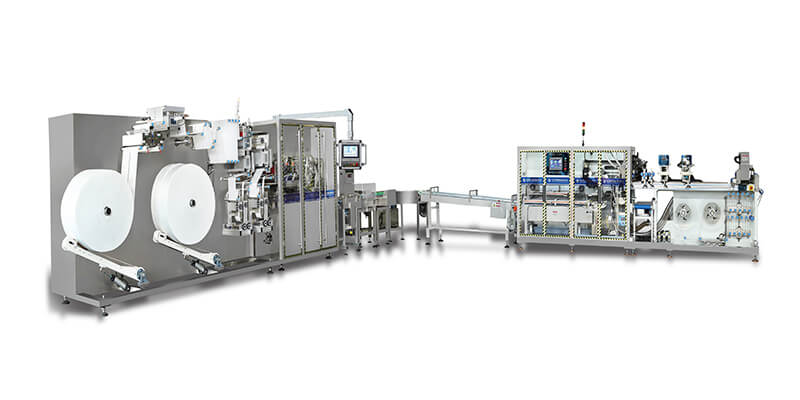
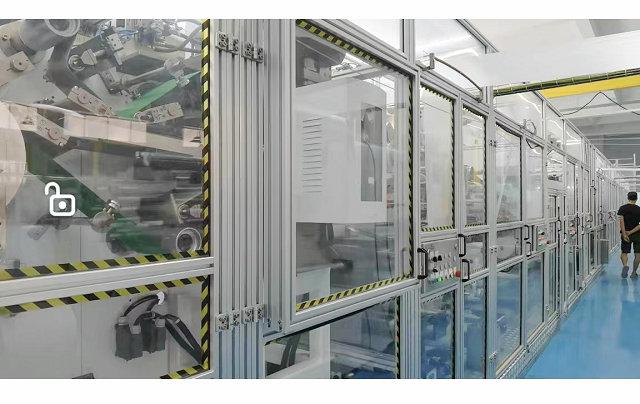
A complete process map shows which converting, handling, and utility functions belong in the project.
Turn Products Into Sanitary Pad Machine Requirements
Build a format matrix for every launch pad. Include finished dimensions, wing or wingless form, layer sequence, absorbent structure, top sheet, acquisition layer if used, back sheet, release materials, adhesive zones, embossing, folding, individual wrapper, and required discharge orientation. Identify the controlling drawing and sample. If a future format is not fully developed, list it as an option with an assumption rather than allowing it to distort the launch specification.
For each raw material, provide the properties needed for feeding and conversion: nominal width, permitted range, roll diameter, core dimension, winding direction, basis weight, thickness, stretch behavior, surface condition, and splice presentation. The line supplier should state compatibility assumptions. Material names alone are not sufficient because different grades of nonwoven, film, paper, elastic, pulp, or absorbent polymer can behave differently in tension control, cutting, bonding, and dust extraction.
Translate quality language into inspection methods. "Good sealing" should become a defined visual or physical check with samples, frequency, and acceptance disposition. Do the same for pad dimensions, core position, component alignment, adhesive placement, folding, wrapper integrity, and contamination. Your quality team should approve the method before the trial. A supplier can then design a meaningful test instead of interpreting an undefined adjective during FAT.
Forecast Mix Instead of Chasing Peak Speed
Capacity planning must account for product mix, operating calendar, planned maintenance, material changes, cleaning, format changeovers, quality sampling, and downstream interruptions. Start with demand by format and convert it into required acceptable units for the planned production periods. Then test several operating scenarios. Avoid treating design speed as continuous saleable output; it describes a different condition from stable working speed, actual shift operating speed, and a contractual acceptance value.
Ask each supplier to explain the conditions behind its output statement. Which product format, materials, wrapper, operator arrangement, and downstream connection were assumed? How are stops and rejected products recorded? What happens as rolls near their end or a splice passes through the process? An answer supported by a timed run log and sampled product is more useful than a higher number without context.
Capacity should also be balanced with packing and logistics. If the converter discharges faster than the wrapper, counter, bagger, or manual packing team can receive products, accumulation or repeated stops will govern output. Examine the whole path from roll preparation to finished pack. The right sanitary pad machine for the business is the one that works within that system, not one optimized in isolation.
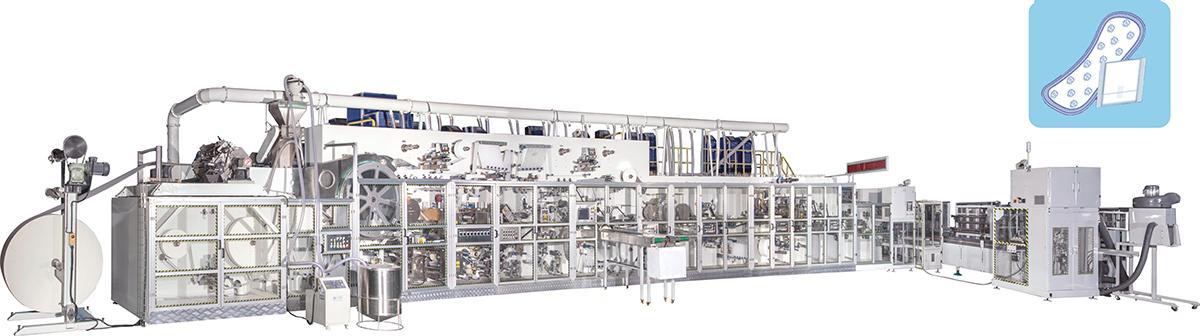
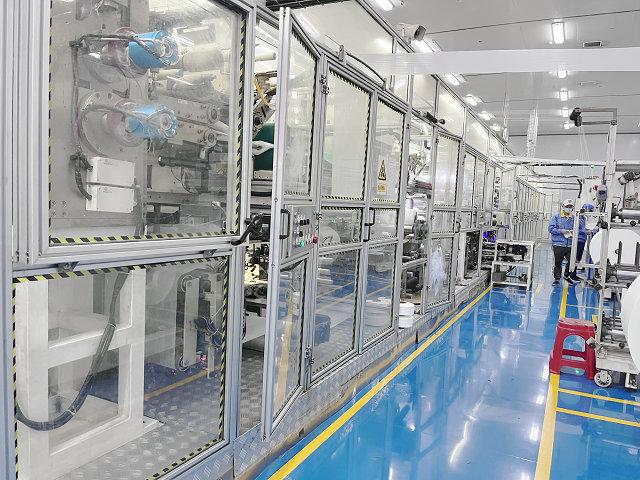
Stable output depends on balanced stations, materials, operators, and the downstream product handoff.
Check Factory Readiness and Line Boundaries
Send suppliers an accurate site package. It should show usable floor area, columns, doors, lifting access, floor levels, service corridors, material routes, operator routes, and available utility connection points. Request a scaled layout with maintenance clearances, roll-loading zones, control cabinets, extraction connections, adhesive equipment, and product discharge. Review it with production, maintenance, safety, logistics, and the building team.
Utility schedules should distinguish normal and maximum conditions and state how values will be verified. Confirm electrical characteristics, compressed-air quality and distribution, environmental conditions, dust extraction, ventilation, network needs, and any process heating or cooling interfaces. Do not assume auxiliary equipment is included. Allocate supply, installation, cabling, piping, testing, and ongoing maintenance in a responsibility matrix.
Check code and safety obligations through qualified local parties. The supplier can provide equipment information, drawings, and its proposed protective functions, but the buyer is responsible for confirming local workplace, electrical, fire, building, and environmental requirements. Resolve differences in the specification and design review. Do not rely on an unsupported statement that a machine is universally compliant.
Compare Quotations on One Scope
Issue the same request package and require a clause-by-clause response. Each supplier should mark requirements as compliant, alternative, optional, excluded, or requiring clarification. Normalize included modules, format tooling, controls, inspection devices, conveyors, extraction, adhesive systems, packing interfaces, documents, training, startup support, software backups, and initial spares. Commercial comparison becomes credible only after technical boundaries are aligned.
Business question
Supplier evidence
Buyer test
Decision outcome
Can launch products run?
Signed format and material matrix
Trace every layer to a module and trial
Accept, clarify, or price an option
Will capacity serve the mix?
Defined stable-run condition
Model shifts, changes, and packer limits
Approve capacity basis or revise plan
Does it fit the plant?
Layout and utility schedule
Multidiscipline site review
Close civil and utility gaps
Can staff operate it?
Role and training proposal
Observe normal run and fault recovery
Set staffing and training actions
Is acceptance objective?
Draft FAT protocol
Link each claim to a witnessed check
Make evidence contractual
Use total project exposure, not a universal ROI promise. Record equipment scope, site preparation, utilities, freight responsibility, installation inputs, trial materials, laboratory needs, staffing, training, ramp-up loss, routine consumables, wear parts, and maintenance capability. The values belong to the buyer's quotations and operating assumptions. Sensitivity testing is more honest than presenting one payback figure as certain.
Audit the Operating Experience
During a supplier visit or remote demonstration, follow an operator's work rather than only watching products exit. Observe roll loading, threading, splice preparation, recipe selection, startup checks, quality sampling, reject handling, cleaning access, tooling storage, alarm interpretation, and restart. Ask the demonstrator to show a controlled fault and recovery. Record required tools and whether tasks can be completed safely in the proposed layout.
Request a witnessed format change relevant to your mix. Time from last acceptable unit of the old format to first acceptable unit of the new one, while separately recording cleaning, mechanical change parts, manual adjustment, recipe selection, trial products, and quality approval. This creates a usable planning input and reveals whether a quoted "quick change" depends on extra technicians or preassembled tooling.
Maintenance staff should inspect lubrication points, wear areas, guards, sensors, belts, cutters, vacuum paths, electrical panels, and diagnostic information. Confirm how components are identified in drawings and the bill of materials. Ask to see the backup and restoration process without assuming unrestricted software access. Maintainability is an operating requirement that needs evidence before purchase.
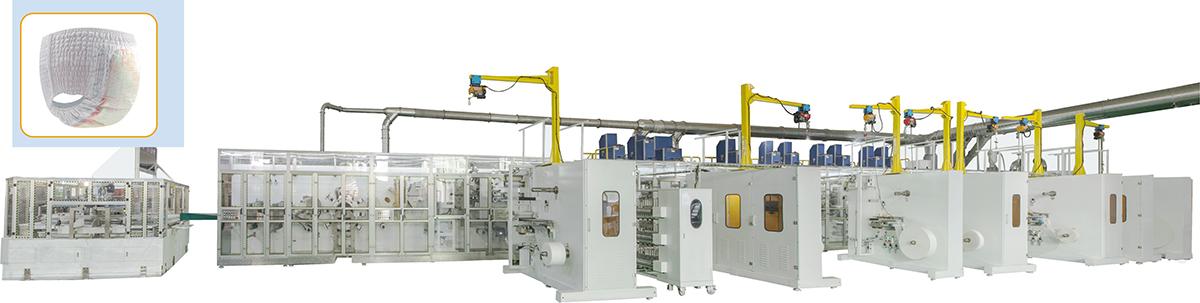
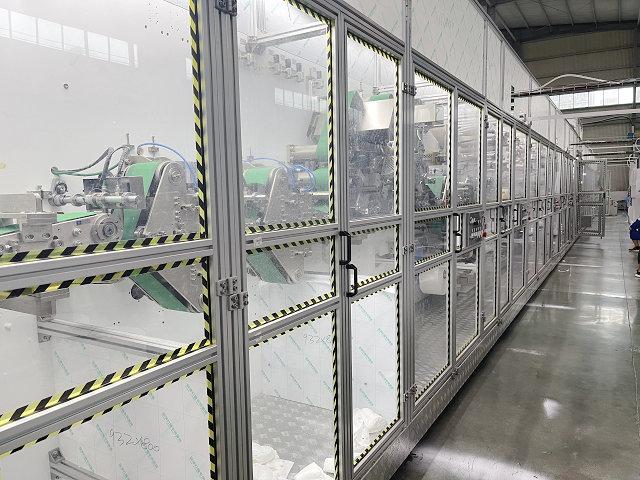
Access, identification, and recovery tasks should be evaluated from the plant team's perspective.
Prove the Choice Through FAT
Write the FAT protocol before the purchase order is finalized. Include machine identification, completeness checks, safety functions, recipes, alarms, manual controls, automatic sequence, product-specific sustained running, sample measurement, reject segregation, changeover, stops and restarts, document review, and software backup. Define trial material lots, staffing, test duration, warm-up treatment, sampling frequency, and the rule for restarting a test after interruption.
Use an acceptance workflow with five states: planned, witnessed, passed, conditionally open, and failed. Every open item needs evidence, an owner, a due date, and a retest or document-review method. Keep signed measurement sheets, logs, labeled samples, photographs, software versions, and training records together. A clean evidence pack should support site receipt and commissioning, not merely authorize shipment.
Business-to-FAT traceability checklist
Every launch format appears in the controlled product matrix.
Every material has an identified trial grade and lot.
Every capacity claim states product, quality, time, and stop rules.
Every buyer-supplied utility or auxiliary item has an owner.
Every scored feature maps to a demonstration or document.
Every deviation is priced, accepted, or closed before release.
Plan Startup and Support Ownership
Installation and ramp-up are shared work. Create a readiness gate covering foundations, utilities, access, material inventory, laboratory equipment, operators, maintenance staff, translation needs, lifting resources, and safety permits. Define who checks shipping condition, assembly, leveling, wiring, piping, dry tests, material trials, training, and site acceptance. An incomplete site can consume support time without proving machine performance.
Training should be role based. Operators need startup, running, changeover, checks, cleaning, and safe response to alarms. Maintenance personnel need inspection intervals, lubrication, adjustment principles, diagnostic data, backup handling, and parts identification. Supervisors need production records and escalation discipline. HAINA can connect requirement review, FAT evidence, and project training, while the buyer verifies competence with observed tasks rather than attendance alone.
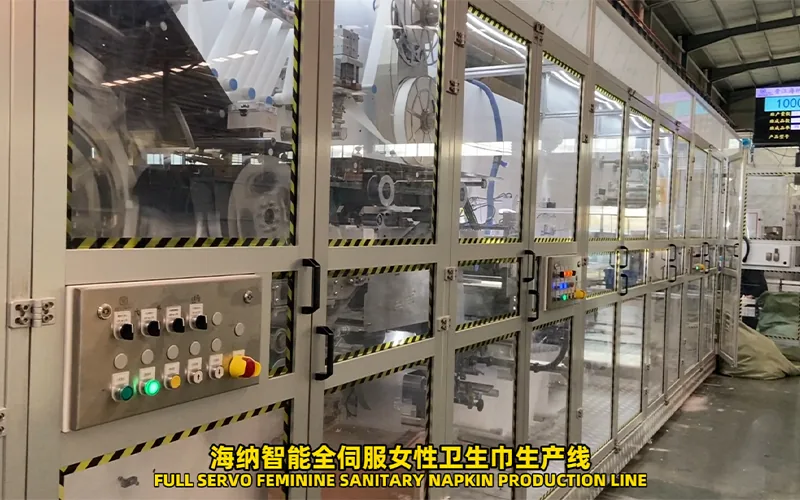
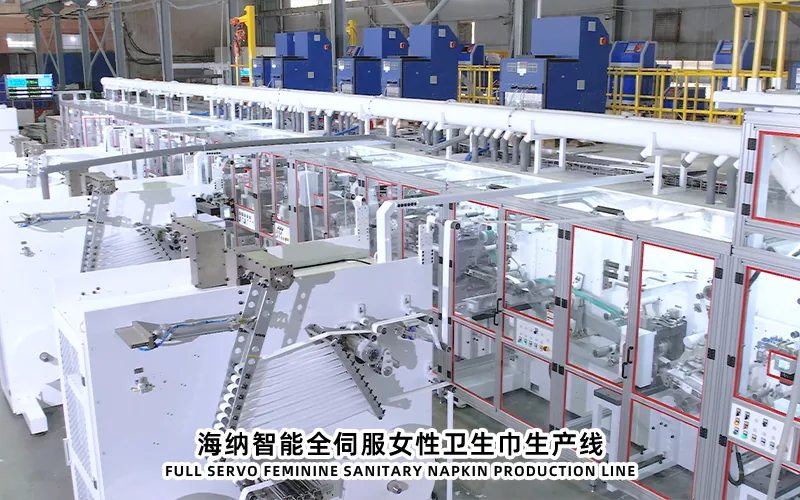
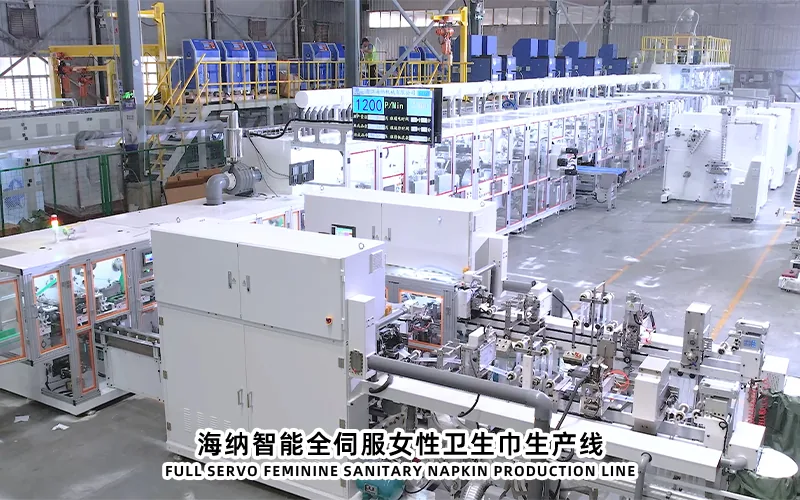
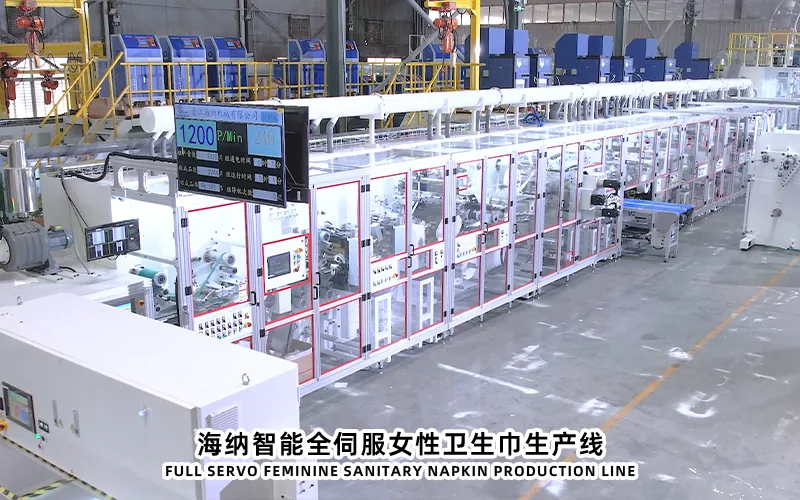
For a reference point while defining scope, review the sanitary napkin manufacturing equipment configuration and annotate which modules, product formats, and interfaces your business requires. Submit those annotations with the inquiry. The resulting conversation will be far more precise than asking for the "best" machine without a product or factory context.
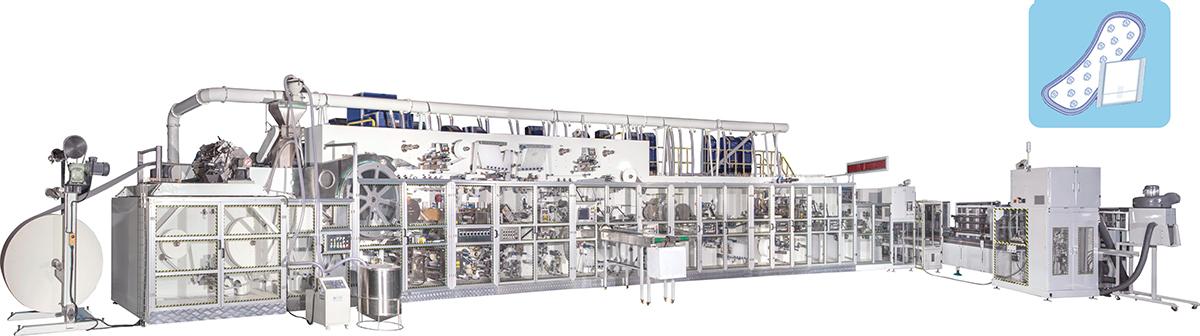
The final layout and module list should be checked against the buyer's signed business requirements.
Frequently Asked Questions
Can I select a machine before finalizing every pad?
You can begin market engagement, but contractual scope needs controlled launch formats and materials. Keep undeveloped products in an assumptions and options register so suppliers do not price different interpretations.
Is automatic equipment always right for a startup?
Not automatically. Compare product demand scenarios, labor capability, quality system, financing, utilities, packaging method, and ramp-up resources. Automation only creates value when the complete operating system can support it.
How should two different quotations be compared?
Build a normalized scope sheet covering modules, tooling, auxiliaries, controls, inspection, documents, site work, startup inputs, training, spares, and deviations. Compare commercial values after those boundaries are aligned.
What should I send with my first inquiry?
Send the product and material matrix, target packaging handoff, demand scenarios, site layout, utilities, desired automation boundary, quality checks, and proposed acceptance logic. Mark confidential or preliminary information clearly.
Conclusion
The right sanitary pad machine is the one that fits a verified business case, makes the controlled product range with available materials, integrates with the factory, and proves stable acceptable output under a written test. Before committing funds, convene finance, production, quality, maintenance, facilities, safety, and procurement to sign one requirement and responsibility pack. Send it to shortlisted suppliers, resolve every deviation, and witness the selected launch product, changeover, alarm recovery, document handover, and training tasks at FAT. Release the order milestone only when the evidence matches the factory's actual plan.