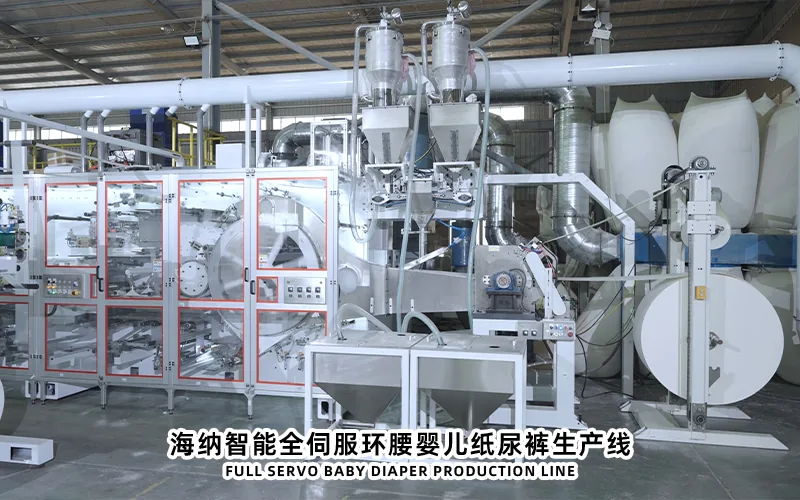
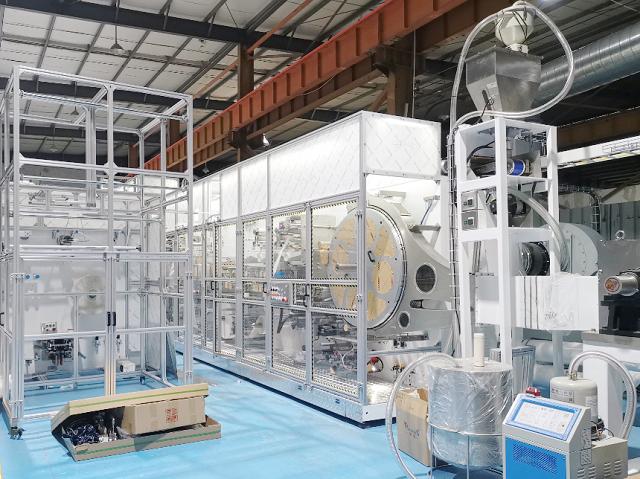
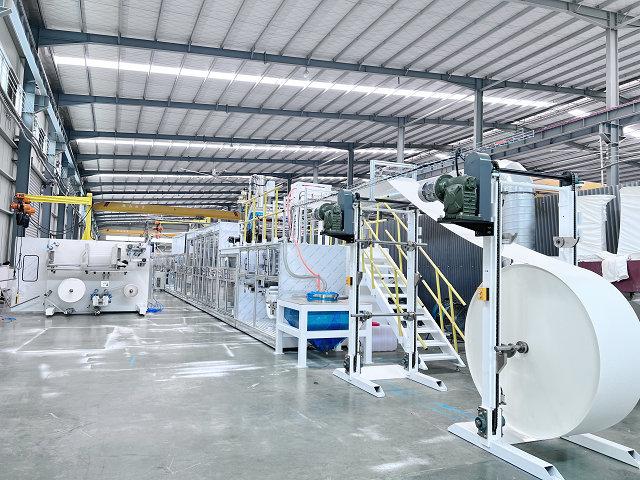
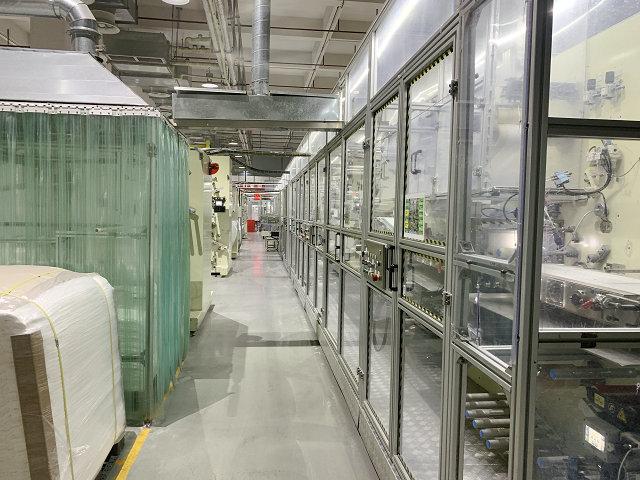
Choose a baby diaper production line as a complete factory flow, not as an isolated converter. Define the baby diaper portfolio, material supply, acceptable quality, size mix, packaging boundary, production calendar, utilities, staffing, maintenance capability, and building constraints. Then verify that core formation, component application, cutting, folding, inspection, rejection, counting, and downstream handling remain balanced under representative conditions. The right diaper production line is the one that delivers traceable acceptable products at an agreed stable condition, changes formats predictably, fits material and people routes, and transfers technical knowledge through FAT records, documents, training, and controlled site startup.
Design the Product Portfolio
Product strategy controls line architecture. List each launch diaper size and construction, including core concept, acquisition components, top sheet, back sheet, standing leak guards, leg elastics, waist elements, side panels, fastening tapes, landing area, contour, fold, count, and packing orientation. Attach revision-controlled drawings, bills of material, inspection methods, and labeled samples. Classify products as launch, planned, or conceptual so bidders know which ones must be demonstrated and which remain options.
Map expected demand by size and channel as scenarios. A launch may concentrate on a limited range and add formats later, while contract production may require frequent transitions. The line choice should reflect that mix. A dedicated product can favor repeatability; a broad portfolio needs stronger tooling control, recipe governance, and changeover planning. Avoid claiming exact future output before sales, staffing, and material assumptions are verified.
Identify product characteristics that create equipment risk. A difficult elastic arrangement, component registration, core geometry, tape position, fold, or thin flexible material may deserve a special trial. Rank these risks with product development and quality. Supplier demonstrations should then answer the most important uncertainty instead of running only the easiest diaper.
The product portfolio determines required modules, tooling, recipes, checks, and downstream presentation.
Draw the Diaper Production Line Boundary
Create a process diagram from raw-material receipt to packaged output, then mark the purchase battery limit. The proposed line may include unwinds, absorbent-core preparation, component applicators, adhesives, web guiding, cutting, folding, inspection, rejection, counting, and stacking. Individual packing, bagging, coding, case packing, conveyors, extraction, adhesive preparation, compressed air, and data systems may be included, optional, or supplied separately.
Assign each interface to one party for design, supply, installation, connection, testing, and maintenance. Define roll-loading responsibility, splice method, scrap transfer, dust ducts, utility termination, guarding between machines, accumulated product, packer signals, and fault reset. Where two suppliers meet, issue a joint signal list and mechanical-interface drawing. A gap between scopes can stop an otherwise functional factory.
Automation boundaries also define labor. Record roles for material preparation, loading, inspection, replenishment, reject handling, cleaning, changeover, packing, and fault recovery. A line called fully automatic still needs supervision and physical support. Evaluate whether work can be performed safely with the proposed aisles, platforms, lifting aids, and service clearances.
Balance Every Process Station
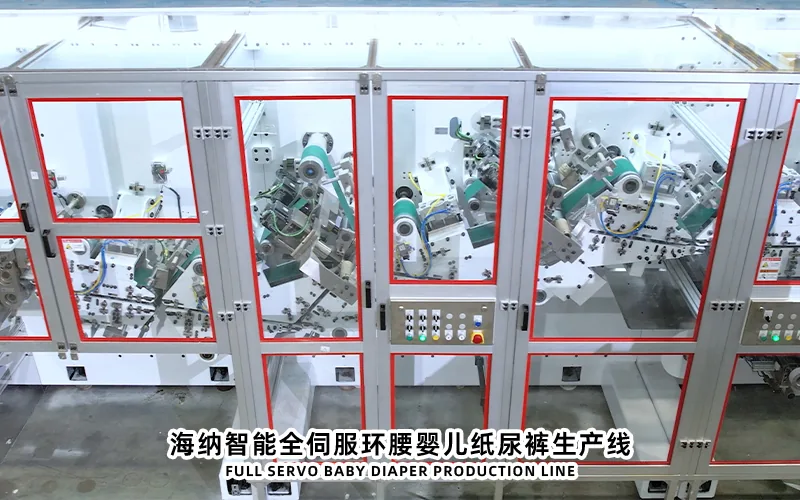
A production line is limited by interactions between stations. Core preparation must feed conversion consistently; component application must remain registered; adhesive condition must suit materials; cutters and folders must handle the format; inspection must process the product state; and discharge must feed counting or packing without damage. Ask the supplier to explain accumulation, synchronization, and controlled response when one station slows or stops.
Use representative materials during trials. Provide widths, diameters, core sizes, winding, basis weights, stretch information where relevant, splice forms, and approved grades. Record lots and machine settings. Material properties can affect tension, static, vacuum, bonding, dust, cutting, and registration. Qualification should include routine events such as a roll nearing completion, a prepared splice, and restart after replenishment.
Inspection and reject functions must be tested at line speed under approved conditions. Document detectable defects, sensor coverage, reject timing, confirmation, repeated-fault reaction, and product segregation. Identify characteristics left to offline sampling. The line balance is not acceptable if inspection overload or a downstream reject device becomes a hidden bottleneck.
Station balance begins with traceable materials and continues through inspection and product discharge.
Plan Material Logistics and Utilities
Model the factory around operating movements. Show incoming trucks or containers, quarantine, raw-material storage, acclimation where required by site procedure, roll staging, lifting paths, line-side inventory, scrap removal, quality sampling, tooling storage, maintenance access, finished-product transfer, and emergency routes. Check door dimensions, columns, floor levels, and loads through qualified project engineers.
Request a configuration-specific utility schedule. It should identify electrical conditions, compressed air, extraction, ventilation, network, adhesive equipment, and other interfaces, with normal and maximum bases where applicable. The buyer's facilities team should verify available capacity and connection work. Never transfer utility figures from another line without supplier confirmation for the selected scope.
Environmental and housekeeping controls support material behavior and product cleanliness. Define storage and operating conditions from approved material and product requirements. Plan dust collection, access for cleaning, waste segregation, pest controls, and prevention of cross-contamination. Confirm local building, fire, electrical, workplace, and environmental obligations with responsible specialists rather than relying on a general machine statement.
Calculate Capacity by Size Mix
Convert the demand scenario into required acceptable diapers by format and production period. Include planned shifts, production days, maintenance, sanitation, size changes, roll changes, sampling, and packer availability. Then test low, base, and high cases. Keep every assumption visible so the sponsor understands whether the selected line has appropriate flexibility without interpreting the model as a guaranteed return.
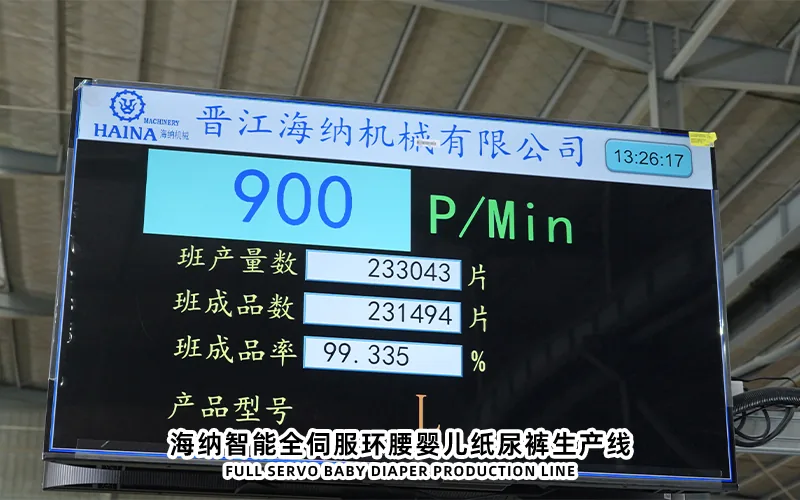
Separate design speed from stable working speed, actual operating speed, and the contractual acceptance value. Ask what diaper, materials, operators, duration, quality criteria, and downstream state support each claim. The capacity model should use a defensible stable condition and product mix, not an instant design number. Different sizes may require separate evidence.
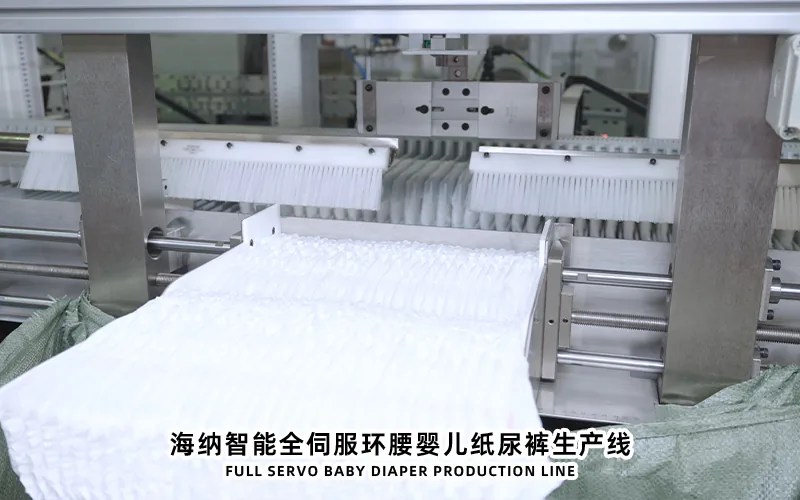
Count output at the business-relevant boundary. If the line contract ends at counted stacks, model separate packing availability and handling. If bagging is integrated, include bag changes, count recipes, coding, sealing, rejects, and case transfer. Record accumulation limits and behavior during downstream blockage. Acceptable converted diapers sitting unprotected between processes are not equivalent to released packed goods.
Test Changeovers and Line Recovery
Build a format-to-tooling matrix for guides, applicators, cutters, drums, folding parts, inspection regions, conveyors, and count settings. Identify recipe changes and manual adjustments. Label change parts and define storage, cleaning, inspection, and replacement. Quotation scope should state which size sets are included and what future additions require.
Witness a representative change from last acceptable old diaper to first acceptable new diaper. Record clearance, cleaning, parts, mechanical settings, recipe selection, threading, setup output, sample measurement, corrections, quality release, and waiting. Have trained factory roles perform the sequence. A supplier estimate made by expert technicians is not the same as a repeatable plant method.
Also test controlled recovery. Stage an agreed downstream stop, material break simulation, or inspection fault through safe supplier procedures. Observe containment, alarm information, product segregation, restart sequence, first-product checks, and records. Recovery evidence exposes whether the integrated system protects quality when real operations depart from steady state.
Changeover and recovery tests show how the complete line returns to accepted product after interruption.
Compare Integrated Line Evidence
Line-integration question
Documentary proof
Witness test
Approval condition
Does the portfolio fit?
Format-to-module and tooling matrix
Run the highest-risk launch diaper
Samples meet approved checks
Are stations balanced?
Process and control narrative
Sustained run with routine material events
No unexplained recurring bottleneck
Does packing connect?
Mechanical and signal interface
Block, accumulate, and recover safely
Products remain controlled
Can the factory support it?
Layout, utilities, and role matrix
Site and task walkthrough
All interfaces have owners
Can formats change?
Change-parts and recipe register
Convert through first quality release
Method is repeatable by trained staff
Whole-line design review
Product and material revisions match the proposal baseline.
Every auxiliary and downstream boundary has one responsible party.
Raw-material, people, tooling, scrap, and product routes are clear.
Utility data corresponds to the exact equipment configuration.
Inspection coverage and offline quality checks do not leave a gap.
Stable-run, changeover, blockage, and restart tests are specified.
Score evidence only after mandatory gaps are closed. Weightings can reflect product risk, integration, site work, changeover, maintainability, documents, and support. Keep price comparison aligned to the same boundary. A lower converter price may require separate packing, extraction, tooling, or site work; a broader scope may include equipment the launch does not need. Normalize both technical value and obligations.
Manage FAT, Installation, and Ramp-Up
FAT should trace the complete line requirement to evidence. Confirm equipment identity, modules, safety functions, controls, recipes, alarms, inspection and rejects, sustained product operation, representative changeover, downstream fault response, documents, backups, tooling, and training. Agree material lots, duration, staffing, sample frequency, stop rules, and retests before the formal test.
Site readiness covers access, lifting, foundations, utilities, extraction, adhesive systems, material inventory, packing interface, tools, quality instruments, trained staff, and permits. Installation and commissioning tasks need an owner matrix. HAINA can coordinate project engineering, FAT, and training for the specified line, while the factory verifies local readiness and competence.
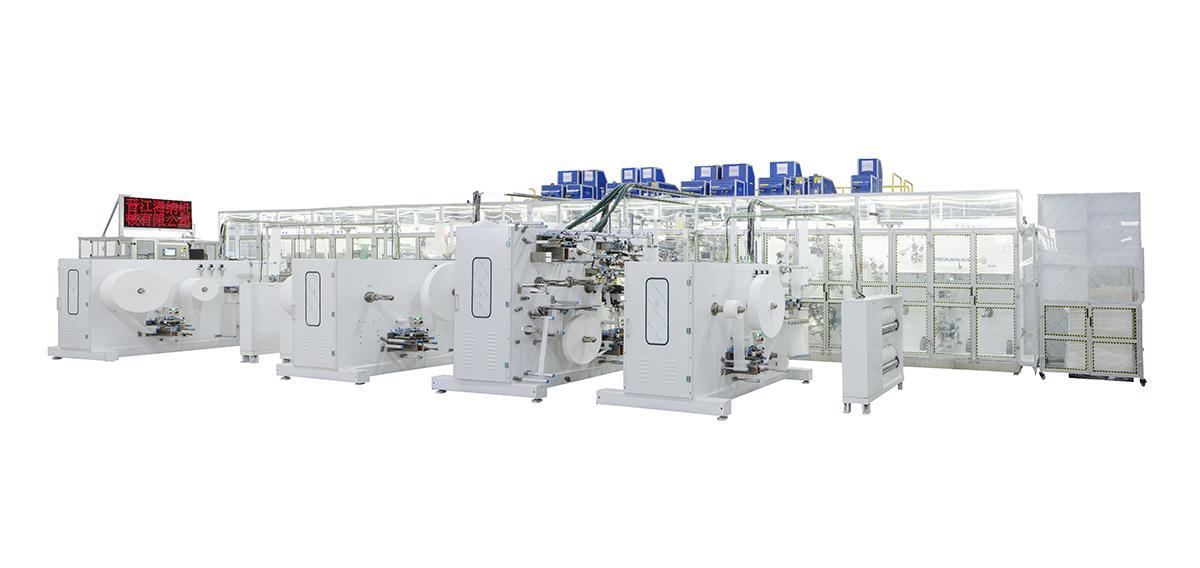
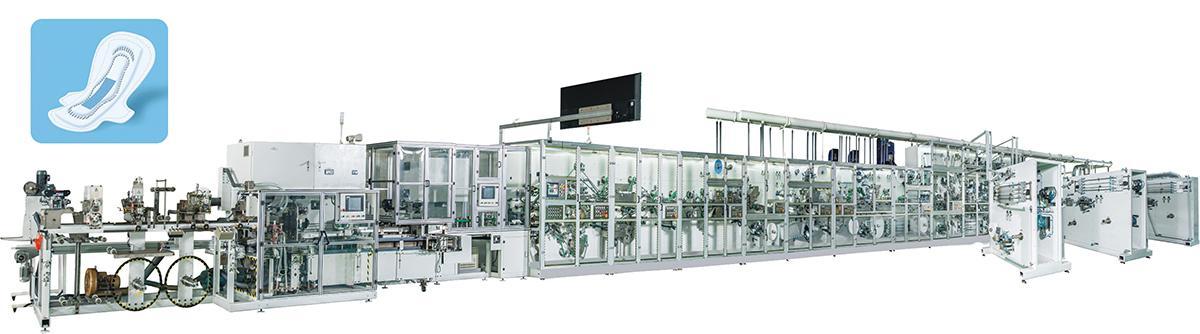
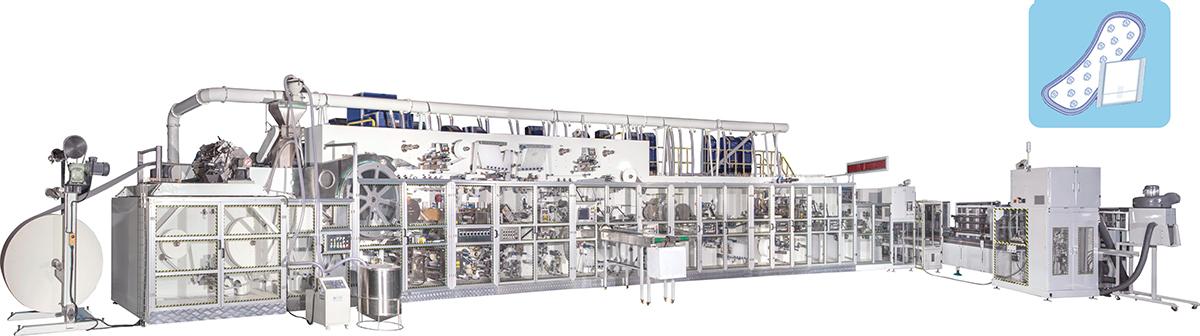
Review the automatic baby diaper manufacturing line configuration as an initial architecture reference, then replace assumptions with signed project schedules. During ramp-up, use short interval records for product, materials, settings, rejects, stops, and interventions. Change one controlled variable at a time and update approved recipes only after quality confirmation.
FAT and site startup should preserve one traceable baseline from modules through released product.
Frequently Asked Questions
Is the converter the same as a complete production line?
Not always. Confirm whether core preparation, inspection, counting, stacking, bagging, extraction, adhesives, conveyors, and utilities are included. Draw the boundary and assign every interface.
How should capacity be compared across diaper sizes?
Request defined stable evidence for representative formats and model the planned size mix, changeovers, material events, quality checks, and packing boundary. Do not use one peak value for all products.
Why test a downstream blockage at FAT?
It shows accumulation, alarms, containment, reject handling, synchronization, and restart. These behaviors determine whether acceptable products remain protected when packing cannot receive output.
What makes a layout ready for approval?
It must show equipment, maintenance clearances, roll and tool handling, operators, samples, scrap, utilities, packing transfer, emergency routes, and structural constraints at a usable scale.
Conclusion
The right baby diaper production line balances product design, materials, every converting station, inspection, packaging, utilities, people, and building flow. Its value cannot be judged at the converter discharge alone. Before approving the line, assemble production, quality, maintenance, logistics, facilities, safety, and supplier engineering around the scaled layout and requirement matrix. Then witness the highest-risk diaper, a planned size change, routine material replenishment, reject challenge, packing blockage, and controlled restart. Release the technical decision only when acceptable product, interface ownership, documents, and trained tasks are all recorded against the same project baseline.