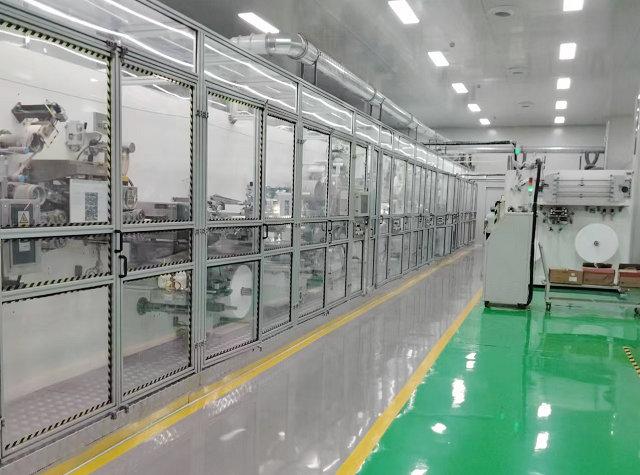
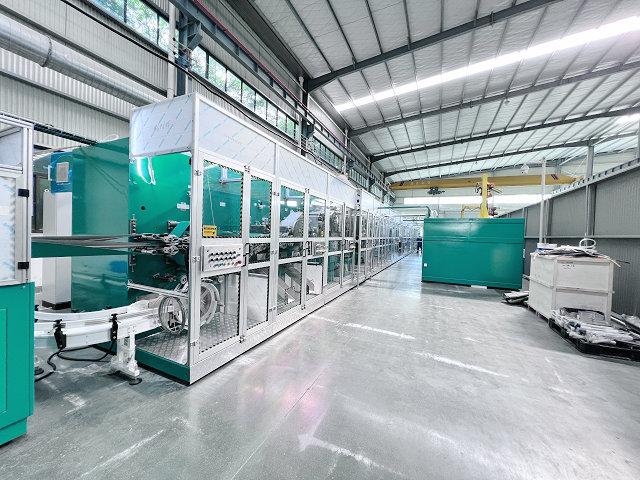
Choose a Nappy manufacturing machine by defining the taped baby diaper products it must make, then verifying the complete configuration against those definitions. Give suppliers controlled size drawings, material and roll data, core construction, elastic layout, tape and frontal component details, quality criteria, product mix, and factory interfaces. Compare included process stations, stable conforming output, size-change method, inspection and rejection, maintenance access, documents, training, and support. Require a technical agreement and FAT protocol that distinguish design speed from tested stable operation. The right choice is the line that proves the buyer's product range with identified materials and measurable acceptance evidence.
Define the taped baby nappy range
Nappy is a regional term that can describe several absorbent products, so procurement must state that this project concerns open baby diapers with a tape or hook-and-loop style closure. Pull-on baby pants, adult products, menstrual pants, underpads, and sanitary napkins require different constructions or equipment. Preserving the boundary prevents suppliers from answering a precise product request with a broad claim about hygiene machinery.
Create one controlled specification package for each planned size. Show finished and unfolded dimensions, core shape and location, topsheet, acquisition or distribution layer if present, core wrap, backsheet, leg elastic, waist elastic where used, standing barriers, side tape, frontal landing component, adhesive zones, cutting profile, fold, and discharge orientation. Mark the critical component locations and tolerances on drawings. A sample helps communication, but it cannot replace dimensions and release criteria.
Add a size and demand matrix. Identify common materials, size-specific material widths, closure variants, expected campaign length, changeover frequency, shift plan, sampling frequency, and downstream pack formats. These planning quantities do not justify an unsupported output or payback claim. They allow engineering to identify shared stations, dedicated parts, likely setup work, and packaging interfaces.
Define product quality with the factory team before sending inquiries. Criteria may address dimensions, core distribution, component position, elastic placement, barrier continuity, tape and frontal alignment, bond condition, appearance, folding, count, and other functional tests selected by the product owner. State the measurement method, instrument, sample plan, limit, and reaction to a failure so every supplier receives the same test basis.
The product drawing should connect every layer and closure component to a defined machine function.
Nappy machine configuration requirements
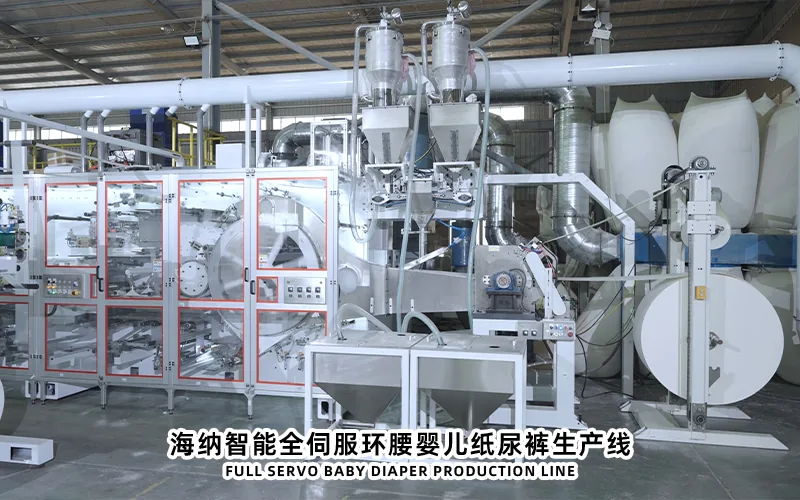
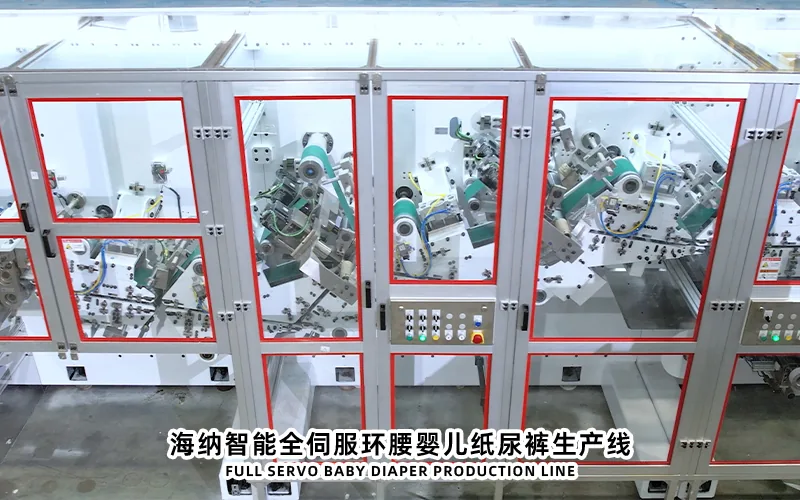
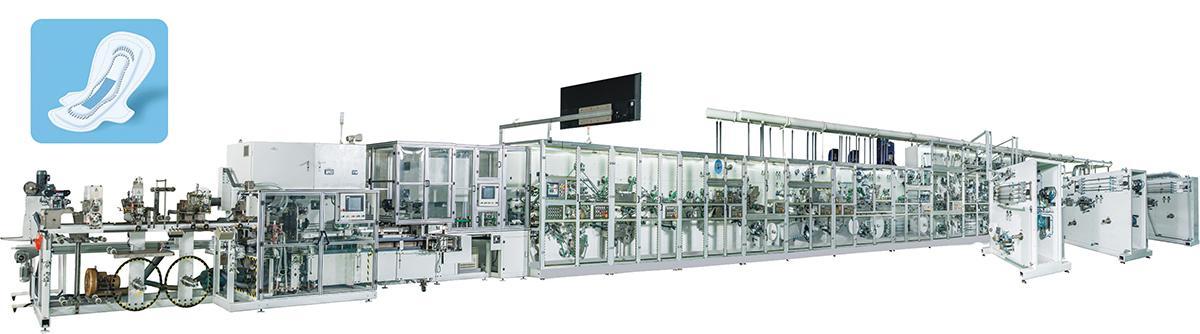
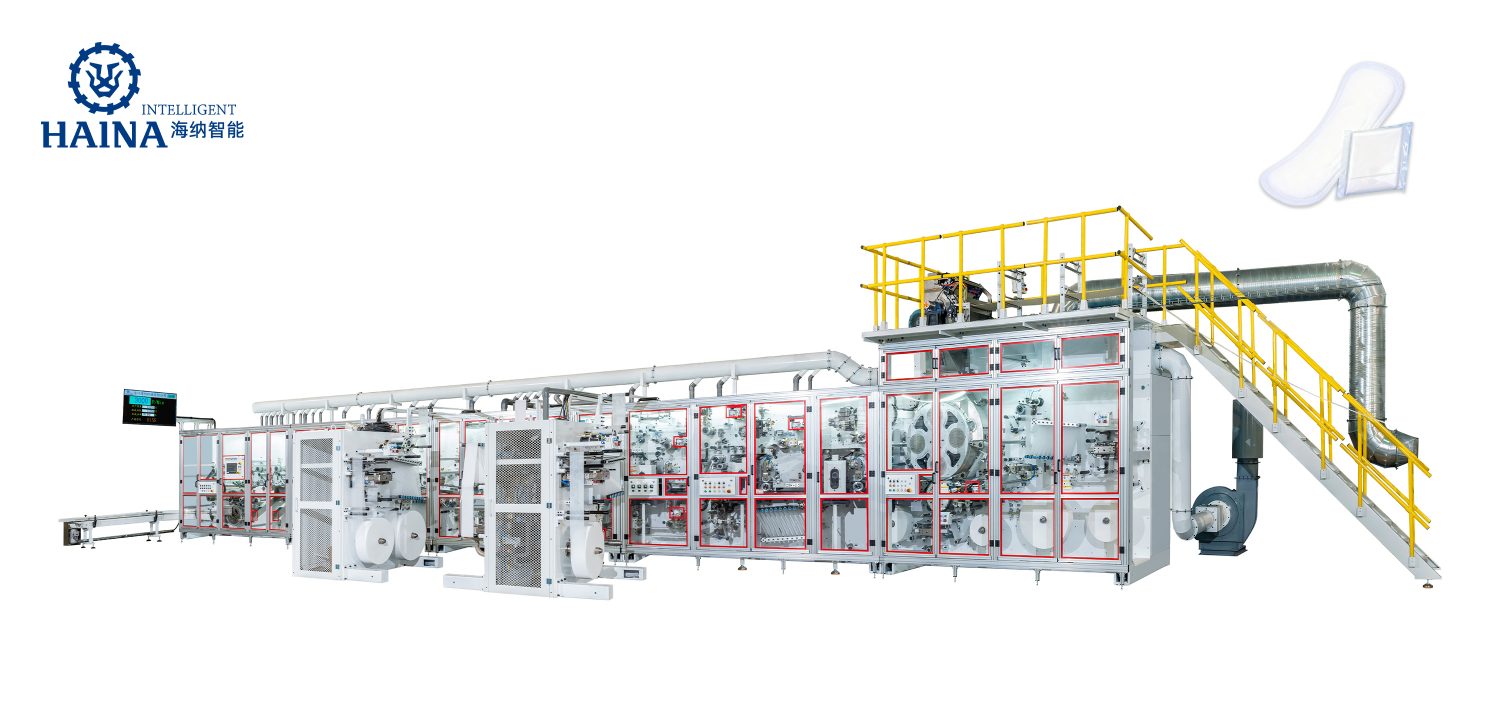
Map the taped nappy to its equipment functions in process order. Start with absorbent dosing, core preparation, and containment; continue through roll feeds, path regulation, elastic and barrier placement, side-tape cutting and application, frontal landing material registration, adhesive delivery, diaper cutting, folding, transfer, inspection, confirmed rejection, counting, and the packer connection. For each station, record its supported range, control method, required change parts, and acceptance evidence.
Closure construction deserves special attention. The supplier should explain how side tapes are unwound or fed, cut, positioned, bonded, and checked; how the frontal component is registered and applied; and what happens when a component is missing or misplaced. Ask whether the planned tape material, frontal material, dimensions, and roll presentation have been tested. A line configured for one closure system may require hardware and control changes for another.
Separate base scope, selected options, future provisions, buyer-supplied items, and exclusions. Presence sensing, registration measurement, vision inspection, web-splice detection, reject confirmation, coding, counting, stacking, and bagging are not interchangeable functions. Require a defect-coverage list and process narrative rather than accepting the phrase automatic inspection.
Review factory fit with the technical scope. Confirm service clearances, roll routes, lifting access, operator positions, material staging, change-part storage, waste removal, sample flow, and interfaces with dust extraction, adhesive supply, utilities, coding, packing, and production-data systems. Assign mechanical, electrical, signal, elevation, commissioning, and safety responsibilities at each interface.
Qualify materials and closure components
Build a nappy-material qualification table that records each item's product role and supplier identity, then its web width, outer roll and inner core dimensions, unwind orientation, splice design, surface treatment, thickness or basis information from the material source, stretch behavior, storage condition, and proposed trial lot. Include nonwovens, film or backsheet, tissue or core wrap, absorbent inputs, elastic materials, tapes, frontal material, adhesive, and any optional component.
Nominally similar materials may behave differently during unwinding, guiding, tensioning, elastic application, cutting, bonding, or transfer. Closure materials can vary in stiffness, release behavior, surface compatibility, and bond response. Test identified production-intent rolls whenever possible. Where a substitute is used for early work, log every material difference and define a later trial that must close the assumption.
Decision area
Evidence requested
Nappy-specific limitation
Witness check
Size coverage
Controlled size matrix, station ranges, change-part list
Supported dimensions and constructions, not only size names
Trace boundary sizes to hardware and approved samples
Tape system
Applicator description, roll data, placement controls
Approved tape type, presentation, cut and position range
Measure placement and evaluate bond by the agreed method
Frontal component
Feed, registration, cutting, and detection narrative
Material and printed-reference compatibility
Challenge reference loss and inspect rejected product
Core construction
Input specification, forming method, containment plan
Witness transfer and response to blocked discharge
Material approval also requires record discipline. Identify lot numbers during FAT, retain sample labels, record approved settings, and reconcile material consumed with accepted, rejected, sampled, and held output as required by the protocol. If a material behaves poorly, preserve the roll information, symptom sequence, affected samples, and changes attempted. This makes later engineering discussion factual.
Closure and web materials require production-intent trials because feed and bonding behavior can differ despite similar descriptions.
Plan size changeovers and recipes
For every product size, list the recipe, material widths, guides, cutters, forming parts, fold or transfer settings, tape and frontal settings, inspection limits, discharge format, and downstream adjustments. Mark components that are common, adjusted, exchanged, or added. The supplier should identify tooling, lifting, calibration, storage, and protection needs for all change parts.
Assess the full changeover interval from last accepted old-size product to first accepted new-size product. Divide it into clearance, isolation, parts exchange, mechanical adjustment, material replacement and threading, recipe selection, sensor or inspection setup, trial running, sample checks, and formal quality release. A claim based only on mechanical work understates the actual production loss.
Recipe controls should include named sizes, revision identification, access levels, authorized ranges, backup, restoration, and records of permitted changes. Confirm how a recipe is linked to the installed parts and material set. A checklist can require independent verification of critical parts, recipe, tape, frontal material, core dimensions, and inspection settings before trial production begins.
Representative changeover acceptance
Record the last accepted product from the old size and isolate the line according to the approved task.
Verify line clearance and reconcile old materials, labels, samples, and change parts.
Install identified parts and materials using the supplier's controlled instruction.
Select the authorized recipe and independently confirm critical settings and inspection limits.
Run trial product, document adjustments, and segregate all output before quality release.
Measure the agreed characteristics and identify the first accepted new-size product.
Review time by phase, material used, safety issues, errors, and open corrective actions.
Witness at least a representative or high-risk size change when changeover flexibility is central to the purchase. Record the conditions and results without turning them into a universal guarantee. Future performance will depend on trained personnel, material preparation, equipment condition, and the same disciplined release sequence.
Compare output with quality evidence
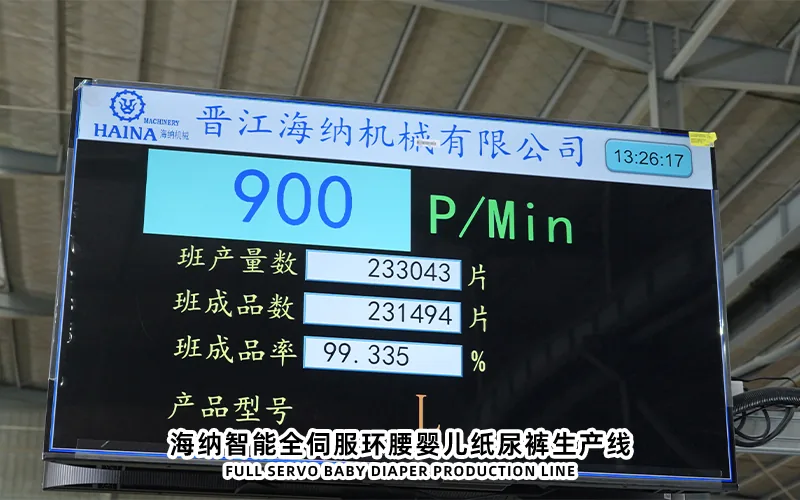
Do not rank offers on a single speed number. Ask suppliers to state design speed, demonstrated stable working speed, configurable range, proposed buyer operating condition, and contractual acceptance value separately. Require the diaper size, construction, material lots, quality plan, downstream state, observation period, stop treatment, reject accounting, and manual interventions behind each tested result.
FAT should begin with equipment identity and configuration inspection. Witness startup, material threading, first-product approval, the defined stable run, samples across time, normal stops, controlled restart, inspection and reject challenges where safe, and the representative changeover if included. Record alarms, setting changes, rejected output, held product, and reasons for interrupted tests.
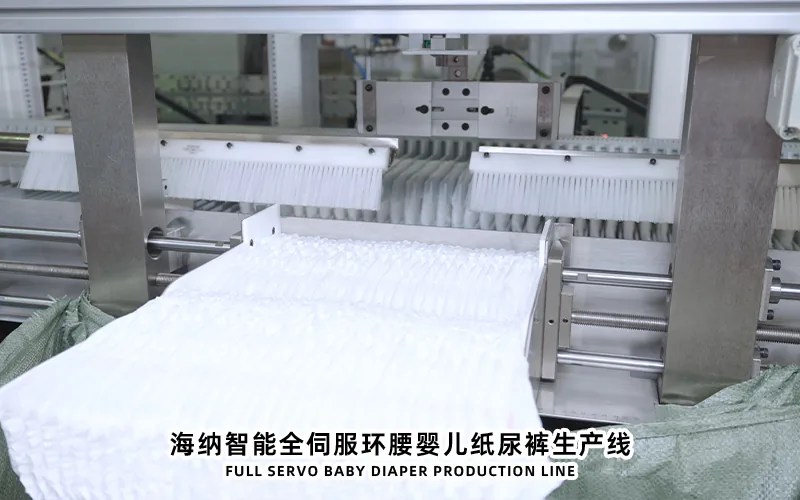
Inspect products with agreed methods rather than selecting attractive samples. Label samples by time, recipe, size, and material lot. Review component position, core condition, elastics, barriers, closure placement and bond, dimensions, fold, and other specified characteristics. Preserve raw measurements and signed results. A supplier claim is established only for the configuration and conditions actually tested.
The automatic baby diaper manufacturing machine category is the correct equipment context for open taped nappies. HAINA can review the buyer's product drawings, material matrix, and FAT plan during requirement engineering; procurement should require the resulting decisions to appear in controlled project documents.
A defensible output result includes run conditions, interruptions, rejected material, labeled samples, and inspection data.
Audit maintenance and support readiness
Inspect maintenance access at cutters, bearings, belts, guides, sensors, drives, filters, adhesive equipment, and cleaning points. Confirm isolation, stored-energy control, lifting needs, alignment references, diagnostic access, software backup, and safe restart. Obtain task instructions with intervals or condition triggers, wear criteria, required skills, tools, lubricants where applicable, and evidence fields.
Evaluate spares according to failure consequence, likelihood, lead-time exposure, interchangeability, and storage requirements. Request an identified startup and critical-spares proposal, normal wear list, manufacturer references where available, and the process for approving substitutes or obsolete components. Check that the parts documentation matches the quoted configuration and uses revision control.
Training should separate operator, maintenance, quality, and supervisory competence. Ask for task-based objectives, supervised practice, assessment, and sign-off. Test the support route before award: who receives technical evidence, what remote-access conditions apply, how a parts request is identified, how an unresolved problem escalates, and which costs or availability commitments are contractual.
Review sample manuals, drawings, parts pages, alarm explanations, recipes, changeover sheets, maintenance tasks, and FAT forms. Documents promised after delivery cannot be scored as proven quality unless representative samples show their clarity and correspondence to the line.
Run a gated selection scorecard
Create pass or fail gates for product construction, closure system, size range, required safety scope, site fit, essential interfaces, and acceptance commitment. Then weight configuration clarity, material evidence, stable output, quality control, changeover, maintainability, documentation, training, spares, software governance, warranty, and project support according to factory risk.
Every score must cite evidence. Use technical agreement clauses, drawings, station lists, trials, inspected samples, document examples, and binding supplier responses. Mark assumptions and give them owners and due dates. Do not award a high score because a supplier uses confident language or shows a machine making a different product.
Normalize commercial scope before comparison. Include equipment, options, size parts, inspection devices, auxiliaries, packing interfaces, freight responsibilities, installation and commissioning support, test materials, spares, tools, software, documents, training, and buyer site work. Scenario models should identify whether each speed, waste, staffing, service, or cost input is quoted, FAT-tested, buyer-estimated, or unresolved.
The final score should be traceable to product fit, witnessed tests, controlled documents, and explicit responsibilities.
Frequently Asked Questions
Does Nappy in this title mean a baby diaper?
Yes. The selection scope here is an open taped baby diaper. The buyer should state that definition because pull-on pants and other absorbent hygiene products use different constructions.
Can one line make all nappy sizes?
Only a documented size matrix can answer. Verify station ranges, materials, recipes, dedicated parts, changeover work, inspection settings, and accepted boundary samples.
Why test closure materials during FAT?
Tapes and frontal components can differ in feed, cutting, placement, release, surface compatibility, and bond behavior. Identified production-intent trials expose those risks.
What is the most useful supplier comparison evidence?
Use a signed configuration, production-intent trial, witnessed stable run, labeled inspection results, representative changeover, document samples, and closed deviations.
Conclusion
The right Nappy manufacturing machine is the one proven for the buyer's taped baby diaper construction, closure materials, size matrix, factory, quality plan, and operating case. Procurement should issue one controlled requirement package and use evidence gates before comparing weighted scores. Ask HAINA to mark every process function, option, interface, size part, and limitation in the technical agreement. Then witness production with identified materials, reconcile accepted and rejected output, inspect labeled closure and core samples, perform a representative size change, and close deviations objectively before the equipment selection is approved.