For a sanitary napkin machine, ordering release liner as "coated side out" is not enough to establish how its working face will meet the product. The order also needs a named viewing end and a depiction of the free web. Those references let the material supplier and equipment supplier check the same orientation instead of interpreting an isolated arrow differently.
Specify the roll, not a threading procedure: identify the functional face, show how it is wound and where the tail leaves in the agreed view, then obtain confirmation against the proposed process interface. Add print direction only if the liner actually has a directional feature.
Identify the release face
The functional release face is the surface intended to meet the relevant adhesive interface and permit the specified separation behavior. Do not infer that identity from color, gloss or a familiar paper appearance. The supplier's construction description should establish which face performs the function. Where both faces are treated, their properties may differ, so “coated” alone can remain ambiguous.
Give each face a stable designation in the material specification. For example, a project drawing can identify a named release face and a named reverse face, provided those names are connected to the supplied construction. If both sides have separate release functions, preserve both identities. The goal is to remove dependence on an individual's memory of which surface looked smoother in a sample.
A supplier-approved face identification can be represented on a drawing or controlled sample. The method should suit the material. Procurement should not ask staff to improvise an adhesion experiment or expose themselves to operating adhesive equipment merely to decide which side of an incoming roll is functional.
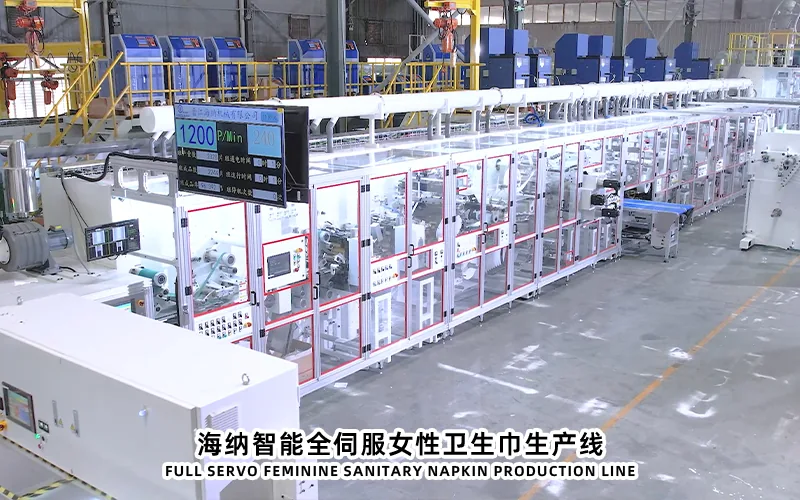
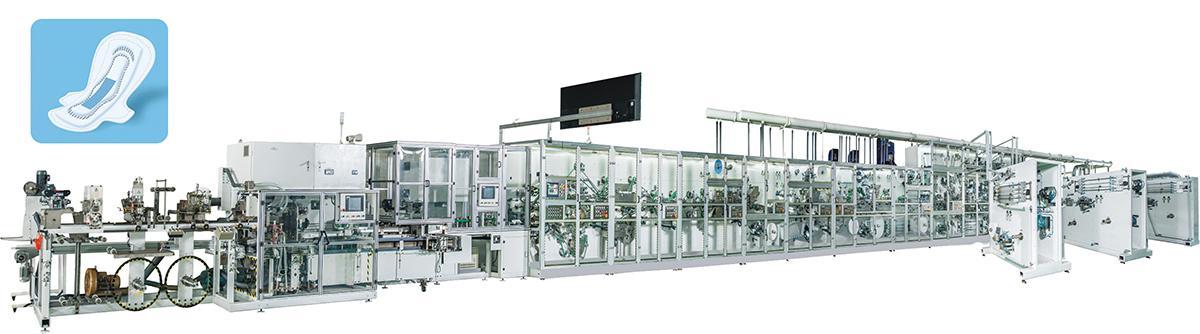
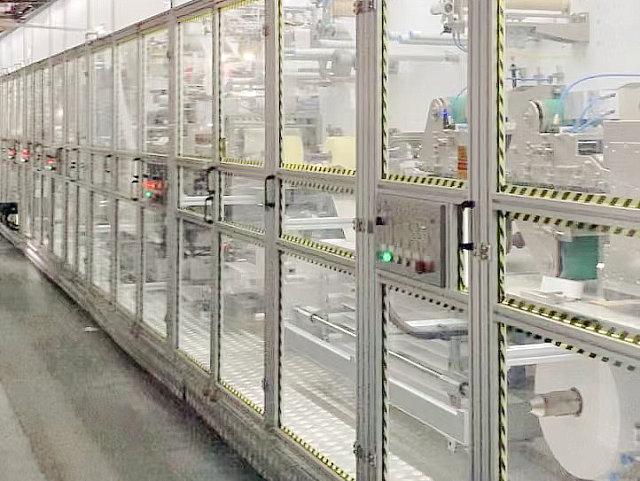
Release face identity comes from the material specification, not from this machine image.
Choose the viewing convention
Clockwise and counterclockwise describe rotation only from a specified viewpoint. Looking at the opposite end of the same roll reverses the apparent direction. A purchase order that gives a rotational arrow without identifying the viewing end leaves room for two interpretations. Naming the drive side does not solve the problem unless both parties share the same machine-side definition.
Use a clearly identified roll end or another agreed view reference on the material drawing. The sketch should show which side the observer sees and how that view relates to the functional face. If the roll can arrive without a permanent end identity, the supplier and buyer need an agreed identification method that remains meaningful at receipt.
This distinction becomes especially important when a sales sketch, material supplier drawing and machine layout were prepared by different teams. Their page orientations may look similar while their assumed viewing ends differ. Compare the references rather than approving the drawings because the arrows appear to point the same way on screen.
A mirrored image can make this harder. A photograph placed into a presentation may have been flipped for layout, changing its apparent directional relationships. Use the controlled drawing as the order reference and treat photographs as supporting context. If a photograph is offered as the primary orientation evidence, ask the supplier to confirm the view and whether the image preserves the original direction.
Separate wound orientation from departure
“Release face inward” or “release face outward” describes the functional surface relative to the wound layers. The point where the free web departs the roll is another relationship. A drawing can show departure above or below the roll, but the meaning still depends on the view and the proposed arrangement. Neither description should silently stand in for the other.
The buyer should ask for a roll sketch that combines these relationships. Show the wound package, the designated face and the free-end direction in the agreed view. The drawing can remain schematic; its purpose is orientation rather than manufacturing detail. A clear schematic often communicates more than a photograph in which the functional face cannot be identified.
Wound face
Which named surface faces toward or away from the roll center.
Departure direction
Where the free web leaves the depicted roll in the defined view.
Rotation description
The roll movement as seen from that same identified end.
Do not assume that a supplier's internal winding code has an industry-wide meaning. Ask for the code legend and its matching sketch. A number or letter can be a useful ordering shortcut only after both parties have locked the convention it represents.
Account for the proposed path
The surface facing outward on the roll is not a complete description of the surface that eventually meets the product. The material path can change the way a face is presented. The relevant engineering review therefore connects the supplied roll orientation with the required face at the intended process interface. It does not stop at the unwind label.
Ask the equipment supplier to confirm that relationship using its approved process representation. Procurement can identify the desired interface and material face without specifying how staff should route the web. Path design and operating instructions remain the equipment team's responsibility. A buyer should not solve a drawing disagreement by directing an improvised reversal around machine components.
Where a proposed path differs between product variants or options, confirm whether the same roll orientation remains appropriate. A common liner name does not establish a common presentation requirement. If the equipment proposal changes, revisit the orientation relationship before repeating an old material order. Otherwise, a previously correct winding specification can be carried into a different interface unnoticed.
The required face at the process interface should be confirmed in project documentation.
Locate print and longitudinal identity
A liner can have print, a registration feature or another longitudinal identity in addition to its functional release surface. Correct face presentation does not automatically establish the correct reading direction or repeat relationship. A roll may present the intended surface while a directional printed feature is reversed relative to the approved product arrangement.
The material drawing should distinguish cross-web position from machine direction identity. State the relevant viewing face for the artwork and identify which end of the repeat leads in the intended travel direction. If the liner has no directional print, avoid adding unnecessary complexity; simply record that the specification contains no such requirement.
Likewise, a reference edge used to locate print should have a stable definition. “Left print margin” becomes ambiguous if the artwork is viewed from the opposite face. Connect edge naming to the same face and travel convention already used in the roll sketch. This keeps artwork approval and winding approval from becoming two internally correct but mutually incompatible documents.
Read a complete roll sketch
Consider an order description that says only "release face out, clockwise." It leaves the observer and tail undefined. A more complete hypothetical order description is: "Face A is the supplier-designated release face; view the roll from marked end X; wind A outward; depict the tail leaving above the roll toward the right in that view; no directional artwork." These are proposed order details, not the required orientation for a HAINA machine. Request an actual supplier drawing and have the equipment supplier confirm or correct the relationship before placing an order.
Proposed supplier-drawing brief
Hypothetical order description
Confirmation needed for the real order
Faces A and B
A is the release face; B is the reverse
Material supplier connects each name to its construction
Observer at end X
Ask the supplier to mark viewing end X
Both parties can identify that same end at receipt
Wound relationship
Face A outward in this example
Equipment supplier accepts the relationship for the intended interface
Free tail and travel
Request a tail above the roll, traveling right in the end-X view
Supplier returns a drawing of the agreed departure, not an ornamental tail
Rotation arrow
Ask the supplier to draw an arrow consistent with the tail and viewing end
Arrow and code legend agree with the motion on the returned drawing
Artwork, if present
Not applicable in this unprinted example
For a printed liner, add viewing face, reference edge and leading repeat
Send this textual brief to the material supplier and request an end-view drawing of the roll and its free tail. Ask it to mark the material faces, viewing end X and travel direction, then return the matching code and legend. No roll schematic is supplied here: the table is a proposed drawing brief, not a drawing or a machine threading route.
Before approval, compare the returned sketch with the equipment supplier's required face at the process interface. A mutually consistent roll drawing can still describe the wrong project requirement. Resolve that interface separately; do not try to repair a purchasing mismatch by improvising a new web path.
Check delivery against the convention
Receiving confirmation should refer to the approved orientation definition. A label saying “as ordered” has limited value when the order used an undefined winding term. Once a common convention exists, the supplier's identification and the observed delivery can be compared against it using the authorized material inspection process.
Keep material conformance separate from equipment compatibility. A delivered roll may follow the approved supplier sketch while the project team discovers that its original interface assumption was wrong. That is a different problem from a roll wound contrary to the agreed sketch. Preserving the documents makes the distinction visible and supports an appropriate correction.
Retain the actual drawing revision represented by the delivery.
Connect any orientation observation to the identified roll and agreed viewing reference.
Describe a discrepancy as a specific face, view or departure conflict.
Carry orientation into reorders
For a reorder or a new liner supplier, send the agreed sketch and legend with the material revision. Ask the new supplier to return its equivalent orientation rather than copying the former supplier's code. If its notation differs, keep both legends attached to the same physical definition so receiving staff can interpret the delivery.
For the HAINA sanitary napkin equipment family, discuss the required liner interface within the actual proposed configuration. Do not infer an unwind option or routing capability from a product page. A confirmed interface description gives the material supplier a concrete target for the orientation drawing.
When the product or equipment arrangement changes, identify whether the functional face, travel relationship or artwork direction changes with it. If none changes, the existing orientation can remain meaningful. If one does, revise the affected relationship explicitly rather than issuing a vague request to reverse the roll.
For purchasing handover, retain a readable copy of the agreed sketch with its legend. A material code in an ordering system may be too short to carry the full convention, but it can point to that document. This lets a new buyer or receiving reviewer recover the intended orientation without reconstructing an old conversation.
Confirm the actual liner interface before using a previous order as a reorder template.
FAQ
Is “clockwise unwind” a complete order instruction?
No. It needs an identified viewing end and a common depiction of the free web. Looking from the opposite end reverses the apparent rotation. Connect the arrow to the functional face and agreed view so the instruction survives transfer between different teams.
Can gloss reliably identify the release face?
Do not assume it can. Appearance depends on the construction, and both faces may have treatment. Use the material supplier's approved face identification and specification. A visual impression alone should not decide an interface that depends on release behavior.
Does outward winding prove the correct face reaches the product?
It establishes only the face relationship within the wound roll. The proposed path determines the later presentation. Ask the equipment supplier to confirm that relationship in its project representation, without treating a purchasing discussion as an operating instruction.
Can an old winding code be reused with another liner supplier?
Only after its meaning is confirmed. Supplier codes may use different legends. Compare their sketches for face, view, free-end direction and any directional artwork. Reusing the same code characters without that comparison can repeat an assumption rather than preserve the same orientation.
Conclusion
Send the liner supplier a face definition and an identified end view showing the wound relationship, free tail and travel direction. Include artwork references only where needed, and obtain the equipment supplier's confirmation of the intended interface. Retain the returned sketch and code legend for delivery and reorders. That is a usable orientation specification; it is not a machine threading instruction.