When a buyer approves sanitary napkin trial samples at another location, the decision depends on more than the contents of the delivered box. The reviewer must be able to connect the received specimens to an identified production trial, understand how they were selected and see what happened during preparation and transfer. A practical chain of custody preserves those links without claiming that a shipping receipt proves product conformity. Build a sample pack that joins the specimen identities, trial references, handover records, receipt observations and final review. Where a link is missing, qualify the conclusion rather than treating an attractive, unlabelled product as the approved trial sample.
State the decision the delivered samples must support
Explain why the samples are being sent before selecting them. The buyer may want to review appearance, confirm the agreed construction, conduct a specified examination or compare an approved reference with a trial result. Those purposes require different supporting information. A package described only as “samples for approval” leaves the recipient to guess which conclusions the sender expects.
Identify the intended reviewer and the applicable product specification or trial agreement. State whether the samples represent a particular event, a defined sampling plan or simply illustrative examples. Do not imply statistical representation where no selection method was agreed. If the review is limited to selected characteristics, put that limitation on the request rather than relying on a discussion that the receiving team did not attend.
Keep the term chain of custody practical and bounded here. It means a documented account of sample identity and transfer within this procurement review. It is not a claim of certification, a legal evidence standard or a guarantee that every sample remained unchanged. The records should make the known history and its limitations visible.
Link sample selection to the production trial
Give the trial an identifiable reference and link each selected sample set to it. Include the product configuration, relevant material references and the sampling event information specified by the approved plan. A time or production-stage reference can help distinguish samples taken under different conditions, but its meaning must be clear to both parties. The receiving reviewer should not need access to the operator's memory to locate the original evidence.
Record who selected the specimens and why those specimens were included. If the set contains ordinary production examples and unusual observations, identify them separately. A deliberately retained exception sample is useful when labelled correctly; it becomes misleading when mixed into a reference set without explanation. Likewise, selecting only favourable pieces should not be described as a representative sample of the run.
When preparing an inquiry about HAINA sanitary napkin production equipment, include the buyer's sample-review purpose in the proposed trial requirements. Ask what sample identifiers and supporting trial records can be agreed for the project. This does not presume that a particular sampling or custody service is included in the equipment supply.
Tie each sample set to its identified trial.
Control split sets and changing specimen identities
A sample set often divides after collection. One portion may remain with the supplier, another may go to the buyer and another may be reserved for an agreed examination. Create a parent reference for the collected set and distinct child references for the portions. Record what was assigned to each portion and its intended use. Do not allow two physically different sets to circulate under one label that implies they are interchangeable.
Use labels and packaging methods appropriate to the product and approved review procedure. The objective is to preserve identity without altering a characteristic that will later be judged. Where an additional marker, folding action or packaging step might affect the intended examination, agree the treatment with the responsible reviewer. The custody record should disclose preparation that is relevant to interpreting the sample.
If the package has a closure identifier, record it along with the sample-set reference. A closure can help the recipient compare the delivered package with the sender's record, but it does not establish the history of every item inside. Keep the contents list, sample labels and package reference connected; no one identifier replaces the others.
Record each handover with a specific purpose
A handover entry should establish who had responsibility for an identified set, what was transferred and what condition was recorded. Avoid asking every participant to sign a vague declaration of “good condition” if their role does not include product examination. The illustrative sequence below describes evidence responsibilities, not a real shipment or prescribed logistics service.
Illustrative event
Identity to carry forward
Observation or record
Question this entry answers
Trial collection
Trial reference and parent sample set
Selection purpose and applicable sampling event
Which production evidence does the set belong to?
Set division
Parent reference and distinct child sets
Contents and intended use of each portion
Which physical specimens went to each reviewer?
Dispatch preparation
Child set, package and closure references where used
Contents record and relevant preparation observations
What did the sender prepare for transfer?
Physical receipt
Delivered package and enclosed sample references
Observed condition and any discrepancy
Does the received set correspond to the dispatch record?
Product examination
Individual specimen or reviewed subset
Method reference, examination history and findings
Which evidence supports each review finding?
Approval disposition
Reviewed evidence set and product revision
Approved scope, qualifications and remaining questions
What exactly was accepted or left unresolved?
Reference supporting records instead of attaching the same photograph to every event. Each entry should contribute a distinct fact. Duplicate paperwork can make a transfer look well documented while leaving the original selection or the final specimen identity unproven.
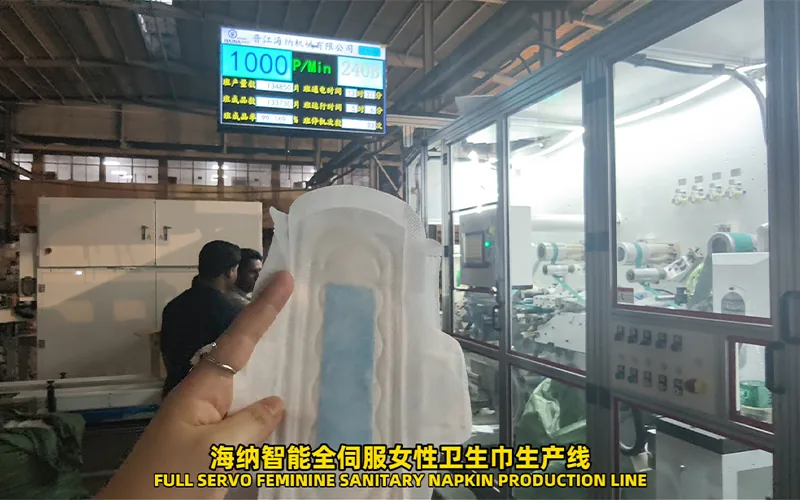
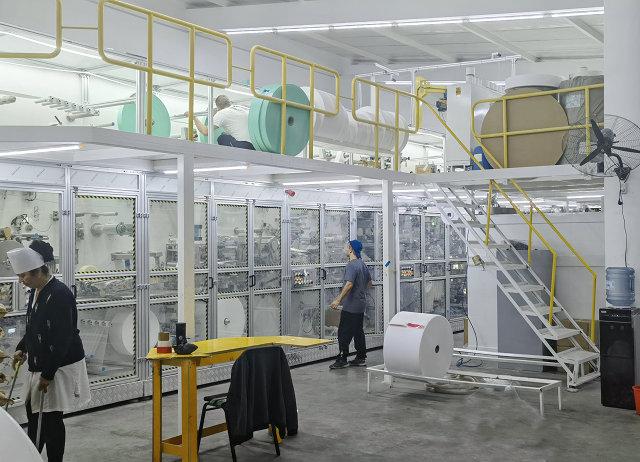
A sanitary pad sample held in front of the production line.
Receive the sample before reviewing the product
On arrival, first compare the physical delivery with the dispatch information. Record visible package condition, closure observations where applicable, the contents received and the labels present. The person acknowledging receipt should distinguish a delivery acknowledgement from a product approval. A courier signature normally does not answer whether the buyer's trial evidence requirements were met.
Document discrepancies before the set is divided or used. Missing labels, an unexpected quantity or a mismatch between the contents and the stated child set can affect the interpretation of later results. Preserve the received identity and contact the responsible sender through the agreed project route. A quick relabelling based on appearance can conceal the original problem rather than resolve it.
Assess whether observed handling or storage differences are relevant to the intended examination. The responsible quality team should define the response using the approved method. This guide does not invent transport limits or prescribe a conditioning interval. If the sample can still answer a narrower question, record that narrowed scope; if it cannot, identify the evidence needed for a replacement review.
Preserve the history created by examination
Reviewing a specimen can change it. Opening, separating layers, marking an area or using it in a test may make it unsuitable for another examination. Link the examination record to the individual specimen or identifiable subset, and record the relevant treatment. A previously examined sample should not later be presented as untouched reference material.
Agree how reviewers will distinguish their working specimens from retained references. If several departments need the same set, coordinate the order through the approved review plan instead of allowing the first reviewer to consume the evidence needed by another. When the plan changes, update the allocation and disclose the effect on the remaining review.
Photos and written findings should carry the specimen identity they describe. A report containing close-up images from different pieces can easily become ambiguous when filenames are renamed or pictures are copied into a presentation. Keep the source record available so the final decision can be traced to the examined item, not merely to a visually similar photograph.
Useful distinction
Record “received,” “examined” and “approved” as different events. Each has a different owner and supports a different conclusion.
Resolve missing links without inventing a history
When a gap appears, state the unknown fact precisely. Is the uncertainty about which trial produced the sample, which child set was dispatched, what preparation occurred or which specimen a test report describes? These gaps require different evidence. Asking for “more information” without naming the missing link often produces another general assurance instead of a usable record.
Accept a correction only when its basis can be explained and retained. A dispatch record may resolve a transcription error; a contemporaneous labelled photograph may clarify which package was prepared. A later recollection may be useful context but should not be represented as an original observation. Keep the correction visible, including who supplied it and which uncertainty it resolves.
If identity cannot be recovered, do not assign the most convenient label to the sample. Determine whether a new set can be collected under an agreed plan or whether the review must remain limited. The cost of another sample transfer may be inconvenient, but an approval attached to an unidentifiable product creates a different and more persistent uncertainty.
Preserve the connection between collected samples and the trial configuration.
Bind approval to the evidence actually received
The approval should identify the product revision, reviewed sample set, examination references and characteristics covered. It should also state material qualifications or unresolved questions. Avoid broad language such as “machine approved” when the evidence concerns only selected product samples. Equipment acceptance, product approval and receipt of a shipment have different scopes.
Return the disposition to the sender with the same references used throughout the transfer. If a particular specimen prompted a question, identify that specimen and the associated observation so the supplier can investigate the matching trial record. A new photograph without its sample reference may restart the ambiguity that the custody process was designed to prevent.
Archive the sample pack as one linked evidence set: collection purpose, trial references, allocation, transfers, receipt, examination and disposition. Preserve retention or disposal instructions as determined by the responsible project procedure. The aim is that a later reviewer can reconstruct the approval's basis without assuming that every product sharing the same appearance was part of the accepted set.
Trial-sample custody questions
Does a sealed package prove that the samples represent the complete trial?
No. A closure record concerns the identified package. Representation depends on the collection purpose and sampling plan. The sender must describe how the enclosed specimens relate to the production event.
Can the buyer approve samples when one transfer entry is missing?
The responsible reviewer must assess what that gap prevents them from establishing. Some missing information may be recoverable from identified records; other gaps may limit or prevent the intended conclusion. Record the decision and its basis explicitly.
Should retained samples and shipped samples share an identifier?
They can share a parent-set reference, but the separate physical portions need distinguishable child identities. Otherwise a later report may not show whether a finding belongs to the supplier's retained specimen or the buyer's received specimen.
Is approval of delivered trial samples equivalent to equipment acceptance?
Only the agreed approval scope determines the conclusion. A sample review may cover particular product characteristics while leaving equipment functions, sustained operation or other contractual checks outside its evidence boundary.
Conclusion
Make the specimen's journey part of the approval evidence. An identifiable trial, transparent selection, controlled set division and documented receipt allow the buyer to connect findings to the product actually reviewed. Preserve examination history and expose missing links before signing the disposition. The resulting custody pack supports a precise sample decision while keeping broader equipment claims outside the evidence it can provide.