Three suppliers may use the field name “job” for three different things: a production order, a printer template and an inspection reference. Before connecting their equipment, a sanitary napkin project needs an agreed dictionary that explains each meaning and the relationship between them. Assign who originates a value, who transforms it, which event activates it and what a receiving device's confirmation means. The practical deliverable is a field ownership sheet with testable handover rules. It lets the buyer review an interface proposal without assuming a particular network protocol, controller or factory software is already included in the equipment supply.
Resolve conflicting field meanings first
Begin with the proposed interfaces from each participating supplier. For every field crossing a supply boundary, ask what object it identifies, where that object is maintained and whether its identifier can be reused. A production order may select several packing operations, while a printer template may be reused for several orders. Treating those references as synonyms leaves the receiving party unable to interpret a change reliably.
In an illustrative design review, the main-line supplier says “job accepted” when an order instruction is received. The coder supplier uses the same phrase for a selected template. Both statements can be accurate while confirming different events. The interface team should record their meanings separately and define the additional evidence needed to associate the order with the intended template. Merely renaming both signals “ready” would conceal the disagreement.
Keep the field dictionary independent of the eventual transfer method. Manual entry, a file exchange or an agreed device connection still needs defined source and destination meanings. The buyer approves the packaging information; the responsible suppliers describe the references their equipment can provide. Physical print inspection remains a separate acceptance subject. This guide concentrates on the semantic handover between participants and the evidence that each transfer fulfills its agreed meaning.
Name an authority for every field
List only the fields relevant to the approved project. Possible examples include the product reference, packaging artwork revision, production lot reference and an approved date representation. These examples are not a declaration of what regulations require on any particular product. The authorized packaging specification determines which information belongs on the pack.
For each field, identify the source of truth and the person or system permitted to change it. The source might be a controlled manual instruction or a defined software record, depending on the actual installation. A manually entered value still needs an approved source and a checking responsibility. Automation changes the transfer method; it does not remove the need for ownership.
Record how the source is identified during a review. “From production” is too vague when several departments and suppliers use that phrase differently. A document reference, controlled job identifier or other agreed record should allow the value on the pack to be traced back to an authorization. If that link cannot be described, the interface definition is incomplete before any technical connection is considered.
Define information responsibilities around the supplied line.
Make field transformations explicit
A value can change meaning between the approved record and the printed mark. A field may be shortened, combined with another entry, reformatted or represented by a device-specific template. Document the transformation and its owner instead of assuming that identical field names guarantee identical content. Where no transformation is intended, make that expectation equally clear.
Ask which party controls the template that arranges the information. Separate template identity from the values inserted into it. A correct lot reference in the wrong template can produce an unsuitable mark, while the correct template containing an outdated value creates another kind of error. Both identities should be reviewable in the project's evidence.
Clarify handling of an unrecognized or missing entry without inventing a technical implementation. The suppliers should describe the proposed behavior for review, including the responsible decision-maker and the record produced. Do not accept an undocumented default simply because the device permits production to continue. The buyer should approve the handling policy within the agreed equipment and quality procedures.
Map the events that activate new information
Ownership alone does not say when a new value applies. A job change, artwork revision, approved lot transition or restart may create a different information boundary. Identify the event that requests the change and the event that authorizes it to become active. If these occur at different points in the process, the record must distinguish them.
Discuss material and product already between those points. The appropriate disposition depends on the actual line arrangement and the buyer's procedures; it cannot be guessed from a diagram. Ask how the project will identify the affected interval and how responsibility for its review is assigned. A proposed solution should describe the evidence available, not merely promise that “the system handles it.”
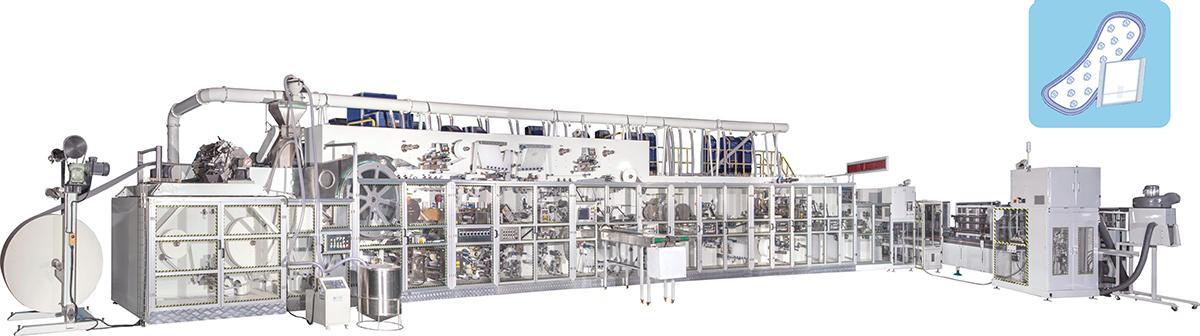
For an inquiry covering HAINA sanitary napkin machines and their project interfaces, provide the intended information-change scenarios with the packaging requirements. Ask which interfaces are included in the supply and which must be coordinated with an external coder or inspection supplier. No integration capability should be inferred solely from a product-family page.
Build the field ownership sheet
Each row should represent an approved information field or template identity, not an entire device. This illustrative sheet shows the questions to resolve. The entries are proposed responsibility descriptions, not a statement about an installed system.
Illustrative field
Approval/source owner
Transfer or transformation question
Activation evidence
Exception owner to name
Product reference
Buyer's controlled product record
Is the destination value copied or translated into another reference?
Approved job and active destination reference agree
Product information authority
Artwork or print-template revision
Authorized packaging revision record
Who selects and maintains the corresponding device template?
Template identity is included in the witnessed change record
Packaging approval owner
Production lot reference
Named production record
Where is the value entered, checked and transferred?
Source authorization can be linked to the marked sample
Production traceability owner
Approved date representation
Buyer's applicable packaging instruction
Which party owns formatting and any permitted conversion?
Expected representation matches the authorized sample
Packaging information approver
Inspection reference
Approved inspection setup
How does its revision stay aligned with the active print information?
Witnessed comparison uses the intended reference
Inspection method owner
Add concrete project document references when completing the sheet. A supplier's company name alone may not identify who can answer a field question during commissioning. Name the responsible role and the route for resolving a disagreement about the approved value.
Separate data ownership from physical equipment scope.
Interpret what each confirmation actually proves
A confirmation can mean different things at different points. It might establish that a command was received, that a template was selected, that a value became active or that a marked sample was examined. These statements are not interchangeable. Ask each supplier to define the meaning of its proposed confirmation in language that the buyer's acceptance team can test.
Trace an example through the complete agreed path. What proves the initial authorization? What proves the destination received the intended revision? What connects that revision to a physical pack? Where applicable, what establishes that the inspection device used the corresponding approved reference? If the evidence stops at receipt of a message, the project should not report it as confirmation of correct finished packs.
A useful review question
“What specific statement may the buyer make when this confirmation appears, and what remains unproven?”
Retain the answer in the interface documentation. It will help operators and investigators interpret records later without reconstructing the original supplier discussions. It also prevents a broad word such as “ready” or “complete” from acquiring more meaning than the supplier intended.
Pay particular attention to a change in context that leaves the displayed characters unchanged. Two authorized jobs might legitimately use the same visible field value, yet require separate approval records. A screen that still shows the expected text cannot establish which job supplied it. Ask how the proposed records distinguish the active job, template revision and applicable authorization without demanding an unverified technical feature. The acceptance evidence should follow the agreed identities, even where the printed representation happens to look identical.
This is also why an isolated screenshot is a limited handover record. Keep its context and its relationship to the witnessed event, so a later reviewer can tell which approval it supports.
Witness the agreed exception scenarios
The acceptance plan should include relevant deviations from the normal information sequence. Examples to discuss with the responsible suppliers include a missing approved field, an unrecognized template revision or a requested change that has not received its defined confirmation. These are planning questions, not instructions to bypass equipment safeguards or introduce uncontrolled data into production.
For each agreed scenario, state the expected indication, the responsible response and the evidence required to resume the approved sequence. Conduct witnessing under an authorized test procedure with identified materials and samples. The buyer should be able to see which part of the information path was challenged and which conclusion the result supports.
Keep an exception log that distinguishes information errors from print appearance issues. If the mark is readable but its authorization cannot be traced, the open point belongs to the information path. If the content is authorized but the print fails the applicable examination, another investigation is needed. Some events may involve both, but recording both prevents one supplier's successful check from being mistaken for complete closure.
Close exceptions with the same field and revision references used in the initial test. An informal demonstration using a different job may not resolve the original acceptance question.
Hand over a controlled field dictionary
At handover, collect the approved field definitions, source owners, template references, change events and confirmation meanings into one controlled dictionary. Link it to the suppliers' relevant interface documents and the witnessed results. The dictionary should describe the delivered arrangement rather than a proposed feature that was removed during the project.
Include a revision process. Adding a field or changing its formatting may affect more than the coder; an inspection reference, operating instruction or sample-approval record could also need review. State who assesses those consequences and how the affected parties receive the approved revision. A document that nobody owns will quickly stop describing the installation.
The handover is complete when a new team member can trace an approved field from its source to the finished-pack evidence and identify who must answer an exception. That is a more practical acceptance test for documentation than the size of the interface binder.
A finished pad shown against the production-line background.
Packing-code interface questions
Does successful character recognition prove that the approved lot was printed?
It proves only the examination defined for that device and setup. Confirming authorization also requires a link to the approved source value and the relevant job or transition record. Those responsibilities should be stated separately.
Is a field ownership sheet useful without factory software integration?
Yes. Manual entry still requires an approved information source, a change authority and a checking method. The sheet should describe the actual arrangement, including human responsibilities, rather than imply that software is mandatory.
Who should determine the required date format?
The buyer's authorized packaging requirements determine the permitted representation. Suppliers should explain how their proposed equipment implements that instruction. A default printer format should not be treated as regulatory or product approval.
Can one supplier sign for every external device?
Only within an explicitly agreed responsibility boundary. Identify who verifies each information handoff and who approves the complete result. Do not infer comprehensive responsibility from the supplier whose screen happens to display the final message.
Conclusion
Approve the information path as deliberately as the printed appearance. Name the source authority, document transformations, define activation events and specify what each confirmation proves. The finished ownership sheet and field dictionary should let the buyer trace a marked pack back to an approved instruction and direct unresolved questions to the correct party. That evidence is the useful result of interface coordination.