Adult & Baby Diaper Machine,Sanitary Napkins Production Line Blog
Build a risk based maintenance plan for a pull up baby diaper machine covering web handling, tooling, utilities, controls, planned stops, and restart proof.
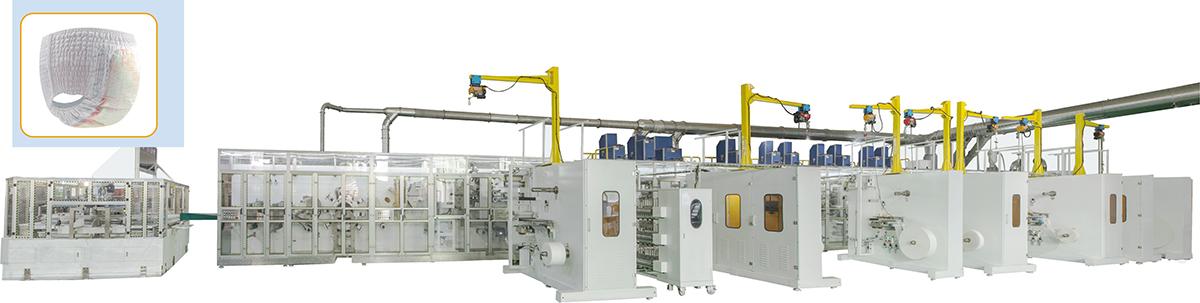
Maintenance for a pull up baby diaper machine at high production speed should protect alignment, tension, cutting, bonding, vacuum transfer, and controls before defects force a stop. The practical method is risk based: define critical conditions, assign checks by shift and interval, trend measurements, and reserve planned windows for work that cannot be done safely while running. Production speed should never replace evidence of stable output. Buyers and plant teams should connect maintenance records to defect and downtime data, verify restart quality after intervention, and adjust intervals according to actual wear, materials, environment, and operating load.
Rank Maintenance Risk by Product Impact
List the machine functions that can create safety exposure, widespread product defects, long recovery, or consequential damage. Typical groups include unwinds and splices, tension control, web guiding, core formation, SAP and pulp dosing, elastic application, bonding, cutting, vacuum transfer, folding, inspection, discharge, and packaging interfaces. For each function, describe the failure effect and the earliest observable condition.
Criticality should determine attention, but it should not become a permanent label that nobody reviews. A low-cost bearing can be highly critical if its failure damages a cutter or blocks production for a long replacement. A sophisticated module may be less urgent when it has redundancy and an accessible spare. Include part lead time, detection ability, work difficulty, and quality containment in the ranking.
Establish a baseline after installation or major overhaul. Record alignment, runout, vibration where applicable, tension response, vacuum, air condition, tool setting, sensor position, temperatures, current signatures if supported, and representative product measurements. Future readings become useful when they are taken at the same location, load, speed condition, instrument, and method.
Maintenance rule: Never extend an interval only because no failure occurred. Use condition history, wear measurement, product trend, and the consequence of missing deterioration.
Risk ranking connects machine condition with product quality and recovery time.
Build Shift Condition Checks
Operators see the machine under load and can detect early changes that a stopped inspection misses. A shift check should be short, specific, and possible from safe positions. Include abnormal sound, vibration, heat, odor, dust buildup, web tracking, splice behavior, tension movement, adhesive pattern, vacuum pickup, compressed-air leakage, cutter appearance, product registration, and recurring alarms.
A checkbox alone provides weak information. Define what normal looks like, where to observe it, and what response is required. Some conditions permit continued operation with monitoring; others require quality containment, speed reduction, or a controlled stop. Escalation rules should identify who makes the decision and how affected product is traced.
Keep cleaning and inspection connected. Removing dust, fibers, adhesive strings, and scraps can reveal loose fasteners, damaged cables, air leaks, worn surfaces, or misaligned sensors. However, cleaning must follow the plant's isolation and material procedures. Compressed air should not simply move contamination into bearings, cabinets, optics, or the product path.
Maintain Web Handling and Drive Accuracy
High-speed web stability depends on roll condition, shaft or chuck integrity, brake response, rollers, bearings, alignment, tension feedback, guide sensors, actuators, and servo coordination. Inspect surfaces for buildup and damage, verify free rotation where designed, and check that locking devices hold securely. A contaminated or damaged roller can create periodic tracking or tension errors that appear as registration defects downstream.
Guide sensors need clean optics and a reliable material edge or printed reference. Verify bracket rigidity, sensor range, actuator travel, and the centered neutral position. If the guide frequently reaches its travel limit, investigate incoming roll alignment, upstream geometry, or threading rather than repeatedly resetting the center. Trend correction demand where the control provides it.
Drive maintenance should follow the manufacturer's lubrication, coupling, belt, gearbox, motor, and servo instructions. Check fastening and alignment after intervention. Do not treat servo tuning as routine compensation for wear, looseness, web slip, or changing inertia. Back up approved parameters and record every authorized change.
Stable web movement requires clean rollers, sound bearings, aligned guides, and controlled drives.
Control Cutting and Bonding Tool Condition
Cutting systems can deteriorate through edge wear, contamination, runout, bearing condition, pressure errors, timing changes, or incorrect setup. Define how cut quality is inspected and how tooling condition is measured before a damaged edge creates fragments or pulls material. Store cutters with protection, identification, and a history of service and sharpening where applicable.
Bonding modules require checks suited to their process. Adhesive systems need clean application, verified temperature zones, hoses and cables in good condition, controlled pressure or delivery, nozzle alignment, and safe handling. Thermal or ultrasonic joining systems need clean patterned surfaces, correct engagement, sound mounting, controlled energy inputs, cooling where required, and product tests that detect weak or damaged joints.
When a tool is replaced, maintenance is not complete at mechanical installation. Verify guards, fasteners, clearances, phase, utilities, recipe, no-load behavior where appropriate, and identified trial products. Quality should release the output before normal production resumes. Retain the setup record so future teams know which tool, position, and method were approved.
Protect Vacuum Air and Dust Systems
Vacuum carries and forms lightweight materials throughout a diaper line. Filters, ducts, holes, seals, valves, blowers, transfer drums, and timing all influence pickup. A declining reading may reflect a leak, blockage, worn seal, open branch, filter loading, or process change. Measure at defined points and conditions instead of relying only on one central indication.
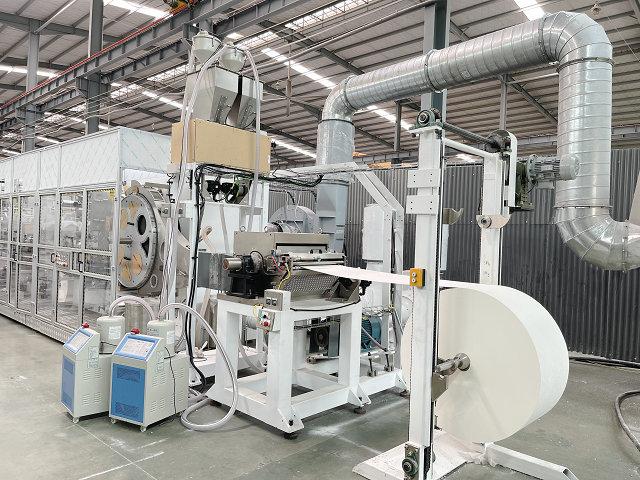
Dust extraction affects product cleanliness and equipment life. Inspect source capture, duct integrity, branch balance, separators, filters, discharge, grounding where required, and access for safe cleaning. Dust on optics and electrical cooling paths can create intermittent stops or heat stress. Poor extraction may also disturb light webs if airflow is not balanced with the forming process.
Compressed air needs pressure, flow, dryness, filtration, drainage, and leak control. Check cylinders, valves, fittings, splicing devices, and local regulators. A static pressure reading can appear normal while demand causes a drop, so investigate faults under the operating condition in which they occur.
Vacuum, dust extraction, and compressed air should be checked at defined loads and locations.
Maintain Sensors Servos and Control Cabinets
Control reliability begins with a clean environment, correct cooling, secure connections, protected cables, verified grounding, and controlled software. Inspect cabinet filters and heat exchangers according to condition. Keep doors closed during production and correct failed seals or fans. Fiber and dust inside a cabinet can reduce cooling and make intermittent electrical faults harder to diagnose.
Sensors should be inspected for cleanliness, mounting, cable strain, target position, and teach settings. Replacing a sensor with a similar part does not prove equivalent response. Record the model, wiring, parameter, physical datum, and test result. Protect spare sensors and control components from moisture, static, contamination, and uncontrolled firmware or parameter changes.
Backups should include PLC, HMI, drive, vision, recipe, and relevant network configurations in a version-controlled location. Test the restoration process without risking production. Access rights and change logs help distinguish a hardware fault from an undocumented parameter edit. HAINA project training can cover the supplied controls, but plant ownership of authorized backups and change management remains essential.
Set Frequencies with a Maintenance Matrix
Frequency layer
Typical purpose
Evidence captured
Trigger to revise
Each shift
Detect visible or audible change under load
Condition checks alarms defects and response
Repeated observation or rising defect pattern
Planned short stop
Clean inspect tighten and measure accessible points
Measured condition work completed and trial release
Wear near limit or task duration exceeds window
Longer planned stop
Service guarded or precision assemblies
Parts tools alignment settings and verification
Condition trend or production plan changes
Event based
Respond to collision jam overload defect or modification
Cause affected product repairs and restart approval
Every qualifying event requires review
Condition based
Act before a measured limit is exceeded
Comparable trend at controlled conditions
Rate of change or consequence increases
The initial schedule can use supplier guidance and engineering judgment, but plant history should refine it. Review overdue work, repeated corrective tasks, parts consumption, unplanned downtime, and defects by machine zone. Shortening every interval creates unnecessary stops; extending every interval transfers cost into failures. The objective is timely, verified work.
Run a Controlled Planned Stop
Scope: select work from risk, condition, due tasks, and known defects; define parts, labor, tools, and expected duration.
Stop and secure: hand over the machine condition and isolate energy under the plant safety process.
Execute and inspect: record findings before cleaning or replacement removes evidence of the original condition.
Restore: remove tools, confirm fasteners and guards, reconnect utilities, check settings, and close work records.
Verify: run a controlled restart, measure product, check alarms and trends, and obtain quality release.
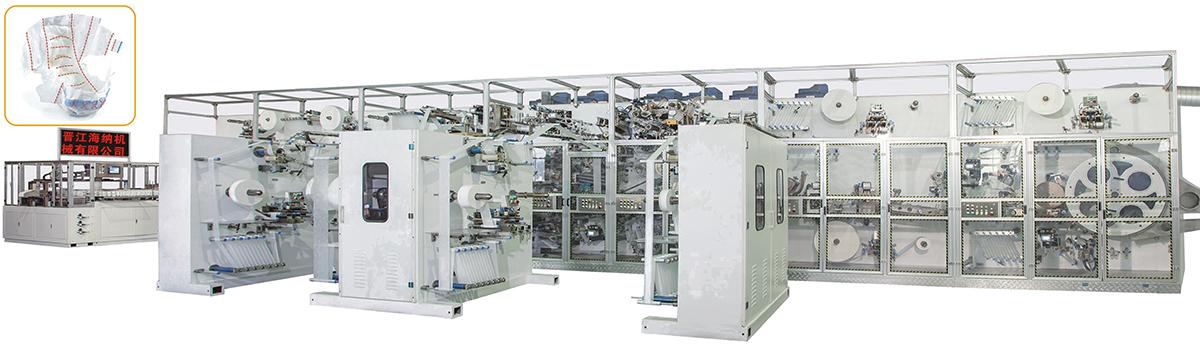
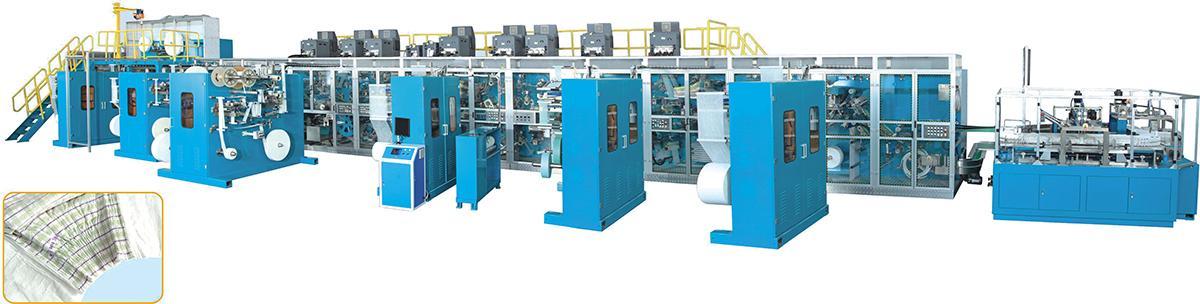
For equipment selection and service planning, review the maintenance access and documentation of an automatic baby diaper manufacturing machine against the intended materials and staffing model. Ask for task lists, lubrication points, recommended spares, drawings, backup procedures, and training scope before shipment.
After the stop, compare expected and actual time, findings, added work, parts, restart waste, and recurrence. This closes the loop between planning and operating evidence. A task that repeatedly finds no deterioration may need another method or interval, while a fault discovered between services demands earlier detection.
Use maintenance key points in the shift review without turning the meeting into a list of completed jobs. Highlight condition readings outside their normal band, temporary repairs, deferred safety or quality work, recurring parts, and tasks that changed machine settings. The next shift should know what was touched, which products were verified, and what observation still requires escalation.
A planned stop is complete only after controlled restoration and product release.
High Speed Maintenance Questions
Should maintenance intervals be based only on running hours?
No. Combine time or cycles with condition, material abrasiveness, environment, failure consequence, event history, and measurable wear.
Can operators perform maintenance?
Operators can perform authorized checks and basic care when trained, but guarded, energized, precision, or specialist work needs defined competent personnel and safe isolation.
What proves that maintenance was effective?
Record the original condition, completed work, restored settings, machine trial, product measurements, alarms, and quality release. A closed work order alone is insufficient.
How should critical spares be selected?
Use failure consequence, detection, lead time, replacement time, commonality, storage needs, and whether setup or supplier support is required.
Conclusion
High-speed maintenance succeeds when the plant observes deterioration early and completes planned work with evidence. Rank critical functions, establish baselines, use concise shift checks, protect web handling and precision tooling, and maintain supporting utilities and controls. A frequency matrix should evolve with condition and downtime data. Every intervention must end with restored settings, controlled startup, measured products, and quality release.