Adult & Baby Diaper Machine,Sanitary Napkins Production Line Blog
Compare heat sealing and ultrasonic welding on a pull up baby diaper machine by materials, joint function, process window, maintenance, and FAT evidence.
Heat sealing and ultrasonic welding are not interchangeable labels on a pull up baby diaper machine. Heat sealing joins compatible layers through controlled temperature, pressure, and dwell, while ultrasonic welding converts high-frequency mechanical vibration into localized heat at the joint. The suitable method depends on material composition, laminate thickness, bond geometry, line pitch, appearance, ventilation, maintenance capability, and the failure mode the product can tolerate. Buyers should compare the joining window with their approved materials and verify bond strength, damage, consistency, restart behavior, and tool wear under defined FAT conditions.
Locate the Joint and Define Its Function
Start by marking every intended bond on the finished pull-up product. A side seam, elastic laminate, waistband assembly, material splice, or secondary attachment does not carry the same load and may not use the same joining principle. Define whether the joint is structural, peelable, decorative, sealing, or only needed to maintain position during conversion. Then define how consumers open, wear, stretch, and remove the product.
The requirement must include joint width, location, appearance, softness, breathability, opening behavior, and allowed damage around the bond. A high peak force is not automatically better. A seam that is too rigid can reduce comfort or tear the surrounding nonwoven instead of opening at the intended location. Quality teams should approve both measurable criteria and representative physical samples.
Draw the layer stack at the joining point. Record each substrate, basis weight or thickness, coating, elastic content, print, adhesive, fold, overlap, and expected variation. The energy has to reach the intended interface without burning, glazing, cutting, shrinking, or marking adjacent material. Supplier trials are meaningful only when this stack matches the production article.
The joint location and complete material stack must be defined before selecting the joining method.
Understand the Heat Sealing Process Window
Heat sealing uses heated tooling and pressure to soften or activate compatible thermoplastic surfaces. Its important variables include actual tool temperature, pressure distribution, contact time, surface pattern, layer thickness, cooling, release condition, and machine timing. The displayed temperature is only a controller value; verification should consider sensor position, tool-face temperature, warm-up stability, and variation across the working width.
A narrow thermal window creates operational risk. Too little energy can leave weak or discontinuous bonds. Too much can harden the seam, distort elastic, thin a film, create holes, transfer contamination to the tool, or mark the product. Acceleration and stopping can change dwell or heat accumulation, so qualification should include startup and controlled slow conditions instead of only steady running.
Heat sealing may be attractive where materials respond consistently to temperature and the desired pattern can be maintained with accessible tooling. Buyers should review warm-up time, guarding against hot surfaces, temperature-zone control, ventilation, cleaning method, and response to an extended stop. The process also needs a defined release action if material remains against a hot tool.
Understand the Ultrasonic Welding Process Window
Ultrasonic welding applies mechanical vibration through a sonotrode against an anvil or patterned roll. Frictional and intermolecular heating occurs locally where the material and joint geometry concentrate energy. Key variables include amplitude, force, engagement or contact condition, energy delivery, gap, pattern, alignment, material support, tool condition, and vibration behavior of the mounting structure.
The method can localize energy and avoid continuous hot tooling, but it still requires a compatible layer stack and a stable mechanical system. Too little energy can create incomplete welds. Excess energy or poor alignment can cut through the web, create hard edges, mark the surface, generate particles, or shorten tool life. Variation in material thickness, folds, elastic strands, and contamination changes how energy enters the joint.
Frequency and power ratings alone do not establish production capability. Ask how the generator, converter, booster, sonotrode, anvil, mounting, cooling, controls, and alarm logic work as a system. Verify how recipes are protected, how tools are aligned, and how operators recognize overloads or a deteriorating pattern before product quality fails.
Joining quality depends on the complete energy path, alignment, support, and material condition.
Compare the Two Joining Methods
Decision factor
Heat sealing review
Ultrasonic welding review
Buyer evidence
Energy delivery
Temperature pressure contact and cooling
Amplitude force alignment pattern and support
Approved parameter window with boundary trials
Material response
Thermal softening shrinkage and sticking
Vibration response thickness and energy concentration
Trials using approved production layers
Stop and restart
Heat accumulation and material release
Trigger alignment and overload response
Samples before during and after interruption
Tool condition
Surface contamination wear and temperature uniformity
Horn and anvil pattern wear or damage
Inspection criteria and reference samples
Work environment
Hot surfaces warm-up and ventilation
Noise vibration cooling and electrical controls
Risk review and maintenance access check
The decision should not be made by assigning a generic winner. Some products may use different methods at different joints, and a proven material construction can change the balance. Compare samples from the real process, not hand-made laboratory pieces that do not reproduce web tension, folds, pitch, and line dynamics.
Match Materials and Joint Geometry
Create a test matrix that changes one meaningful factor at a time: material supplier, basis weight, layer count, overlap, elastic location, seam width, and pattern. Include approved extremes rather than only nominal samples. If recycled content, soft additives, treatments, printing, or breathable structures are planned, verify their influence instead of assuming the same settings will transfer.
Joint geometry controls stress. Pattern area, point shape, spacing, edge radius, and seam direction influence energy concentration and tear behavior. A visually attractive narrow pattern may have little process margin; a broad pattern may become too stiff. Test tensile, peel, opening, stretch, and leakage-related behavior as appropriate to the product function, while also checking holes and damage around the seam.
Condition materials before a trial using the plant's controlled method, and record roll identification and environment. Moisture, storage, winding tension, and age can affect handling and bonding. A successful trial with unidentified sample rolls is weak evidence for a purchasing decision.
Material trial evidence list
Controlled product drawing and joint cross-section.
Approved material codes, roll IDs, and supplier specifications.
Parameter settings and actual tool or system condition.
Samples from startup, stable running, interruption, and restart.
Measurement results plus visual and tactile inspection.
Rejected examples showing under-bond and over-energy limits.
Monitor Bond Quality During Production
Production control needs leading indicators and product results. For heat sealing, monitor relevant temperatures, pressure condition, timing, tool cleanliness, and alarms. For ultrasonic systems, monitor recipe, energy-related outputs provided by the system, overloads, force or gap condition where available, alignment, and cooling. Trends are more useful than isolated values when they are linked to product samples.
Define the sampling plan by risk. Measurements should cover the joint along its length and across machine lanes or sides. Include visual inspection for holes, incomplete areas, burnishing, contamination, hard edges, tears, and position. Keep approved and limit samples at the line so operators share the same judgment.
An online presence sensor cannot prove full bond performance. Vision can detect location, pattern presence, or obvious damage if designed for that purpose, but destructive or functional tests may still be required. Define which faults trigger rejection, line stop, containment, or increased sampling.
Process trends should be connected to identified samples and clear product release rules.
Plan Tooling and Maintenance Controls
Joining tools require controlled handling. Establish inspection intervals based on actual condition and performance instead of waiting for obvious failures. For thermal tooling, review surface damage, coatings, contamination, heaters, sensors, connections, runout, pressure, and uniformity. For ultrasonic tooling, inspect contact patterns, horn and anvil surfaces, fasteners, alignment, bearings or support elements, cabling, cooling, and mounting integrity.
Cleaning methods must not scratch a sealing face or change a patterned tool. Specify approved tools and chemicals, safe temperature or isolation conditions, and acceptance after cleaning. Maintenance records should link the installed tool identity to hours, product types, observations, repairs, and sample performance.
Spare strategy depends on lead time and failure consequence. Critical heaters, sensors, generators, converters, cables, or qualified tooling may deserve a defined spare, but the list should follow the selected architecture. Confirm storage protection and whether replacement components require tuning, pairing, software setup, or supplier support.
Build a Joining Technology FAT
A useful FAT begins with approved materials and a signed test method. Specify which joints are tested, the sample method, instrument, conditioning, acceptance rule, and treatment of startup waste. Run nominal settings first, then demonstrate the agreed process window without damaging the product. Include a normal stop, restart, speed transition, and material splice if these can affect the joint.
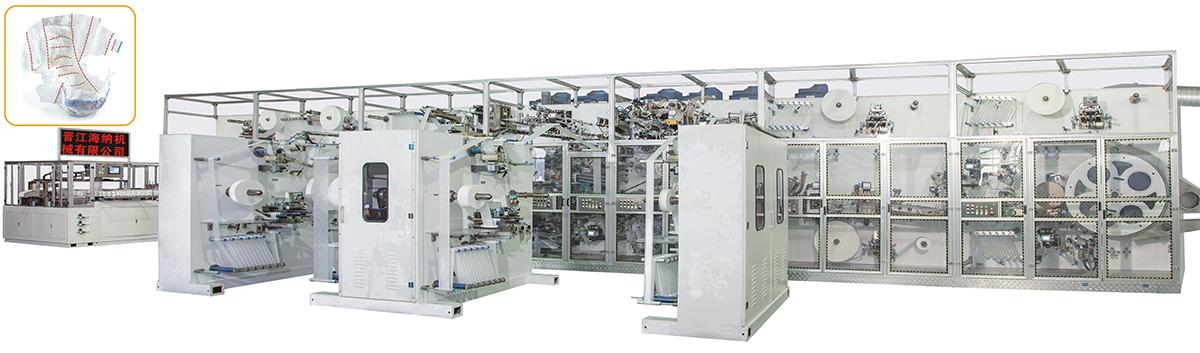
HAINA can review joining modules on a pull up baby diaper machine configuration against the buyer's product drawing and material stack. The final contract should identify the selected method, included tooling, utilities, controls, spare scope, training, and test responsibilities.
At FAT, compare design speed, stable working speed, and the contractual acceptance condition carefully. Joining quality at a short demonstration peak does not prove sustained operation. Record the exact materials, recipe, duration, disturbances, accepted quantities, rejected quantities, stoppages, and retained samples. Open issues need an owner and closure evidence.
Also verify measurement-system repeatability before comparing trial results. The same joint can appear different when sample width, pull direction, conditioning, grip position, or test rate changes. Quality and supplier personnel should measure a shared sample set, resolve method differences, and retain the approved work instruction. This prevents a later site dispute in which the machine setting is blamed for variation created by the test method.
A joining FAT should prove the defined process window with production materials and traceable samples.
Joining Technology Questions
Is ultrasonic welding always faster than heat sealing?
No. Usable line performance depends on joint geometry, material response, pitch, controls, tooling, and required quality. Compare demonstrated stable conditions.
Can one joining recipe handle different nonwoven suppliers?
It should not be assumed. Thickness, composition, treatment, and variation can change the process window, so each approved material family needs verification.
What is the most important FAT sample?
No single sample is sufficient. Retain identified pieces from startup, stable running, a disturbance, restart, and the agreed boundary settings.
Can vision inspection replace seam strength tests?
Usually not. Vision may detect position or visible defects, while functional bond performance often requires a defined physical test and sampling plan.
Conclusion
Choose heat sealing or ultrasonic welding by beginning with the joint function and complete material stack. Establish a usable process window, examine how speed changes and stops affect it, and define product tests that reveal weak bonds and material damage. Tool condition, operator controls, maintenance, and spare support belong in the decision. A witnessed FAT with traceable materials and samples provides the evidence needed to approve the joining system.