Adult & Baby Diaper Machine,Sanitary Napkins Production Line Blog
Assess a fully automatic baby diaper machine with auto bagger using package range, interfaces, accepted bag output, labor, lifecycle cost, FAT, and site tests.
A fully automatic baby diaper machine with an auto bagger is worth considering when manual stacking and bag loading limit accepted output, create count variation, require excessive handling, or cannot follow the planned product mix. Buyers should treat the converter and bagger as one controlled system and define stack count, compression, bag range, transfer logic, reject handling, replenishment, and stop recovery before comparing price. The investment case should use accepted sealed bags, not main-machine design speed, and include integration, packaging materials, labor tasks, utilities, maintenance, changeovers, and commissioning evidence.
Identify the Real Packing Constraint
Measure the present or planned downstream process before selecting equipment. Follow diapers from final folding through counting, stack formation, compression, transfer, bag opening, loading, sealing, coding, inspection, case packing, and pallet movement. Record accepted bags, waiting, blocked discharge, count errors, damaged products, seal defects, film replenishment, and the labor required in each operating state.
A main line may stop because an operator cannot remove stacks, because a bag is not ready, because the sealer waits for temperature recovery, or because cases are not cleared. These are different constraints. An auto bagger addresses only the functions inside its scope, so define whether counting, stacking, compression, loading, sealing, coding, rejection, and case handling are included.
Use a reason-coded baseline for normal production, roll changes, size changes, meal breaks, cleaning, and faults. A short observation during an easy product run can overstate automation value. Include small and large packages, different sizes, and materials that represent the launch plan.
The investment starts with measured flow from the converter to accepted sealed bags.
Freeze the Product and Package Matrix
Create one matrix that connects diaper size, finished fold dimensions, thickness, orientation, stack count, compression, bag dimensions, bag material, seal design, code position, and case quantity. Identify the smallest and largest stable stacks and any promotional package. A bagger selected for one middle format may need substantial parts or may not support an extreme format.
Define product condition at the bagger inlet. The converter should deliver the correct fold, orientation, spacing, and count signal. Confirm how malformed, missing, double, or rejected products are prevented from entering a good stack. If a quality inspection system controls rejection upstream, specify tracking through the transfer.
Packaging drawings should include tolerances and functional checks. Bag width alone is insufficient. Review film thickness, coefficient of friction, print registration, gusset, opening behavior, static, seal layer, perforation, handle features, and winding. Use actual packaging rolls during the integration trial.
Package matrix review
Every diaper size is linked to approved fold, orientation, and stack count.
Minimum and maximum stack dimensions fit transfer and compression limits.
Bag construction, winding, print mark, seal layer, and roll data are defined.
Code content, location, readability, and reject response have an owner.
Change parts and recipes are listed for both diaper and package changes.
Case packing and pallet flow can remove output from the bagger reliably.
Define the Converter to Bagger Interface
Write an interface control document even when one supplier provides both machines. Identify mechanical location, product transfer, electrical power, communications, operating states, speed reference, stack request, ready signal, fault signal, emergency stop behavior, reject command, counter reconciliation, and restart sequence. Assign ownership for each signal and device.
Define normal, starved, blocked, manual, setup, fault, and emergency states. When the bagger is not ready, the converter may slow, stop, reject, or use accumulation depending on the agreed design. The response must protect product quality and avoid uncontrolled piles. After recovery, the system should not lose count or mix suspect stacks with accepted output.
Review physical access around the interface. Operators need space to remove jams, clean sensors, load film, take samples, and isolate energy. Guards and doors must open without colliding with conveyors or nearby equipment. Preserve a route for maintenance parts and do not use emergency space for bag storage.
A documented interface aligns product transfer, signals, access, and fault recovery.
Balance Rates Accumulation and Stop Logic
Keep speed terms separate. Design speed is an engineering capability under stated conditions. Operating speed is the set point used in a test or shift. Stable working speed is the demonstrated condition for the named product and materials. FAT acceptance value is the contracted pass condition. For an integrated investment, use accepted bags per period and record the main-line and bagger states that produced them.
Rate balance should include cycles, not only averages. A bagger may load and seal in batches while the converter supplies a continuous stream. Stack buffers or accumulation can absorb normal cycle variation, but they have finite capacity. Calculate the response to film change, bag replenishment, short seal fault, missing product, and downstream blockage.
Test controlled stop and restart. Verify what happens to diapers already between the final cutter and sealed bag, how counters reconcile, how suspect material is removed, and who releases production. Frequent micro-stops can reduce output even when neither machine records a long breakdown, so use synchronized timestamps and reason codes.
Capacity note: The integrated system is constrained by accepted product flow, event recovery, and downstream clearance. Adding peak rates from separate brochures does not establish complete-line capacity.
Review Bag Materials Sealing and Coding
Trial each planned film construction or representative approved range. Observe unwind, guiding, print-mark sensing, bag opening, static, slipping, wrinkling, tearing, and tracking. Record roll diameter, core, width, winding direction, splice method, and storage. A film that seals well can still fail to open or transfer consistently.
Define seal quality with the buyer's packaging specification. Check seal continuity, contamination, wrinkles, damage, appearance, and product entrapment using agreed methods. Temperature, pressure, and dwell settings are process inputs, not proof of an accepted package. Include warmup, normal running, short stops, and restart.
Coding and inspection require controlled content, location, contrast, trigger, and rejection. Confirm date or batch data transfer, user permissions, change approval, verification, and record retention. A correct code on a rejected or incorrectly counted bag is not a good product, so integrate checks rather than treating the coder as an isolated accessory.
Bag material behavior and seal quality must be verified with the planned package formats.
Calculate the Complete Investment Boundary
Include the bagger, product-transfer devices, stacker scope, compression, coder, inspection, reject handling, conveyors, electrical panels, communication, guards, spare parts, change parts, and software. Add installation, transport, lifting, utilities, commissioning materials, trial bags, travel, training, and production-support costs according to the actual project.
Factory changes may include floor space, access, power, compressed air, network, climate control for film where needed, bag-roll storage, case staging, and pallet routes. Faster packing can shift the constraint to case packing or warehousing. Include the people and handling equipment required after sealed bags leave the system.
Ongoing cost includes energy, air, sealing components, belts, sensors, cutters, filters, lubricants, cleaning, critical spares, preventive maintenance, software support, and specialist skills. Compare these with changed labor tasks, accepted output, internal rejects, rework, and downtime. Do not assume every displaced manual minute becomes a cash saving; state whether labor is removed, redeployed, or supports added production.
Compare Automation Options with Evidence
Option
Best fit condition
Evidence to request
Main tradeoff
Manual stack and bag loading
Low volume, simple formats, available trained labor
Task study, count accuracy, damage, and accepted bags
High handling and output variability
Automatic counting and stacking
Stack formation is unstable but bag loading remains manageable
Stack range, discharge logic, staffing, and trials
Manual transfer can remain the bottleneck
Integrated auto bagger
Volume and package repeatability justify connected loading and sealing
Package matrix, interface test, accepted output, and changeover
Higher integration and maintenance responsibility
Auto bagger with downstream handling
Case and pallet flow would otherwise restrict sealed-bag output
Complete flow simulation and site logistics plan
Wider factory scope and more interfaces
Score only technically suitable proposals. Mandatory package range, product quality, safety, and interface functions should be pass conditions rather than averaged against price. Compare assumptions, exclusions, buyer-supplied items, stable-run method, changeover, training, spares, and service with the same requirement document.
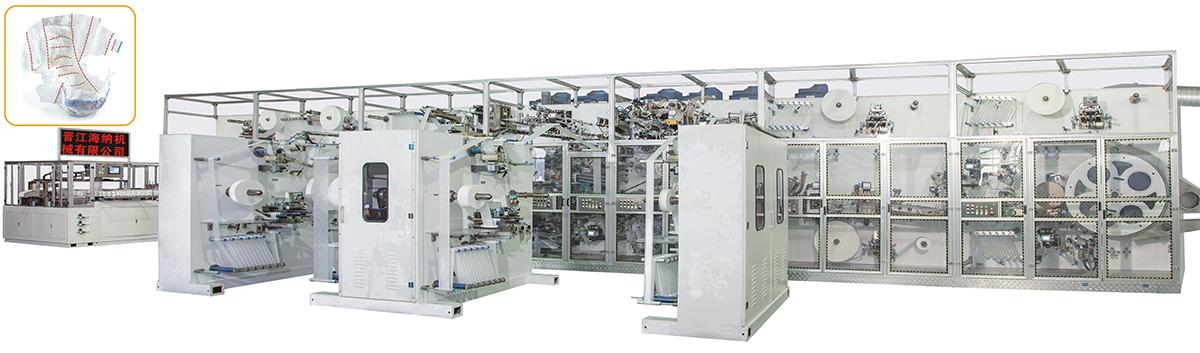
During configuration review, HAINA can discuss its fully automatic baby diaper machine against a buyer's stack and package matrix and define the proposed bagging boundary. Final investment approval should use buyer-verified demand, local costs, material trials, and accepted-output evidence.
Accept the Integrated System at FAT and Site
The FAT should include representative diaper sizes, stack counts, bag formats, and actual materials. Test normal running, product starvation, bagger blockage, film depletion, bad bag, code fault, count fault, rejection, emergency stop, and restart. Reconcile counters from the converter, stacker, bagger, and accepted output.
Record operating set point, stable periods, every stop, recovery, rejected product, rejected bags, samples, material changes, and accepted sealed bags. Run a representative package change and measure from last accepted old-format bag to first accepted new-format sequence. Identify pre-staged work and specialist labor.
Site acceptance confirms the final layout, utilities, environment, operator readiness, film supply, case flow, data connection, and performance after transport. Close every exception with owner, action, date, and retest evidence. Update recipes, drawings, manuals, spare lists, and training after modifications.
Acceptance should challenge the complete line from converted product to verified sealed bag.
Auto Bagger Investment FAQ
Does an auto bagger always reduce headcount?
No. It changes handling tasks, but staff may still be needed for film supply, case packing, quality, waste, fault recovery, cleaning, and maintenance.
Can a bagger run every package count with one setup?
Not automatically. Confirm stack dimensions, compression, bag range, recipes, tooling, change parts, and demonstrated quality for every planned format.
Should converter and bagger speeds be identical?
Their rate logic must be balanced, but batch cycles and accumulation matter. Verify accepted sealed output and response to normal interruptions instead of comparing display values only.
What is the most important FAT evidence?
Use synchronized run logs, counter reconciliation, accepted sealed bags, defects, stops, recovery, package changes, and signed results under named product and material conditions.
Conclusion
An auto bagger investment should solve a measured packaging constraint and be specified as part of one production system. Freeze the product and package matrix, control converter-to-bagger signals, balance cycles and accumulation, test film and sealing, and include all integration and lifecycle costs. Compare options using accepted sealed output and verified labor tasks, then challenge the interface at FAT and site. That evidence shows whether full integration supports the factory's actual product mix and operating plan.