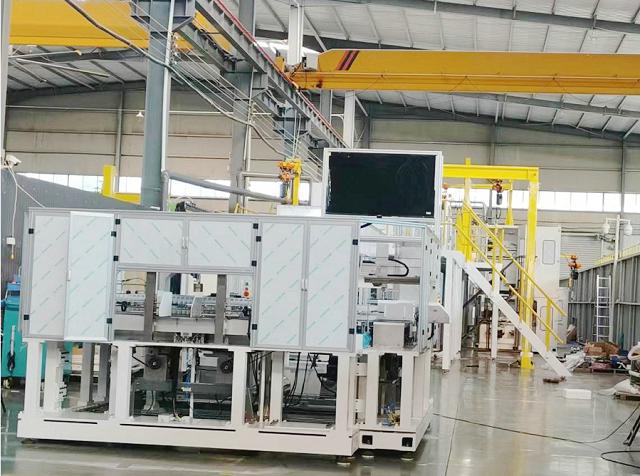
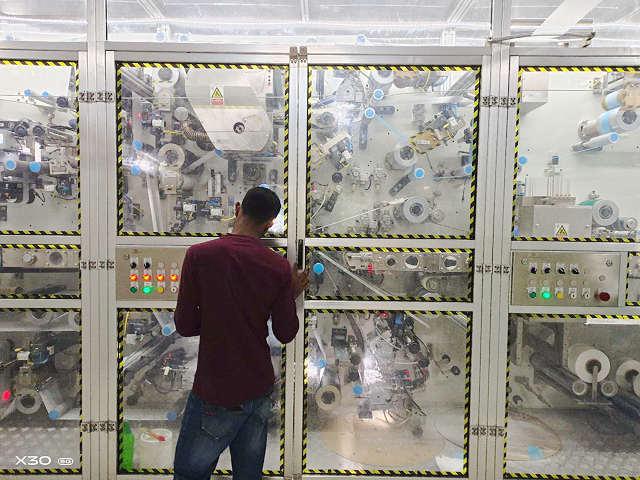
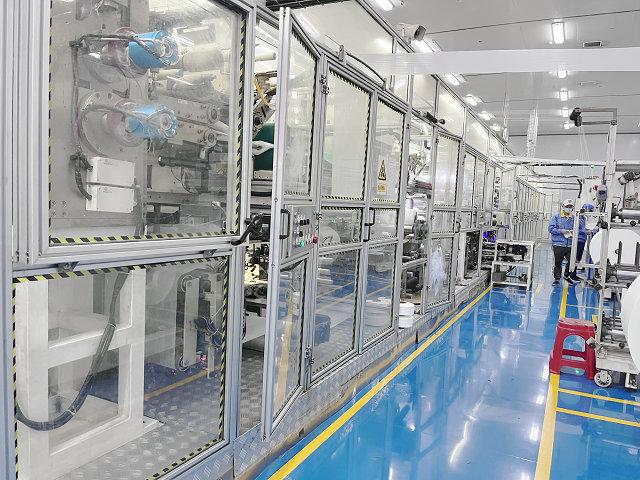
A reliable adult diaper line commissioning program begins with site readiness and ends only after a documented continuous trial run. The factory should verify layout, utilities, environmental conditions, approved raw materials, safety systems, operator availability, and acceptance methods before production testing starts. Installation then progresses through mechanical alignment, electrical checks, dry running, material threading, low-speed adjustment, staged speed increases, quality validation, and operator handover. Clear responsibilities and measurable pass conditions help distinguish equipment issues from utility, material, process, or packaging problems while giving both buyer and supplier an objective basis for final acceptance.
Set the Scope Before Installation
Commissioning is more than proving that motors can run. It must confirm that the installed line can safely make the agreed adult diaper specification with repeatable quality under the conditions defined in the purchase agreement. A useful commissioning document identifies the product sizes, absorbent core structure, elastic configuration, tape or fastening design, raw material grades, packaging interface, test duration, sampling method, and required production records.
The buyer and supplier should also agree on the meaning of key terms. Design speed, stable working speed, qualified output, machine efficiency, rejection rate, and total material waste are not interchangeable. The calculation period and exclusions must be written down. For example, planned size changes, roll replacement, material defects, utility interruptions, and downstream packaging stops may need separate reporting. Without a shared method, two teams can observe the same trial and reach different conclusions.
Freeze the trial product specification before technicians travel to the site. A late change to diaper width, elastic count, core weight, tape location, or waist structure may require tooling, web-path, software, or timing changes. Normal commissioning adjustments cannot always compensate for a product design that differs from the approved technical scope.
Assign Responsibilities Clearly
A responsibility matrix gives each party a named owner and completion deadline. It should cover the main line as well as glue systems, air supply, dust collection, inspection equipment, product conveying, packaging, laboratory testing, waste handling, and lifting support. The matrix below is a practical starting point, but every project should be adapted to its actual supply boundary.
| Work Item |
Buyer Responsibility |
Supplier Responsibility |
Completion Evidence |
| Building and layout |
Provide finished floor, access route, working space, lighting, and approved location. |
Provide layout, module dimensions, service clearances, and foundation requirements. |
Signed site readiness checklist with measurements. |
| Utilities |
Provide compliant power, grounding, compressed air, ventilation, and other agreed services. |
State capacity, quality, connection, and operating requirements. |
Measured values recorded under operating load. |
| Installation |
Provide unloading, lifting, local labor, permits, and site coordination as agreed. |
Guide positioning, assembly, alignment, connection, and machine setup. |
Installation inspection and open-item list. |
| Trial materials |
Supply approved materials, packaging supplies, and sufficient quantities. |
Confirm material specifications and threading requirements. |
Material list with supplier, grade, width, and lot number. |
| Testing and training |
Provide operators, technicians, quality staff, and laboratory support. |
Conduct functional testing, parameter setup, instruction, and agreed demonstrations. |
Trial reports, approved samples, and training records. |
Hold a short coordination meeting at the start and end of each commissioning day. Record completed actions, observed defects, replacement parts, material usage, safety concerns, and the next test target. A controlled record keeps important settings and decisions from depending on personal memory.
Complete the Site Readiness Check
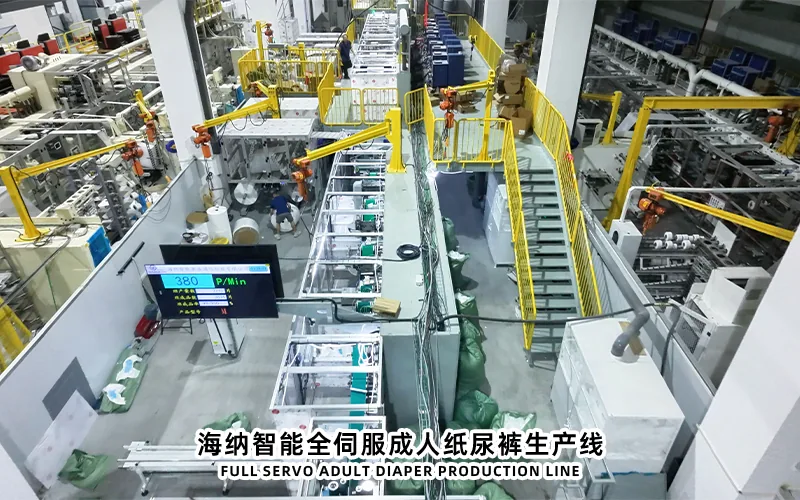
Verify the actual building against the latest approved layout. Construction drawings may not show later columns, pipes, fire equipment, drains, cable trays, or neighboring machines. Measure door width, corridor clearance, turning space, unloading height, and crane access for the longest and heaviest modules. The route must remain clear from the truck unloading point to the final machine position.
The floor should be level, dry, clean, and capable of carrying the equipment. Mark the machine centerline and fixed reference points before unloading. Allow working space around unwind stands, glue units, cutters, drive sections, inspection points, electrical cabinets, and packaging interfaces. Maintenance access matters because rollers, belts, motors, bearings, and cutting assemblies may need removal during routine service.
Complete major drilling, painting, concrete work, and overhead construction before machine modules are opened. Dust and debris can contaminate bearings, guide rails, sensors, electrical cabinets, adhesive surfaces, and absorbent materials. Temperature and humidity should be suitable for both the equipment and the selected nonwoven, tissue, fluff pulp, absorbent polymer, elastic, and tape materials.
- Confirm production, maintenance, cleaning, and emergency access.
- Check floor level, anchoring points, drainage, and load capacity.
- Provide secure storage for tools, spare parts, and moisture-sensitive materials.
- Verify lighting at threading routes, inspection areas, and changeover points.
- Prepare safe disposal routes for startup waste and rejected products.
Prepare Utilities and Trial Materials
Measure electricity at the planned machine connection, including voltage, frequency, phase sequence, protective grounding, and available capacity. Compressed air must meet the specified pressure, flow, filtration, and dryness while other factory equipment is operating. A pressure reading with no load does not prove that the air system can support cylinders, valves, brakes, and controls during production.
Ventilation, cabinet cooling, hot-melt adhesive equipment, vacuum systems, and dust extraction should be commissioned before absorbent core production begins. If the line includes a pulp mill, inspect airflow, duct sealing, filter condition, and waste discharge. Check every interface to third-party equipment so that a packaging or utility fault is not incorrectly recorded as a main-line failure.
Use approved production materials for the acceptance run. Substitute rolls can behave differently because of basis weight, elasticity, surface treatment, roll hardness, splice quality, friction, or tension response. Prepare enough material for threading, setup waste, process adjustment, destructive quality tests, speed ramp-up, operator practice, restarts, and the continuous trial. Record each material lot to support defect tracing.
Material control: Keep a retained sample from every critical trial material. If web breaks, bonding defects, tension variation, or core instability occur, the team can compare the physical material with the recorded machine settings instead of relying on assumptions.
Verify Mechanical, Electrical, and Safety Functions
After positioning, inspect frame level, module alignment, fastener torque, belt tracking, roller freedom, blade clearance, lubrication, vacuum piping, air lines, guards, and platforms. Remove transport brackets only according to the installation procedure. Where permitted, turn mechanisms manually before energizing them to identify interference, loose parts, or foreign objects.
Electrical checks should cover terminal tightness, cable labels, grounding, motor direction, encoders, sensors, servo drives, cabinet ventilation, network communication, alarms, and backup power arrangements where supplied. Test each emergency stop, door switch, safety interlock, warning device, and isolation point. A disabled safety circuit invalidates the functional test and creates unacceptable risk.
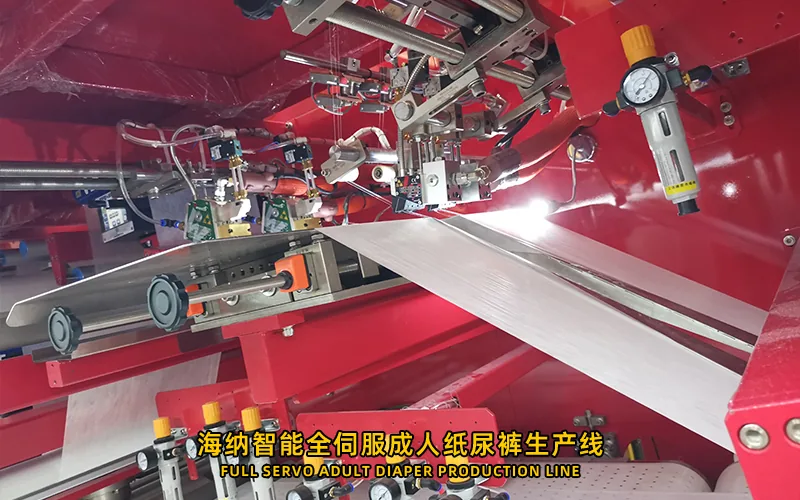
Begin dry testing with individual devices. Jog motors, cutters, actuators, web guides, unwind brakes, vacuum valves, adhesive controls, and reject gates separately. Confirm that the control-screen indication matches physical movement. Progress to linked low-speed running without material only after individual functions pass. Listen for contact, vibration, air leakage, or abnormal bearing noise and correct the cause before material threading.
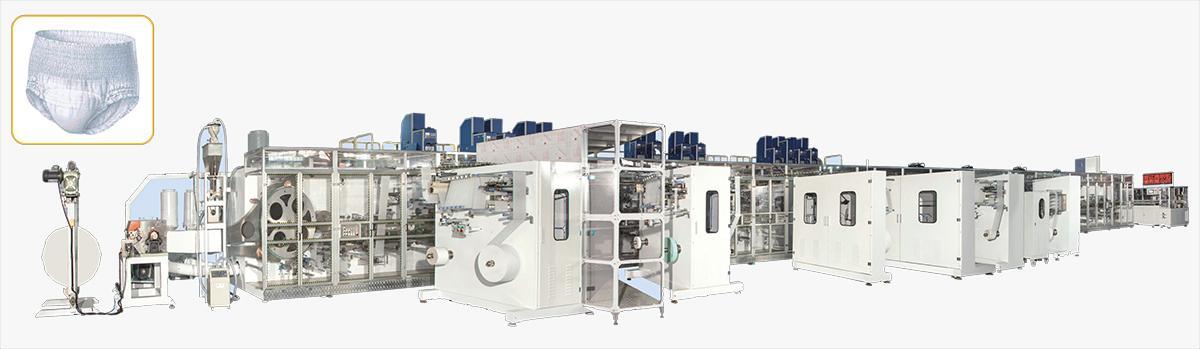
Machine buyers comparing an automatic adult diaper making machine should ensure that the commissioning documents list every supplied module and third-party interface. Clear boundaries make troubleshooting and final acceptance faster.
Follow Staged Commissioning Steps
A phased sequence protects the equipment and makes defects easier to isolate. Do not combine several major changes in one trial. Adjust one controlled variable, observe the result, and record the accepted value before moving forward.
- Static inspection. Confirm installation alignment, connections, lubrication, guards, tooling, utilities, and removal of transport restraints.
- Dry functional testing. Test individual drives and actuators, verify rotation direction, validate alarms and interlocks, and run linked sections without material.
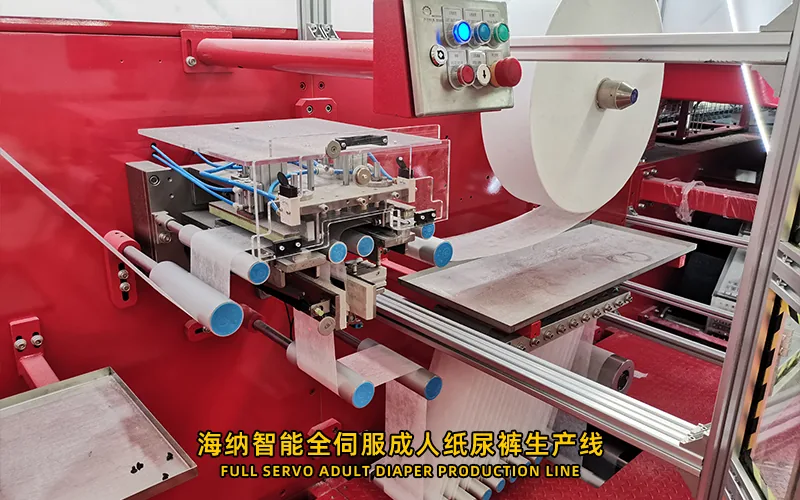
- Material threading. Load each web according to the approved route and establish basic unwind, tension, tracking, vacuum, and splice settings.
- Low-speed product formation. Set absorbent core distribution, adhesive application, elastic placement, cutting, folding, fastening components, and reject timing.
- Quality stabilization. Inspect weight, dimensions, core position, leakage barriers, bonding, elastics, tapes, appearance, and compatibility with downstream packaging.
- Controlled speed ramp-up. Increase speed through agreed levels and hold each level long enough to observe web behavior, temperature, vacuum, synchronization, rejects, and product quality.
- Continuous acceptance run. Use the agreed product, material, speed range, duration, sampling method, and reporting format before final handover.
A typical project timeline follows the same logic even when the number of days changes:
Preparation periodSite, utilities, materials, personnel, lifting equipment, laboratory tools, and acceptance documents are confirmed before delivery or technician travel.
Installation periodModules are positioned, connected, aligned, inspected, and integrated with supporting systems.
Functional test periodSafety circuits, individual mechanisms, linked dry running, and interface signals are verified.
Process setup periodMaterials are threaded, low-speed products are formed, defects are corrected, and approved recipes are established.
Performance validation periodSpeed is raised in stages, quality is sampled, downtime is classified, and a continuous run is completed.
Handover periodTraining is assessed, documents and backups are delivered, open items are assigned, and acceptance records are signed.
Measure Trial-Run Acceptance
Acceptance must connect operating data with qualified output. A short display of high speed does not establish stable production, while good samples made slowly do not prove the agreed performance range. The final protocol should define what is measured, who measures it, which instruments are used, how often samples are taken, and how downtime and rejects are classified.
| Acceptance Area |
Required Check |
Objective Evidence |
Response to a Failed Check |
| Safety |
Emergency stops, guards, interlocks, alarms, and isolation points operate correctly. |
Signed function-by-function safety test. |
Correct the issue before production testing continues. |
| Product quality |
Dimensions, weight, core position, bonding, elastic function, fastening, and appearance meet the agreed sample. |
Inspection sheets and retained approved samples. |
Identify the material, tooling, setting, or process cause and repeat the test. |
| Operating performance |
Qualified output remains stable at the agreed product specification and trial conditions. |
Time-stamped counters, production records, and quality results. |
Analyze the limiting section and repeat the defined stage. |
| Waste and rejection |
Startup waste, process rejects, inspection rejects, and material failures are classified. |
Counted or weighed waste by cause and time period. |
Correct recurring causes and verify with another controlled run. |
| Continuous operation |
Stops, alarms, splices, temperatures, tension, and quality remain within agreed conditions. |
Continuous run log with downtime reasons. |
Close significant faults before final acceptance. |
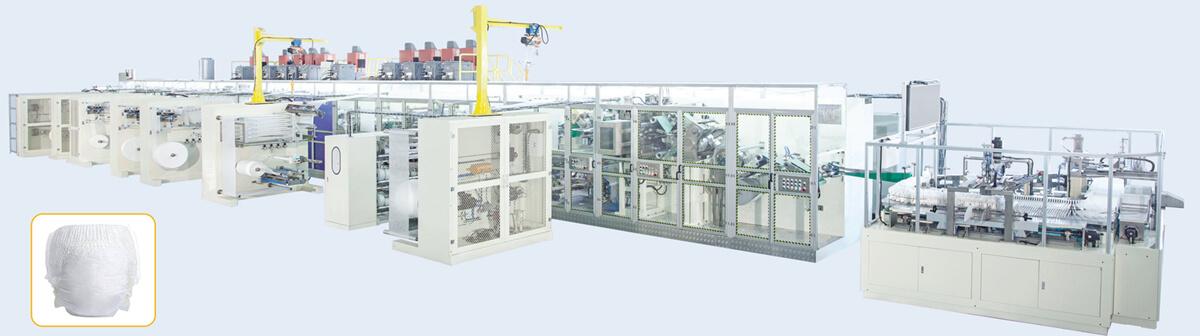
HAINA publishes the CK450 adult diaper line with a design speed of 450 pieces per minute, a stable working speed of 400 pieces per minute, efficiency of at least 85 percent, and a rejection rate of no more than 4 percent. These are published specifications for that model, not universal promises of actual factory results. Final performance depends on the ordered configuration, product design, raw materials, utilities, operator capability, maintenance condition, test method, and contractual acceptance terms.
Train Operators and Complete Handover
Operator training should begin during installation and continue through the trial run. Assign production operators, a mechanical technician, an electrical technician, quality staff, and a supervisor who can approve product and material decisions. Include personnel from every shift expected to operate the line after acceptance.
Operators should practice startup, controlled shutdown, web threading, roll loading, splice preparation, recipe selection, tension adjustment, size changeover, defect identification, reject handling, cleaning, and emergency response. Maintenance personnel need additional instruction on lubrication, cutters, belts, bearings, sensors, servo alarms, electrical drawings, preventive maintenance, program backups, and spare parts.
Use practical competency checks rather than attendance alone. Ask operators to start the line, identify representative defects, respond to a simulated web break, and complete a safe shutdown. Ask maintenance staff to locate isolation points, interpret typical alarms, and explain routine inspection tasks. Save one protected master recipe for each accepted product size and record later changes under controlled revision.
The handover package should include operating and maintenance manuals, electrical drawings, approved recipes, software backups, spare-parts lists, lubrication schedules, training records, accepted samples, trial reports, and an open-item list with owners and completion dates. This package becomes the factory baseline for production, maintenance, troubleshooting, and future product development.
Frequently Asked Questions
How much raw material is needed for commissioning?
Prepare more than the theoretical consumption of the final run. Material is also needed for threading, setup, adhesive adjustment, cutter timing, quality testing, speed ramp-up, operator practice, planned stops, and repeated trials. Calculate the quantity from the approved bill of materials and add a practical reserve.
Should the line run at design speed immediately?
No. Begin with individual checks and low-speed production, then increase through controlled stages. Product quality, tension, vacuum, temperature, synchronization, and reject operation should remain stable at each stage. Design speed and stable qualified production are different measurements.
What commonly delays an adult diaper line trial run?
Common causes include incomplete utilities, insufficient compressed air, unfinished dust extraction, unsuitable materials, inadequate material quantity, late product changes, unavailable operators, and untested packaging interfaces. A joint readiness review before shipment can prevent many of these delays.
When should final acceptance be signed?
Acceptance should follow successful completion of the agreed safety, quality, operating, efficiency, waste, continuous-run, documentation, and training checks. Remaining minor items should be listed with a responsible party and completion date instead of being left as informal promises.
How can approved commissioning settings be protected?
Back up the control program and recipes, identify each file by product and material version, limit editing permissions, retain approved samples, and document critical mechanical settings. Create a controlled new recipe when a material or product design changes instead of overwriting the accepted baseline.
Conclusion
Successful commissioning turns installed machinery into a repeatable production process. The strongest projects confirm site conditions before delivery, define responsibilities, use approved materials, validate safety and functions systematically, increase speed in stages, and judge performance through qualified output. A documented continuous trial, practical operator assessment, complete handover package, and protected baseline recipes give the factory a sound starting point for commercial production. When the buyer, equipment supplier, material providers, and packaging partners work from the same acceptance plan, problems can be identified by cause and resolved with evidence.