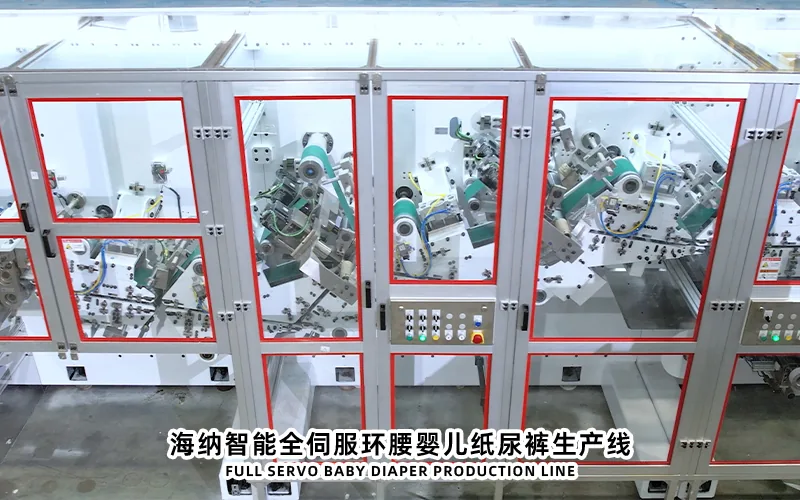
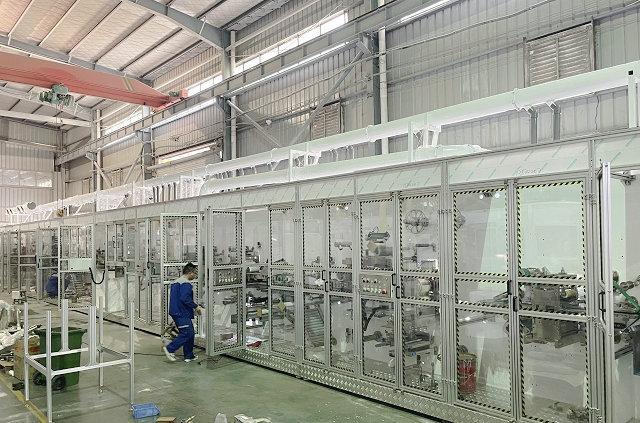
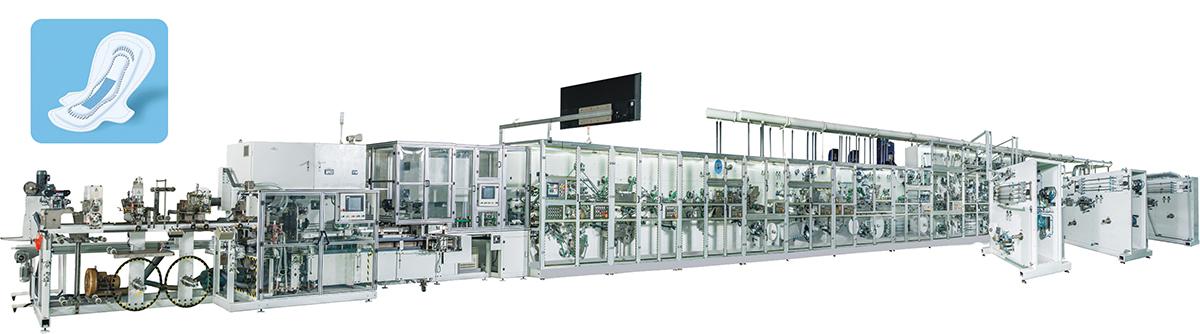
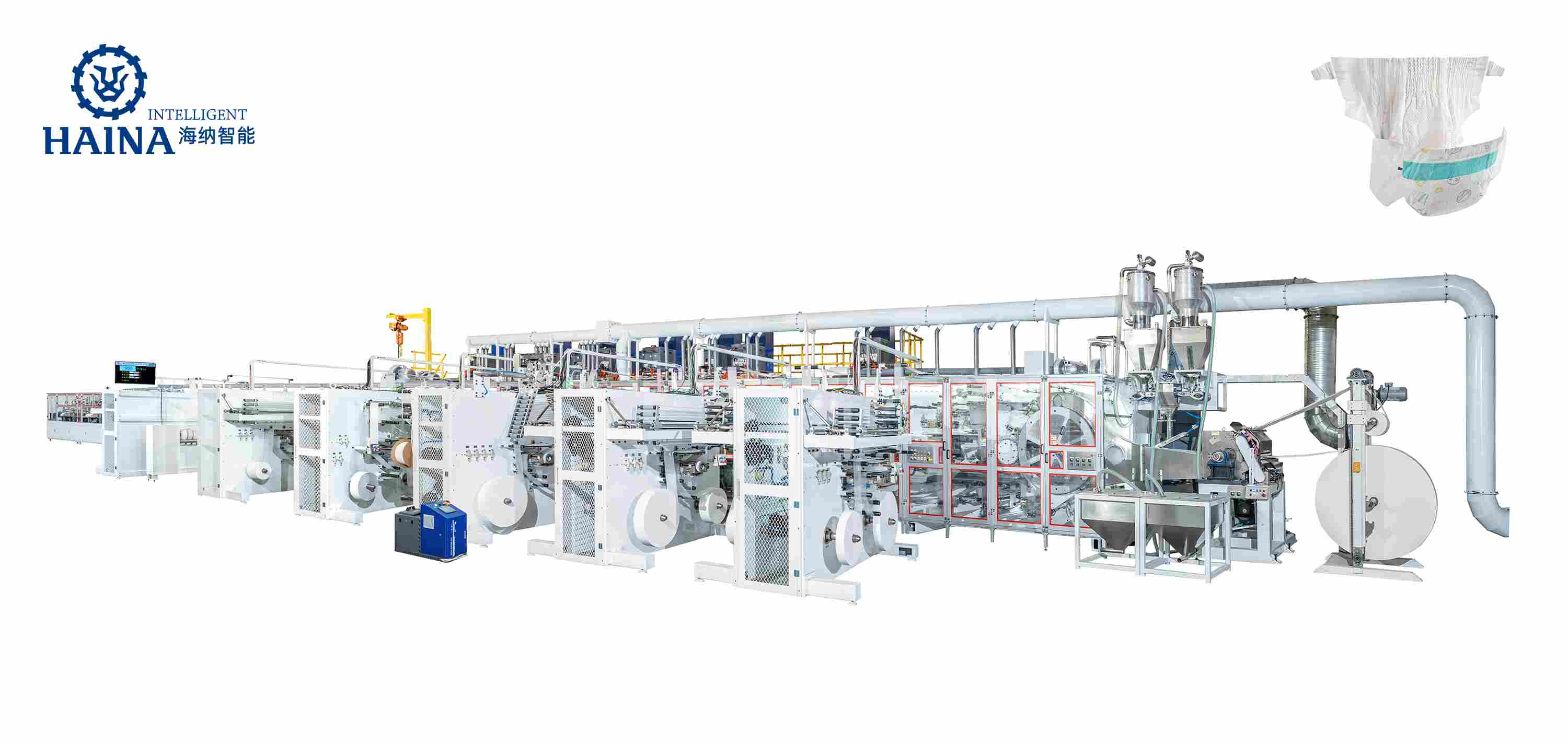
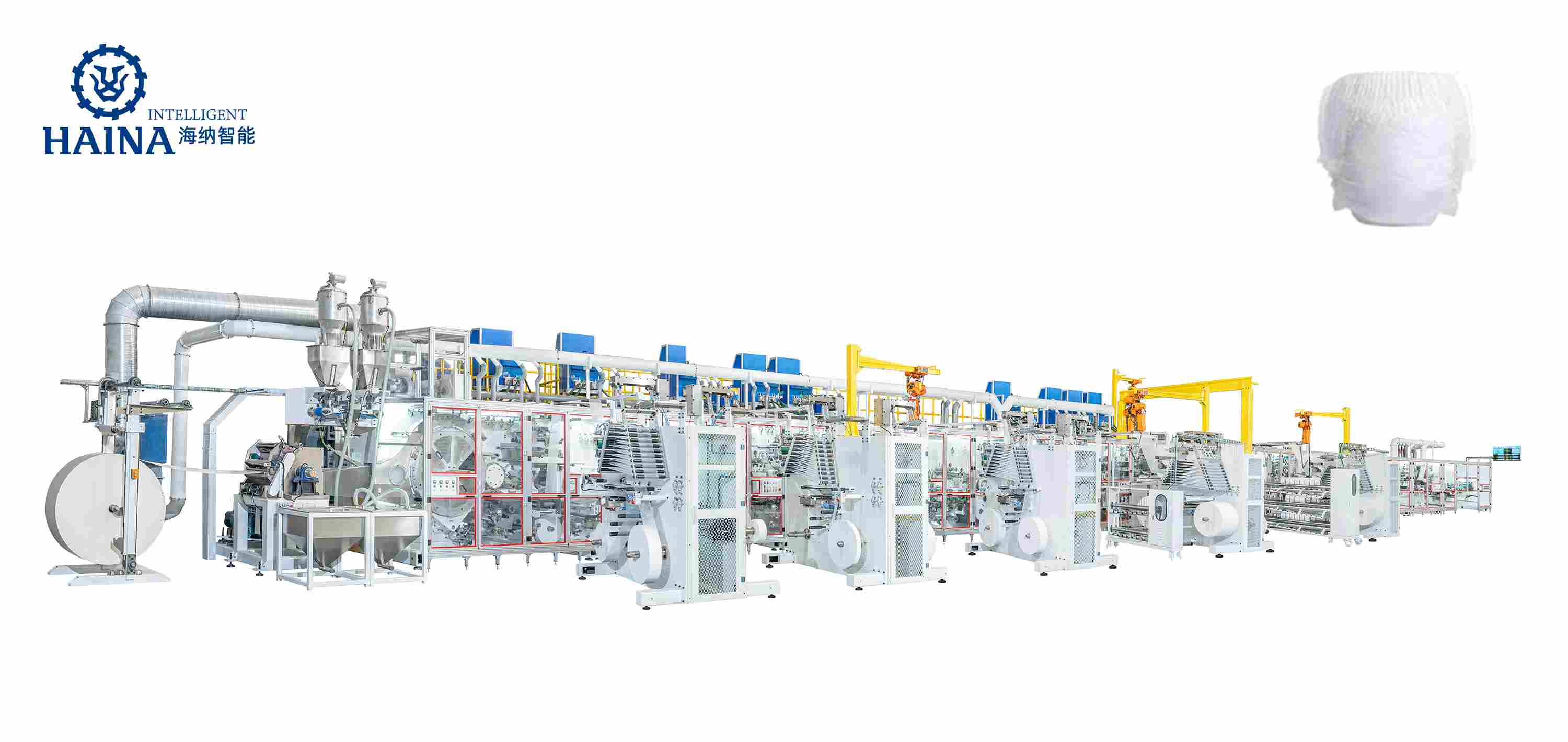
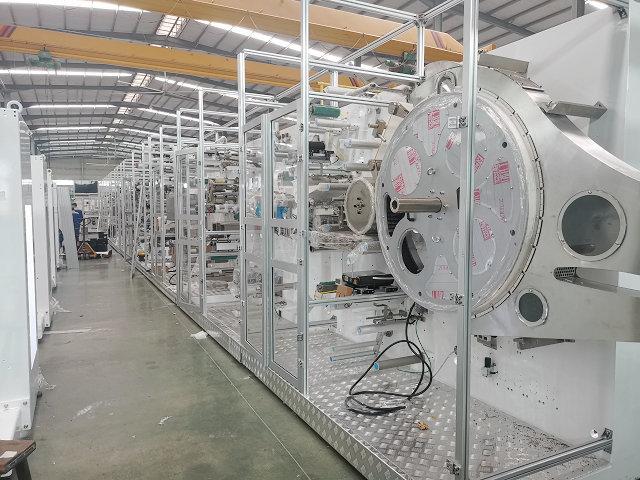
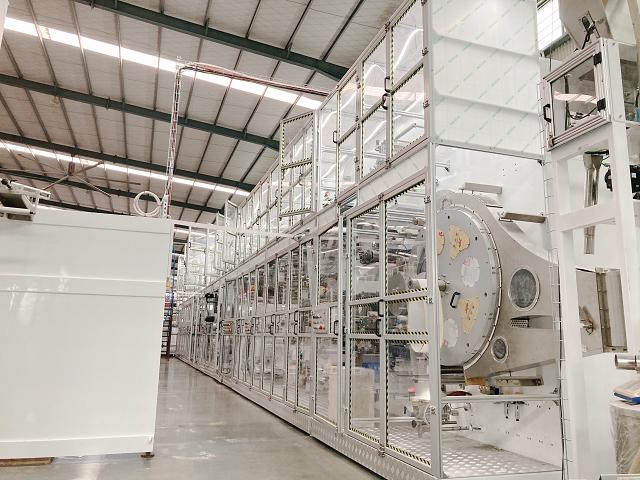
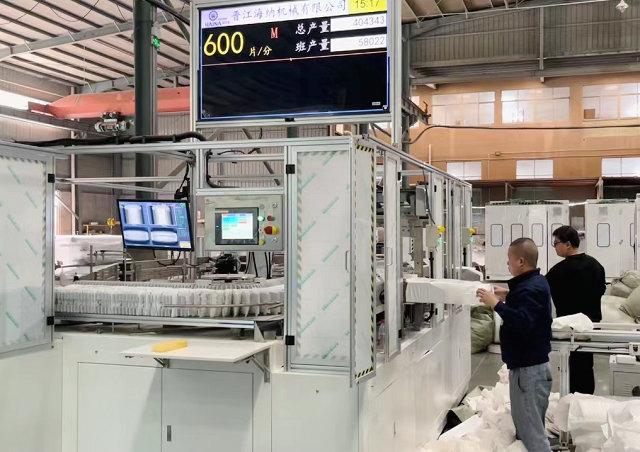
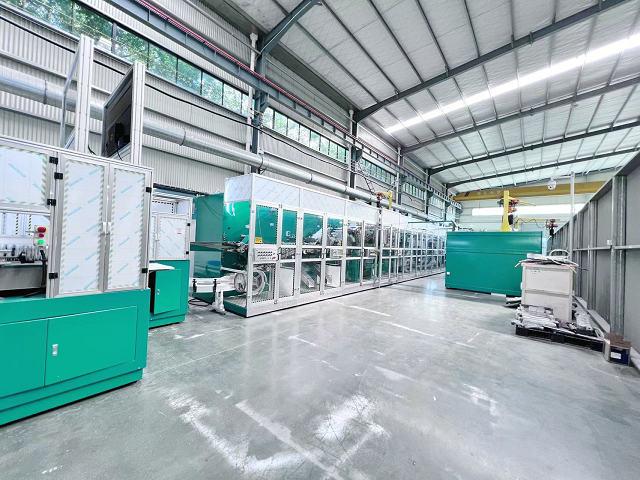
A diaper machine typically uses fluff pulp, superabsorbent polymer, tissue or core wrap, hydrophilic nonwoven topsheet, acquisition or distribution material, polyethylene film or breathable laminate backsheet, hydrophobic nonwoven for cuffs, elastic strands, fastening tapes or hook-and-loop components, frontal landing material, construction adhesives, and release materials. The exact bill of materials depends on diaper architecture and the configured process. Compatibility cannot be judged from material names alone: width, thickness, basis weight, roll build, tensile behavior, elasticity, friction, surface treatment, adhesive response, splice design, and storage condition all influence feeding and conversion. Buyers should qualify materials through documented trials and finished-product tests.
Material System Used by a Diaper Machine
A diaper is a coordinated material system. The topsheet receives liquid and contacts skin; distribution layers move liquid; the absorbent core stores it; tissue or nonwoven can contain the core; backsheet material provides a barrier; cuffs and elastics support fit and leakage control; fastening components close the product; and adhesives join layers. Product engineering should define each function before selecting a supplier grade.
The line receives these inputs in different forms: large parent rolls, narrow rolls, elastic packages, tape or landing-zone rolls, adhesive in the specified supply form, and bulk core ingredients where applicable. Each unwind, feeder, applicator, forming station, guide, cutter, and bond point has a configured range. HAINA can review a buyer's material schedule against the proposed machine configuration, but final compatibility requires representative material and product evidence.
Each material enters through a dedicated handling or application function.
Create a controlled bill of materials by product code. Include function, supplier and grade, approved alternatives, key specification references, roll width and diameter, core size, winding direction, splice construction, packaging, storage, and machine station. A commercial name alone cannot protect conversion because suppliers may offer variants with different surface, strength, or roll properties.
Specify Absorbent Core Materials
Fluff pulp is commonly fiberized to help form an absorbent matrix, while superabsorbent polymer provides liquid-storage capability. Their proportions and distribution belong to the product design and must be verified through appropriate performance tests. Machine compatibility involves pulp-sheet dimensions and condition, defibration behavior, polymer feed characteristics, containment, dust control, forming geometry, vacuum behavior, core transfer, and the ability to keep material where the drawing requires.
Core wrap or tissue supports containment and handling according to the architecture. Specify width, strength in relevant directions, wet behavior where important, porosity, surface, roll condition, and splicing. A weak web may break under the established tension, while a large change in porosity can alter vacuum transfer. Increasing tension to force stability may stretch, narrow, or damage the material and move the problem downstream.
Storage and conditioning matter. Protect pulp and polymer from moisture, contamination, damaged packaging, and unidentified mixing. Use defined acclimation where the factory's material procedure requires it. During trials, record ambient and material condition so an apparently successful setting is not generalized beyond the tested state. Do not invent an acceptable moisture or dosage value; use verified material and product specifications.
Control Topsheet and Distribution Layers
The topsheet is commonly a soft hydrophilic nonwoven selected for liquid intake and skin-facing performance. Machine-relevant properties include width, basis-weight tolerance, thickness, tensile behavior, elongation, friction, surface treatment uniformity, linting, roll hardness, telescoping, winding direction, and splice quality. Product evaluation may also consider softness, strike-through, rewet, appearance, and skin-contact requirements under the buyer's approved methods.
An acquisition or distribution layer, when used, has a different function and can have different stiffness, bulk, recovery, and liquid-handling behavior. Its width and placement must match the product drawing and applicator capability. A thicker or stiffer grade may feed well at the unwind yet transfer poorly, disturb a nip, change cut behavior, or affect the folded product. Test the complete process rather than approving it from a supplier data sheet alone.
Thin webs require compatible roll quality, tension behavior, guiding, and joining.
Match Backsheet, Cuffs, and Elastics
Backsheet may be a film or a film-nonwoven laminate depending on product design. Specify width, thickness or basis references, barrier requirement, surface friction, stretch, thermal sensitivity, winding, roll quality, print or registration marks, and bonding surface. Breathability is a product property that must be supported by material and test evidence; it should not be inferred merely from appearance.
Thin films can wrinkle, neck, stretch, build static, or suffer surface damage if tension, rollers, guides, or contact surfaces are unsuitable. A laminate can change stiffness and fold behavior. During qualification, observe the material from unwind through finished-product transfer. Mark where instability first appears and retain samples before changing the process. This separates an incoming roll issue from line setup or damaged hardware.
Cuff nonwovens are generally selected for barrier and construction functions and may be hydrophobic according to the design. Elastic strands or films create leg, waist, or other fit features. Record package form, dimension, extension behavior, relaxation, surface treatment, storage, age controls where specified, and adhesive compatibility. Machine settings alone cannot compensate for uncontrolled elastic variation without changing product geometry or fit.
Qualify Fastening and Bonding Materials
Tape tabs, hook components, landing zones, frontal tapes, release papers, and related items must fit the configured unwind, cut, orient, place, and bond process. Verify roll width and build, winding direction, pitch or registration, release behavior, stiffness, cut quality, engagement function, and attachment. For printed material, define mark contrast, repeat, location, and allowable variation using a controlled drawing and trial.
Construction and elastic adhesives should be approved for the substrates, process, and finished-product requirements. Machine considerations include supply form, delivery equipment compatibility, heating and flow behavior, hose and nozzle setup, application pattern, open time, compression, contamination control, and safe handling. Bond performance also changes with substrate treatment, surface contamination, and storage. Never assume that an adhesive working on one nonwoven will work on a substituted grade.
Use a bond qualification matrix covering every joined pair and relevant process state: normal running, startup, planned stop and restart, and format change where exposure differs. Inspect adhesive position and pattern, then test attachment with the buyer's approved method after any required conditioning or aging. Record failure mode, not only a pass result. A substrate tear, adhesive separation, or interface failure points to different decisions.
Fastening and adhesive materials must be qualified as joined systems.
Connect Handling Properties to Settings
Machine settings should be linked to observable material behavior. Tension and guide references affect tracking and stretch; vacuum affects transfer and containment; thermal and adhesive settings affect joining; phase affects placement and cut; nip or compression settings affect bonds and web condition. Product engineers should define allowed outcomes, while machine and process teams establish a validated window for the approved material set.
When introducing a new lot or supplier, begin at the approved reference and compare roll geometry, splice, web stability, surface response, alarms, and product samples. Do not copy a large offset into the master recipe after one run. If adjustment is required, document direction, reason, observed response, and limits. Escalate when a material can operate only near an equipment boundary or requires frequent intervention.
Material handling outside the machine is equally important. Use first-in and controlled-status practices according to factory rules, preserve labels, prevent floor contact and crushing, control opened rolls, and define return-to-storage. Acclimation and environment should follow supplier and site specifications. A well-configured baby diaper production machine cannot restore a telescoped, contaminated, moisture-damaged, or incorrectly wound roll.
Run Material Trials and Acceptance
Rank trial risk before using production time. New material function, large property change, new bond pair, narrow process window, critical product attribute, or uncertain supply form deserves a focused engineering trial. Define objective, baseline, material lots, machine configuration, recipe, variables allowed to change, sample points, test methods, stop criteria, and approval authority before starting.
Run enough material to observe roll start, stable section, splice where relevant, and downstream handling under the agreed condition. Capture setup loss separately from stable output. Test product characteristics connected to the material as well as normal release criteria. A topsheet trial may require tracking, bonding, appearance, intake, and rewet evaluation; an elastic trial needs placement, attachment, geometry, and functional response; a backsheet trial needs handling, bond, and barrier evidence.
Approve the exact grade and supply condition tested, not a broad family name. Update the bill of materials, incoming checks, storage rules, recipe reference, approved supplier status, retained samples, and change-control record. If the trial is conditional, state the restriction and required follow-up. Material acceptance should remain separate from commercial negotiations so technical evidence is not softened by purchasing urgency.
Finished-product evidence closes a material trial; smooth feeding alone does not.
Frequently Asked Questions
Can recycled or alternative materials run on a diaper machine?
Possibly, but suitability requires product-safety review, specification, feeding and bonding trials, finished-product testing, and change control. Sustainability intent does not prove cleanliness, strength, conversion behavior, or functional performance.
Can a material with the same basis weight be substituted directly?
No. Thickness, tensile behavior, elongation, friction, treatment, porosity, stiffness, roll build, and adhesive response may differ. Compare specifications and qualify the actual supply form on the configured process.
Which roll information should purchasing request?
Request material grade, width, diameter range, core dimensions, winding direction, splice method and frequency rules, roll build and packaging requirements, storage conditions, lot traceability, and the technical properties linked to use.
Who approves a new diaper material?
Use cross-functional approval. Product engineering confirms design fit, production and machine teams confirm conversion, quality confirms tests and controls, purchasing confirms controlled supply, and authorized management releases the documented change.
Conclusion
A diaper machine uses a coordinated set of absorbent ingredients, nonwovens, films, elastics, fastening components, adhesives, and release materials whose properties must match both product design and equipment capability. The product engineer's practical next step is to issue a station-by-station material schedule with controlled specifications and risk-ranked trial needs. Review it with HAINA, then witness the highest-risk web, bond pair, and finished-product tests before approving any material as production-compatible.