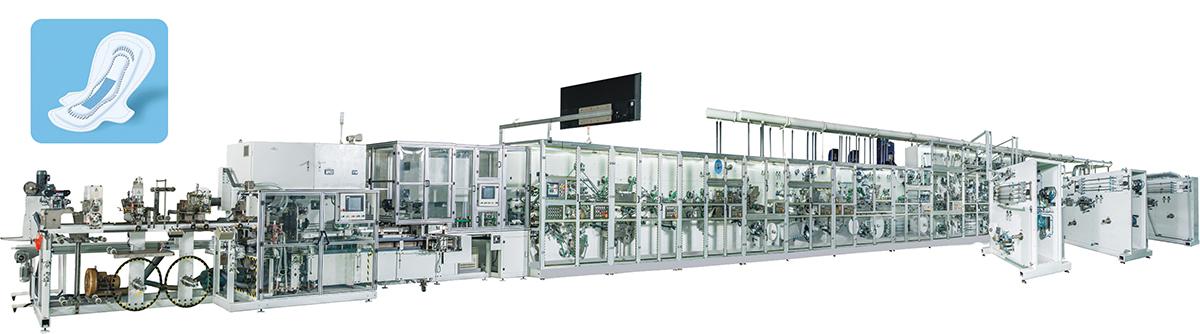
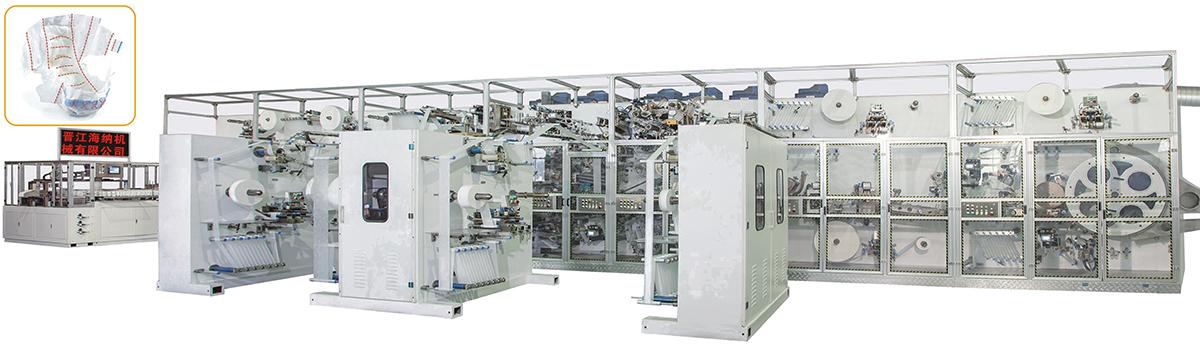
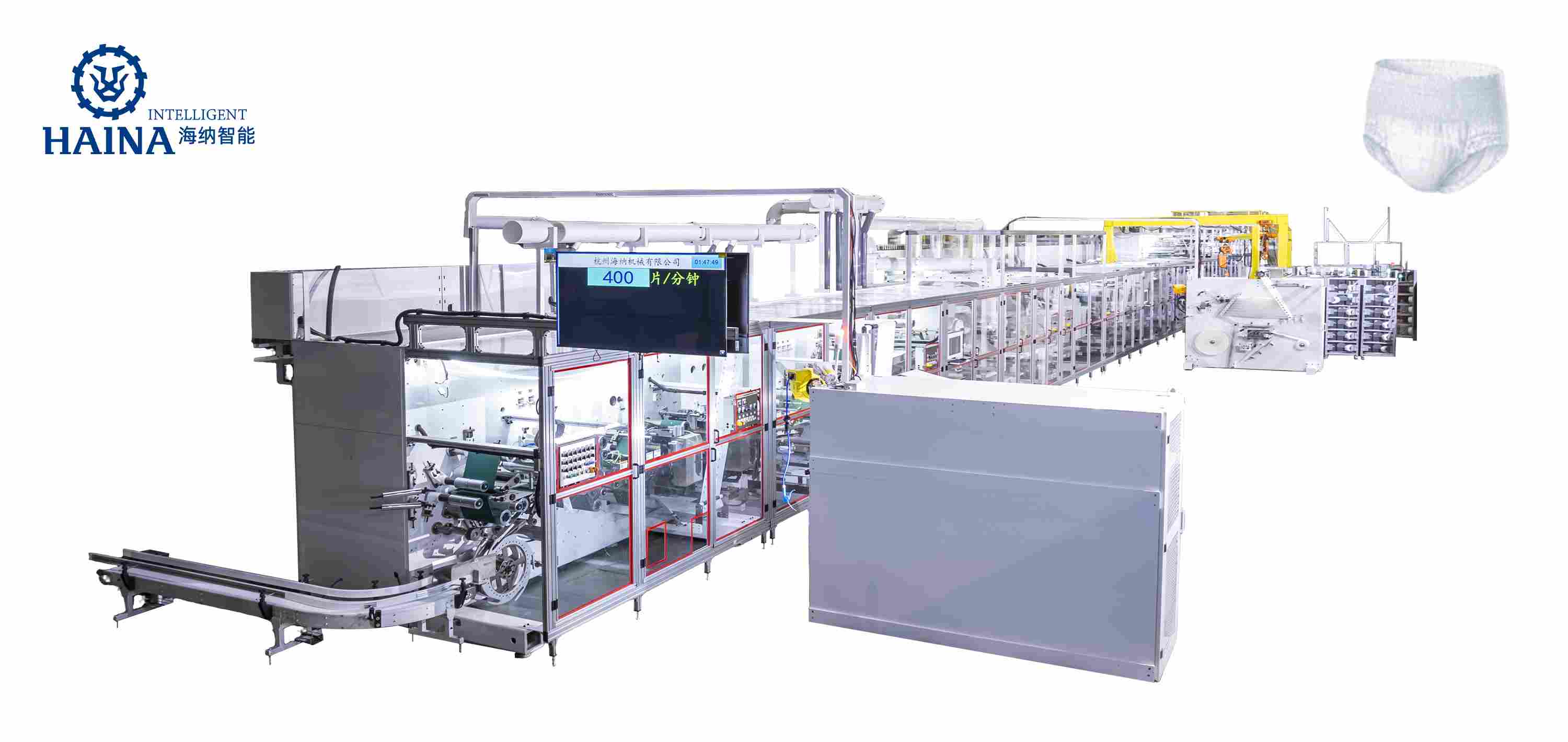
A Diaper production machine should be chosen through a hierarchy of requirements: exact product category, approved formats and materials, complete process boundary, stable acceptable output, factory fit, maintainable operation, and objective acceptance. Begin by deciding whether the project makes taped baby diapers, pull-on products, adult briefs, or another defined absorbent article. Then issue common drawings, quality methods, utility data, packing interfaces, and FAT conditions to every supplier. Compare only configurations that answer the same scope, and make the final decision from traceable trials, samples, changeover evidence, controls, documentation, training, spare-parts planning, and written deviations rather than price or speed alone.
Build the Selection Hierarchy
Start at the top of the hierarchy with intended use. A production machine is engineered for a defined absorbent product, not for every item called a diaper. Product architecture determines web widths, component applicators, absorbent-core route, elastic functions, cutters, folders, controls, and inspection. If intended use is unclear, later comparisons of speed, footprint, and quotation value are built on different assumptions.
The second level is mandatory capability: launch products and materials, quality methods, factory utilities, safety review, downstream handoff, and acceptance logic. These are gates. The third level contains differentiators such as changeover ergonomics, diagnostic depth, data functions, future provisions, tooling design, document quality, and support structure. The final level is commercial comparison after all boundaries have been normalized.
This order prevents an attractive optional feature from outweighing a missing basic function. It also helps decision meetings. Every open point can be labeled intended-use, mandatory fit, differentiator, or commercial exposure, then assigned to the correct technical or financial owner.
Selection should progress from intended product through mandatory process fit to evidence and commercial scope.
Define the Diaper Production Machine Duty
Name the product category and form. For a taped baby diaper, define core construction, top and back sheets, acquisition layer, leak guards, leg and waist elastics, side panels, tapes, landing zone, contour, and fold. If the project concerns pull-on pants or adult briefs, issue a different architecture statement. Do not assume one proposal can cover those categories without explicit engineering evidence.
State the launch sizes, future sizes, production calendar, packing boundary, and planned operator model. Use demand as scenarios rather than a guaranteed volume. The duty should describe whether the line ends at folded products, counted stacks, bags, or another transfer point. It should identify required material replenishment, scrap and reject handling, cleaning, quality sampling, and changeover conditions.
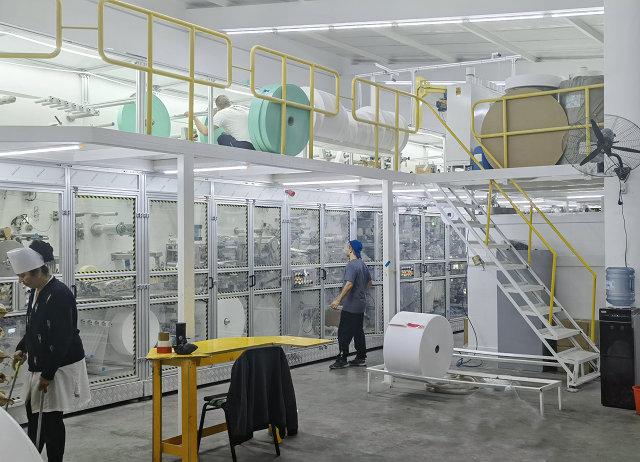
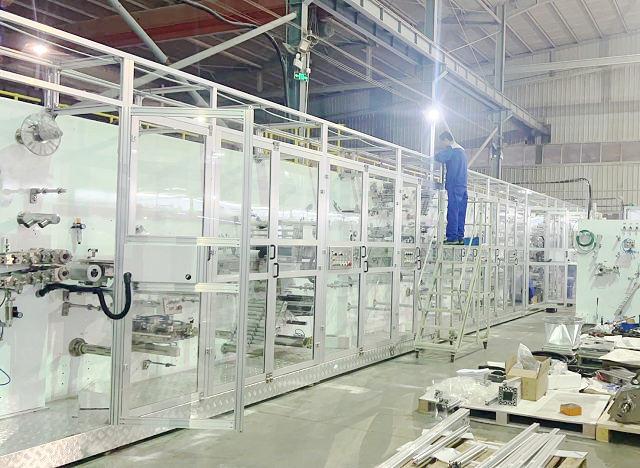
Add the factory environment: usable space, columns, doors, floor data, material routes, service access, utility conditions, extraction, adhesive area, network needs, packing equipment, and local compliance review. The supplier should return a scaled layout and configuration-specific utility schedule. Qualified local parties remain responsible for site laws and building obligations.
Freeze Products, Materials, and Tests
Build one format sheet per launch product with controlled drawings, layer structure, component positions, material codes, final dimensions, fold, count orientation, reference sample, and inspection methods. Identify critical characteristics and sample frequency for FAT. A trial cannot answer an unstable requirement, so late changes need formal impact review for tooling, modules, materials, schedule, and acceptance.
Provide a material schedule with width, roll diameter, core, winding direction, basis weight, thickness or stretch where relevant, splice, surface condition, and approved grade. Request trial quantities and preserve lot identity. Similar material names can conceal different friction, elongation, static, permeability, adhesive response, dust, and cutting behavior. Material substitutions need a qualification route.
Quality methods should distinguish machine checks from product tests. Online sensors may monitor missing or displaced components and support rejection, but they do not automatically verify every dimension, bond, absorbent property, or functional outcome. Define offline measurements and laboratory methods under the buyer's quality system. Label and retain samples from startup, stable running, material events, changeovers, and recovery.
Controlled product drawings and traceable material lots make machine demonstrations comparable.
Compare Complete Process Boundaries
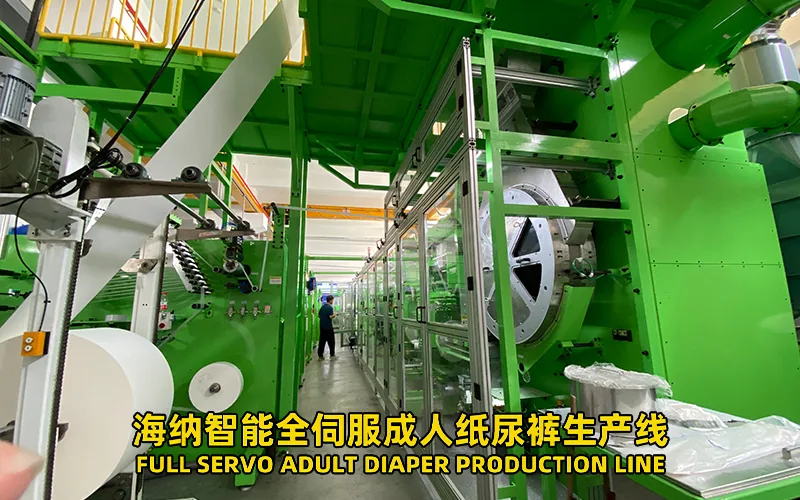
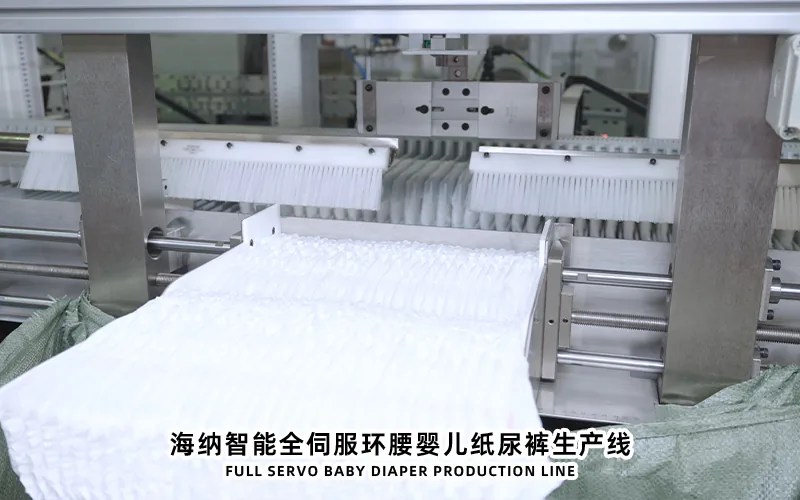
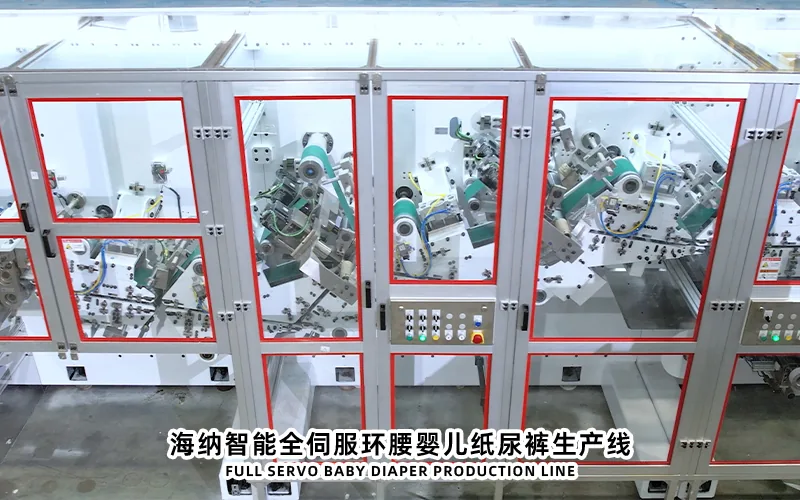
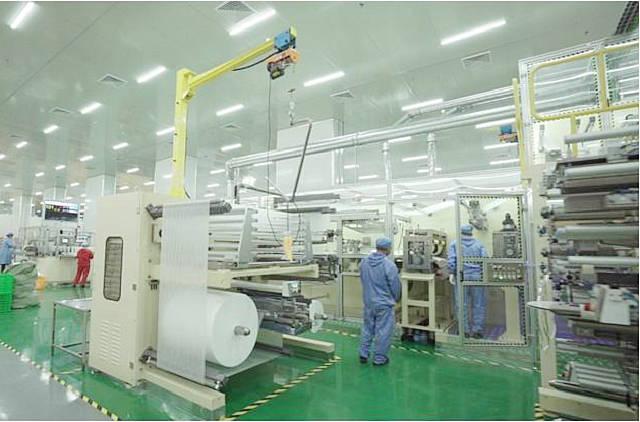
Require a marked process flow. Depending on the project, the system may include material unwinding, core preparation, component placement, elastic and leak-guard functions, adhesives, web guidance, compression, contour cutting, folding, inspection, rejection, counting, stacking, and packing transfer. List every option and exclusion. "Complete line" has no decision value without a battery-limit definition.
Identify auxiliaries and buyer supplies. Compressed air, electrical distribution, dust extraction, adhesive equipment, conveyors, baggers, coding, laboratory equipment, lifting devices, tools, freight, installation labor, trial materials, and initial spares may be handled differently by each bidder. Allocate design, supply, installation, connection, test, and ongoing maintenance for every interface.
Normalize quotation scope in a controlled table. Include launch tooling, inspection devices, controls, language, software backups, documents, training, commissioning inputs, change parts, wear and critical spares, packing signals, and open engineering. Keep future options separate. A lower price with missing functions is not equivalent to a broader accepted scope, while unnecessary options should not inflate the launch project.
Require Stable Output Evidence
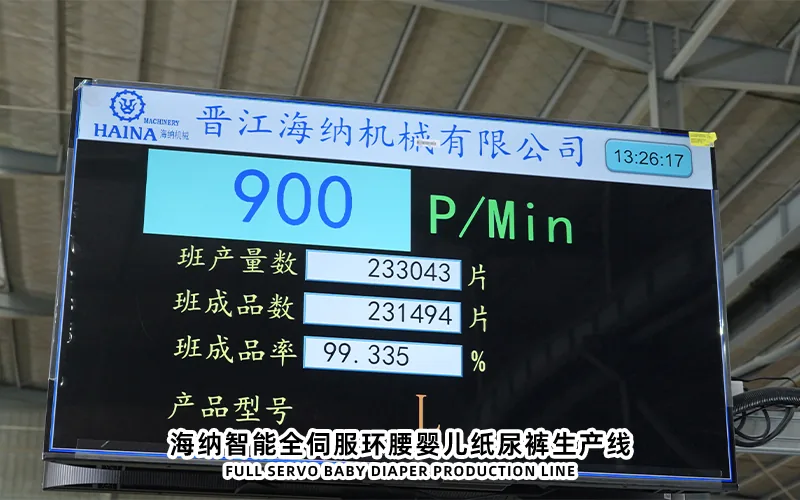
Separate design speed, stable working speed, current operating speed, and contractual acceptance output. Design speed is not a promise of continuous saleable production. Stable evidence needs the product, material lots, recipe, staffing, quality criteria, downstream state, test duration, treatment of planned events, and stop-accounting rule. Different formats may require different conditions.
Witness a timed run with input, accepted output, rejects, stop start and end, cause, interventions, sample times, and material events. Observe roll changes or splices, inspection behavior, discharge balance, controlled stops, and restart. The line should return to quality through a documented sequence. Products made while the process or inspection is uncertain must remain contained.
Capacity planning should then use the verified stable basis and the buyer's size mix, shifts, maintenance, cleaning, changeovers, sampling, packing availability, warehouse flow, and demand scenario. Do not convert a FAT result directly into revenue or ROI. Finance and operations must apply local assumptions and test downside cases.
A stable-run record connects product quality, materials, interruptions, and recovery to the output claim.
Evaluate Change Control and Maintenance
Create a format-to-change matrix. Identify recipe values, manual settings, guides, applicator positions, cutters, drums, folders, inspection regions, conveyors, count recipes, and packing signals. Every removable item needs an identifier, storage location, condition check, included quantity, and replacement reference. Distinguish recipe-only changes from mechanical conversions.
Witness one commercially important format conversion and timestamp the final released unit from the outgoing run and the initial released unit from the incoming run. Build the event record around product clearance, cleaning, tooling, mechanical settings, threading, setup output, measurement, correction, and quality approval. Separate hands-on activity from waiting. Have future plant roles perform tasks after instruction and check whether access, tools, and documents support repeatability.
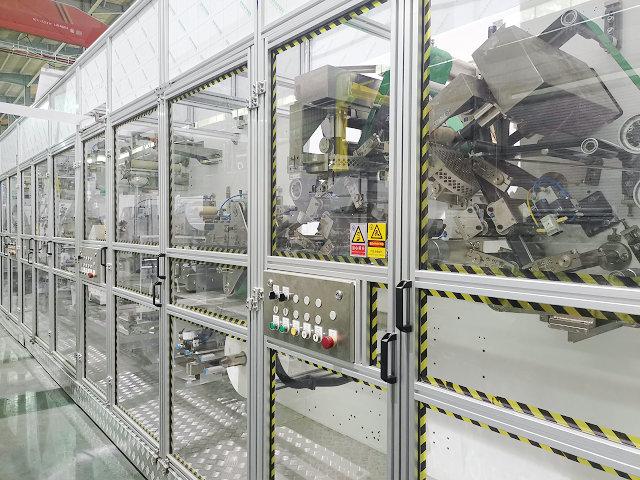
Maintenance evaluation covers safe access, inspection points, lubrication, cutters and wear parts, belts, sensors, vacuum and extraction paths, panels, alarms, event history, backups, and parts identification. Request recommended intervals and spares as supplier inputs, then apply the factory's criticality method. Avoid unsupported promises about equipment life, response times, or maintenance-free operation.
Establish change control for recipes, software, components, drawings, and product formats. Proposed substitutions require comparison and authorization under the contract. A technician's temporary correction should be recorded and either removed or incorporated through formal approval. Controlled baselines protect both product quality and later diagnosis.
Use Gates Before Commercial Ranking
Requirement level
Question
Evidence
Decision action
Intended use
Is this the correct diaper architecture?
Signed product and process statement
Reject mismatched proposals
Mandatory fit
Can launch products run in this factory?
Format, material, layout, utility matrices
Close every gate before scoring
Performance
Is acceptable output stable and testable?
Defined FAT protocol and timed trial
Retest unsupported claims
Operational value
Can staff change and maintain the line?
Task demonstrations and document review
Score repeatability and exposure
Commercial value
Are total scopes equivalent?
Normalized quote and deviation register
Rank only accepted boundaries
Technical approval gate
Exact product category and launch formats are approved.
Materials and quality methods are traceable and available for FAT.
Modules, auxiliaries, tooling, and buyer supplies are fully listed.
Layout, utilities, access, and packing interfaces have owners.
Stable-run, changeover, inspection, and recovery tests are objective.
Documents, training, backups, spares, and deviations are contractual.
Score only relevant evidence. Product risk may receive more weight than optional data features; a multi-format factory may emphasize changeover; a remote site may emphasize maintainability and parts planning. Document weightings before reviewing final prices. Any open mandatory point should remain visible rather than receive a neutral score that improves the total.
Convert the Choice Into Acceptance
The selected proposal must become a contract traceability pack. Link user requirements to supplier responses, final modules, drawings, utilities, responsibilities, tooling, tests, documents, and deviations. Set document precedence. Establish change authorization and open-item handling. Technical statements in presentations should not override signed specifications.
FAT should verify identification, completeness, guards and interlocks, manual and automatic sequences, recipes, alarms, inspection, rejection, product measurements, stable operation, format change, controlled stop, restart, backups, documents, training, and parts. Record material lots, test conditions, software versions, samples, and retests. HAINA can use the agreed matrix to coordinate engineering and FAT evidence for the configuration.
Review the automatic baby diaper production machine as a relevant equipment reference, then require project-specific confirmation of every function and limit. Before site delivery, verify access, utilities, lifting, extraction, adhesives, materials, packer, tools, laboratory readiness, operators, maintenance staff, and permits. Site acceptance should focus on installed interfaces and local product readiness.
The final selection becomes real only when requirements trace to witnessed hardware, products, documents, and trained roles.
Frequently Asked Questions
What is the first machine selection question?
Ask which exact absorbent product architecture the factory will make. Product category, form, layers, components, sizes, and packing boundary control every later equipment decision.
Can I compare quotations by price per machine?
Only after normalizing modules, tooling, auxiliaries, site responsibilities, tests, documents, training, spares, packing interfaces, and exclusions. Otherwise, the scopes may not be equivalent.
How much speed margin should a buyer request?
There is no universal margin. Model demand, product mix, shifts, planned loss, downstream constraints, and verified stable conditions. Keep design capability separate from contractual acceptance.
What should remain after FAT?
An indexed pack of requirements, conditions, logs, measurements, samples, media where allowed, software versions, documents, training results, deviations, and open-item closure evidence should remain.
Conclusion
Diaper production equipment should be selected in the correct order: intended product, mandatory factory fit, stable evidence, operational value, and finally normalized commercial terms. Skipping the hierarchy allows price or a peak speed to hide a product, tooling, utility, or acceptance gap. Before approval, issue the shortlisted supplier a final traceability challenge: map every launch format and material to modules, run the highest-risk product, measure samples across interruptions, complete a changeover, and have plant staff demonstrate operation and maintenance tasks. Release the Diaper machine decision only after all mandatory gates and written deviations are accepted.