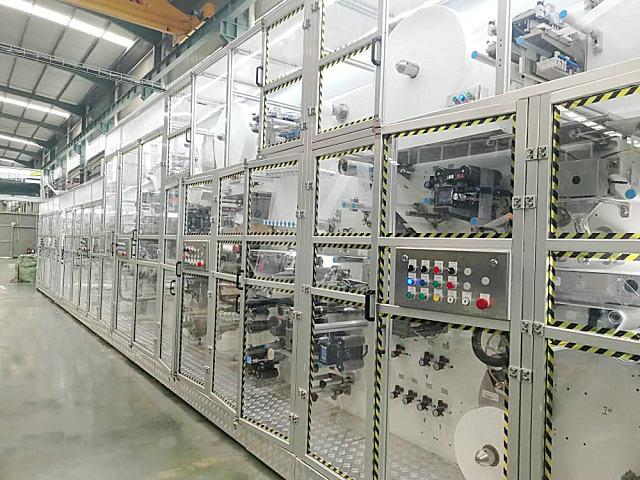
An effective equipment management system for a baby diaper equipment manufacturer connects engineering release, incoming inspection, assembly records, testing, maintenance documentation, change control, and customer support. A factory auditor should verify that every important requirement can be traced from the approved specification to a drawing or bill of materials, an installation or test record, and a resolved exception. The system should distinguish standard controls from project-specific commitments and preserve the configuration actually delivered. It should also show who approves deviations, how measuring devices and test methods are controlled, and how lessons from commissioning or service are returned to engineering.
Baby Diaper Equipment Control Model
Equipment management starts before metal is cut. The manufacturer needs a controlled path from inquiry and contract review through design, sourcing, fabrication, assembly, internal testing, FAT, packing, installation support, and service. Each stage should accept defined inputs, produce identifiable outputs, and close exceptions before the next irreversible step. The objective is not a thick procedure manual. It is confidence that the machine being built matches the agreed product, material, automation, interface, and acceptance boundaries.
An auditor should select one real project and follow it vertically. Begin with the approved technical agreement, then locate its engineering release, key purchased-part specifications, assembly inspection records, software version, FAT protocol, punch list, and final configuration record. This sample reveals whether documents connect in practice. A polished quality policy has limited value when staff cannot show which revision governed the machine on the floor.
For baby diaper manufacturing equipment, configuration details may include product format, raw-material paths, process units, control architecture, inspection functions, reject handling, and downstream interfaces. The manufacturer should identify which values are requirements, adjustable settings, trial targets, or contractual acceptance criteria. Treating all values as one undifferentiated "machine parameter" list creates disputes later.
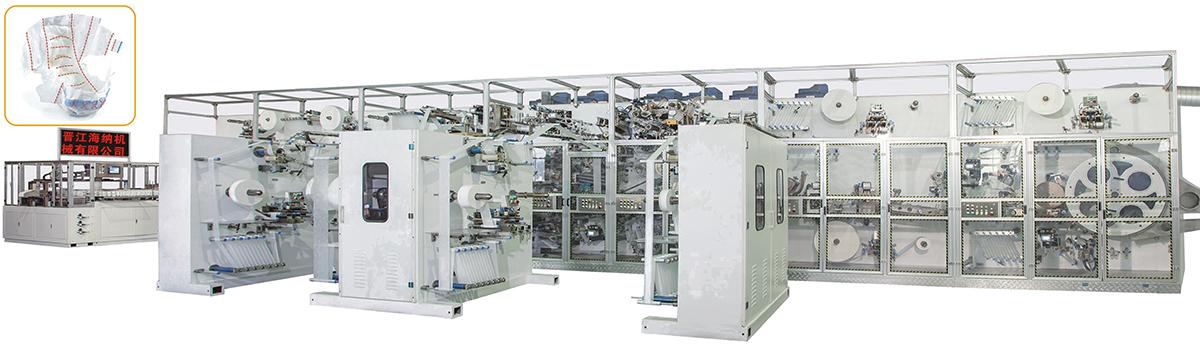
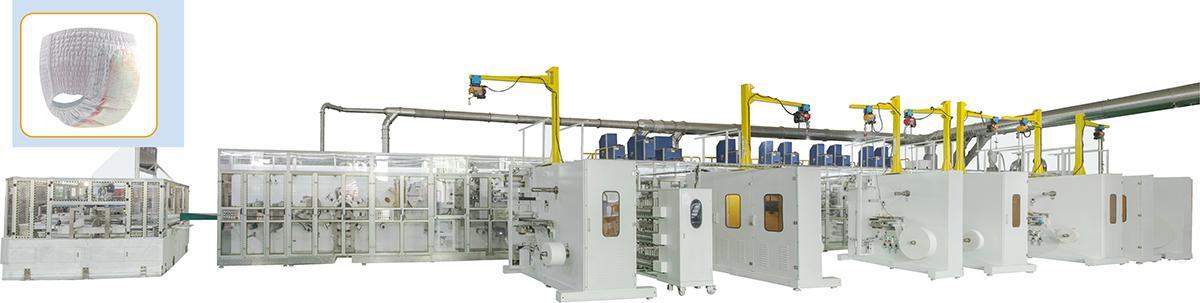
The physical machine should be traceable to the approved project configuration.
Translate Contracts Into Engineering Requirements
Contract review should resolve ambiguity before design release. The manufacturer and buyer need an agreed product definition, expected material properties, size or format range, utility boundary, factory constraints, operator language, data needs, and FAT method. Where a requested result depends on buyer-supplied materials, utilities, or upstream and downstream equipment, the responsibility and trial conditions must be explicit.
A requirement matrix is more useful than scattered emails. Give each requirement an identifier, source, owner, verification method, planned stage, and status. Link it to drawings or documents where it is implemented. Safety-related functions, critical interfaces, product-quality controls, and buyer-specific options deserve visible attention. When a statement cannot yet be verified, label it open and assign a closure date rather than letting an assumption quietly enter the design.
Engineering release should be formal. Drawings, bills of materials, pneumatic and electrical information, control descriptions, and software baselines need revision identity and approval. Shop-floor personnel must have access to current information and a method to remove obsolete copies. Ask how a superseded drawing is prevented from being used at machining, assembly, wiring, and spare-parts preparation. The answer should describe a working control, not simply state that errors are rare.
Control Purchasing, Assembly, and Identification
Purchased components affect performance, maintainability, and future replacement. The purchasing specification should carry the engineering identity and any critical characteristics that receiving staff must verify. Supplier name alone does not establish conformity. Depending on risk, evidence may include model confirmation, certificates supplied with the component, dimensional checks, functional checks, or comparison with an approved sample. Unverified substitutions should be placed on hold until authorized engineering review.
During fabrication and assembly, travelers or inspection plans should identify the important steps and acceptance evidence. Examples include frame geometry, alignment, fastener control, rotating-part installation, piping cleanliness, cable identification, sensor positioning, guarding, and utility connections. Not every bolt needs an individual record, but the organization should justify which characteristics are critical and how they are checked.
Identification must survive the workshop. Labels on electrical devices, pneumatic components, service points, controls, and cables should correspond to delivered documentation. A buyer later troubleshooting a sensor should not have to infer which drawing tag applies. Spare and change parts also need enough identity to prevent visually similar items from being mixed.
Assembly inspection should cover alignment, identification, access, and interface completion.
Preserve Records That Explain the Delivered Machine
Useful records answer three later questions: what was installed, what was checked, and what exception was accepted? The manufacturer should retain the as-built bill of materials or equivalent configuration record, relevant inspection results, software and parameter baselines, test evidence, deviation approvals, and release status. Records need dates, project identity, responsible personnel, and clear results. A blank checklist with signatures gives less assurance than a concise record with measurements and acceptance limits.
Traceability depth should follow risk. A standard structural part may need only drawing and inspection identity, while a critical drive, control, or inspection component may need model, serial information, settings, and test results. The auditor should ask the manufacturer to explain this risk logic. Demanding serial tracking for every minor item can bury critical evidence, but tracking nothing makes configuration recovery difficult.
Data integrity matters as much as retention. Entries should be made at the time of work, corrections should remain understandable, and electronic records should have controlled access and backup. Photographs can support findings, yet they should include context and project identity. A folder of unlabeled images does not prove when or why an inspection occurred.
Audit trail
Sample evidence
Question to test the system
Weak signal
Contract to design
Requirement matrix and released drawings
Where is each buyer option implemented?
Requirements remain only in email
Design to purchase
Approved bill of materials and specifications
How are substitutions reviewed?
Purchasing chooses an equivalent alone
Assembly to test
Inspection plan and resolved nonconformities
Which characteristics block test release?
Checks are signed without results
Test to delivery
FAT record, punch list, as-built baseline
What remains open at packing release?
No link between changes and retest
Delivery to support
Manuals, spares identity, service history
Can support identify the delivered revision?
Service relies on personal memory
Verify Testing and FAT Evidence
Testing should progress from component and subsystem checks to integrated operation. Electrical inspection, input and output checks, drive direction, sensor response, alarms, interlocks, guarding, manual functions, automatic sequence, material threading, product formation, reject logic, and interfaces may be covered according to the agreed scope. Test readiness should require completed assembly and closed safety-critical exceptions.
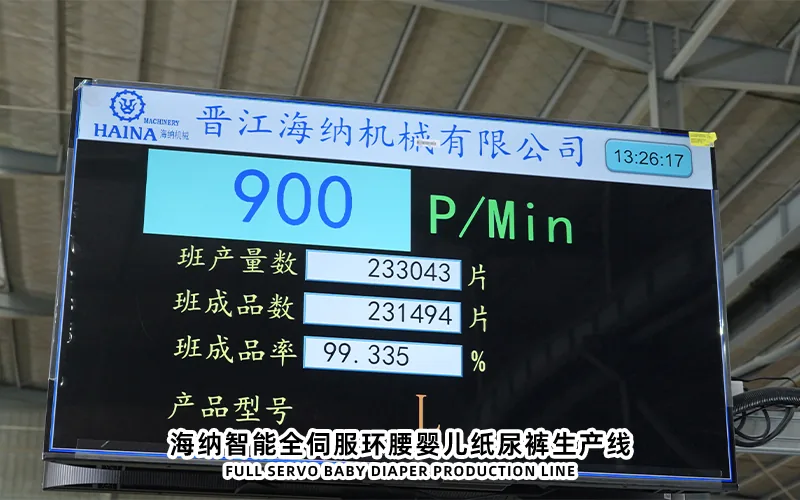
The FAT protocol must define conditions before the run. Record the machine configuration, product format, raw-material identity, utility condition, operator roles, warm-up or setup method, sample plan, run duration or sequence, stop rules, and acceptance calculations. Design speed is a design reference; stable working speed is a demonstrated condition; operating speed is the buyer's chosen production setting; and a contractual acceptance value is what the signed protocol judges. Combining them into one headline number obscures evidence.
Exceptions should enter a numbered punch list with severity, owner, action, evidence, and closure status. Changes made during FAT require impact review and appropriate retesting. A verbal promise to address an issue after packing is not equivalent to an agreed open-item plan. The buyer should know which items block shipment and which can be closed at installation.
FAT evidence should link test conditions, results, exceptions, and final configuration.
Govern Changes, Deviations, and Software Revisions
Change control applies to drawings, purchased components, process arrangements, controls, software, parameters, and documentation. A change request should state the reason, affected items, technical review, safety and quality impact, buyer-approval need, implementation plan, and verification. Emergency workshop decisions still need retrospective capture before release. Otherwise the delivered equipment and documents gradually diverge.
Software requires a baseline that can be identified and restored. Record program versions, human-machine interface files, drive settings, recipes or protected parameter sets, access levels, and backup method. The auditor should ask for a demonstration of version identification and restoration on a representative project. A backup that has never been checked may be incomplete or tied to unavailable tools.
Deviation is not the same as change. A deviation accepts a specific departure for a defined project or item; it does not silently alter the standard design. The disposition should explain technical acceptability, additional inspection, effect on spares or manuals, and buyer notification where applicable. Recurring deviations should trigger a standard-design review rather than permanent exception handling.
Audit Maintenance Information and Support Readiness
The delivered maintenance package should enable safe inspection, lubrication, adjustment, wear monitoring, replacement, troubleshooting, and restart. Verify that component names and tags match the machine, intervals have a stated basis, consumables and spare parts are identifiable, and isolation or access constraints are clear. Generic supplier manuals can support component detail, but the line-level documentation should explain how those components fit together.
Support readiness can be sampled before purchase. Give the supplier a realistic technical question and observe how it is logged, routed, investigated, and answered. The aim is not to measure a promised response time. It is to see whether service personnel can recover the project configuration, request useful evidence, involve engineering, document the resolution, and update recurring knowledge.
HAINA can review project requirements, FAT evidence, maintenance information, and training scope for its supplied equipment. During an audit, the buyer should still verify the actual process owners, project records, measuring tools, software controls, and open-issue route rather than treating a brand presentation as sufficient proof.
Factory Audit Evidence Map
Follow one project: Sample the contract, requirement matrix, engineering release, purchase controls, assembly inspection, test baseline, punch list, and as-built package.
Follow one change: Confirm request, impact review, approval, shop-floor implementation, document update, test, and customer communication where required.
Follow one nonconformity: Check identification, containment, technical disposition, rework or acceptance authority, verification, and recurrence review.
Follow one service case: Verify machine identity, evidence received, technical diagnosis, response record, closure, and feedback into manuals or design.
A final audit should reconcile the physical build with records and support data.
Frequently Asked Questions
Does a quality certificate replace a factory equipment audit?
No. A certificate may describe a management framework, but the buyer still needs project-level evidence that requirements, changes, tests, and delivered configuration are controlled.
How many projects should an auditor sample?
Use risk-based samples that include current work, a completed delivery, and a project with meaningful changes or exceptions. Trace depth is usually more revealing than a broad count of shallow checks.
What is the most important FAT record?
No single sheet is enough. The decisive set combines approved criteria, identified conditions, measured results, exceptions, corrective evidence, and the configuration that was finally released.
Why inspect service controls before buying?
Post-delivery diagnosis depends on accurate project baselines and issue routing. An early sample shows whether the supplier can connect a field symptom to the correct engineering information.
Conclusion
A dependable baby diaper equipment management system makes the delivered machine explainable: requirements lead to controlled engineering, the build produces traceable inspection, FAT records show conditions and results, changes preserve the baseline, and service can recover the same configuration. Before supplier approval, conduct a vertical audit on one project and require closure evidence for every material gap. The buyer's next action should be to issue a short evidence request covering the requirement matrix, as-built record, FAT protocol, software backup, change example, maintenance package, and service-case workflow, then verify those items against equipment on the factory floor.