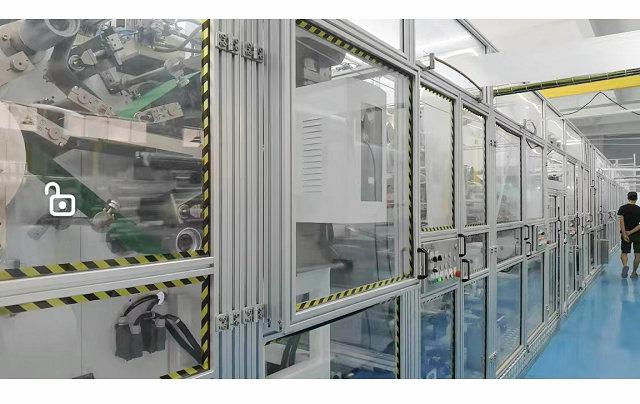
Allocate already-approved adult diaper machine spares between two warehouses according to when each location can make the right item physically available to the intended maintenance task. The central warehouse may hold stock economically while a nearby store offers quicker access, but distance alone does not establish availability. Opening hours, authorized access, reservation, transfer arrangements, and the item's storage needs can change which location is useful. Start with those constraints, then decide where the existing stock should sit.
This is a location-allocation decision. It assumes that the relevant spare references and their permitted applications have already been approved. It does not determine replacement equivalence, technical release, installation practice, or reorder quantities. The aim is to distribute a known stock holding without counting the same physical spare twice or promising a recovery path that nobody can carry out.
Define adult diaper machine stock for allocation
Take a reconciled snapshot of the already-approved physical stock. Identify the spare reference, relevant application boundary, quantity, present warehouse, and any existing reservation. Keep technical approval as an input to the allocation exercise. A location planner should not broaden a part's permitted use just to make an attractive distribution plan possible.
Exclude material that is not actually available to this decision. Stock promised to a separate project, an unresolved return, or an item still in transit may appear in an inventory total without being selectable for a new location. Use the site's existing status information to identify those limits; this guide does not create a second stock-release process.
Record storage constraints from the applicable item instructions. A smaller store may be close to the line yet lack the required preservation arrangement or suitable space. In that case, location convenience does not remove the constraint. Ask the responsible stores and maintenance teams what an acceptable local holding would require before assuming that the approved spare can be kept beside production.
Choose locations with a scenario model
Compare the proposed distribution against specific access scenarios. The table below does not assign universal quantities. It helps the buyer decide whether a known item should remain centrally held, sit locally, or be distributed where the available holding permits. Each choice still needs the site's approved storage and inventory controls.
Observed scenario
Location implication
Evidence needed before choosing
Limit to keep visible
Planned work with a confirmed advance transfer
Central holding may support the named task
Reservation, transfer owner, destination receipt plan
It is not immediate local availability
Unplanned demand when central access is unavailable
Consider local holding if permitted storage and access exist
Authorized local retrieval path during the demand window
A spare alone does not establish repair readiness
Shared item serving two eligible machine groups
Retain a clear allocation or reservation rule
Demand ownership and response to simultaneous requests
One physical item cannot cover both requests at once
Local storage cannot preserve the item as required
Keep the suitable location or establish an approved alternative
Applicable storage instructions and site capability
Proximity cannot override preservation needs
Document why the chosen location answers the relevant scenario. If an item is moved locally only because a historical central transfer was unavailable, retain that evidence and the condition being addressed. Later improvements to the transfer route may justify a different arrangement, but the review should have a reason beyond a general preference for centralization or local convenience.
Name the task and its availability window
Describe the maintenance demand that the location is intended to serve. Planned work and an unexpected interruption can produce different access questions. For planned work, the relevant spare may be transferred in advance under the approved schedule. For an interruption outside normal stores hours, the team may need an established route to retrieve a retained item without depending on an unavailable person.
Separate the availability of the spare from the completion of the repair. A local item does not guarantee that qualified personnel, instructions, tools, or the permitted work conditions are ready. The allocation review addresses the material path only. Its contribution should be described as access to the needed stock, not a promise about total downtime.
Ask the maintenance owner which demand scenarios matter for this machine group. Do not automatically treat every spare as needing identical immediate access. A bulky assembly for planned work may have a different location rationale from a small approved item associated with an unplanned task. Record the rationale in terms of the identified task and its access constraints, avoiding unsupported universal response targets.
Allocate a known spare holding against the task it is intended to support, rather than the equipment family's name alone.
Test whether the local store is accessible
A nearby warehouse can be unavailable in practice. Review its opening arrangements, authorized access, identification method, and ability to record a transaction during the relevant work period. Ask which role can retrieve the approved spare and how that role confirms the actual location. The fact that someone knows where a key is kept does not establish a controlled access route.
The store is open, but retrieval is uncertain.
Review the picking environment. Similar packages, cramped shelving, or incomplete location references can make a nearby item difficult to find. Use permitted identification that connects the physical stock with its existing inventory record without weakening the item's required storage conditions.
The store is closed during the demand window.
Determine whether an authorized alternative access arrangement exists and whether its records remain usable. Do not propose informal bypasses. If the site has no workable route, treat local stock as unavailable for that scenario until the responsible owner establishes one.
Test the transfer as an executable sequence
Assess a central-to-local transfer through the steps that people must actually complete, rather than through distance or an assumed vehicle journey. Use the site's permitted handling and inventory arrangements throughout. The sequence below is a planning and retrieval check; it is not an instruction for lifting, moving, or installing a component.
Request the specific holding. The maintenance request identifies the approved spare and intended application, together with the demand window. Name the role that receives it during that window; an unattended inbox does not establish a usable starting point.
Confirm selection and reservation. Central stores checks the identified physical stock and any competing commitment. Record which item or quantity is reserved for the request so another team does not receive an incompatible promise against the same holding.
Prepare the permitted handover. Identify the authorized picker and the item's applicable packaging or preservation requirements. Confirm that the necessary resources exist for the transfer; this review does not invent alternative handling methods when those resources are absent.
Arrange the available transfer route. Name the dispatch and transport responsibilities using confirmed arrangements. Distinguish routine service from an exceptional request. Where the relevant work period has not been tested, leave that part of the path unconfirmed.
Make the destination receipt visible. The receiving role acknowledges the identified stock and its destination location through the existing process. Until that boundary is closed, the item may be in transit rather than freely selectable on either shelf.
The warehouse choice should correspond to a defined demand window and a demonstrated access route.
Resolve two requests competing for the same item
Consider a central holding with one already-approved spare eligible for both machine groups. If the groups request it during the same work window, both requests can be valid while only one can receive that physical item. Resolve the conflict through the site's allocation authority before either team treats the material as committed.
Identify the collision. Confirm that both requests concern the same physical holding, rather than two distinct references sharing a short description. Keep their task references and demand windows visible; a total stock figure alone can hide the conflict.
Recover the existing reservation. Establish whether an authorized commitment already governs the item. If the responsible authority changes that commitment, record the revised decision and notify the affected requesters through the agreed route.
Choose one executable material path. Record which request receives the item and from which location. An assumed return from the first task should not become a confirmed promise to the second unless its timing and usable condition have an established basis.
Expose the uncovered demand. Ask the responsible maintenance owner to identify an approved alternative route or leave that request unfulfilled. Do not hide it by displaying the same spare as available support in both warehouse plans.
For the HAINA adult diaper machine product family, keep the installed-project and approved-spare references when asking the project engineering contact to clarify an uncertain application boundary. That clarification does not decide the buyer's competing stock allocation.
Count each physical item in one place
Distinguish warehouse quantity from visibility in the maintenance planning system. A planner may display a centrally held spare as support for a local line, while stores correctly records it at the central location. Those views need a common physical reference. Do not add the planning display to the warehouse balance as though it describes another item.
When dividing a holding, reconcile the origin quantity, moved quantity, destination receipt, and resulting locations. Retain the relevant identity at the level already required for those spares. If the original package is split, the site's controlled identification method must let each separately held portion point to its stock reference without relying on the label left at the other warehouse.
In-transit material needs a visible state in the existing process. An outstanding transfer should not be advertised as freely selectable at both locations. If the inventory system presents movement through separate transactions, the responsible team should establish how staff recognize the intermediate condition. The objective is one consistent physical count, even where several teams can see or request the same stock.
A retrieval rehearsal tests the material path without claiming that it proves the complete maintenance outcome.
Rehearse the proposed allocation
Run a limited retrieval exercise through the permitted process before describing the new allocation as usable. Choose an identified spare and a relevant demand window. Follow the request from maintenance to the actual shelf or confirmed central transfer, checking which roles, records, and resources are needed. The exercise need not include installation or interrupt production.
Record where the proposed route differs from the available route. Perhaps the local reference is correct but its authorized picker cannot access the store at that time. Perhaps the central item is visible but reserved elsewhere. These findings change the location's usefulness even though the stock count is accurate. Assign each gap to the owner who can resolve its specific access or allocation question.
Review the distribution when the underlying assumptions change, such as a warehouse relocation, altered access hours, or a different transfer arrangement. Use the original scenario and rehearsal record to identify what requires rechecking. This keeps the allocation connected to practical availability rather than allowing an old location decision to survive long after its access conditions have changed.
Two-warehouse allocation questions
Should every critical spare be stored beside the machine?
First assess the relevant demand, authorized access, storage conditions, and confirmed central transfer route. A critical item may need local holding, but proximity alone does not prove that the location supports its task.
Can the central quantity also appear in the local planning view?
It can be visible as external support if the location and reservation limits remain clear. It must not be added to the local physical quantity as a second spare.
What if there is only one spare for both warehouses?
Choose a location and reservation rule against the relevant scenarios. Record the effect on the other machine group. One item cannot be represented as simultaneously available at two shelves.
Does a successful retrieval rehearsal prove the repair response?
It demonstrates only the tested material-access path under its stated conditions. Personnel, permitted work, tools, and repair verification remain separate requirements for the actual maintenance task.
Conclusion
Distributing adult diaper machine spares across two warehouses should turn approved stock into credible material availability. Match each location to its demand window, confirm the transfer path, and preserve one physical count through reservations and movement. Before changing the arrangement, rehearse the route for a selected existing spare and document the constraint it solves. That evidence gives the buyer a location decision grounded in usable access rather than an apparently generous total spread across two inventory screens.