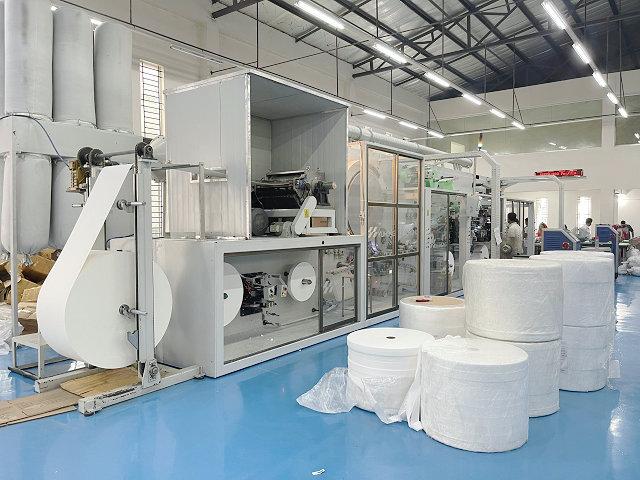
Buyers should ask baby diaper manufacturing machine suppliers who will train each job role, what tasks trainees must perform, which documents and backups will be delivered, how competence will be tested, and what support applies after handover. A number of training days does not define useful training. The program should cover safe operation, threading, recipes, size change, quality checks, fault recovery, maintenance, spare parts, software control, and production restart with the buyer's materials. Support terms also need response channels, availability, remote access rules, language, escalation, exclusions, and evidence required before a service case can be diagnosed.
Assign Competence by Job Role
Build a role matrix before agreeing the course. Operators need safe startup, threading, recipe use, routine checks, material changes, alarms, product sampling, controlled stop, and housekeeping. Maintenance technicians need mechanical, electrical, pneumatic, vacuum, adhesive, inspection, and control-system diagnosis within their authorized scope. Quality staff need measurement methods, defect standards, sampling, traceability, and release rules. Supervisors need performance definitions, change control, escalation, and shift handover.
Identify the trainees by name or required position, language, current experience, and prerequisite skills. A person unfamiliar with servo systems or electrical safety may need foundational training before machine-specific work. Interpretation can support communication, but technical terms, alarms, drawings, and interface labels should be translated consistently.
Define who is authorized to change recipes, tune drives, bypass a sensor, access maintenance modes, edit inspection thresholds, or restore software. Training does not automatically grant authority. The buyer's plant should establish access roles and approval rules, while the supplier explains the technical effect and protected boundaries of the supplied system.
Training objectives should differ for operators, maintenance, quality, and supervisors.
Define the Practical Training Scope
Convert broad promises into observable tasks. For operation, include pre-start inspection, utility checks, safe threading, material identification, roll loading, splice preparation, recipe verification, web centering, startup sequence, product measurement, packaging interface, stop, restart, and shutdown. For changeover, trainees should prepare tools and parts, follow isolation requirements, set manual references, load the correct recipe, and obtain quality release.
Maintenance training should follow the actual machine architecture. Cover lubrication, cleaning, inspection, belts and couplings, bearings, cutters, tension and guiding elements, vacuum, dust extraction, compressed air, adhesive systems, sensors, drives, cabinets, backups, and replacement verification. Make clear which precision adjustments or software functions remain supplier-level work.
Fault training should use safe, controlled scenarios. Trainees can diagnose a contaminated sensor, incorrect material path, guide limit, air loss indication, recipe mismatch, or controlled alarm without creating equipment damage. They should gather evidence before resetting: alarm history, machine state, material lot, affected zone, product sample, settings, and recent work.
Minimum practical exercises
Complete one supervised startup and normal shutdown.
Thread each material path included in the trainee's role.
Prepare and execute representative roll changes and splices.
Perform one product or size change using controlled documents.
Measure critical product features and make a release decision.
Diagnose selected alarms and complete a verified restart.
Perform assigned inspection and maintenance tasks safely.
Require Controlled Documents and Backups
Training depends on documents that match the delivered machine. Ask for an equipment list, layout, utility requirements, operating manual, maintenance manual, lubrication schedule, pneumatic and electrical drawings, parts drawings where included, spare and wear-part lists, safety information, alarm guide, recipe guide, and inspection instructions. Each should carry an identifiable revision.
Software deliverables require equal attention. Define backups for PLC, HMI, servo drives, vision or inspection systems, recipes, and relevant configuration files. Record software version, hardware relationship, access method, passwords or account handover under an agreed security process, and restoration responsibility. A backup that has never been checked may not support recovery.
Link each training exercise to the relevant document. If a trainee cannot find a lubrication point, alarm explanation, or changeover reference without relying on the instructor's memory, the documentation needs improvement. Record redline corrections during FAT and site commissioning, then issue final controlled versions.
Documents and software backups should match the final delivered equipment revision.
Test Competence Through Demonstration
Attendance proves presence, not competence. Define a practical check for each role. An operator can identify risks, complete pre-start checks, thread a selected path, choose the authorized recipe, respond to an alarm, inspect product, and conduct a controlled stop. A maintenance technician can isolate the relevant energy, inspect a component, follow a replacement method, restore settings, and support a verified restart.
Use observation sheets with task, acceptance behavior, result, retraining need, assessor, and date. Avoid testing only under ideal stable running. Include a handover between shifts and a scenario requiring escalation rather than an unauthorized adjustment. Keep the standard focused on safe and repeatable behavior.
Train internal trainers where the buyer will operate several shifts or add staff later. They need enough depth, materials, and assessment tools to reproduce the program. Define whether supplier certificates indicate attendance or demonstrated competence; the plant still controls its authorization to work.
Prepare Installation and Ramp-Up Support
Separate installation supervision, commissioning, training, trial production, performance testing, and ramp-up assistance in the commercial scope. State who supplies labor, lifting, utilities, materials, consumables, tools, instruments, interpretation, travel arrangements, and permits. Delays caused by missing site readiness should have a clear reporting and rescheduling process.
Before specialists arrive, use a readiness checklist for floor and access, power, compressed air, vacuum or extraction interfaces, environmental conditions, materials, packaging, quality instruments, network permissions, safety procedures, and trainee availability. A supplier technician cannot complete practical training when the machine is waiting for utilities or approved rolls.
Plan training around the startup sequence. Classroom orientation can occur early, but hands-on work should follow mechanical completion, safety checks, utilities, dry trials, material trials, and product release. Repeat critical tasks after the first production experience, when trainees can ask more specific questions.
Site support works best when utilities, materials, staff, and quality tools are ready before commissioning.
Clarify Remote Service and Escalation
Define the service channel, normal availability, supported languages, required case information, target acknowledgement process, and escalation contacts. Do not treat response time as repair time. Diagnosis depends on evidence, time zone, machine access, parts, plant resources, and whether the issue can be reproduced safely.
A good case package includes machine identity, module, software version where relevant, product and material, event time, alarm history, current state, recent changes, photos or video, affected samples, and actions already taken. The supplier should state which data can be exported and how logs remain synchronized.
Remote access needs explicit authorization, cybersecurity controls, session logging, user roles, and a method to stop access. Define whether the buyer must provide a secure connection and who may approve parameter changes. A remote session should end with actions, settings changed, backups, verification results, and next responsibility.
HAINA can discuss training and support scope for a baby diaper manufacturing machine during project review. Buyers should attach the agreed role matrix, deliverables, site conditions, and service boundaries to the contract rather than relying on a general after-sales statement.
Use a Supplier Question Table
Question to ask
Strong evidence
Unclear answer to resolve
Contract attachment
Who is trained for which task?
Role matrix with practical objectives
All staff receive general training
Trainee roles and competence checks
Which documents are final deliverables?
Revision-controlled document register
Manuals supplied with machine
Format language revision and due date
How are backups restored?
System list version record and tested method
Programs are backed up
Files access responsibility and verification
What happens after a service request?
Channel evidence checklist and escalation flow
Support is available anytime
Coverage exclusions and communication process
What site conditions are required?
Readiness checklist tied to commissioning stages
Buyer prepares the factory
Utilities labor materials tools and delays
Close Handover with Open-Point Control
Use a handover register that combines equipment status, FAT and site observations, documents, backups, spares, training records, sample approval, and unresolved work. Each open point needs description, impact, owner, target date, closure evidence, and the condition for buyer acceptance. Do not hide training gaps inside a general punch list.
Conduct a final independent run by the buyer's trained team while the supplier observes. The team should prepare materials, start, verify quality, manage a normal roll change, respond to a selected event, and shut down. Maintenance and quality staff should complete their related tasks. This exposes dependence on supplier intervention before the specialist leaves.
After an agreed operating period, review repeated alarms, operator questions, spare use, maintenance findings, quality variation, and documentation corrections. The review can identify focused refresher training. Preserve lessons in controlled procedures and internal trainer materials so competence does not leave with one employee.
Training should also cover abnormal but foreseeable plant conditions. Teams need to understand the approved response to low air pressure, vacuum loss, an interrupted adhesive system, a damaged roll, a packaging stop, rejected output, and loss of a control or inspection device. The exercise should focus on safe containment and evidence collection, not improvised bypasses.
Ask how competence will be maintained after the first production months. New operators, revised products, replacement components, and software changes can make the original course incomplete. A change-control process should identify which procedures, backups, risk reviews, and people require an update. Refresher work is most useful when linked to actual events rather than repeated as a generic presentation.
Spare-parts support deserves a training element as well. Maintenance staff should know how to identify the installed item, verify an approved replacement, preserve sensitive components, record consumption, and perform post-replacement checks. Procurement should understand which parts need supplier confirmation and which standard parts can be sourced under controlled specifications.
Handover should close practical competence, documents, backups, samples, and outstanding responsibilities.
Training and Support Questions
How many training days are enough?
There is no universal number. Duration depends on machine scope, roles, prior skills, language, site readiness, product range, and the practical tasks required for competence.
Should training be completed at FAT or at the buyer's site?
Use both when practical. FAT supports early learning and documentation review, while site training covers the installed utilities, local team, materials, and production procedures.
What information should be sent for remote diagnosis?
Send machine and module identity, event time, alarm history, operating state, material and product, recent changes, visual evidence, samples, and actions already tried.
Does a training certificate authorize machine work?
Not automatically. The buyer's plant should authorize work according to demonstrated competence, role, safety rules, and access control.
Conclusion
Evaluate training and support as measurable project deliverables. Assign skills by role, require hands-on tasks, connect instruction to final documents and backups, and test competence through demonstration. Prepare the site before specialists arrive, define remote service evidence and access, and close every handover point with an owner. This approach gives the buyer a usable operating capability rather than only a record of attendance.