A useful factory acceptance test for a diaper production line converts the purchase agreement into observable tests, named materials, controlled product sizes, measurable acceptance limits, and signed evidence. It should define what will be tested at the supplier factory, who provides materials and operators, how design speed differs from stable working speed, how defects and waste are counted, and what happens when a result fails. Buyers should write the FAT before assembly is complete, attach approved product drawings and sample criteria, and reserve enough time for safety, changeover, packaging, documentation, and repeat-run checks.
Define the FAT Boundary Before Writing Tests
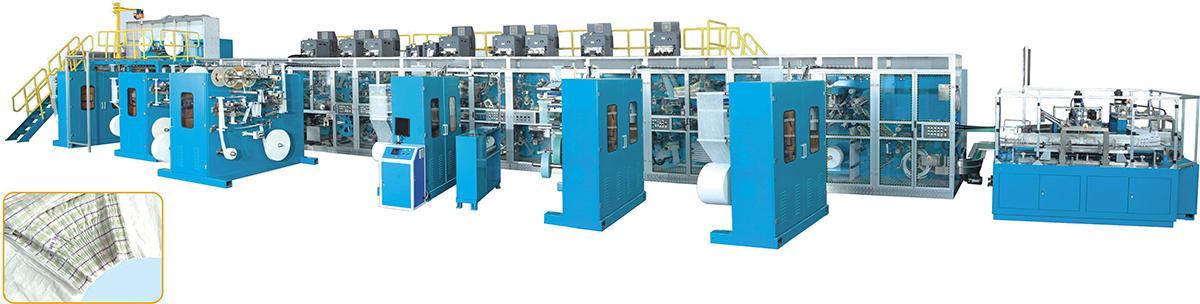
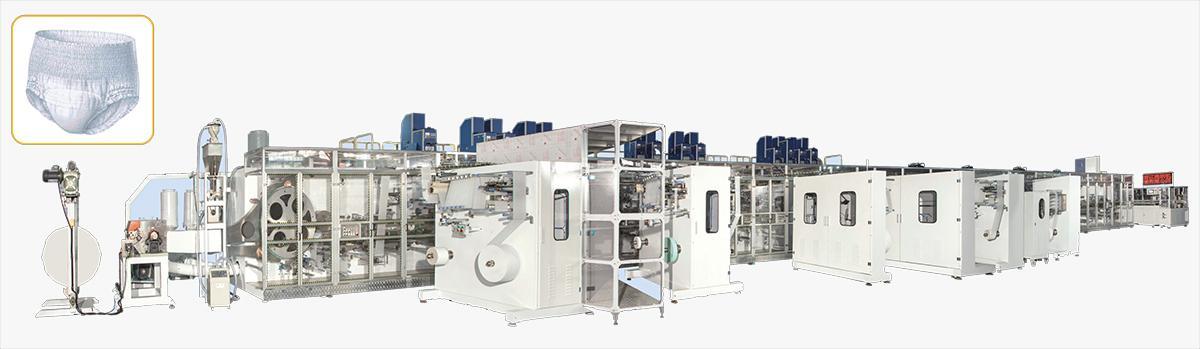
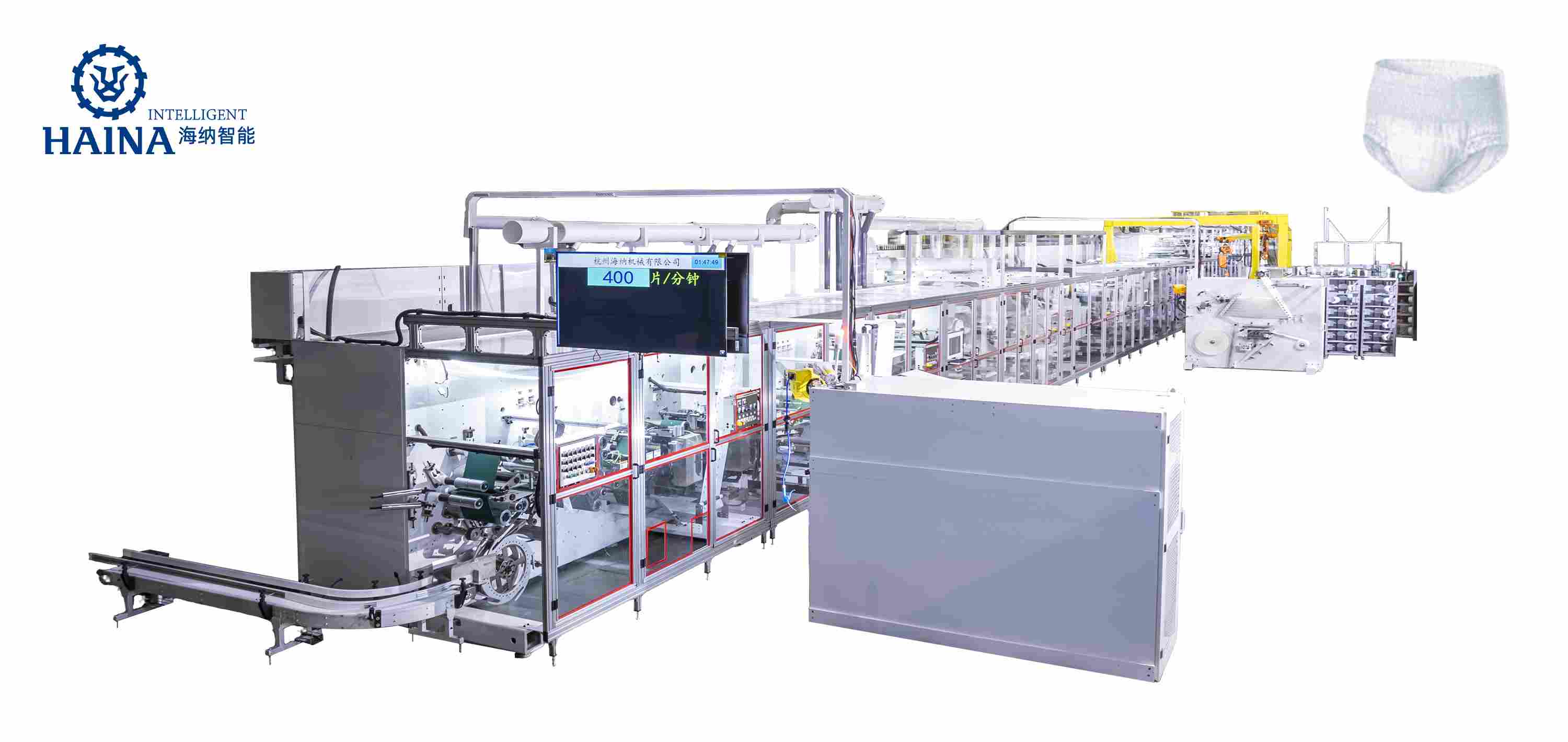
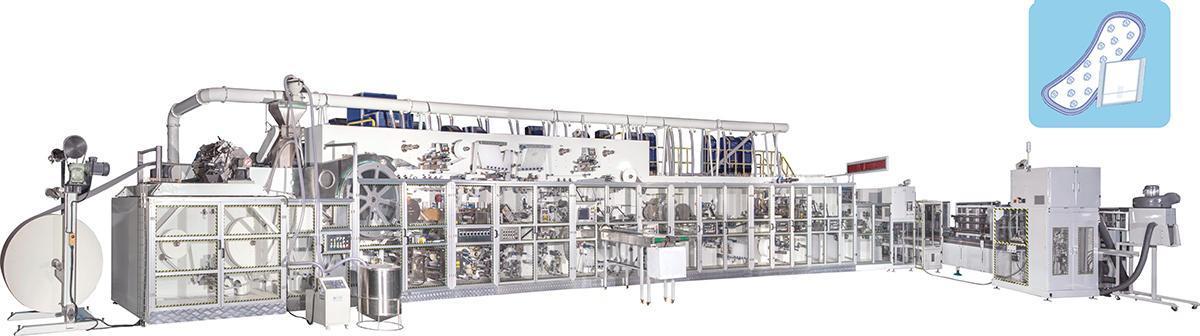
The first page of a FAT should state exactly which equipment is inside the test boundary. A diaper manufacturing production line can include pulp preparation, absorbent core forming, SAP dosing, nonwoven feeding, elastic application, tape or waistband processes, cutting, folding, inspection, rejection, counting, stacking, bagging, and data collection. If an auto bagger or inspection device is supplied by another party, the test must say whether it will be physically connected, simulated, or excluded.
List the contract documents that govern the test. These normally include the approved product drawings, material specifications, layout, utility schedule, electrical scope, software functions, safety list, spare-parts list, and agreed performance schedule. Give every document a revision number. A result cannot be judged consistently when the supplier and buyer are working from different drawings.
The boundary also needs a location and condition statement. Record the available electrical supply, compressed air, dust extraction, room conditions, test materials, packaging materials, and measuring tools. Identify temporary factory arrangements that will differ from the final plant. The FAT proves performance under stated factory conditions; it does not replace site acceptance after shipping, installation, and connection to the buyer's utilities.
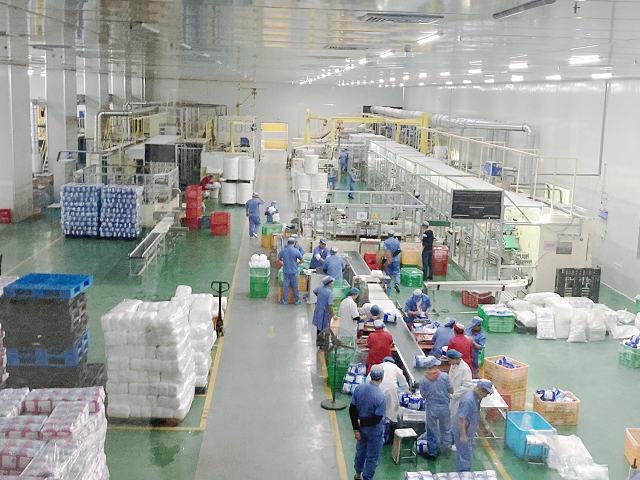
A FAT starts with a clearly defined equipment boundary and approved test condition.
Freeze the Product and Material Matrix
Do not write only that the machine will make several sizes. Build a matrix that names each test size, product construction, finished dimensions, core profile, elastic arrangement, tape system, waistband, package count, and approved sample. Mark which size represents the widest web, the longest product, the highest material load, and the most difficult changeover. Testing only an easy middle size leaves important operating risks unexamined.
Attach a material schedule for every roll and consumable used during the FAT. Include topsheet, acquisition layer, tissue, pulp, SAP, backsheet, cuff nonwoven, elastic, frontal tape, side tape, release material, adhesive, packaging film, and labels where applicable. Record supplier, grade, width, basis-weight range, roll diameter, core size, winding direction, splice preparation, and quantity. The FAT result is meaningful only for the materials actually run.
Responsibility for material must be explicit. State who purchases it, who ships it, who checks it on arrival, and how unused or damaged material will be handled. Keep certificates and receiving records with the FAT evidence, but do not treat a certificate as proof that the material runs correctly. Compatibility is demonstrated by threading, tension stability, bonding, cutting, forming, and finished-product inspection under the agreed test.
FAT input package
Approved product drawings and signed reference samples for every test size.
Material schedule with roll data, winding direction, lot identity, and quantity.
Acceptance sheet for dimensions, appearance, bonding, count, and packaging.
Utility and environmental conditions available at the supplier factory.
Named buyer and supplier representatives authorized to sign results.
Calibrated or otherwise controlled measurement tools and sampling method.
Write Measurable Acceptance Conditions
Each FAT line item needs five elements: the object being tested, the setup, the method, the acceptance condition, and the evidence. Replace phrases such as good quality, normal operation, and easy changeover with checks that two qualified observers can perform in the same way. If a dimension is controlled, name the sampling point, sample quantity, measurement tool, and drawing tolerance. If a sensor is tested, state the simulated fault and expected response.
Acceptance values must come from the signed commercial and technical agreement. The FAT document should not create new guaranteed values after the order, and it should not weaken values already agreed. Where a value has not been contracted, use the FAT to collect a baseline and label it as an observation, not as a pass condition. This distinction prevents an unresolved assumption from becoming a false guarantee.
Test item
Defined setup
Evidence
Acceptance wording
Product dimensions
Named size and approved materials after stable setup
Numbered sample sheet and measurements
All measured characteristics meet the signed drawing tolerance
Material splice
Specified unwind and prepared replacement roll
Video, alarm log, splice sample, and waste record
Sequence completes according to the approved function description
Fault rejection
Controlled missing or displaced component
Marked input, rejected output, and counter record
Known fault is identified and segregated as agreed
Stable run
Named size, materials, speed basis, and duration
Time log, counters, stops, defects, and accepted output
Signed contract limits are met using the agreed calculation
Emergency stop
Defined operating condition and safe test method
Checklist and restart record
Machine response and controlled restart match the safety specification
Build the Test Sequence Around Production Risk
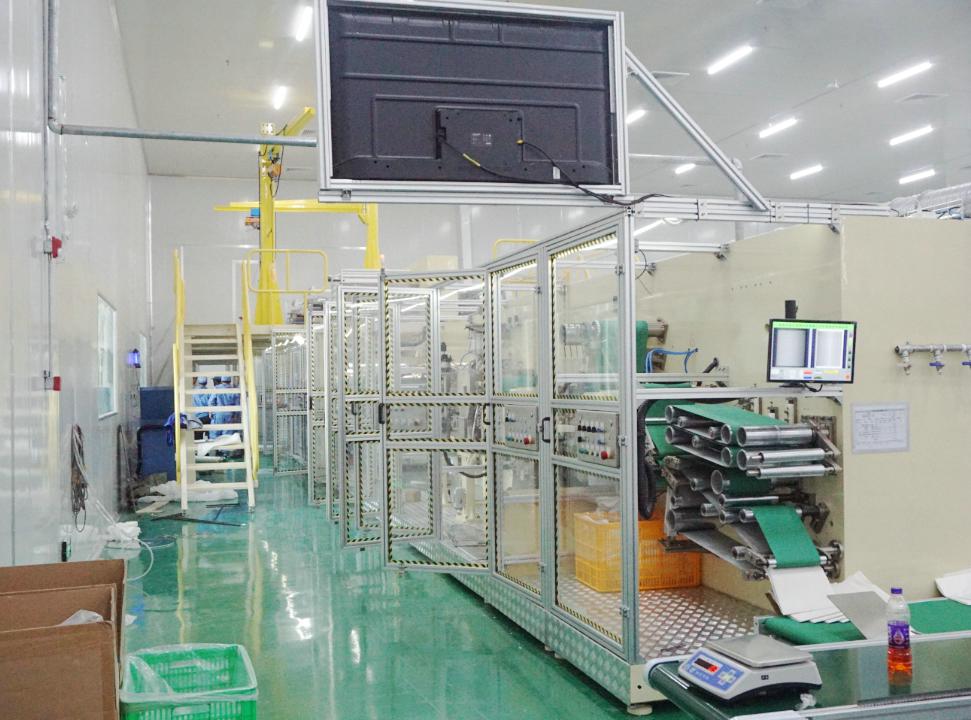
Start with document and installation checks before consuming production material. Verify equipment identification, guards, electrical cabinets, lubrication, fasteners, web paths, direction arrows, control screens, recipes, alarms, and utility connections. Then perform dry motion and low-speed threading. These stages catch basic errors without hiding them inside a high-speed run.
Move from individual functions to connected operation. Test unwinds, web guiding, tension control, adhesive application, absorbent core formation, component registration, elastic placement, cutting, folding, inspection, rejection, counting, and discharge. When a function has several modes, include the modes required by the contract. Record settings instead of relying on an operator's memory.
Use a risk-based order for product trials. Run the size or material combination most likely to expose web width, cutting, tension, or sealing limits before repeating easier conditions. Allow time to correct findings and rerun the affected sequence. A schedule that places every difficult test in the final hours encourages rushed decisions and weak evidence.
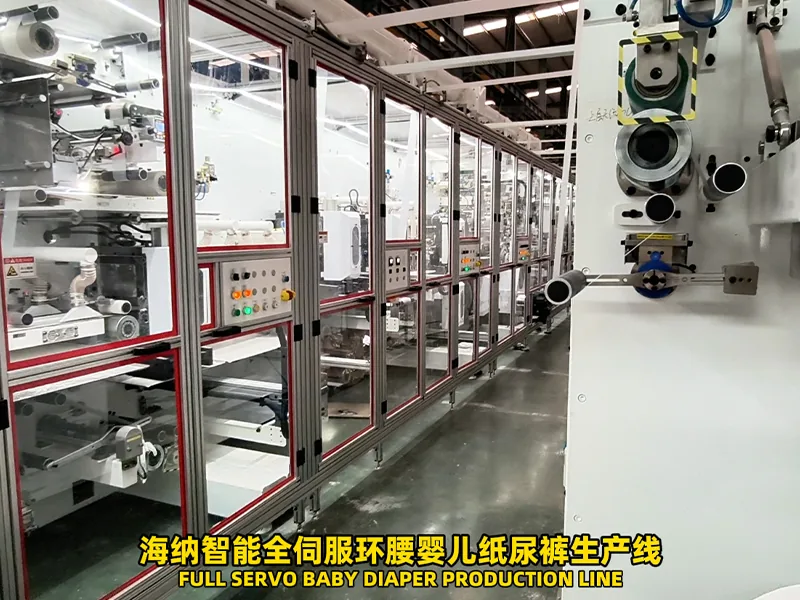
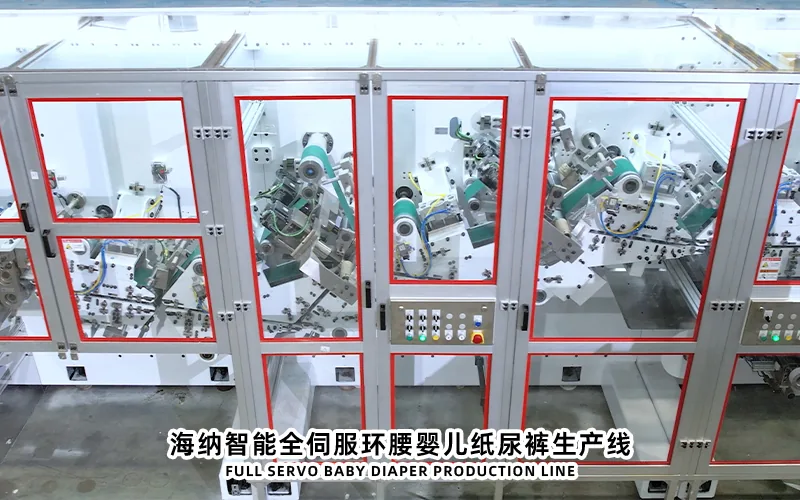
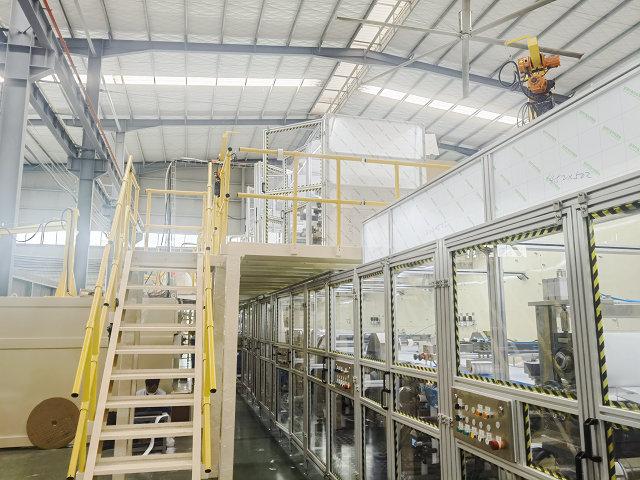
Functional checks should progress from individual stations to connected production.
Separate Design Speed from Accepted Stable Output
Design speed describes an engineering capability under stated conditions. It is not automatically the speed at which every product, material, size, and packaging format will run continuously. Operating speed is the set point used during a particular run. Stable working speed is the demonstrated condition at which the complete tested system maintains the agreed quality and continuity. FAT acceptance value is the contractual threshold and method used to decide pass or fail.
Write these terms separately in the test. State the exact product size, material set, duration, planned stops, excluded stops, quality sampling intervals, counter sources, and packaging condition. Define whether accepted output is counted at the main machine discharge, after rejection, after stacking, or after sealed bags. A speed display alone cannot prove sellable output.
Keep a chronological run log. Record start and stop time, operating set point, accepted count, rejected count, material changes, alarms, adjustments, micro-stops, and reason codes. If the supplier makes a correction, identify the time and repeat the relevant measurement. HAINA and the buyer can then review the same production evidence rather than debating a single peak number.
Record Defects Waste and Traceable Evidence
Define the defect catalog before the run. Categories may include missing components, displaced core, poor elastic position, adhesive contamination, damaged backsheet, incorrect fold, weak bonding, tape misplacement, count error, or package defect. The buyer's approved product specification should decide what is acceptable. Do not combine all issues into one vague waste figure because different causes require different corrective action.
Agree how startup waste, roll-change waste, changeover waste, test samples, known challenge pieces, and unplanned process waste are separated. Record material input only when the measuring method is available and reliable. If exact mass balance is outside the FAT scope, count products and events that can be verified instead of inventing precision.
Evidence should remain traceable after the meeting. Use numbered sample bags, photographs tied to test items, exported alarm records, recipe versions, counter screenshots, measurement sheets, and signed observation logs. Store one controlled copy with the project documents. A concise evidence package is more useful than hours of unindexed video.
Defect categories and waste boundaries should be agreed before the stable run begins.
Test Changeovers Packaging and Safety Functions
A changeover test should name the starting and ending product, the approved procedure, required tools, change parts, recipe handling, responsible people, and timing boundary. Separate machine stop time from subsequent tuning and quality-release time. Confirm that removed tooling is identified and protected and that settings cannot be confused between sizes. Inspect the first products after restart rather than declaring completion when the machine first moves.
For downstream integration, test counting, stack formation, transfer, bag opening, loading, sealing, coding, rejection, and response to a packaging stop. If the bagger is unavailable at FAT, document the simulator and list functions that remain for site acceptance. Buyers comparing an automatic baby diaper manufacturing machine should make this interface boundary visible in both the quote and test protocol.
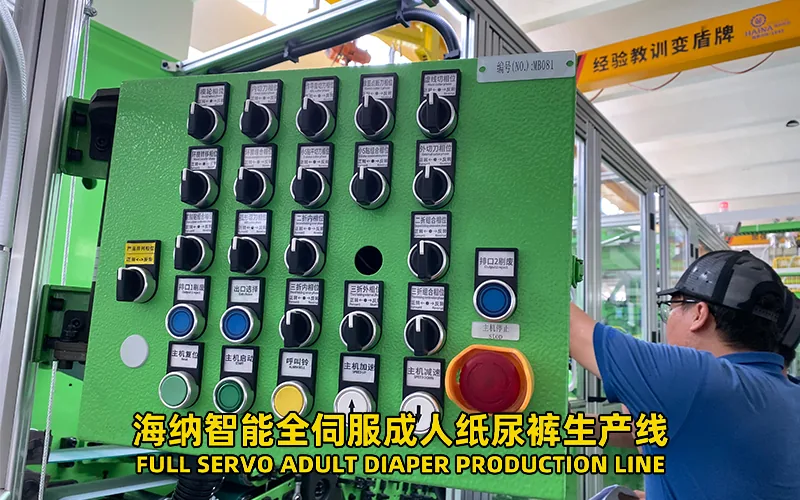
Safety checks require a controlled method. Verify guards, interlocks, emergency stops, reset logic, warnings, isolation points, and restart behavior without creating an uncontrolled hazard. Record any temporary factory safeguard and the permanent site responsibility. Operator training should cover safe threading, jam removal, adhesive hazards, stored energy, and fault recovery before anyone participates in production testing.
Assign Owners and Close FAT Exceptions
Use one exception register for every failed, conditional, or deferred item. Each record should describe the observation, affected requirement, evidence, immediate containment, corrective action, owner, due date, and verification method. Distinguish a minor document correction from a performance issue that affects shipment approval. Avoid broad statements such as supplier will improve later.
The closing meeting should classify each item as passed, passed with an agreed condition, failed and requiring retest, or deferred to site acceptance for a documented reason. State whether shipment is released and who has authority to approve it. Both parties should sign the test report and exception register, while signatures on attendance pages should not be mistaken for acceptance.
After corrective work, repeat the smallest complete test that proves the issue is resolved without hiding related effects. Update drawings, software versions, recipes, manuals, and parts lists when the correction changes the delivered configuration. The final FAT package should become a commissioning input, not an isolated purchasing document.
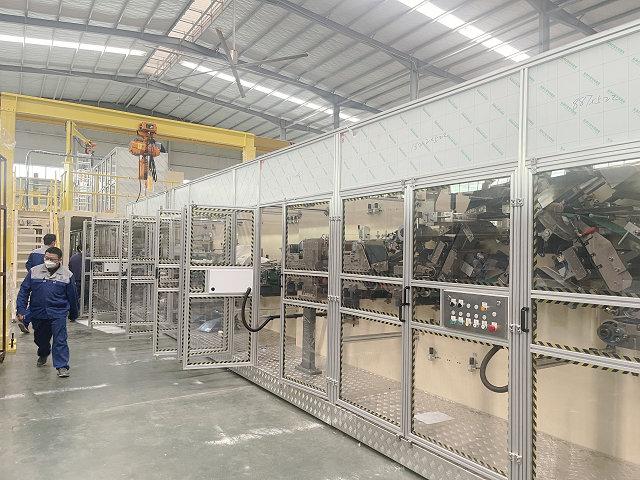
Shipment release should follow signed results, controlled exceptions, and clear retest evidence.
Factory Acceptance Test FAQ
Should the FAT duration be a fixed number of hours?
The duration should follow the contracted performance objective and risk. Define the continuous-run period, allowed interruptions, sampling schedule, product sizes, and retest rules rather than choosing time alone.
Can the supplier's standard FAT form replace the buyer's protocol?
It can provide a useful starting point, but the final protocol must include the buyer's product drawings, materials, interfaces, acceptance values, and contract responsibilities.
What if production materials arrive late or differ from the approved grade?
Record the deviation before testing. Run only with written agreement, describe the limitation in the result, and schedule the affected compatibility test with approved material.
Does a passed FAT eliminate the need for site acceptance?
No. Site acceptance verifies installation, utilities, environmental conditions, operator readiness, downstream connections, and performance after transport and reassembly.
Conclusion
A strong diaper production line FAT is written as a controlled verification plan, not a factory demonstration agenda. Define the equipment boundary, freeze products and materials, use measurable conditions, distinguish speed terms, and preserve traceable evidence. Include connected production, defects, waste, changeovers, packaging, safety, training, and exception closure. When every acceptance statement names a method, limit, owner, and record, the buyer gains a reliable basis for shipment and a practical starting point for site commissioning.