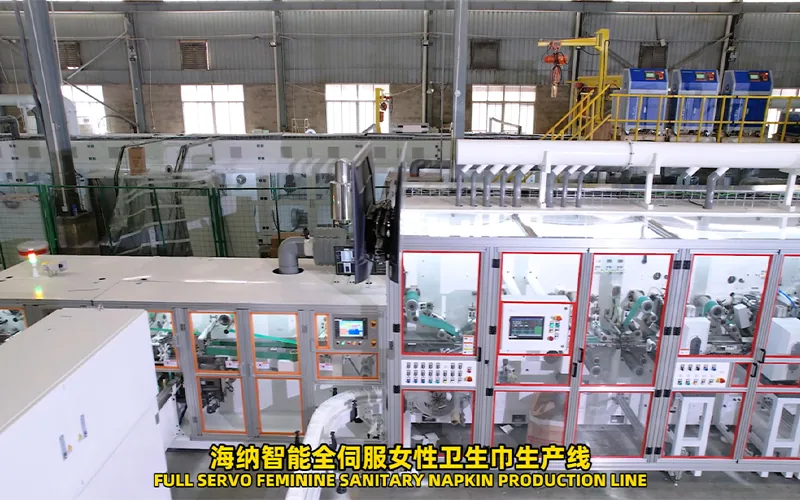
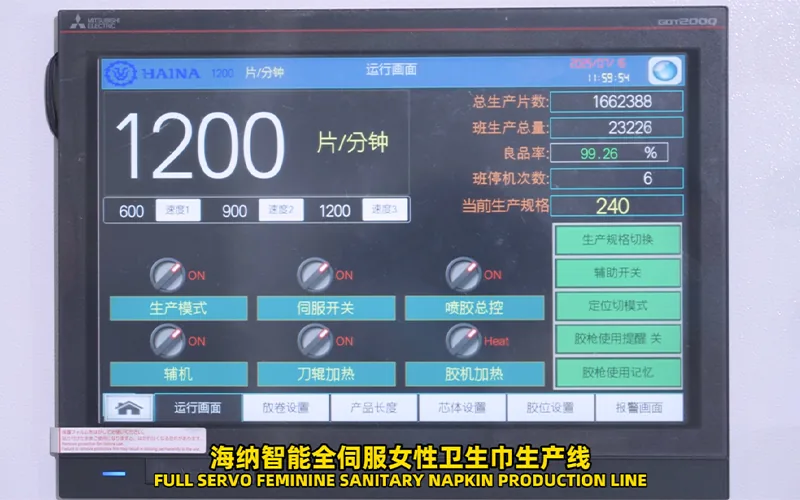
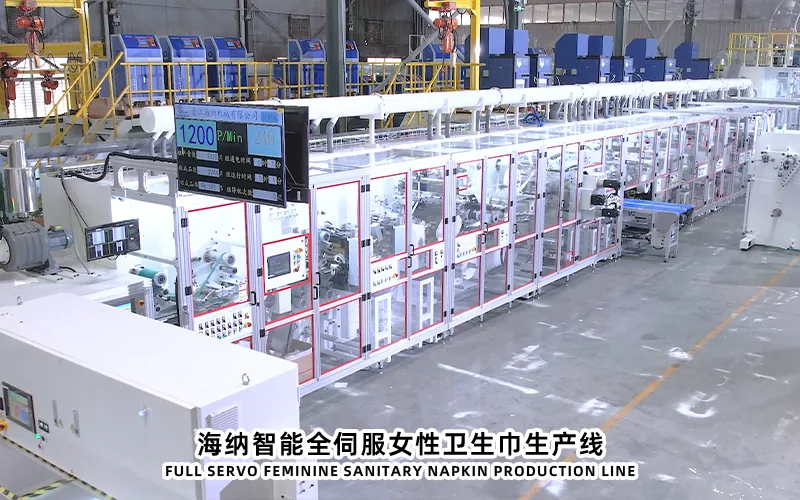
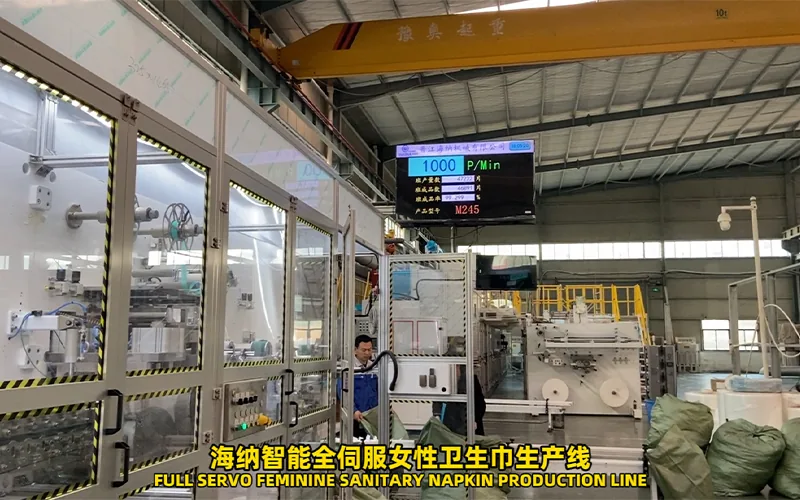
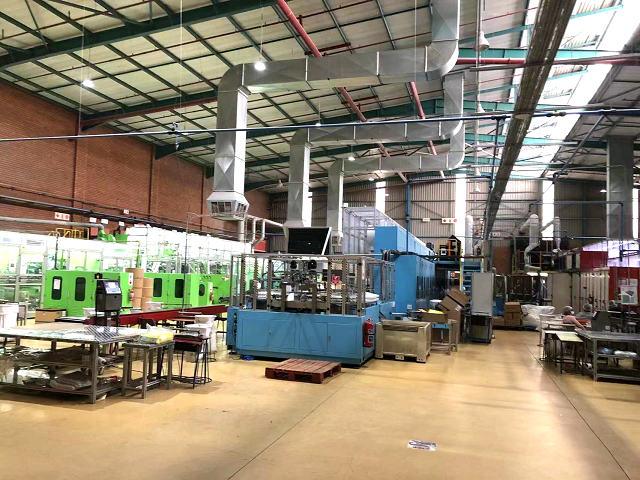
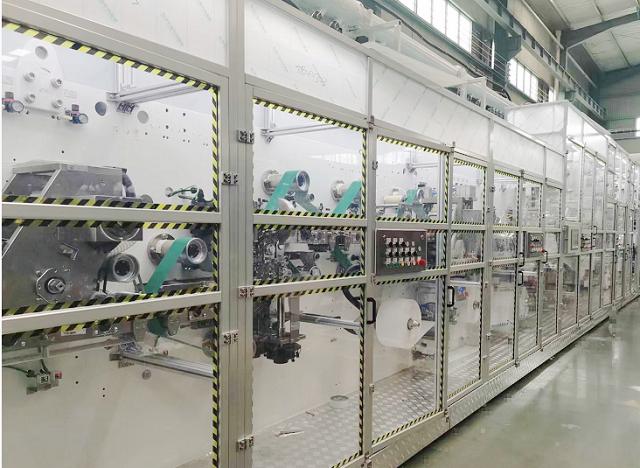
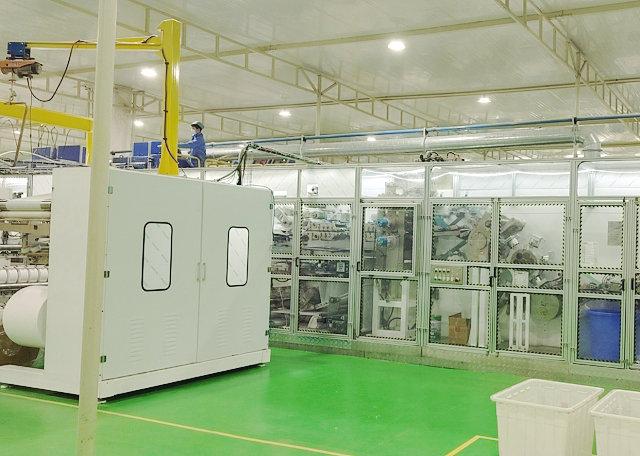
Web tension control affects sanitary napkin production quality by determining whether films, nonwovens, release papers, absorbent layers, and wrappers remain stable as they are guided, bonded, cut, folded, and registered. Tension that is too high can stretch, narrow, mark, or break a web; tension that is too low can create wrinkles, lateral drift, poor tracking, and unstable cutting. Buyers and production teams should evaluate tension by zone, material, roll diameter, acceleration, splice, and process load. Stable quality comes from coordinated mechanics, sensors, drives, recipes, and verified material limits, not from one global tension value.
Understand Tension as a Zone System
A sanitary napkin line carries materials with different strength, elasticity, thickness, friction, and winding quality. Topsheet nonwoven, backsheet film, release paper, wrapper, tissue, and prepared absorbent layers should not be assumed to accept the same force. The line therefore needs defined tension zones separated by driven rollers, nips, accumulators, process modules, or other controlling points.
For each zone, identify the unwind or upstream source, feedback device, actuator, driven element, process load, and downstream boundary. Feedback may come from a dancer position, load cell, drive calculation, or another approved method. The control objective can also differ: hold force, maintain dancer position, coordinate surface speed, or protect registration. A drawing that marks these zones is more useful for troubleshooting than one unlabeled tension setpoint.
Mechanical condition remains fundamental. Roller alignment, surface cleanliness, bearing drag, wrap angle, nip pressure, shaft condition, and web threading affect the force reaching the material. A controller may display a stable value while one side of a web is slipping or a dirty roller creates local drag. Establish a known mechanical baseline before changing software gains or recipe values.
Each material path should be reviewed as a sequence of controlled tension zones.
Connect Product Defects to Tension Causes
High tension can stretch elastic webs, narrow soft nonwoven, distort printed film, change the effective pitch, pull a layer away from registration, or cause breaks at a splice or weak edge. Excessive traction can also mark delicate surfaces. The defect may appear later at cutting or folding even though its cause began at the unwind. Record the first location where the web changes, not only where the finished pad fails inspection.
Low or unstable tension can produce wrinkles, flutter, wandering, poor adhesive contact, fold variation, and inconsistent transfer. A loose web may respond late to a guide or momentarily reverse during a stop. Oscillating tension can move registration periodically, creating a repeating defect pattern. Compare defect frequency with roller circumference, machine cycle, dancer movement, splice timing, and drive trends.
Unequal cross-web tension creates skew and diagonal wrinkles. Check roll winding, shaft centering, cone condition, roller parallelism, guide geometry, and any local friction. Do not correct every skew by increasing guide authority; aggressive guiding can pull an already distorted web from side to side. The correct action depends on whether the root cause is material, alignment, traction, feedback, or control tuning.
Review Unwind and Roll Diameter Control
An unwind must deliver predictable tension as roll diameter and inertia change. Braked and driven unwinds use different control methods, but both need accurate roll mounting, suitable torque behavior, and stable feedback. Review how diameter is measured or estimated, how torque changes through the roll, and how the system responds near the core. A setting proven on a full roll may not remain stable when the roll becomes light.
Dancer travel should remain within an operating band with enough reserve for disturbances. Inspect pivots, cylinders, bearings, position sensors, pressure stability, and mechanical stops. A dancer that sticks can create sudden tension changes while the displayed position appears delayed. Load cells require correct mounting, zero condition, web wrap, cable protection, and a verification method.
Automatic splicing adds an accumulator and a transient event. Confirm roll preparation, splice material, detection, storage capacity, acceleration of the new roll, joint passage, and restoration of normal control. Track the splice into the finished product and remove the affected material according to the agreed rule. Failed splices should create a clear alarm and safe recovery sequence.
Unwind control must remain stable from a full roll through splice or core condition.
Coordinate Web Guiding and Registration
Web guiding corrects lateral position; it does not replace stable tension. A guide needs a suitable sensor target, actuator range, entry span, exit span, and mechanical alignment. Place the sensing point where it represents the feature that matters. An edge sensor may control web position, while print or product registration requires a different reference.
Registration control coordinates repeat length and phase between materials and machine cycles. Tension changes can alter apparent length in stretchable webs, so a correction at one point may create another error downstream. Review where registration marks are read, which drive makes the correction, how limits are set, and what happens when a mark is lost. Large repeated corrections indicate an upstream problem rather than a normal control task.
Adhesive application, embossing, sealing, cutting, and folding introduce process forces. A nip can isolate a zone or transmit a disturbance depending on traction and pressure. Vacuum transfer may stabilize a product but can also change drag. During trials, trend guide position, dancer or force feedback, registration correction, speed, and defect events together. Isolated screenshots rarely reveal the sequence.
Manage Acceleration Splices and Stops
Many tension defects occur during transitions rather than at steady speed. Acceleration demands coordinated torque and speed response across rolls with different inertia. Deceleration can allow an unwind to overrun. A planned stop may release stored web or leave a dancer at its limit. Define ramps and control-state changes by zone, then verify them with every critical material.
Test slow threading, startup, production ramp, speed adjustment, planned stop, emergency stop recovery, splice, low-roll condition, and web-break restart. Observe whether tension returns smoothly or overshoots. Samples should be checked after each transition because a brief registration shift may create several defective products before the process appears stable.
Do not use a slower acceleration simply to hide an unresolved fault without understanding production impact. The correct setting balances material protection, process synchronization, accumulator behavior, and downstream transfer. Record the accepted ramps in the recipe or controlled setup sheet and protect changes through authorization.
Startup, splicing, speed changes, and stops reveal control behavior hidden at steady speed.
Build Material Specific Recipes
A recipe should connect a product version with approved material specifications. Record supplier and grade, roll dimensions, winding, surface, thickness or basis weight where relevant, and observed handling limits. Store zone setpoints, drive ratios, guide centers, registration windows, splice settings, ramps, and inspection limits that are appropriate for that combination.
Recipe control needs ownership. Operators may select an approved recipe and make narrow routine adjustments; process engineers may authorize a broader range; maintenance may change tuning after documented diagnosis. Define permissions and preserve a previous accepted version. An undocumented correction during a difficult shift can become the next shift's hidden problem.
Material changes need a trial plan. Compare the proposed web with the approved one, then test threading, steady running, speed transitions, splice, bonding, cutting, folding, and quality. When reviewing the web-control arrangement of HAINA's sanitary napkin production line, buyers should provide representative roll data and agree how material-specific settings will be verified and handed over.
Diagnose Tension Problems Systematically
Begin with facts: affected product, material batch, roll position, machine zone, speed, transition, time, and defect sequence. Compare good and bad samples. Review alarms, trend data, recent material or maintenance changes, and operator observations. Do not change several setpoints before preserving the original condition.
Inspect the web and mechanics from upstream to downstream. Check roll centering and winding, shafts, chucks, brakes or drives, dancer movement, load cells, rollers, nips, guides, sensors, contamination, bearings, and threading. Then review feedback stability, scaling, limits, tuning, recipes, and communication. A mechanical drag problem can resemble poor control tuning, while an incorrect sensor zero can cause unnecessary mechanical adjustment.
After a correction, repeat the condition that exposed the fault. Run the same material, speed ramp, splice, stop, or roll diameter and inspect products over a defined window. Record the action and result. If the cause remains uncertain, restore the controlled baseline and escalate with evidence rather than leaving multiple unverified changes in production.
Systematic diagnosis follows the material path and separates mechanical from control causes.
Use a Tension Evidence Table
Observed symptom
First evidence to collect
Possible control or mechanical areas
Verification action
Longitudinal stretch or narrowing
Material batch, force trend, zone and speed
High setpoint, excessive nip, drive ratio, drag
Compare dimensions at controlled lower and accepted settings
Roll eccentricity, roller, dancer oscillation, tuning
Compare frequency with rotating components and control cycles
Defect after splice or restart
Event sequence and first bad or good samples
Accumulator, ramps, tracking delay, recipe state
Repeat planned event and record recovery window
Frequent web breaks
Break location, edge condition, tension peak
Material weakness, sharp contact, high force, splice
Inspect web and machine, then reproduce under controlled limits
Follow a Shift Inspection Route
At material preparation: verify roll identity, condition, winding direction, splice preparation, and handling damage.
At each unwind: check centering, shaft or chuck condition, low-roll status, dancer range, and unusual noise.
Along the web path: observe wrinkles, flutter, edge position, roller contamination, tracking, and contact.
At process stations: compare registration, bonding, cutting, folding, and wrapper condition with approved samples.
At the HMI: confirm recipe, guide position, tension feedback, corrections, alarms, and unauthorized changes.
After transitions: inspect samples following startup, splice, speed change, stop, and restart.
Web Tension Control FAQ
Can one tension setting be used for all sanitary napkin materials?
No. Materials differ in strength, stretch, friction, thickness, winding, and process role. Setpoints should be defined by zone and approved recipe.
Does web guiding correct poor tension?
No. Guiding controls lateral position within its range. Unstable tension, skewed rolls, misalignment, or poor traction should be corrected at their source.
Why does registration move when speed changes?
Acceleration changes torque, inertia, dancer position, traction, and material stretch. Coordinated ramps and tuned zones should be verified with representative materials.
What data is most useful for troubleshooting?
Collect synchronized speed, tension or dancer feedback, guide position, registration correction, alarms, material batch, event time, and sequenced product samples.
Conclusion
Web tension control shapes sanitary napkin quality throughout the line. Stable webs support registration, bonding, cutting, folding, inspection, and packaging; unstable webs transfer defects downstream. Define zones, maintain the mechanical path, control rolls through their full diameter, coordinate guiding and registration, test transitions, and preserve material-specific recipes. When a defect occurs, follow the web and the evidence before changing settings. This approach improves repeatability without treating one displayed value as the whole process.