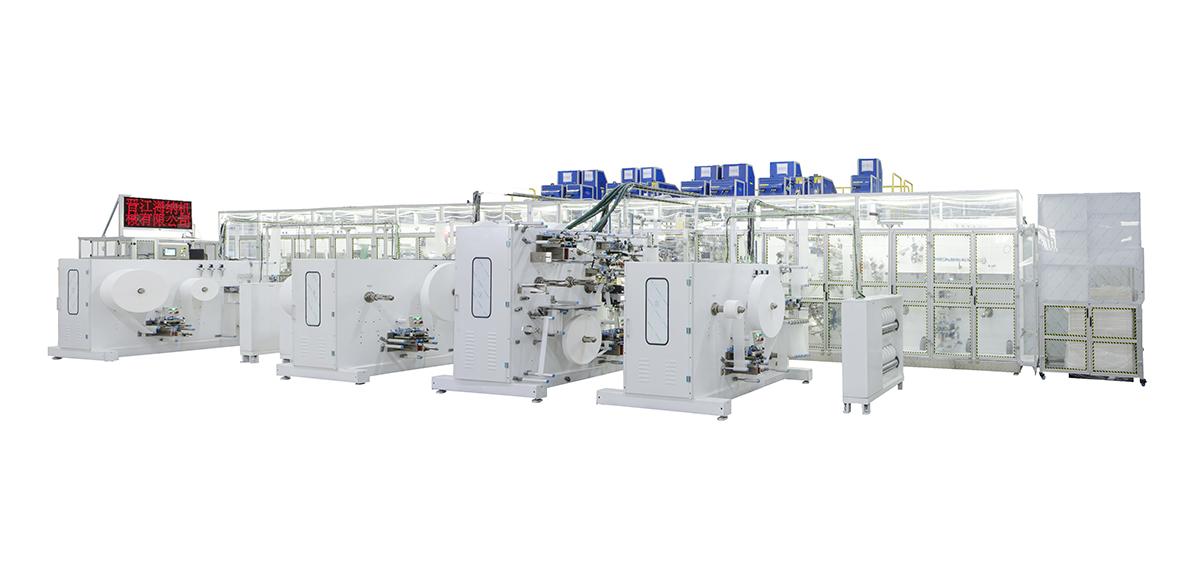
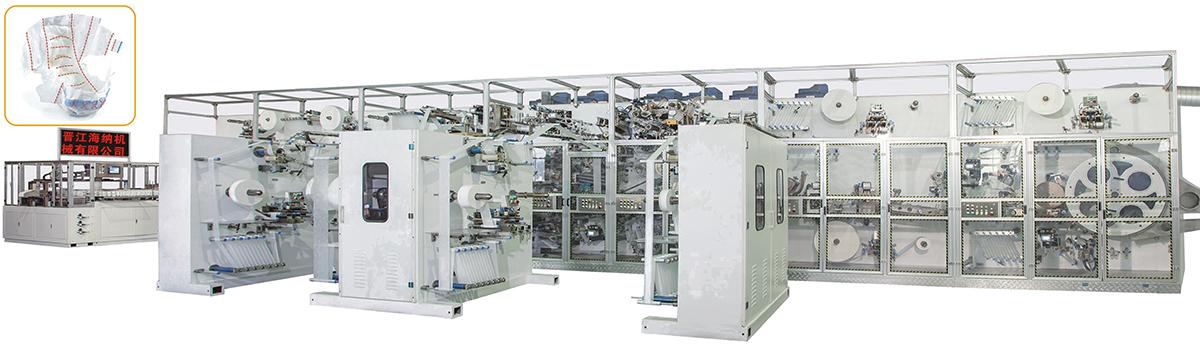
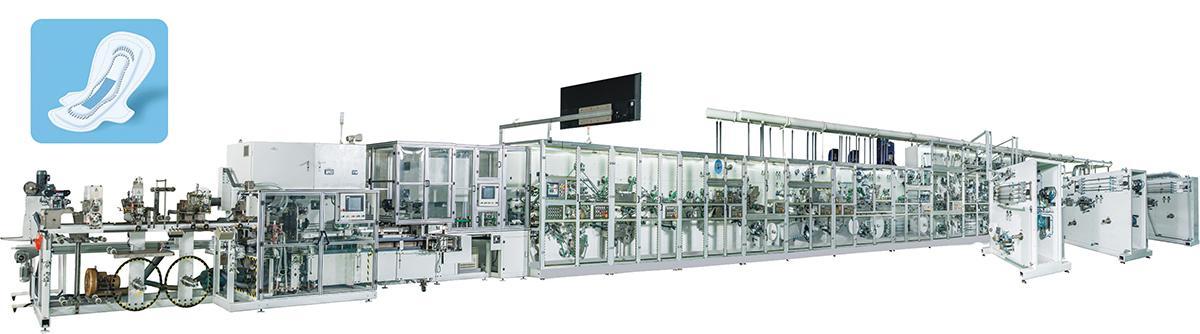
Choose a diaper manufacturing machine by first freezing the diapers, materials, size mix, quality checks, and factory conditions it must support. Then compare suppliers on configured process functions, demonstrated stable output, changeover method, inspection and reject control, maintainability, documentation, training, and lifecycle support. Do not select from design speed or purchase price alone. Require every important claim to appear in a technical agreement and verify it during FAT with identified production-intent materials, an agreed run protocol, inspected samples, stop and restart checks, and closed deviations. The ideal machine is the one whose evidence matches the buyer's defined operating case.
Freeze the product definition first
A procurement comparison is only valid when suppliers quote the same product and boundary. Prepare controlled drawings for every planned diaper size. Identify dimensions, absorbent core geometry, topsheet, backsheet, acquisition or distribution layers where used, leg and waist elastic arrangements, barriers, tapes, frontal component, adhesives, and pack transfer condition. Add measurable product-release checks and the sampling methods the factory intends to use.
Provide a material matrix with roll width, diameter and core, winding direction, splice design, surface or mechanical properties relevant to processing, and supplier samples. State which materials will be available during engineering, FAT, commissioning, and site acceptance. If equivalent test material is proposed, record the difference and require later confirmation with production-intent supplies.
Define the operating case: expected size mix, campaign length, changeover frequency, shift pattern, cleaning window, planned maintenance, operator skill assumptions, and upstream or downstream interfaces. Forecast demand may inform the configuration, but it does not prove a particular output. The supplier must show how the selected line handles the actual mix while protecting product conformity.
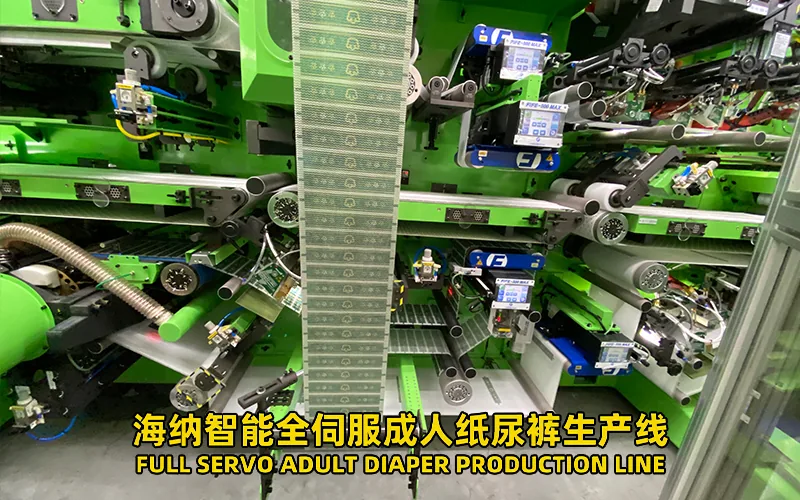
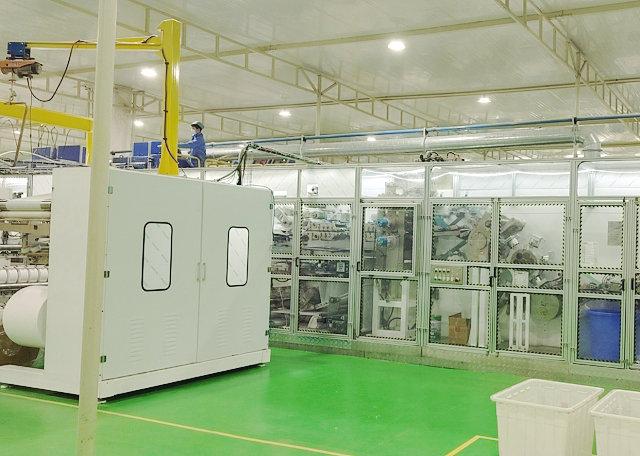
Machine selection begins by mapping each product component to a required feeding, forming, bonding, cutting, and inspection function.
Configured diaper manufacturing machine functions
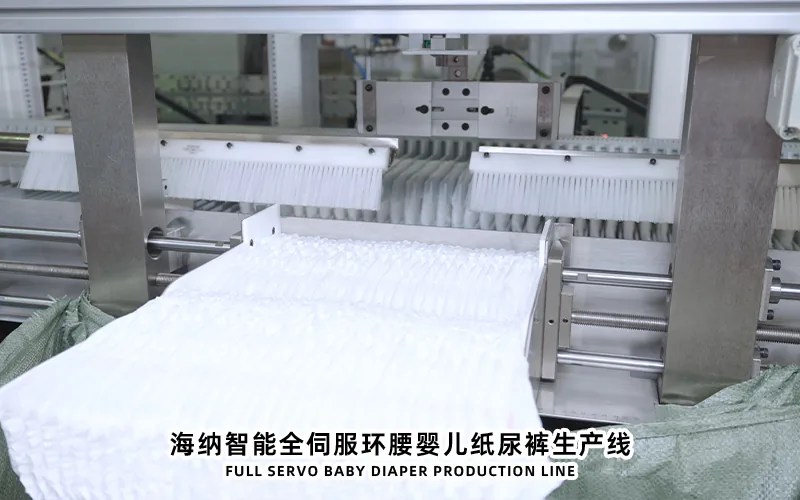
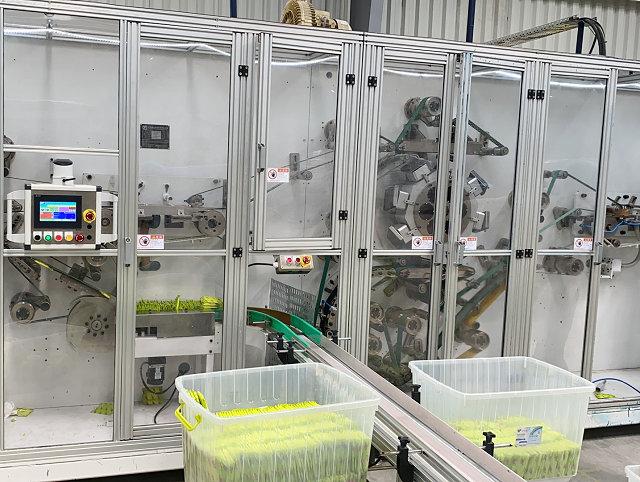
Convert the product definition into a station-by-station configuration. Check absorbent input handling and core formation, tissue or wrap control, nonwoven and film unwinding, web guiding, tension control, elastic application, barrier formation, tape and frontal component placement, adhesive delivery, cutting, folding, product transfer, inspection, rejection, counting, and packaging interface as applicable. A feature named in a proposal is not complete until its operating range, controls, change parts, and acceptance check are described.
Separate the base equipment, selected options, future provisions, buyer-supplied systems, and exclusions. Inspection capability is a common source of ambiguity: presence detection, registration measurement, web-break sensing, metal detection, vision inspection, and reject confirmation are different functions. Ask which defects are detected, at what point, how thresholds are controlled, what happens after detection, and how rejection is verified.
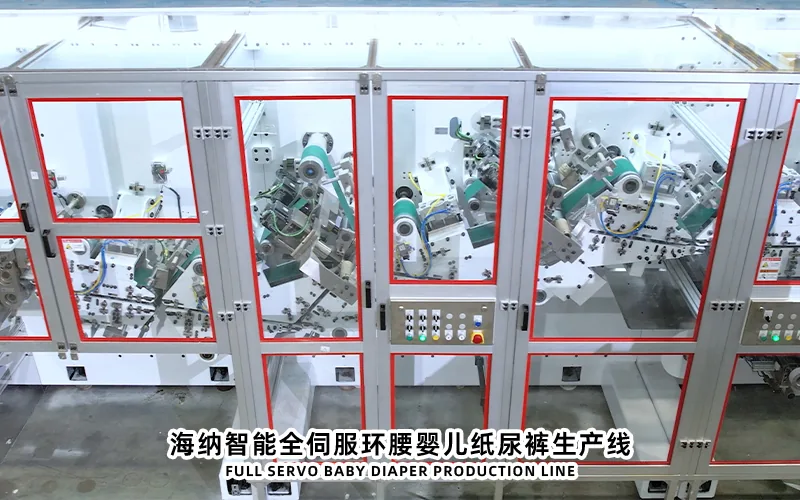
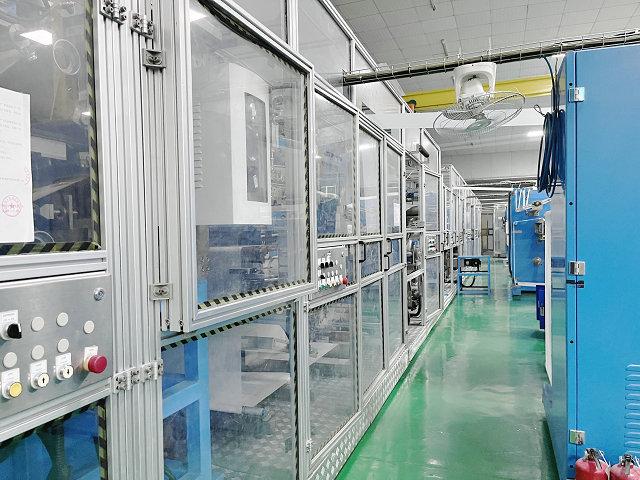
Review utilities and site integration at the same time. The layout must provide material routes, operator access, maintenance clearance, change-part storage, waste removal, sample flow, safe intervention space, and connection to packing or conveying. Confirm electrical, air, extraction, environmental, network, and foundation responsibilities in the technical agreement rather than leaving them to installation.
Compare stable output instead of headline speed
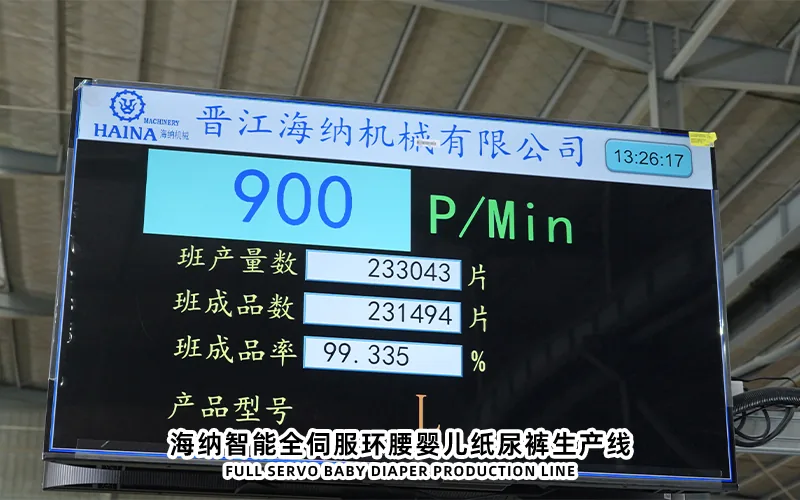
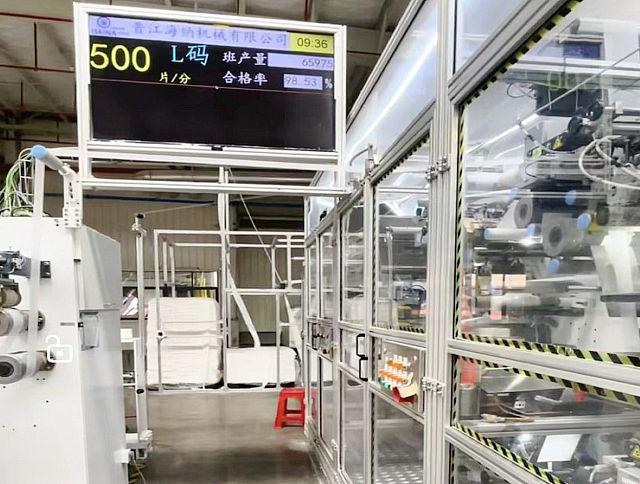
Design speed describes an engineering limit or intended capability under defined assumptions. Stable working speed describes demonstrated sustained operation under stated product and material conditions. Factory operating speed is the setting chosen for daily production after considering quality, materials, maintenance, staffing, and downstream capacity. A contractual acceptance value is the condition the parties agree to test. Record all four separately.
Ask each supplier to disclose the conditions behind an output statement: diaper size and construction, material specifications, inspection criteria, observation duration, planned stops, minor-stop treatment, reject accounting, pack interface, and operator intervention. Without that context, displayed speed values cannot be compared. Released conforming output over an agreed period has more decision value than a brief counter peak.
Use a balanced operating test. Observe startup material, time to first accepted product, stable-run interruptions, quality samples, material changes or splices if included, reject function, stop and controlled restart, and output reconciliation. Avoid a protocol that rewards uninterrupted display speed while ignoring held product or manual correction.
Stable output must be tied to the tested diaper, materials, quality plan, interruptions, and accepted product count.
Evaluate quality and process control
The line should help operators hold the approved process, but it does not replace a product quality system. Review recipe access, setting limits, material presence checks, reference sensors, alarm history, sample points, reject logic, reject confirmation, and traceability interfaces. Determine how settings are versioned, who can change them, and what evidence remains after an adjustment.
Build an inspection matrix from product risk. It may include dimensions, component position, core distribution, elastic placement, tape and frontal alignment, bond or seal condition, visual cleanliness, product folding, count, and other factory-defined performance checks. For every criterion, state the method, instrument, sample frequency, acceptance value, reaction plan, and record owner. Do not accept vague phrases such as high quality without measurable evidence.
Selection area
Supplier evidence
Buyer verification
Warning sign
Product range
Size matrix, station mapping, change-part list
Trace each product feature to included hardware
All sizes claimed with no configuration detail
Stable output
Test conditions, run record, accepted sample results
Witness sustained production under the protocol
Only design speed or a short video is offered
Quality control
Inspection functions, alarm and reject narrative
Challenge detection and confirm physical rejection
Inspection is described without defect coverage
Changeover
Task list, parts, recipes, tools, release checks
Witness a representative format change
Mechanical time excludes threading and approval
Support
Documents, training plan, parts data, escalation route
Audit sample deliverables and contact workflow
Promises are absent from the agreement
Test changeover and maintainability
For a multi-size business, changeover quality can matter as much as running condition. Ask for a breakdown covering clearance, isolation, mechanical changes, material threading, recipe selection, trial production, sample inspection, and release. Identify which parts are size-specific, how they are marked and stored, what tools are needed, and how incorrect assembly is prevented. Record the interval from last accepted old product to first accepted new product rather than only wrench time.
Maintenance review should use the actual layout and components. Inspect access for cleaning, lubrication, cutters, belts, sensors, filters, adhesive equipment, and other service points. Confirm isolation and stored-energy controls, lifting needs, alignment methods, diagnostic access, backup procedures, and safe restart checks. Request preventive task descriptions with interval or condition triggers and clear wear limits instead of a generic instruction to inspect regularly.
Evaluate spares by consequence, probability, lead-time exposure, interchangeability, and storage needs. Obtain manufacturer and supplier part references where contractually available, drawings, software versions, and a recommended startup and critical-spares list. Confirm the procedure for obsolete components and approved substitutes. The ideal line is maintainable by the planned factory team with documented escalation when specialist help is needed.
Witnessed access, task steps, change parts, and release checks reveal the practical burden of format changes and maintenance.
Design a useful FAT
Write the FAT protocol before the equipment is ready to demonstrate. Reference the latest product drawings, material matrix, equipment list, software or recipe versions, inspection methods, and open engineering assumptions. Define responsibilities, safety conditions, test sequence, observation periods, samples, instruments, acceptance values, interruption rules, retest method, and deliverables.
FAT acceptance workflow
Verify equipment identity, installed modules, guards, utilities, documents, and open items against the agreed scope.
Reconcile test materials by specification, lot, roll orientation, and intended product size.
Witness startup and identify the first product accepted under the agreed inspection plan.
Run the defined stable condition while recording stops, adjustments, rejects, held output, and samples.
Challenge alarms, interlocks, inspection, reject handling, and controlled restart where safely agreed.
Perform the representative size or format change if it is part of acceptance.
Classify every deviation, assign ownership and due dates, and define objective closure evidence.
Preserve raw evidence: machine and material identity, timestamps, counter records, alarm exports, settings, sample labels, measurements, photographs where permitted, and signed observation sheets. A pass should mean the stated criteria were met. Conditional acceptance should identify unresolved risk and a closure test, not disguise missing evidence.
The automatic baby diaper manufacturing machine category can help a procurement team frame its inquiry. HAINA can then review the buyer's product and FAT requirements against a proposed configuration. That review should result in controlled documents and testable commitments rather than broad sales language.
Score supplier evidence and support
Build a weighted scorecard before reviewing offers. Use pass or fail gates for product compatibility, essential safety scope, factory fit, and acceptance commitments. Score remaining areas such as configuration clarity, material validation, stable-output proof, controls, changeover, maintainability, documents, training, parts, warranty, and project governance. Weight each area according to the buyer's operating risk, then record the evidence reference and unresolved assumption beside every score.
Audit document samples instead of asking whether documentation is available. Review a manual section, maintenance task, electrical drawing, parts page, alarm explanation, changeover instruction, training agenda, and FAT template. Check language, revision control, component correspondence, and usefulness to the intended users. Do the same for support: test the escalation route, diagnostic data requirements, remote-access conditions, parts quotation process, and handling of an obsolete component.
Commercial comparison should use the same boundary. Include equipment, selected options, change parts, inspection devices, auxiliaries, freight responsibilities, installation, commissioning, training, test materials, tools, spares, software licenses, documentation, and buyer site work. Avoid calculating ROI from unsupported output, waste, efficiency, or service assumptions. Instead, model scenarios and mark each input as quoted, tested, buyer-estimated, or unresolved.
A defensible score links each rating to a drawing, test, sample, document, or binding supplier response.
Frequently Asked Questions
Is the fastest diaper machine always the ideal choice?
No. Compare conforming output under defined materials and quality conditions, along with stops, changeovers, staffing, maintenance, and downstream limits.
How many product sizes should be tested at FAT?
Set the test scope from configuration risk and the contract. Include representative or boundary formats and any changeover needed to prove the agreed size matrix.
What should be a pass or fail selection gate?
Essential product compatibility, required process functions, safety scope, site fit, and acceptance obligations are sensible gates when failure would make the project unusable.
How can buyers compare service claims?
Request named channels, working conditions, evidence requirements, parts logistics, training deliverables, and escalation steps, then include accepted commitments in the agreement.
Conclusion
Choosing the ideal diaper manufacturing machine is an evidence exercise. Freeze the product and material case, map it to an included configuration, compare stable released output, inspect controls and maintainability, and witness an FAT built around real operating risks. A procurement engineer should now issue one common requirement matrix to shortlisted suppliers and reject unreferenced scores. Ask HAINA to mark every requirement as included, optional, excluded, or pending trial, then verify the selected configuration with production-intent materials, labeled samples, recorded interruptions, representative changeover work, and signed deviation closure before authorizing acceptance.