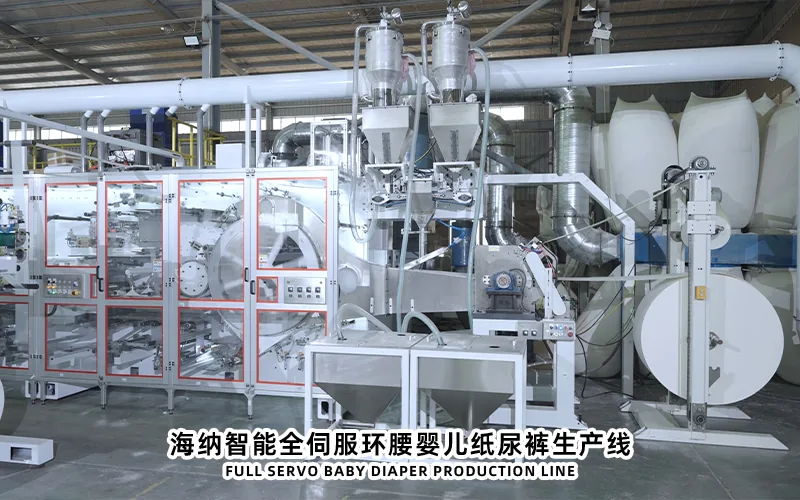
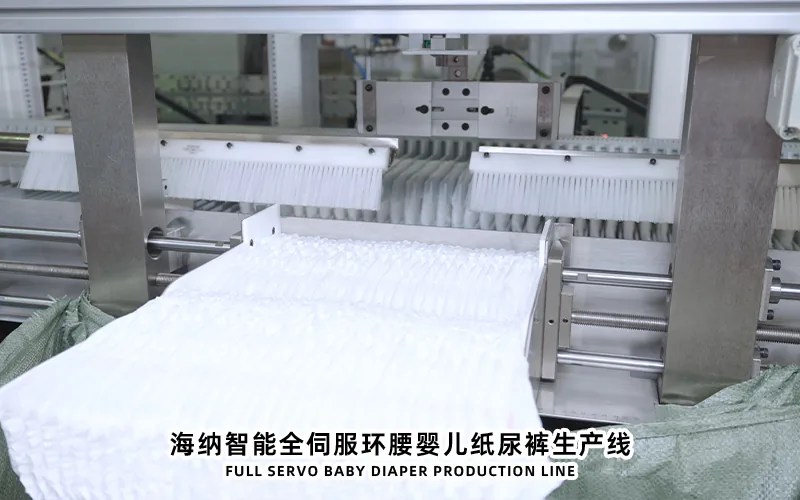
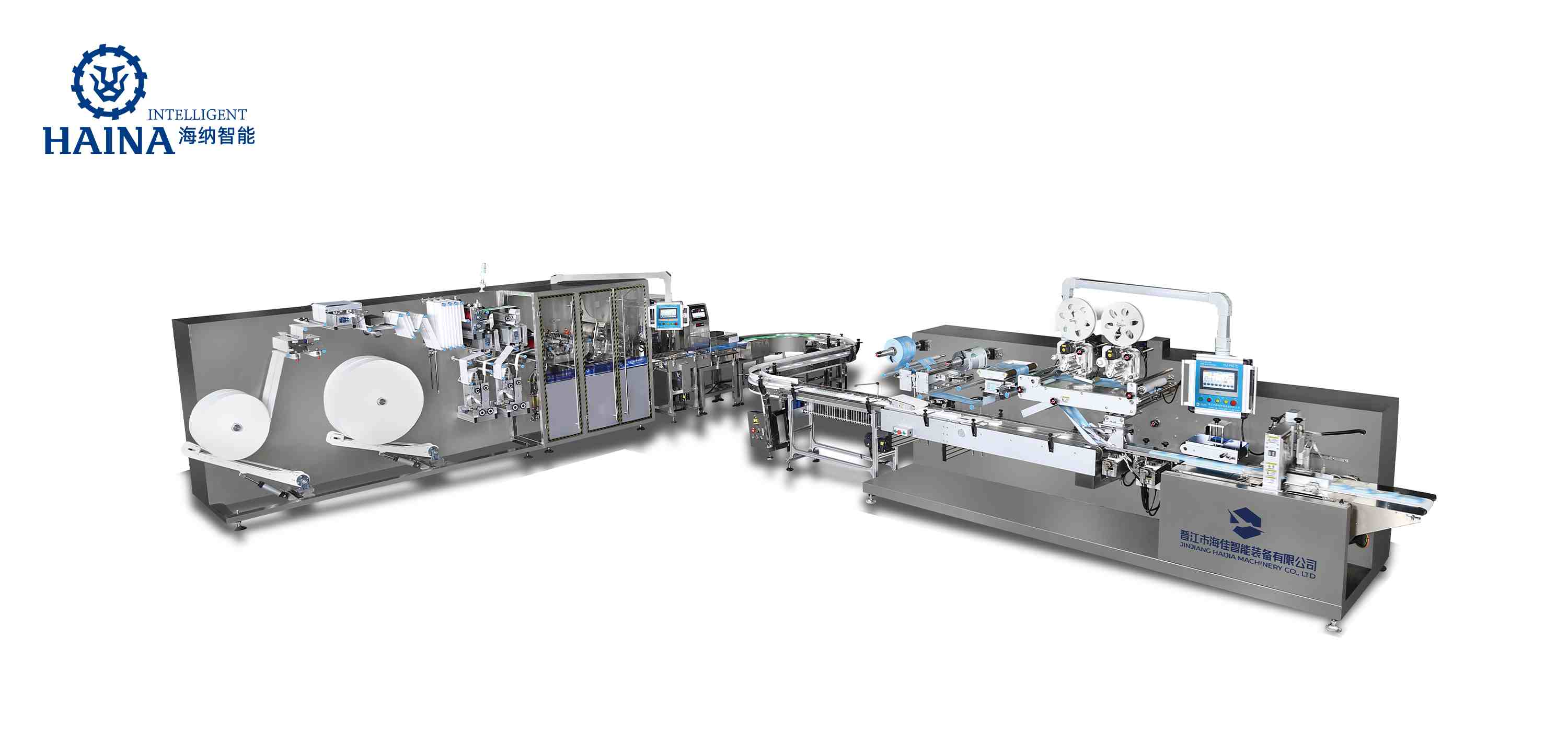
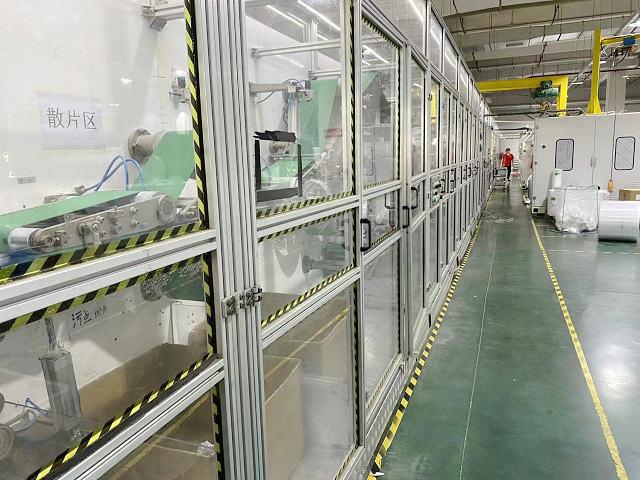
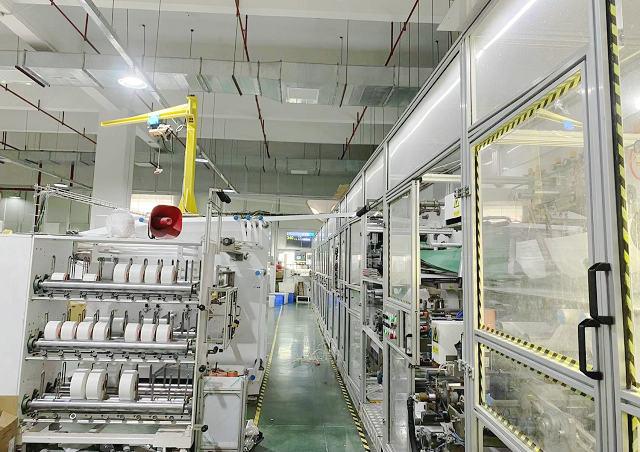
A useful market analysis for a diaper manufacturing machine for sale starts with the products a business can realistically sell, not with a broad forecast or an advertised machine speed. The owner should translate target channels, diaper sizes, pack formats, material choices, demand variability, and launch timing into a SKU plan and a conservative production requirement. That requirement must then be tested against factory space, utilities, staffing, quality capability, working capital, and supplier evidence. The right diaper manufacturing machine is the configuration that can repeatedly make the approved products under documented conditions while leaving manageable commercial and operating risk.
Turn Market Demand into Product Assumptions
Market size is not the same as demand available to a new factory. A business owner needs a bottom-up view: intended sales channels, customer segment, geographic reach, distributor commitments, pack sizes, price position, replenishment pattern, and competing offers. Each assumption should have a source, an owner, and a range. A distributor expression of interest is not a firm order, while an online search trend does not define the product consumers will repurchase.
Separate the total addressable market from the launch volume the business can serve. Then test low, expected, and higher demand cases. The low case protects against buying a configuration that requires unrealistic utilization to support fixed costs. The higher case reveals whether material handling, packaging, warehouse flow, and shifts can expand without disrupting quality. Avoid converting annual demand directly into a headline pieces-per-minute target; scheduled days, shifts, planned stops, changeovers, startup losses, inspection holds, and product mix all affect required operating time.
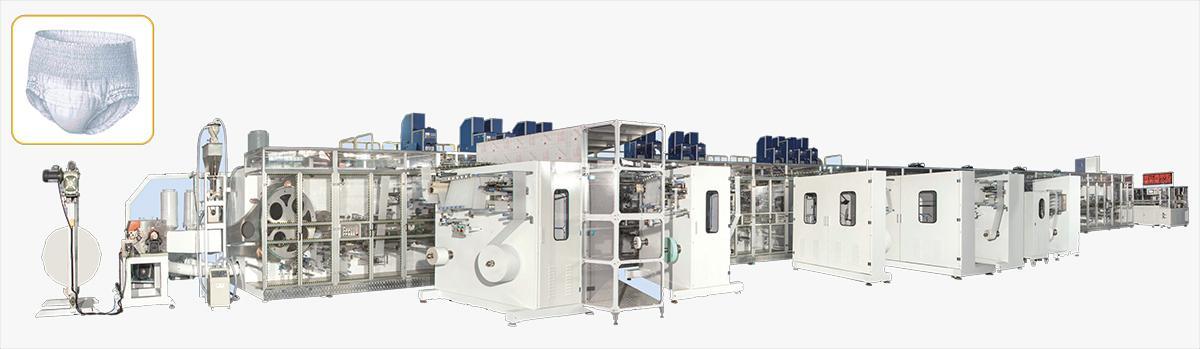
Market planning becomes useful when demand assumptions are connected to a defined equipment configuration.
Product claims also need evidence outside the machine purchase. Absorbency targets, fit, softness, leakage performance, packaging, labeling, and local compliance expectations influence materials, laboratory methods, and release controls. The machine supplier can explain process capability and interfaces, but the brand owner remains responsible for approving the product specification and market claim basis.
Build a Launch SKU Plan
A wide range may look commercially attractive but increases change parts, materials, packaging inventory, validation work, training, and scheduling complexity. Start with a controlled launch portfolio. For every SKU, define diaper size, finished dimensions, construction features, raw material specifications, elastic arrangement, tape or pants-style closure where relevant, printing needs, count per pack, secondary packing method, and inspection plan. Mark which features are shared and which require a physical or recipe change.
Create a SKU-to-process matrix before requesting quotations. It should identify the forming, dosing, acquisition or distribution layer, topsheet, backsheet, elastic, closure, cutting, folding, detection, rejection, and packing implications. This makes hidden complexity visible. Two products with similar dimensions may still require different material tensions or application systems. Conversely, several marketing variants may share one stable machine setup and differ only in approved packing or printed material.
Decision area
Market question
Machine requirement output
Evidence before approval
Size range
Which sizes have credible launch demand?
Format range and change-part list
Approved SKU drawings and change demonstration
Product construction
Which features support the chosen position?
Material paths and application functions
Sample bill of materials and process review
Pack format
What will each channel receive?
Count, compression, bagging, and case interfaces
Packing trial using representative materials
Demand case
What volume is supportable, not merely possible?
Required scheduled production window
Scenario model with stated losses and mix
Quality promise
What must each released product demonstrate?
Inspection points and test methods
Signed specification and sampling plan
Size the Diaper Manufacturing Machine Requirement
Capacity planning should use saleable output under defined conditions. Begin with demand by SKU and pack, add an explicit inventory policy, and convert it into production campaigns. Account for startup, planned sanitation, preventive maintenance, size changes, material changes, quality checks, and likely operating constraints. Keep every assumption editable so the owner can see which variable creates the requirement.
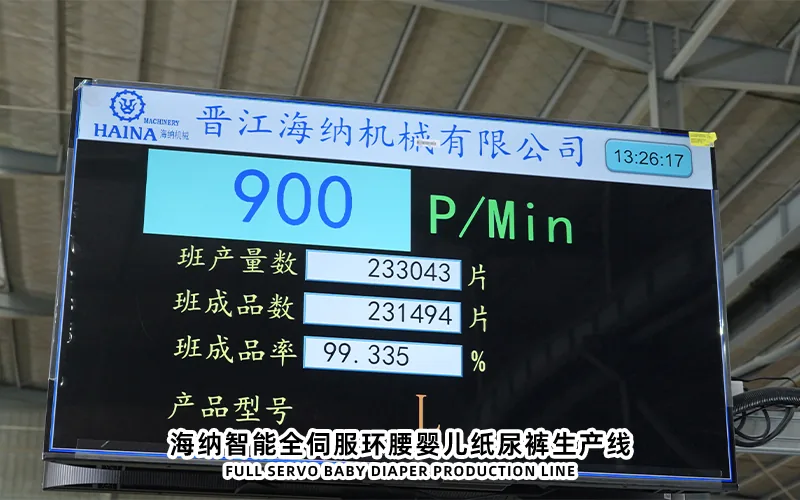
Supplier speed language must be normalized. Design speed describes an engineering basis. A configurable range shows where the system may be set. Stable working speed should be demonstrated with specified products and materials. Actual operating speed is chosen by the factory according to process condition, quality, and schedule. A contractual acceptance value is whatever the parties write into the test protocol. A machine market comparison is unreliable if one quotation uses design speed and another uses demonstrated stable performance.
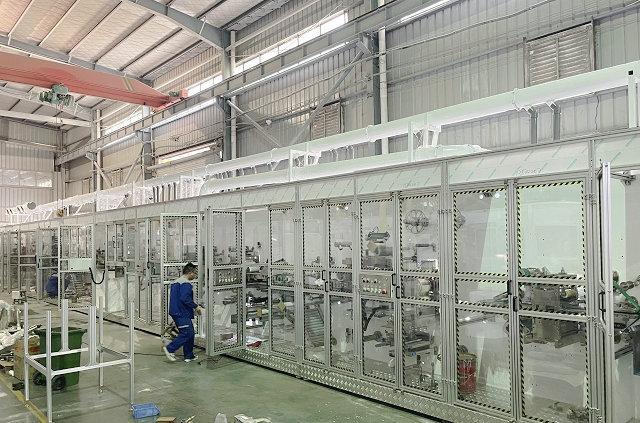
Capacity should be evaluated as an integrated material-to-pack flow rather than an isolated converter rate.
Capacity also extends beyond the converter. Check incoming material staging, core preparation, adhesive supply, air and electrical infrastructure, inspection sampling, rejected-product handling, bagging, case packing, finished-goods storage, and dispatch. A fast central process cannot compensate for a packing or warehouse constraint. The model should identify the limiting resource for each demand scenario.
Check Factory and Organization Fit
Factory fit begins with a scaled layout and a responsibility map. Confirm equipment footprint, service clearances, operator access, raw-material routes, waste removal, laboratory flow, maintenance access, spare storage, lifting provisions, fire and emergency routes, and future expansion zones. Floor properties and utility entry points should be reviewed by qualified local specialists using supplier loads and interface data.
Utilities require more than nominal connection values. Ask for quality, stability, distribution, isolation, drainage, environmental, and monitoring requirements. The buyer must compare these with measured or engineered site capability. Voltage labels alone do not establish power quality, and a compressor nameplate alone does not establish usable air at the machine during peak factory demand.
Organization fit is equally important. Define who owns product development, materials, incoming inspection, machine operation, maintenance, controls, laboratory testing, sanitation, planning, stores, and release. Estimate competence development and shift coverage before startup. Where a role is missing, record whether the gap will be closed by hiring, training, contract support, or a revised operating plan.
Compare Supplier Evidence
A quotation lists what a supplier proposes; evidence shows whether the proposal addresses the requirement. Send the same requirement schedule to all candidates and request a clause-by-clause response. Clarifications should identify included scope, exclusions, options, buyer-supplied items, interface limits, and assumptions. This prevents a lower-looking offer from winning only because it omits packaging, testing, documentation, or installation responsibilities.
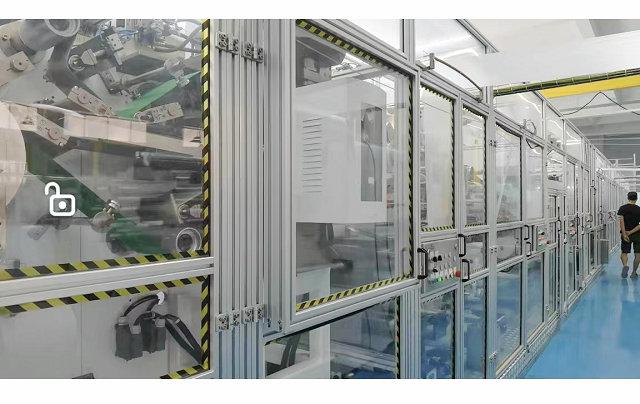
Supplier comparison should include physical build evidence, documentation, and test method agreement.
Request process flow information, configuration drawings, principal component schedules, utility data, format coverage, changeover method, controls architecture, inspection functions, manuals, training agenda, spare-parts proposal, and a draft FAT protocol. Review how deviations are recorded. During a supplier visit or remote design review, trace one representative SKU from material specification through each station to final pack and ask how its critical features will be verified.
HAINA should be evaluated against the same evidence register as every candidate. A useful engineering discussion ties machine functions to the buyer's approved SKU matrix and test samples, rather than relying on general capability language. Keep meeting minutes and assign owners and due dates to unresolved items.
When comparing automatic baby diaper manufacturing equipment, preserve each supplier's original scope response beside the normalized comparison. This lets management see which commercial difference comes from configuration, included service, or an unresolved buyer input.
Model Commercial and Execution Risk
The investment model should include more than the equipment price. Build categories for site preparation, utilities, handling equipment, laboratory capability, change parts, initial spares, materials for trials, packaging interfaces, travel and installation support where applicable, staffing, training, inventory, and startup working capital. Do not invent a universal percentage for these items; obtain project-specific quotations and document the confidence of each estimate.
Risk scenarios should cover slower demand, delayed product approval, material variation, recruitment gaps, utility instability, long-lead spares, and lower-than-assumed saleable output. For each risk, define an early indicator, prevention action, contingency, and decision owner. A risk without a trigger cannot support timely management.
Commercial agreements should connect payment and acceptance milestones to objective deliverables. Examples include approved design documents, completed build review, FAT results, shipment documentation, installation checks, training completion, and site acceptance. The exact structure is a contractual decision for the parties and their advisers, but evidence should be clear enough to avoid interpreting marketing statements after the fact.
Stage-Gate Investment Scorecard
Gate 1 - Market case: Target channels, launch volumes, pack formats, price position, and evidence quality are approved. Stop if demand depends on unsupported reach or a single unconfirmed buyer.
Gate 2 - Product case: Launch SKUs, materials, quality targets, and test methods are defined. Stop if major construction choices remain open.
Gate 3 - Factory case: Layout, utilities, people, laboratory, material flow, and compliance actions have named owners. Stop if a critical site interface is unknown.
Gate 4 - Supplier case: Scope, deviations, demonstrations, documentation, support, and acceptance method are comparable. Stop if claims cannot be converted into tests.
Gate 5 - Investment case: Low, expected, and higher scenarios include startup and working-capital needs. Approve only with explicit residual risks.
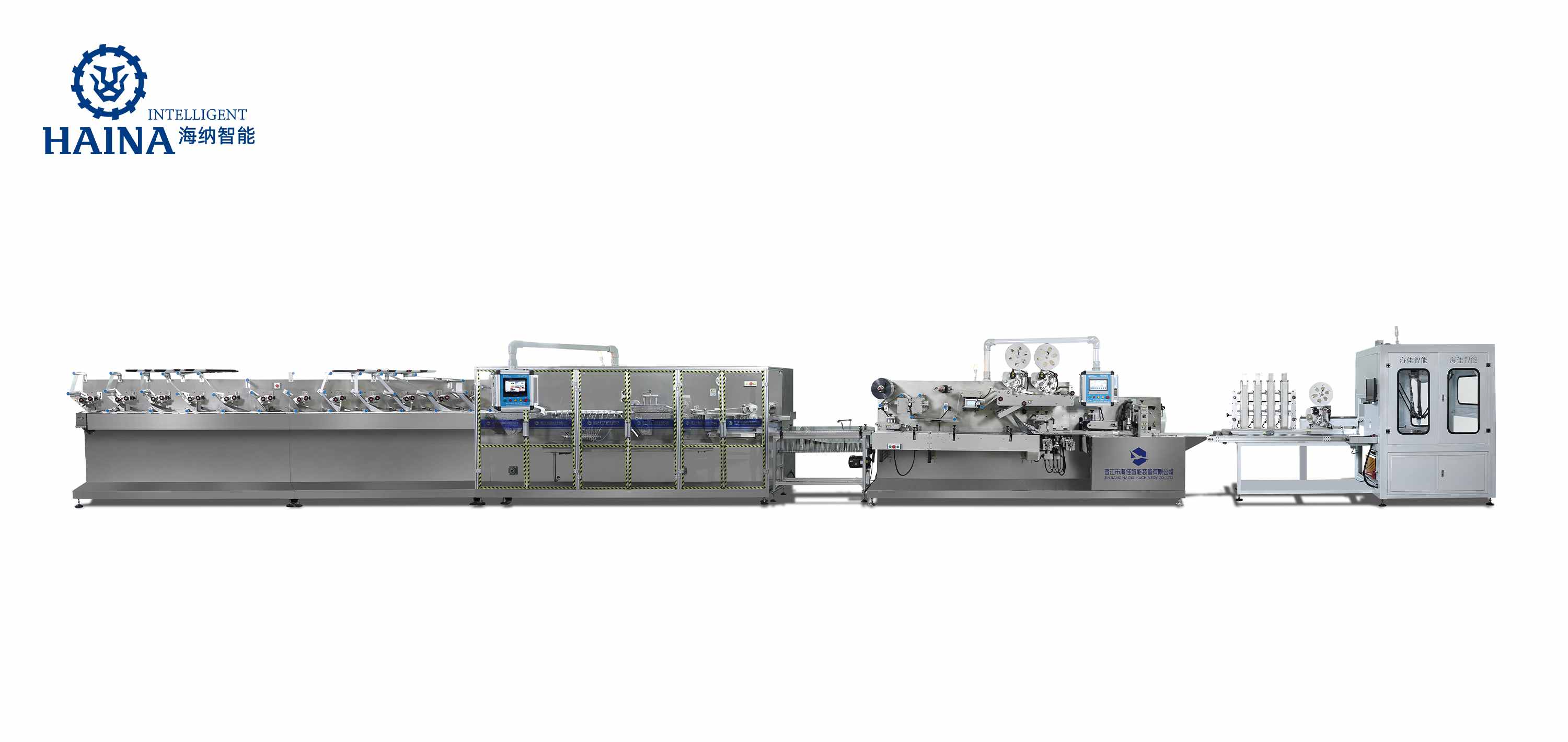
The final investment gate should reconcile commercial assumptions with the offered technical scope.
A score should not hide a fatal gap. Use ratings to organize discussion, but maintain pass conditions for safety, legal obligations, product feasibility, utility availability, and acceptance evidence. Record dissenting views and the basis for management approval. This creates a decision history that can guide later scope changes.
Assign an expiry date to volatile assumptions such as distributor volume, material pricing, and site availability. Refresh them before each investment gate so an old spreadsheet does not become an accidental commitment.
Frequently Asked Questions
Should projected market growth determine machine capacity?
Growth is one input, not a capacity instruction. Convert credible demand by SKU into scheduled production scenarios and account for changeovers, planned stops, quality holds, and downstream constraints. Keep expansion options visible without requiring immediate utilization that the sales plan cannot support.
How many diaper sizes should a new business launch?
There is no universal number. Choose the smallest range that credibly serves target customers, then evaluate lost sales against the added materials, change parts, inventory, validation, and planning burden. Confirm each selected size in the supplier's configuration and test plan.
Can quotations be compared by machine speed and price?
Not reliably. Normalize product scope, material assumptions, speed definitions, included systems, utilities, documentation, testing, training, installation boundaries, spares, and acceptance conditions. Price comparison becomes meaningful only after major exclusions and deviations are exposed.
What is the most important supplier proof before ordering?
The strongest proof is a coherent chain from your approved product requirement to the offered configuration and a witnessed acceptance method. Samples, drawings, component schedules, trial records, and clear deviations together are more useful than any single sales claim.
Conclusion
Market analysis for a diaper manufacturing machine should turn uncertain demand into testable product, capacity, factory, and supplier requirements. The practical buyer action is to freeze a launch SKU matrix and three demand scenarios, issue them with one evidence checklist to shortlisted manufacturers, and reject comparisons that mix different scope or speed definitions. Before approval, ask HAINA to conduct a requirement review against the proposed configuration and FAT method, then have the business team sign every market assumption, technical deviation, cost allowance, and residual risk.