When a material roll changes, the finished-product lot does not necessarily change at the same instant. Different material layers can change at different points, and the information recorded at an unwind may not identify a finished package directly. A buyer who wants useful traceability must ask how those separate events will be connected, including what happens when the connection cannot be proved.
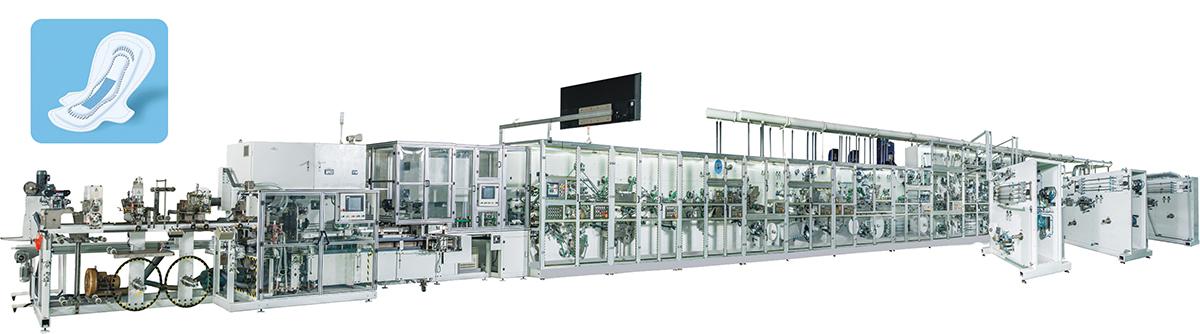
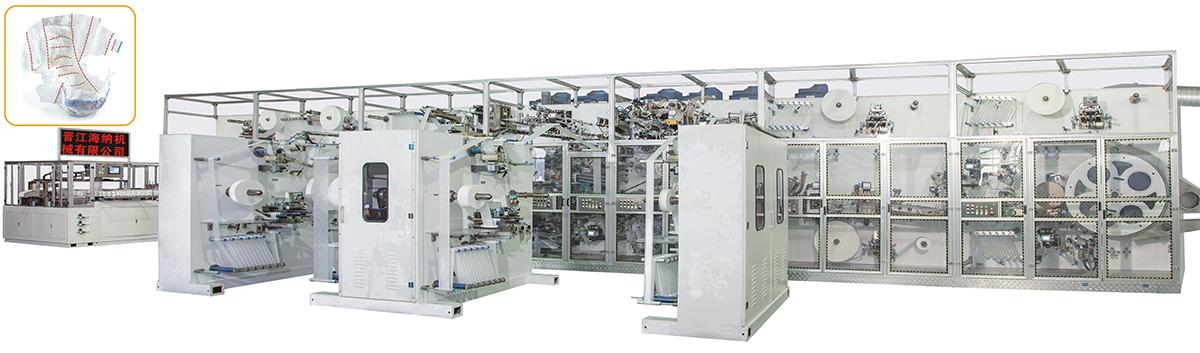
The goal is a roll-to-finished-lot boundary map. It identifies the material identities involved, the evidence used to locate their transition, and the finished-product range assigned to uncertainty. This is a proposed quality record for the buyer and supplier to agree. It is not a claim that every baby diaper production line includes automatic material genealogy.
Start with the traceability question
Define the investigation the map should support. A buyer might need to identify finished lots that could contain a particular incoming material lot, or determine which material identities could be present in a selected finished batch. Those are related but different searches. Agree whether both directions must be possible and which records will support each answer.
Keep the required resolution explicit. A system that links a production order to several material lots may be useful, but it does not automatically provide article-level associations. The buyer should not describe it as more precise than its evidence permits. If a narrower association is commercially important, ask what additional recording and validation would be needed.
Discuss the intended search with HAINA before deciding on data fields or software interfaces. The product configuration, material supply arrangements, and packaging scope may affect the available evidence. A clear question such as “Which finished lots might include this incoming roll?” helps the parties assess a proposed record more effectively than a general request for complete traceability.
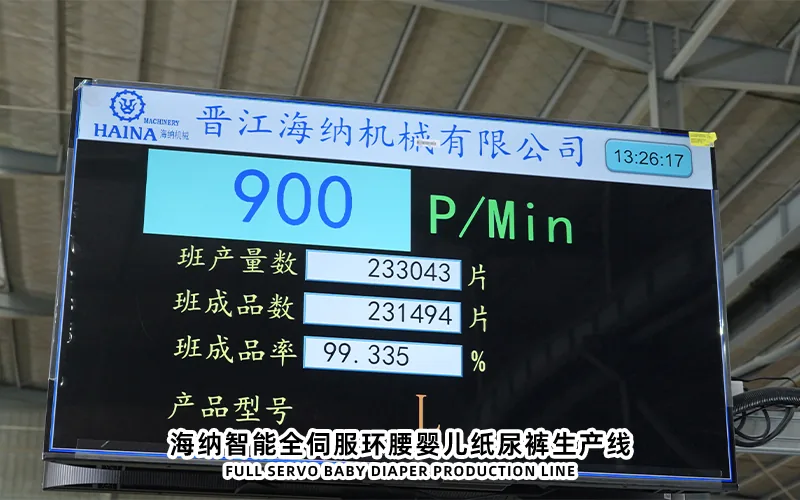
A material boundary record must connect observations made at different points in the production process. Displayed values are contextual, not project commitments.
Distinguish rolls from material lots
A roll identifier and a supplier material lot are not interchangeable. Several rolls may belong to the same incoming lot, while a replacement roll can introduce a new lot. Preserve both identities when they exist. Record how an incoming label is associated with the internal identifier used in production, and who confirms that association.
Include partial rolls, returned rolls, and material transferred between storage and production. If a roll is removed and later reused, the record should preserve its identity rather than treating the later use as an unrelated new material. Quantity information can support investigation, but a quantity estimate alone does not establish where that roll's material appeared in finished output.
Define what happens when the incoming identification is missing or ambiguous. The appropriate disposition belongs to the buyer's approved material-control procedure. The boundary map should show the unresolved identity and its effect on traceability, not silently substitute the nearest available lot number. A plausible label is still an assumption until its relationship to the material is established.
Capture a sequence of events
Separate the old roll's last known use, the new roll's first known use, and the splice-related transition. These observations may come from different records or witnesses. Describe what each timestamp or sequence marker actually represents. A logged operator confirmation, for example, may record when an entry was made rather than when material reached a downstream point.
Also preserve interruptions that affect interpretation. A stop, product removal, rework decision, or change to the active production order can break a simple association based on elapsed time. The map needs to account for those events before it assigns material identities to finished lots. Avoid filling the gap with an assumed constant travel time unless that method has been agreed and supported for the relevant conditions.
Use an event vocabulary that the participating teams understand consistently. “Roll changed” is often too compressed: it might mean the replacement was loaded, a splice was made, or the new material was confirmed downstream. Separate fields or clearly defined event types reduce that ambiguity without requiring the supplier to provide an unverified automatic feature.
Map the layers independently
A diaper incorporates multiple materials, and their roll transitions need not coincide. Keep a separate boundary record for each tracked material layer or component. Then relate those records to the finished-lot structure. This prevents a single production-order label from concealing a period in which several combinations of material lots may have been present.
Illustrative boundary-map entries; actual material names and evidence must be agreed
Tracked material
Old and new identities
Transition evidence
Finished-lot relationship
Open question
Material layer A
Both roll and lot identities recorded
Witnessed sequence references
Boundary assigned using approved method
Confirm supporting records are retained
Material layer B
New roll, same incoming lot
Roll-change event recorded
Lot identity continues; roll identity changes
Check the required traceability resolution
Material layer C
Two incoming lots identified
Downstream association incomplete
Potentially affected range marked uncertain
Quality owner to approve disposition
Returned partial roll
Original identity preserved
Removal and later reuse linked
Separate production periods associated
Verify intervening storage record
The map should remain readable when one transition is certain and another is not. Do not average their confidence into a single status. A finished lot can have a well-supported association for one material and a broader possible association for another; that distinction is valuable during a targeted quality investigation.
Describe the uncertain range
When evidence cannot establish an exact boundary, identify the earliest and latest defensible limits of the potentially affected range. Explain which records support those limits and what remains unknown between them. The buyer's quality authority should approve the handling of that range under the applicable product and material procedures.
Do not invent a universal isolation length or number of packs. An appropriate range depends on the actual process, the event evidence, and the reason for the investigation. A wider boundary may be necessary where observations are missing, but it should be documented as a conservative decision rather than presented as a measured material position.
Keep uncertainty visible after the immediate disposition is complete. If product is released, retained, or otherwise handled under an approved decision, preserve the original boundary evidence and the basis of that decision. Disposition changes the status of product; it does not retrospectively make an uncertain material association exact.
Different material transitions need separate evidence before they can be combined into a finished-lot map.
Carry the link into finished packs
The traceability chain may continue beyond the main machine. Identify where finished-lot codes are assigned and how products are associated with packs, cartons, or other shipping units used by the buyer. The relevant packaging scope should be confirmed for the project rather than assumed from a general equipment description.
Document any handling that can mix or separate output after the material transition. Temporary holding, repacking, and samples removed for inspection can alter a simple sequence-based relationship. Ask which records preserve the connection when those activities occur. A packaging code may be clearly printed while its association with the material boundary remains unsupported.
Where the main line and packaging equipment have different owners or suppliers, give the handover event an explicit definition. Name who provides the upstream boundary information, who records the downstream lot association, and how a missing acknowledgement is reported. This article does not prescribe a communication protocol; it identifies the evidence that any chosen arrangement must make reviewable.
Demonstrate the map during a trial
Choose an agreed trial scenario that exercises the proposed record path, with all physical operations performed under approved procedures. The buyer should observe whether the team can collect the planned identities and events, then reconstruct the finished-lot associations from the resulting records. A demonstration of the screen alone does not prove the end-to-end search.
Test the two search directions separately. Starting with a material identity, identify the possible finished lots and their evidence references. Starting with a finished lot, identify the material identities that may be represented. If the answers differ, investigate whether the gap comes from missing data, incompatible definitions, or a handling event omitted from the map.
For an illustrative document exercise, suppose the new roll label is confirmed but the corresponding packaging handover was recorded late. The upstream change remains known; the precise pack boundary does not. The reviewer should see which downstream observations still provide defensible limits, which packs remain potentially associated, and who approved that interpretation. This exercise exposes an evidence gap without pretending the recorded entry time is the physical transition time.
Include an agreed record exception in the review, such as an incomplete downstream association in an illustrative dataset. The question is whether the proposed workflow marks uncertainty and routes it to a responsible person. Do not create an unsafe production situation merely to demonstrate record handling. A reviewed example can establish the administrative response without interfering with equipment operation.
Assign record ownership
Give each part of the map a named owner: incoming identity, production event, finished-lot association, exception disposition, and final retention. The same person need not own every part. What matters is that an investigator can obtain the evidence and understand who approved its interpretation.
Agree how corrections are recorded. If a lot number was transcribed incorrectly, retain the original entry, the corrected identity, and the reason for the change in the appropriate controlled system. An overwritten spreadsheet cell without a correction history can leave a later reviewer unable to distinguish a legitimate repair from a convenient reassignment.
Finally, check that the retained records use stable identifiers across departments. Purchasing may use a supplier batch reference while production uses an internal material code. The mapping between those names belongs in the evidence pack; relying on staff familiarity makes the traceability chain fragile when personnel or suppliers change.
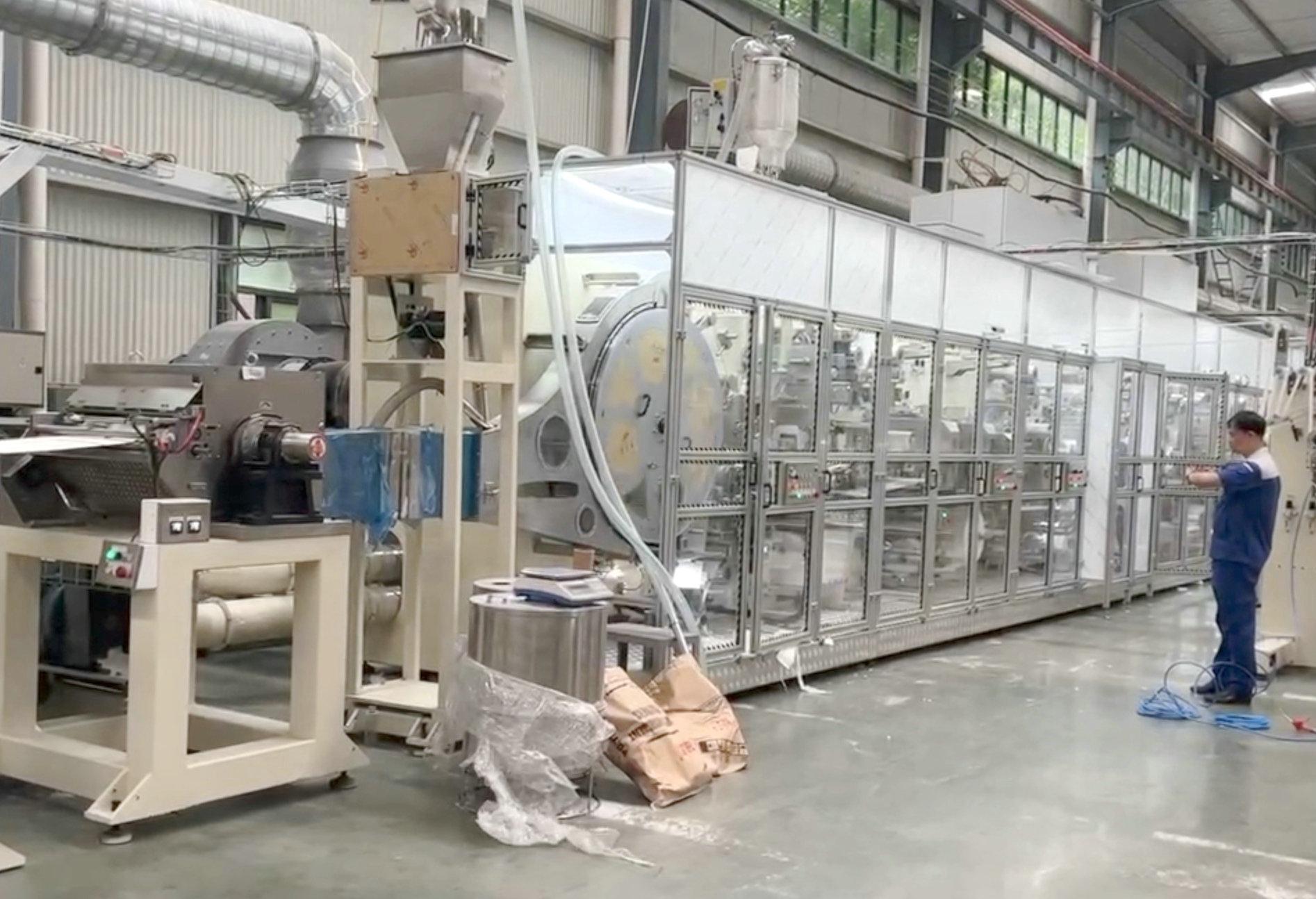
Use the baby diaper production line category as a starting point for configuration discussions, then attach the proposed boundary-map requirements to the actual project scope. HAINA and the buyer should confirm what is supplied, what relies on buyer procedures, and what remains an integration requirement before the map is treated as an accepted deliverable.
Record ownership helps preserve the connection between material receipt, production events, and finished-lot identification.
Boundary questions
Does a new roll always create a new finished lot?
That depends on the buyer's approved lot definition and the material identity involved. A roll change should be recorded even when the incoming material lot remains unchanged; the finished-lot decision needs its own documented basis.
Can timestamps alone establish the boundary?
Only if their meaning and association method are adequate for the agreed purpose. Different clocks, delayed entries, interruptions, and downstream handling can make a time-only match unreliable.
What if one material layer has incomplete records?
Preserve the confirmed associations for other materials, mark the unresolved layer separately, and identify its potentially affected finished-product range. The responsible quality reviewer determines the resulting product disposition.
Is a material-usage total enough for a traceability investigation?
It can support reconciliation, but it does not show which finished lots contain the material. The boundary map needs event and identity relationships in addition to any useful quantity records.
Conclusion: Accept an explainable map
A useful material boundary map states what is known, shows how it is known, and identifies the range that remains uncertain. It does not turn a roll-change event into an exact finished-product boundary by assumption.
Before approval, ask a reviewer who did not build the map to trace one material identity forward and one finished lot backward. Have that reviewer examine an uncertain association as well. The map is ready for formal acceptance when those searches reach supported conclusions and the exceptions lead to documented decisions with clear ownership.