Selecting an adult diaper machine starts with the finished product, not the advertised line speed. A tab style diaper needs reliable frontal tape, side tape, folding, and open-product handling. A pull up product needs continuous waist material, side seam formation, pant shaping, and a different folding path. The two formats also create different material, changeover, packaging, and operator requirements. Buyers should freeze the product drawing, target size range, material specification, quality checks, and packaging interface before comparing equipment. A line should be accepted only after it proves the chosen construction with the buyer's approved materials.
Start with Product Architecture
Tab style and pull up adult products serve related needs, but they are not simply two sizes from the same machine. A tab style diaper is generally opened for use and closed with fastening components. The converting process must control the absorbent body, standing cuffs, leg elastics, backsheet, frontal tape, and left and right fastening parts while keeping the product flat enough for inspection and folding.
A pull up product forms a wearable pant. Its waist structure, elastic distribution, side joining, pant shape, and final folding sequence change the process architecture. The line must manage elastic contraction without distorting the core or causing unstable web tracking. Side seam quality becomes a primary release characteristic because the seam has to survive handling while remaining suitable for the intended opening method.
Some suppliers can configure equipment families for more than one adult incontinence product, but a buyer should not assume that one installed line can switch freely between tab style and pull up formats. Ask for a module-by-module explanation of what is common, what is replaced, what remains dedicated, and what performance changes after conversion. The answer should be supported by drawings and a sample plan.
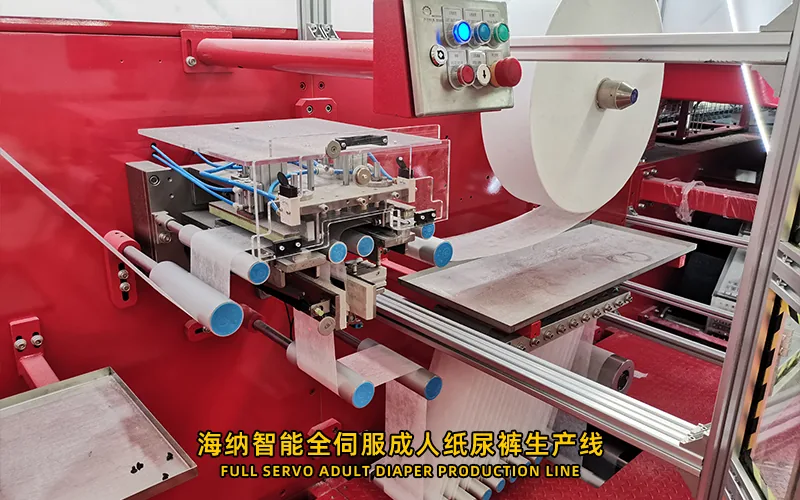
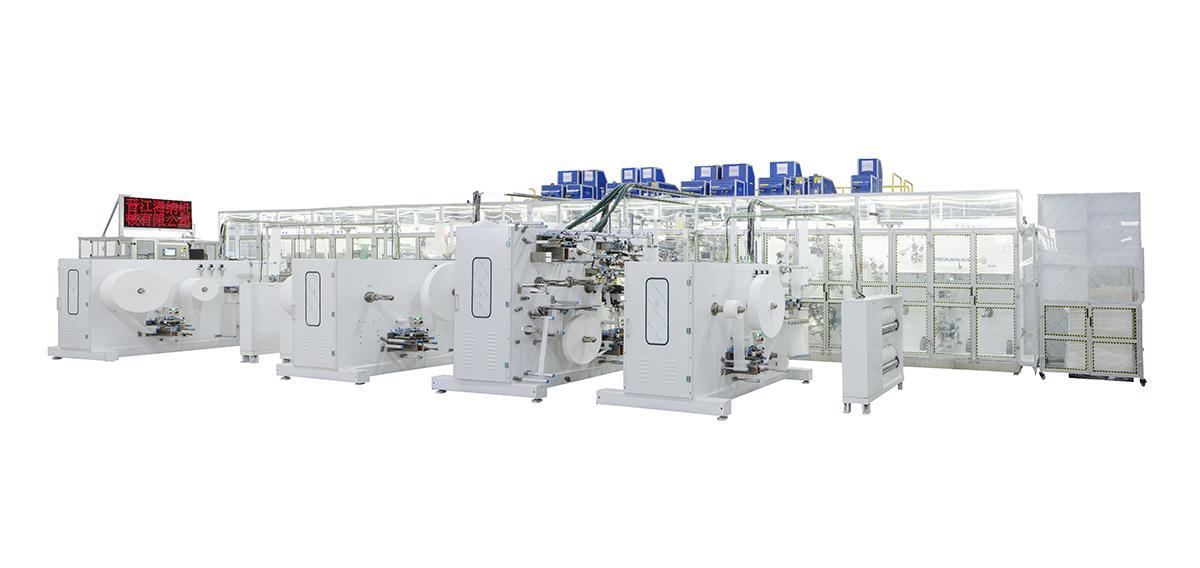
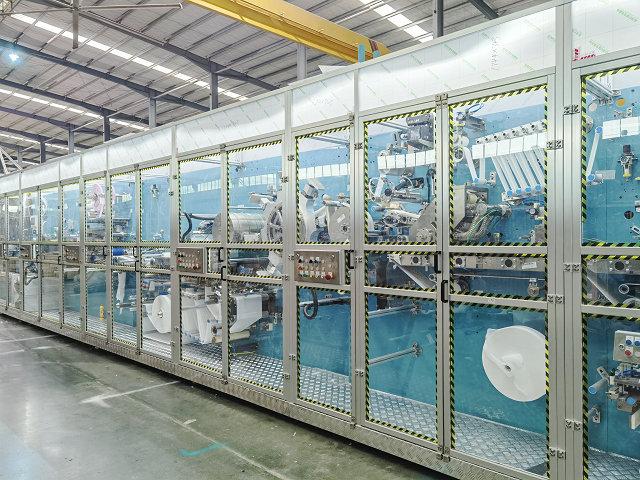
Product architecture determines the converting modules and web path that a buyer needs.
Compare the Required Process Modules
Both product types normally require controlled raw material unwinding, absorbent core formation or feeding, SAP handling where specified, tissue or core wrap management, topsheet and backsheet application, elastic placement, adhesive systems, cutting, inspection, rejection, folding, counting, and transfer. The important question is how each module is configured for the product drawing rather than whether its name appears on a feature list.
For a tab style product, review tape feeding, cut position, placement repeatability, frontal tape registration, ear or side panel handling, and the fold that protects fastening parts. Confirm how the line detects a missing or misplaced tape. Ask whether tape material changes need new tooling, guides, recipes, or sensor adjustments, and include those items in the changeover review.
For a pull up product, examine elastic feeding zones, waist lamination, side seam technology, seam inspection, pant turning or folding, and the treatment of elastic tension during stops. Heat sealing and ultrasonic joining are different process choices with different material compatibility and maintenance needs. The supplier should explain the proposed method against the buyer's approved nonwoven and product construction.
Buyer risk note: A quote that uses one general description for both formats can hide major dedicated modules. Request a marked process flow showing every material entry, joining point, inspection point, reject point, and packaging handoff.
Map Materials and Size Ranges
Material behavior can change the practical equipment choice. List the intended topsheet, acquisition layer, tissue, pulp, SAP, backsheet film or laminated backsheet, cuff material, elastic, tape, hook material, nonwoven waist components, adhesive, release material, and packaging requirements. For each web, record width, basis weight range, roll diameter, core size, winding direction, splice method, and expected variability.
A broad size statement is not enough. Create a controlled drawing for every launch size and show finished length, width, core dimensions, elastic positions, tape or seam locations, fold geometry, and pack count. Large adult formats place additional demands on web width, cutting, vacuum transfer, folding, stack stability, and raw material handling. Ask the supplier to identify the proven operating window and any size that needs separate tooling.
Trial materials should represent commercial supply as closely as possible. A line may run smoothly with a stiff demonstration web but require different tension and guiding when a softer or more extensible material is introduced. Record trial roll lots and retain produced samples. If substitute material is unavoidable, state which tests must be repeated before final acceptance.
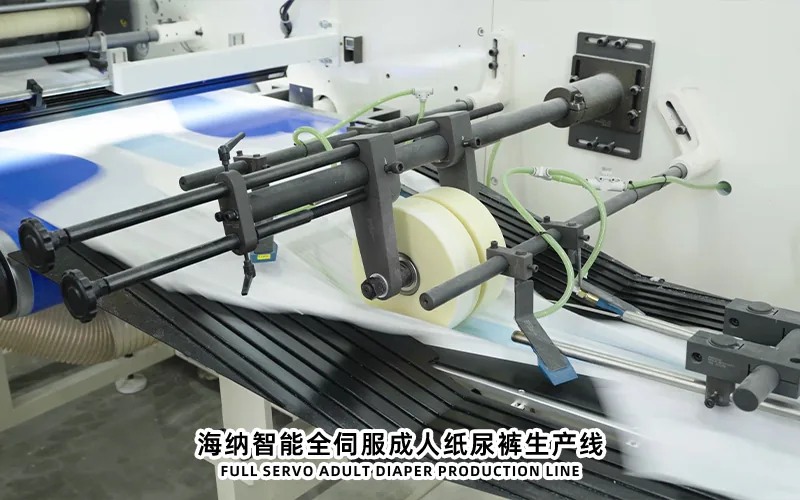
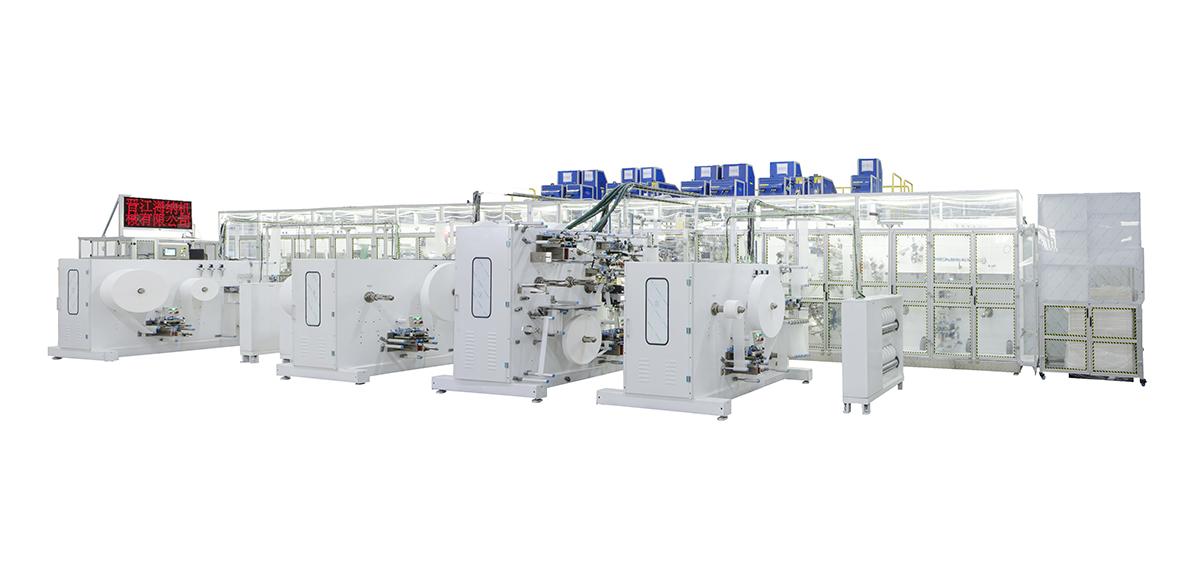
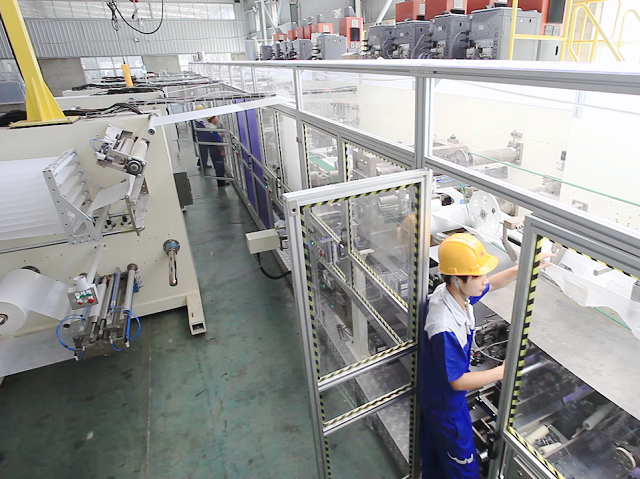
Material specifications and roll conditions should be connected to each machine feed position.
Evaluate Output and Packaging as One System
Design speed is a machine target under stated conditions. Stable working speed is repeatable operation for an agreed product and material set. Sellable output removes rejects, startup waste, stops, and downstream losses. Compare suppliers with the same definitions and test conditions. A pull up construction may have a different stable operating limit from a tab style product because elastic handling and side joining add process constraints.
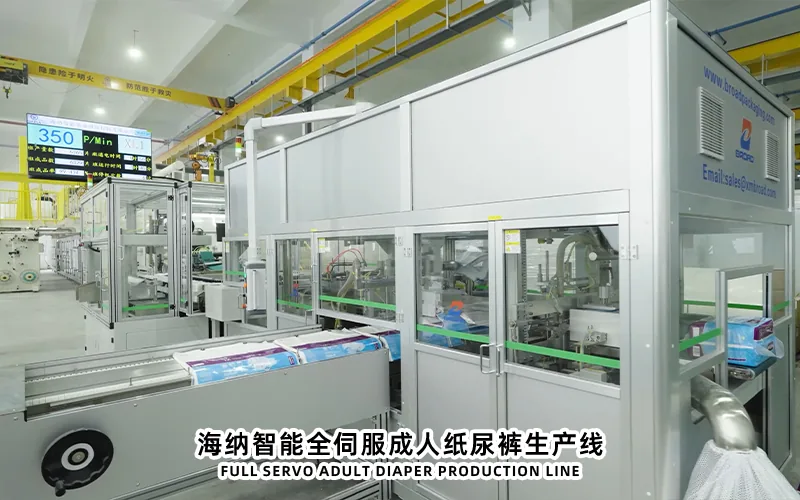
Packaging can become the real bottleneck. Tab products and folded pants may differ in thickness, compression behavior, fold security, stack shape, count, bag size, and sealing needs. Define whether the scope ends at a discharge conveyor, a stacker, a bagger interface, or a complete automatic packaging connection. Also identify who owns signals, accumulation logic, reject tracking, and recovery after a packaging stop.
Labor should be evaluated by task. Count people needed for roll preparation, splicing, material replenishment, core supply, quality sampling, reject handling, packing, pallet movement, cleaning, and maintenance response. Automation at one station may move work to another. Observe the complete flow during a factory acceptance test instead of estimating labor only from the main line controls.
Use a Product Line Selection Table
Decision area
Tab style adult diaper
Pull up adult product
Evidence to request
Closure structure
Frontal tape and side fastening placement
Continuous waist and joined side seams
Controlled product drawing and process flow
Critical joining
Tape bond and component registration
Waist lamination and side seam formation
Material trial samples and inspection method
Elastic control
Leg and waist elastic positions
Distributed pant waist and leg elasticity
Tension zones recipes and restart checks
Changeover focus
Tape guides cutters folds and size tooling
Elastic settings seam tooling shape and folding
Observed changeover with task and waste record
Packaging interface
Open-product fold stack and compression
Pant fold seam protection and stack control
Approved pack specification and interface test
Acceptance basis
Stable sellable output with agreed materials and quality limits
Signed FAT protocol raw records and retained samples
This table is a screening tool, not a replacement for a technical agreement. Add the buyer's specific construction, factory utilities, local skills, spare parts strategy, and planned product roadmap. A decision becomes reliable when each requirement points to a drawing, sample, test, or contract item.
Verify Supplier Evidence Before Ordering
Begin with a remote document review, then use a factory audit or witnessed demonstration for the shortlisted supplier. Check whether mechanical processing, assembly, electrical work, software integration, trial production, and quality inspection are visible and controlled. Review how design changes are approved and how parts, drawings, and software versions remain traceable.
Ask for evidence tied to the proposed product rather than a general video. Useful evidence includes a process diagram, module list, layout, utility schedule, material specification sheet, sample drawing, changeover list, acceptance protocol, training plan, document register, and spare parts proposal. For a buyer comparing HAINA, the adult diaper machine product scope can serve as a starting point, while final functions and acceptance values should remain in the signed project documents.
Service planning should cover installation conditions, commissioning responsibilities, operator and maintenance training, remote diagnostic access, software backup, escalation contacts, and parts identification. Do not treat a broad after-sales statement as a complete plan. Assign deliverables, owners, timing, language, and acceptance evidence.
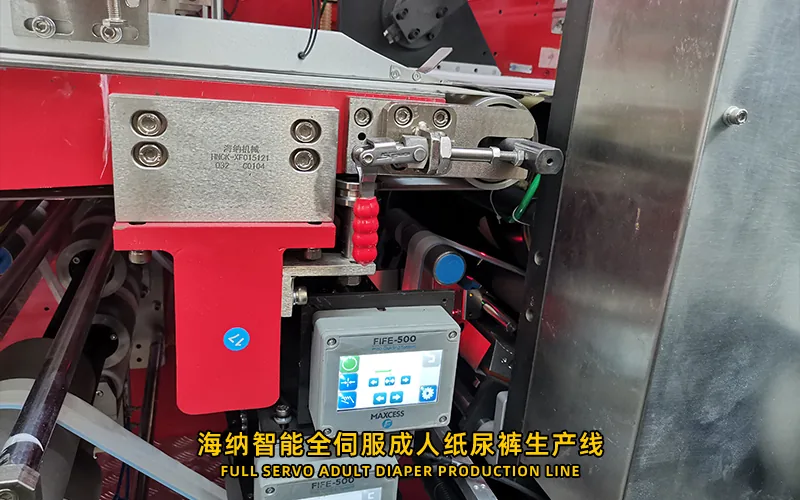
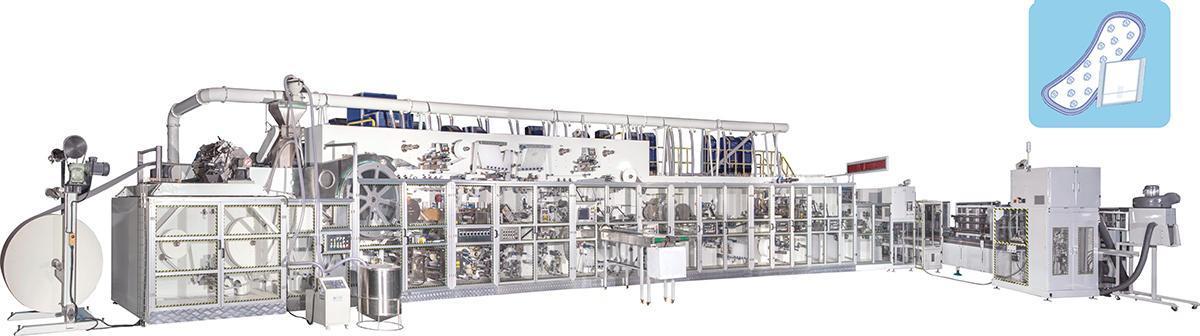
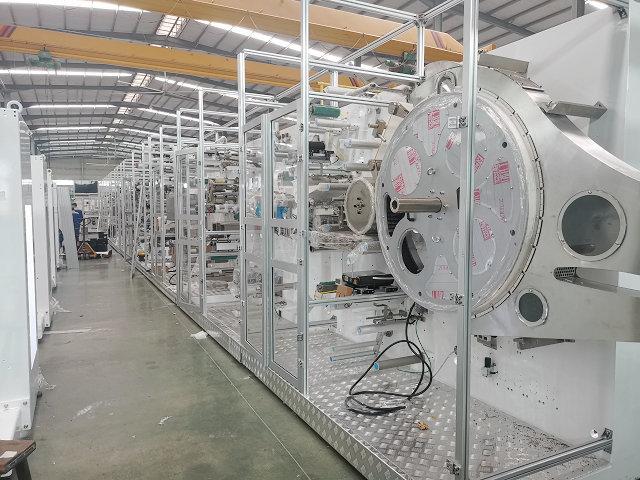
A supplier review should connect visible equipment modules with the proposed technical scope.
Build a Decision Checklist
Selection sequence for the project team
Approve separate product drawings and retained samples for every launch format and size.
Map each raw material to its unwind feed control joining method and inspection point.
Mark modules that are common dedicated optional or excluded from the quoted line.
Define design speed stable working speed sellable output and test duration separately.
Freeze the folding stacking bagging and signal interface for each product format.
Witness one representative size change and record people tools time adjustments and waste.
Agree FAT samples defect rules stop logging safety checks documents training and open-item closure.
Review future products and reserve space utilities controls and material handling only where justified.
Use the checklist in the same order for every supplier. That discipline prevents an attractive optional feature from receiving more attention than product compatibility, process stability, or an excluded packaging module. It also gives commercial and technical teams one shared comparison record.
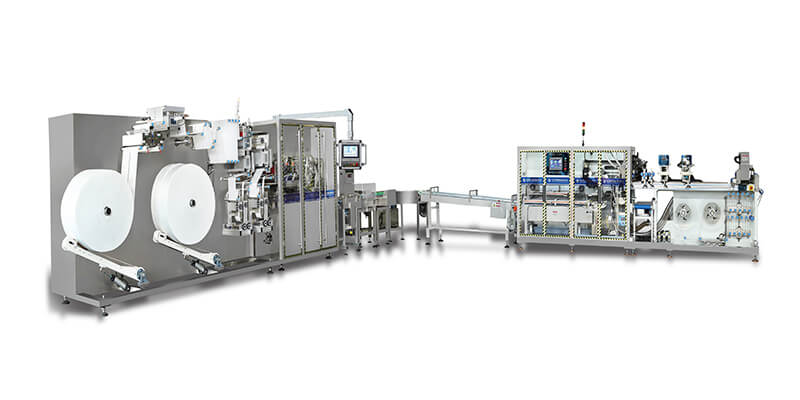
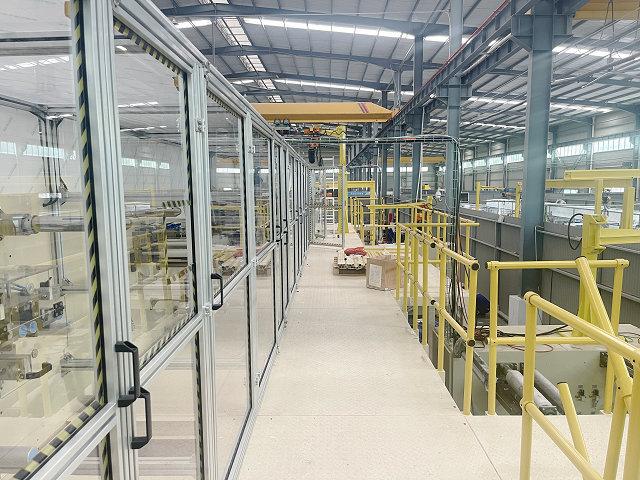
Module access and changeover points should be reviewed before the equipment layout is approved.
Adult Diaper Machine Selection FAQ
Can one adult diaper machine make both tab style and pull up products?
Do not assume so. The formats require different closure, elastic, seam, shaping, and folding processes. A supplier should identify every shared and replaced module, then prove the claimed conversion with the intended materials and product drawings.
Which product should a new factory select first?
Select the product supported by a verified market requirement, approved specification, material supply plan, packaging route, and distribution strategy. Equipment selection should follow that business case rather than a general claim that one format is easier.
Is machine speed the main comparison point?
No. Compare stable sellable output for the same product, material set, quality limits, test period, operator boundary, and packaging condition. Peak display speed alone does not establish commercial capacity.
What should be tested before shipment?
Test the agreed products and materials, stable production, quality checks, defect rejection, one meaningful changeover, stop recovery, packaging interface, safety functions, documents, backups, and training deliverables under a written FAT protocol.
Conclusion
An adult diaper machine should be selected by matching product architecture to a documented process, not by grouping all incontinence products under one equipment label. Freeze the tab style or pull up construction, map materials and sizes, separate common and dedicated modules, define output correctly, and include packaging in the boundary. Then compare suppliers through the same evidence table and acceptance plan. The strongest next step is a controlled requirement sheet that connects every commercial expectation to a drawing, module, material trial, factory test, and handover record.