Adult & Baby Diaper Machine,Sanitary Napkins Production Line Blog
Compare fully automatic and semi-automatic sanitary pad machines by process scope, labor, controls, quality, changeovers, factory needs, and lifecycle cost.
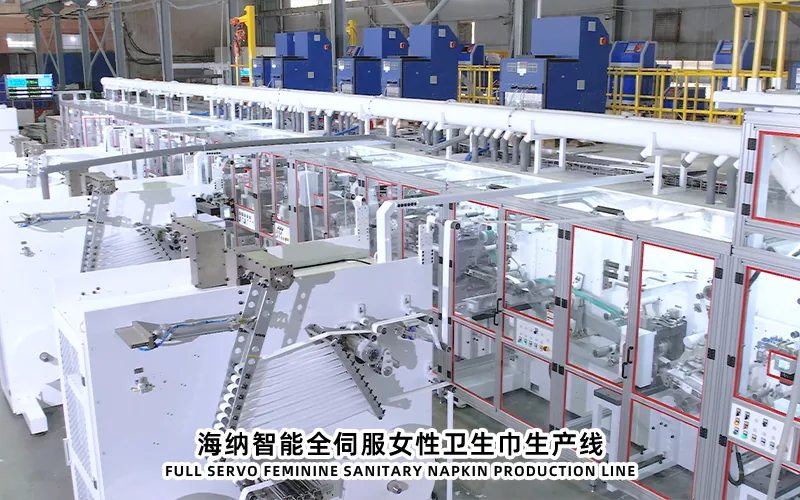
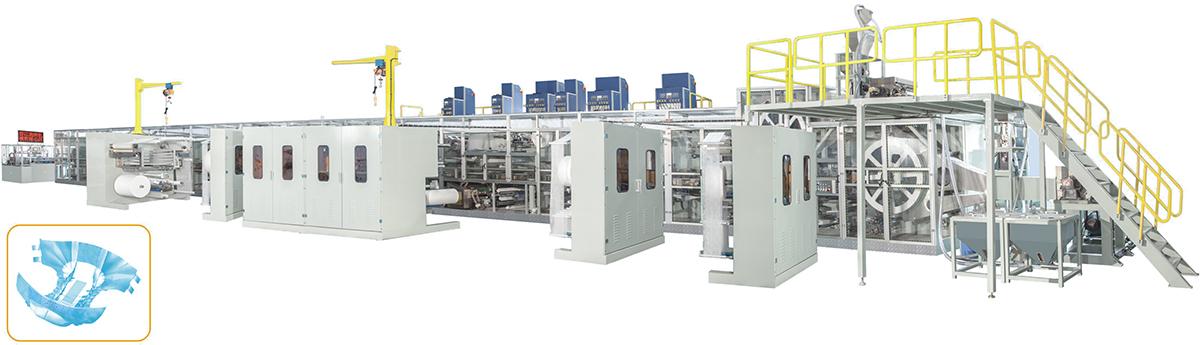
The main difference between a fully automatic and semi-automatic sanitary pad machine is the amount of material handling, process synchronization, inspection, product transfer, and packing support performed by the line instead of operators. Fully automatic does not mean labor-free, and semi-automatic does not describe one standard configuration. Buyers should map every task from roll loading to packed product, then compare stable output, quality control, changeover work, staffing, utilities, maintenance skill, and lifecycle cost. The better choice is the configuration that matches demand and factory capability with verifiable acceptance conditions.
Define the Automation Boundary Task by Task
Supplier labels are inconsistent, so begin with a process map. List raw-material receiving, roll transport, loading, splicing, web guiding, tension control, absorbent-core handling, adhesive application, cutting, sealing, folding, release-paper application, defect inspection, rejection, counting, stacking, bag transfer, sealing, coding, and case packing. For every task, state whether it is automatic, operator-assisted, manual, or outside the supplier's scope.
A line can be highly automated in converting but still depend on manual roll changes and packing. Another may include automatic splicing and bagging yet require manual quality sampling and product adjustment. These are both legitimate designs, but their staffing and output models differ. The contract should describe functions, not rely on the words fully automatic.
Questions that expose the real automation level
What happens when a material roll ends at operating speed?
How are web position, tension, registration, and adhesive patterns corrected?
Which defects are detected and rejected automatically?
Where are products counted, stacked, transferred, and packed?
Which tasks require line stop, reduced speed, or guarded access?
How many people are used in the supplier's staffing estimate, and for which roles?
Automation should be defined by each material, converting, inspection, and transfer task.
Compare Labor by Role and Operating Event
Do not compare only the number of operators standing beside a demonstration. Map workload across a full shift. Include roll transport, loading, splice preparation, adhesive filling, product sampling, package feeding, case handling, scrap removal, cleaning, changeover, fault response, maintenance, quality records, and material staging. A fully automatic line may reduce repetitive handling while increasing the need for trained controls and maintenance technicians.
Semi-automatic equipment can suit a launch with lower volume, flexible labor, limited capital, or simpler product scope. It may also make manual skill a larger quality variable. Frequent intervention can reduce stable output and make performance harder to reproduce across shifts. The decision should reflect local wages, skill availability, training capacity, and ergonomic risk.
Use a time study during supplier trials. Record what each person does, how often, for how long, and what happens when two events occur together. Staffing claims should cover normal production and foreseeable disturbances, not only a short prepared run.
Evaluate Control Architecture and Product Quality
Full automation often uses coordinated servo drives, PLC and HMI recipes, web guiding, tension control, registration, automatic rejection, and integrated alarms. These functions can improve repeatability, but they require correct setup, suitable materials, maintained sensors, and disciplined recipe control. A sophisticated control system cannot compensate indefinitely for unstable raw materials or worn process tooling.
Semi-automatic machines may use simpler controls or divide processes into separate stations. This can reduce integration complexity, yet more product characteristics may depend on operator adjustment and manual transfer. Ask which dimensions, bonding conditions, alignment features, and defect types are controlled automatically and which are sampled offline.
Compare quality using the same product, materials, sampling plan, and acceptance limits. Review startup waste, steady-state rejects, defects after roll changes, recovery after stops, and variation over time. A few selected samples do not establish process capability.
The buyer should map labor at roll changes, setup, fault recovery, sampling, and packing.
Compare Stable Output and Changeover Performance
Nominal speed is only one part of capacity. Sellable output depends on scheduled time, stable operating rate, roll changes, product changes, minor stops, breakdowns, quality loss, material availability, and downstream packing. Fully automatic functions can reduce interruption, but only if they are included, commissioned, and supported by the factory workflow.
Changeover matters when the business plans several sizes or product constructions. Record the parts changed, settings loaded, material paths adjusted, tools needed, people involved, first-good-product criteria, and waste generated. Recipe control and quick-change mechanisms may shorten the task, while a simpler machine may be easier for a small team to understand.
Match the Configuration to Factory Infrastructure
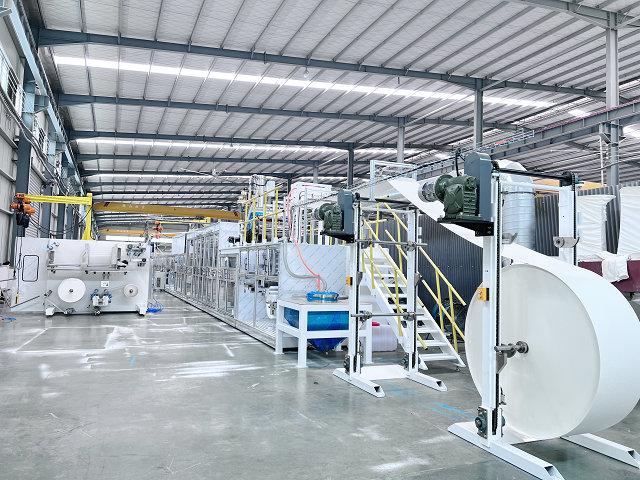
Automation can change electrical load, compressed-air demand, network needs, climate sensitivity, adhesive-system requirements, dust extraction, spare inventory, and technician skills. Request a utility schedule and layout for the quoted configuration. Verify access for jumbo rolls, safe maintenance, tool removal, waste handling, and packaging flow.
A semi-automatic arrangement may use more intermediate storage and manual transfer space. A highly integrated line may be longer and more sensitive to downstream stops. Buffering, accumulation, and packaging speed need review. Neither layout should be judged from machine dimensions alone.
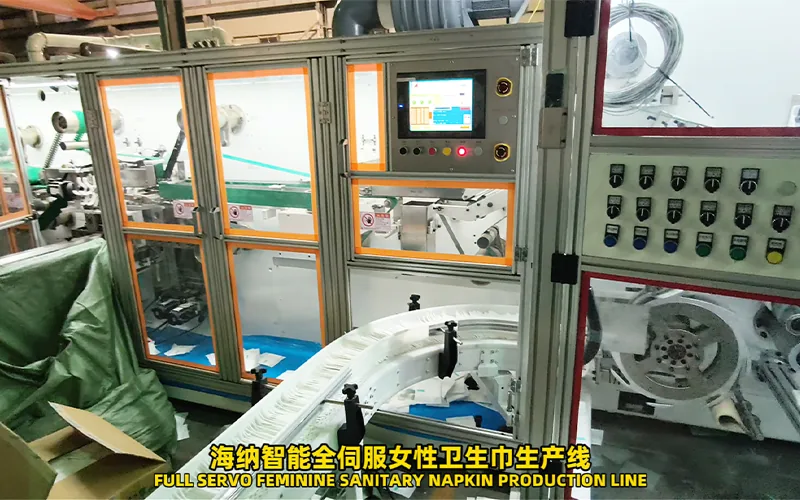
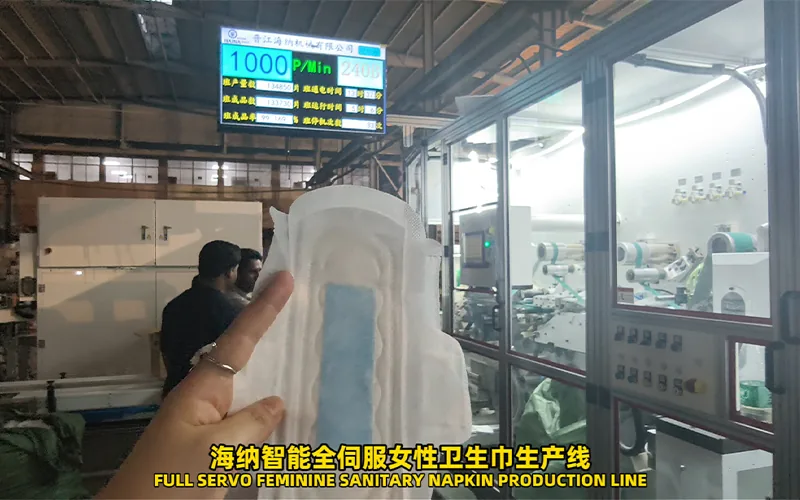
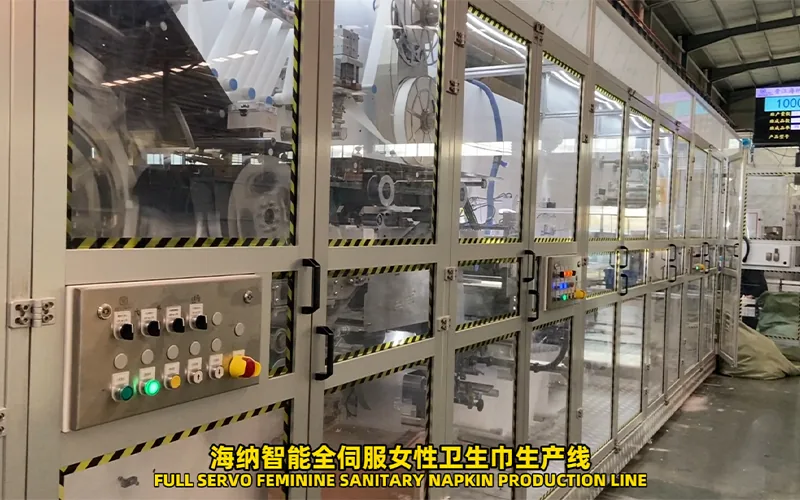
HAINA can discuss the process scope of its automatic sanitary pad machine against a buyer's product plan. The proposal should still state every automatic and manual task, site utility, and acceptance condition so the label can be verified.
Coordinated controls can improve repeatability when materials and settings are managed correctly.
Use a Decision Table for Automatic and Semi-Automatic Options
Decision area
Fully automatic tendency
Semi-automatic tendency
Buyer verification
Material and product flow
More synchronized functions and automatic transfer
More operator handling or separated processes
Task-by-task process map
Labor profile
Fewer repetitive tasks, greater technical skill need
More direct handling and operator influence
Full-shift time study
Quality repeatability
More closed-loop and recipe opportunities
More manual adjustment may remain
Common trial and sampling plan
Investment
Usually broader equipment and integration scope
Potentially lower initial equipment scope
Normalized quotation and lifecycle model
Maintenance
More controls, sensors, and synchronized assets
Simpler modules but possibly more manual mechanisms
Skill, spares, access, and support review
Scalability
Can support higher integrated output when balanced
Can suit staged growth or lower demand
Demand scenarios and packaging constraint
The table describes tendencies, not guarantees. A well-designed semi-automatic machine may outperform a poorly matched automatic line in a specific factory. Require evidence from the exact proposed configuration.
Also test the decision against business interruption. If a trained technician leaves, a sensor fails, a packaging worker is absent, or one product suddenly dominates demand, determine how each option responds. Automation can reduce exposure to some labor events but may concentrate dependency in controls expertise or specialized parts. Semi-automatic production may offer manual fallback, yet that fallback needs enough people, workspace, and quality control to be credible.
Model Lifecycle Economics with Three Demand Scenarios
Create a launch, expected, and high-demand scenario. Estimate sellable output, labor by role, materials, waste, utilities, planned service, wear parts, technical support, financing, and changeover loss. Include the cost of downstream packing and material logistics. Use local cost assumptions and test the model when demand or efficiency is lower than planned.
A fully automatic option can justify a higher initial price when it produces needed volume with controlled quality and manageable staffing. It can also become underutilized if sales ramp slowly or the factory cannot support the controls. A semi-automatic option can preserve capital and simplify the launch, but growing labor, handling, and quality variation may limit expansion.
Include a governance choice as well as a financial choice. Name who owns recipe approval, component substitutions, preventive maintenance, quality release, and production data. A more automated machine needs disciplined settings and change control, while a labor-intensive route needs strong standardized work and supervision. Either option loses its expected value when operating ownership is unclear.
Freeze the product range and demand cases.
Map automatic and manual tasks for each configuration.
Estimate sellable output and staffing from observed evidence.
Add factory, packaging, maintenance, spare, and training costs.
Stress-test lower utilization, more waste, and slower ramp-up.
Select the option whose risks the business can control.
A decision needs product, volume, staffing, utility, and support assumptions rather than a label alone.
Run the final comparison through a sample production week. Place each product order, roll change, inspection, cleaning task, break, and packing requirement on a realistic schedule. Assign people and technical support to simultaneous events. This simple exercise can reveal that a labor estimate is too low, that a bagger limits both options, or that the proposed changeover plan cannot meet the sales mix.
Frequently Asked Questions
Does fully automatic mean no operators are needed?
No. Material logistics, quality checks, monitoring, replenishment, packing support, cleaning, fault recovery, and maintenance still require defined roles.
Is semi-automatic always slower?
Not as a universal rule. Stable sellable output depends on the exact design, product, materials, staffing, interventions, changeovers, and downstream flow.
Can a semi-automatic machine be upgraded later?
Some functions may be upgradeable, but mechanical space, control architecture, safety integration, and packaging interfaces can limit economical conversion. Confirm an upgrade path before purchase.
Which option is better for a new factory?
The better option matches validated demand, available capital, labor conditions, technical skills, utilities, product complexity, and support access. Use scenarios rather than a universal answer.
Conclusion
The difference between a fully automatic and semi-automatic sanitary pad machine is best understood as a task and responsibility map. Define how materials, controls, inspection, transfer, packing, changeover, and recovery work in each proposal. Then test stable output, quality, labor, infrastructure, and lifecycle economics under the same assumptions. The purchasing decision should name the automatic functions in the contract and verify them during FAT, leaving no important expectation inside an undefined marketing label.